
Business
Ottawa Pretends To Pivot But Keeps Spending Like Trudeau


From the Frontier Centre for Public Policy
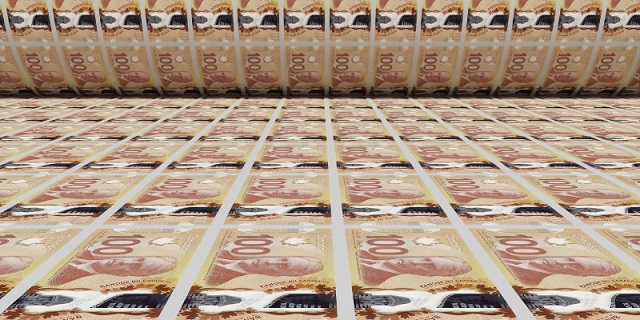
New script, same budget playbook. Nothing in the Carney budget breaks from the Trudeau years
Prime Minister Mark Carney’s first budget talks reform but delivers the same failed spending habits that defined the Trudeau years.
While speaking in the language of productivity, infrastructure and capital formation, the diction of grown-up economics, it still follows the same spending path that has driven federal budgets for years. The message sounds new, but the behaviour is unchanged.
Time will tell, to be fair, but it feels like more rhetoric, and we have seen this rhetoric lead to nothing before.
The government insists it has found a new path, one where public investment leads private growth. That sounds bold. However, it is more a rebranding than a reform. It is a shift in vocabulary, not in discipline. The government’s assumptions demand trust, not proof, and the budget offers little of the latter.
Former prime ministers Jean Chrétien and Paul Martin did not flirt with restraint; they executed it. Their budget cuts were deep, restored credibility, and revived Canada’s fiscal health when it was most needed. Ottawa shrank so the country could grow. Budget 2025 tries to invoke their spirit but not their actions. The contrast shows how far this budget falls short of real reform.
Former prime minister Stephen Harper, by contrast, treated balanced budgets as policy and principle. Even during the global financial crisis, his government used stimulus as a bridge, not a way of life. It cut taxes widely and consistently, limited public service growth and placed the long-term burden on restraint rather than rhetoric. Carney’s budget nods toward Harper’s focus on productivity and capital assets, yet it rejects the tax relief and spending controls that made his budgets coherent.
Then there is Justin Trudeau, the high tide of redistribution, vacuous identity politics and deficit-as-virtue posturing. Ottawa expanded into an ideological planner for everything, including housing, climate, childcare, inclusion portfolios and every new identity category.
The federal government’s latest budget is the first hint of retreat from that style. The identity program fireworks are dimmer, though they have not disappeared. The social policy boosterism is quieter. Perhaps fiscal gravity has begun to whisper in the prime minister’s ear.

However, one cannot confuse tone for transformation.
Spending still rises at a pace the government cannot justify. Deficits have grown. The new fiscal anchor, which measures only day-to-day spending and omits capital projects and interest costs, allows Ottawa to present a balanced budget while still adding to the deficit. The budget relies on the hopeful assumption that Ottawa’s capital spending will attract private investment on a scale economists politely describe as ambitious.
The housing file illustrates the contradiction. New funding for the construction of purpose-built rentals and a larger federal role in modular and subsidized housing builds announced in the budget is presented as a productivity measure, yet continues the Trudeau-era instinct to centralize housing policy rather than fix the levers that matter. Permitting delays, zoning rigidity, municipal approvals and labour shortages continue to slow actual construction. These barriers fall under provincial and municipal control, meaning federal spending cannot accelerate construction unless those governments change their rules. The example shows how federal spending avoids the real obstacles to growth.
Defence spending tells the same story. Budget 2025 offers incremental funding and some procurement gestures, but it avoids the core problem: Canada’s procurement system is broken. Delays stretch across decades. Projects become obsolete before contracts are signed. The system cannot buy a ship, an aircraft or an armoured vehicle without cost overruns and missed timelines. The money flows, but the forces do not get the equipment they need.
Most importantly, the structural problems remain untouched: no regulatory reform for major projects, no tax-competitiveness agenda and no strategy for shrinking a federal bureaucracy that has grown faster than the economy it governs. Ottawa presides over a low-productivity country but insists that a new accounting framework will solve what decades of overregulation and policy clutter have created. The budget avoids the hard decisions that make countries more productive.
From an Alberta vantage, the pivot is welcome but inadequate. The economy that pays for Confederation receives more rhetorical respect, yet the same regulatory thicket that blocks pipelines and mines remains intact. The government praises capital formation but still undermines the key sectors that generate it.
Budget 2025 tries to walk like Chrétien and talk like Harper while spending like Trudeau. That is not a transformation. It is a costume change. The country needed a budget that prioritized growth rooted in tangible assets and real productivity. What it got instead is a rhetorical turn without the courage to cut, streamline or reform.
Canada does not require a new budgeting vocabulary. It requires a government willing to govern in the country’s best interests.
Marco Navarro-Genie is vice-president of research at the Frontier Centre for Public Policy and co-author with Barry Cooper of Canada’s COVID: The Story of a Pandemic Moral Panic (2023).

Business
COP30 finally admits what resource workers already knew: prosperity and lower emissions must go hand in hand

From Resource Works
What a difference a few weeks make
Finally, the Conference of the Parties to the UN climate convention (COP30) adopted a pragmatic tone that will appeal to the working class. Too bad it took thirty meetings. Pragmatism produces results, not missed targets.
We should not have been surprised. Influential figures like Bill Gates and Canadian-Venezuelan analyst Quico Toro, who have long argued that efforts to reduce CO₂ should focus more on technology and prosperity, and less on energy consumption and declining growth, have gained ground.
In the World Energy Outlook 2025, prepared by the International Energy Agency for COP30, you can see that many of the views held by the people above had already gone mainstream before the conference started.
The World Energy Outlook 2025 lays out three scenarios: Current Policies (CPS), Stated Policies (STEPS), and Net Zero Emissions by 2050 (NZE). In WEO 2025, all three scenarios reflect longer timelines for the decline of fossil fuels than in earlier editions, and the NZE pathway explicitly states that major technological breakthroughs will be required.
Unfortunately, many potential technologies are adamantly opposed by the loudest groups within the Climate Change Movement because they are not perfect. Even some continue to oppose nuclear power, one of the few proven sources of large-scale, zero-carbon, firm electricity.
Another noteworthy standout in WEO 2025 was the strong recognition that energy security, costs, and supply chains are now the primary considerations in determining each country’s energy mix.
What all this means is we are breaking away from emotionally charged, fear-based policies and rhetoric and moving toward a practical “let’s do things better” approach.
For 30 years, the radical leadership of the environmental movement has focused on what we should stop doing and on sacrificing prosperity. Essentially, what has been going on is an attack on working people in the industrialized and developing world.
Today, workers in the developed world are so anxious that many are losing faith in democratic institutions. Meanwhile, people in the emerging and developing world see light at the end of the tunnel and are determined to industrialize.
Clearly, it is time to merge the fight to lower CO₂ emissions with prosperity. “Let’s do things better” captures the history of human progress and resonates with working people today.
What does it take for longer, healthier, safer, and more sustainable lives? It takes the pragmatism of workers. They spend their lives striving to improve workplace safety, to develop tools that enable them to perform tasks more effectively with less physical effort, to earn higher pay, to produce more food with less land, and to preserve their opportunity to continue working.
Resource workers have felt under attack and are humiliated when celebrities fly in on a helicopter to denigrate their work and make references to the virtues of small-plot gardening, or politicians who tell them to go back to school for “jobs of the future”, only to find themselves in low-paying service jobs.
As the COP30 discussion indicates, we have reached a turning point. It is time to focus on doing what needs to be done, but doing it better. It is time to stop banning activities entirely as though circumstances and technology never change. Demanding perfection hides what is possible, slows progress and, in some cases, stops it altogether.
Bill Gates’ memo to COP30 points to the turn in the road:
“We should measure success by our impact on human welfare more than our impact on the global temperature, and our success relies on putting energy, health, and agriculture at the centre of our strategies.”
Gates also makes a point that will resonate with working people: “Using more energy is a good thing because it is closely correlated with economic growth.” Ironically, a statement made by a billionaire resonates with working people more than does the message of many climate activists.
The work at the Port of Prince Rupert comes to mind, given its growing role in supplying cleaner cooking and heating fuels, when we are reminded that 2 billion people worldwide cook and/or heat their homes with highly polluting open fires (wood, charcoal, dung, agricultural waste).
Persuasion published Quico Toro’s essay on November 13, 2025, which speaks another truth.
“COP imagines these emissions as something a country’s government can set, like the dial on a thermostat. But emissions are more like GDP: the outcome of a complex process that politicians would like to be able to control, but do not actually control.”
I am feeling more secure about the future here in Canada and BC, as governments, First Nations and the public are leaning into climate and economic pragmatism.
There will be hard discussions and uncomfortable trade-offs. Past decisions need to be re-examined in good faith. Do they meet today’s demands? Are we doing what needs to be done better? Is it the right move for today’s youth and future generations? Will we bring back the hope and opportunity of a growing middle class?
Nobody, not the Liberal government, the BC NDP government, First Nations, none of us would have predicted the world we are facing today, where our economy and sovereignty are challenged.
Today, oil, natural gas, and critical minerals, not one or two but all three, are the financial backstop Canada needs, as we rebuild the economy and secure our sovereignty.
Look West: Jobs and Prosperity for Stronger BC and Canada is as much of an admission that we are falling behind as it is a call to action. Success will take billions of dollars, the exact amount unknown.
But what we do know is that oil, gas, and critical minerals generate the most public revenue, the highest incomes, and are our most significant exports. They are Canada’s bank and comparative advantage. They will provide the cash flow needed to get it done.
Not maximizing oil production and exports is fighting with both hands tied behind our back. We all know it; now we need to focus on doing it better because circumstances have changed dramatically.
Jim Rushton is a 46-year veteran of BC’s resource and transportation sectors, with experience in union representation, economic development, and terminal management.
Resource Works News

From the Fraser Institute
By Ben Eisen and Milagros Palacios
Recently, Statistics Canada released a revision of its calculations of Canada’s gross domestic product (GDP) in recent years. GDP measures the total production in an economy in a given year, and per-person GDP is widely accepted by economists as one of the most useful metrics for assessing quality of life. The new estimate places Canada’s GDP for 2024 at 1.4 per cent larger than previously reported.
By the standards of these sorts of revisions—which are usually quite small—the recent update is significant. But make no mistake, the new numbers do not change the fundamental story of Canada’s economic performance, which has been one of historically weak growth and stagnant living standards for an unusually long stretch of time.
Let’s get into the numbers (all adjusted for inflation, in 2017 dollars) with some historical perspective. The new figures put Canada’s per-person GDP estimate for 2024 at $59,529. By comparison, in 2019 per-person GDP was slightly higher at $59,581. This means there has been no progress at all in Canadian living standards as measured by per-person GDP over the past five years. Even with the revision, five years of flat living standards is an extraordinary result.
This is historically anomalous. From 2000 to 2018—a period that was itself not especially strong by the standards of earlier decades—per-person GDP still grew at a compounded annual rate of just under one per cent. In the 1990s, growth was faster still at roughly 1.8 per cent annually. In both periods, living standards were rising meaningfully, even if the pace varied. The fact that they have completely stagnated for five years is alarming, even if our GDP numbers aren’t quite as bleak as we believed a few weeks ago.
Some pundits determined to view all economic data through a political lens have emphasized that under the new revisions, the overall rate of per-person growth during Justin Trudeau’s time as prime minister is now approximately the same as what occurred during Stephen Harper’s tenure.
However, this is more relevant as a political talking point than an economic insight. The historical data show that at an average annual growth rate of just 0.5 per cent, the Canadian economy’s performance under Harper was weak by long-term standards. This is something that Trudeau himself recognized when he first sought high office, criticizing the Harper government for “having the worst record on economic growth since R.B. Bennett in the depths of the Great Depression.”
Trudeau was right back then that Canadian economic growth during the Harper era was historically weak. As such, a revision showing that Canada’s slow growth has approximately continued for the past decade is hardly cause for celebration. It simply underscores that both governments presided over a long period of weak productivity growth and very slow improvements in living standards—and that in recent years even that sluggish growth has given way to complete stagnation.
Of course, an upward revision to recent GDP calculations is welcome news, but it must not be allowed to distract policymakers or the public from the reality of Canada’s severe long-term growth problem, which in recent years has gone from bad to worse.


Wayne Gretzky’s Terrible, Awful Week.. And Soccer/ Football.

Western Campuses Help Build China’s Digital Dragnet With U.S. Tax Funds, Study Warns

Common Vaccines Linked to 38-50% Increased Risk of Dementia and Alzheimer’s

Trump DOJ seeks to quash Pfizer whistleblower’s lawsuit over COVID shots
-
 Great Reset2 days ago
Viral TikTok video shows 7-year-old cuddling great-grandfather before he’s euthanized
-
 Daily Caller2 days ago
Chinese Billionaire Tried To Build US-Born Baby Empire As Overseas Elites Turn To American Surrogates
-
 Alberta2 days ago
Schools should go back to basics to mitigate effects of AI
-
 Business2 days ago
Major tax changes in 2026: Report
-
 International2 days ago
Two states designate Muslim group as terrorist
-
 Digital ID1 day ago
Canada releases new digital ID app for personal documents despite privacy concerns
-
 Censorship Industrial Complex2 days ago
Death by a thousand clicks – government censorship of Canada’s internet
-
 Bruce Dowbiggin1 day ago
NFL Ice Bowls Turn Down The Thermostat on Climate Change Hysteria