
Community
OBITUARY – Lamontagne, Real


Real F.J. Lamontagne of Red Deer, Alberta passed away peacefully with his wife by his side at the Red Deer Regional Hospital Centre on Wednesday, March 1, 2017 at the age of 58 years.
Real will be lovingly remembered and sadly missed by his beloved wife, Bonnie; his two sons, Christopher (Chandra) Lamontagne of Red Deer; Daniel Lamontagne also of Red Deer; his daughter, Pauline (Brad) Weinberger of Edmonton; and his son-in-law, Simon McMullen of Red Deer; in addition to seven cherished grandchildren. He will also be lovingly remembered and sadly missed by his parents, Fern and Loretta Lamontagne of Saskatchewan; his mother-in-law, Raymonde Fusick of Saskatchewan; three brothers: Marcel (Dorothy) Lamontagne; Andy (Millie) Lamontagne; and Mark (Marcella) Lamontagne, all of Saskatchewan; and six sisters: Paulette (Steve) Williams of B.C.; Lynn (Terry) Friske; Yvette (Alex) Bon; Michelle (Rodney) Rue; Roxanne (Hartley) Diesen; and Cindy (Todd) Hood, all of Saskatchewan; in addition to numerous nieces and nephews, and many, many close friends. Real was predeceased by his daughter, Colette McMullen in 2011; and his father-in-law, Victor Fusick.
Relatives and Friends are invited to a Prayer Vigil which will be held at the Waskasoo Estates Community Hall, 217 England Way, Red Deer County on Friday, March 17, 2017 at 7:00 p.m. with Mr. Ed Meding presiding.
Funeral Mass will be celebrated at St. Mary’s Catholic Church, 6 McMillan Avenue, Red Deer on Saturday, March 18, 2017 at 11:00 a.m. with the Reverend Father Les Drewicki and Reverend Father Tom Puslecki, Concelebrants. Cremation took place at the Central Alberta Crematorium, Red Deer. If friends desire, memorial tributes in Real’s Memory may be made directly to the Red Deer Live-In Society, Box 20005, Red Deer, Alberta T4N 6X5; or to the Alberta Cancer Foundation, c/o Central Alberta Cancer Centre, Bag 5030, Red Deer Regional Hospital, Red Deer, Alberta T4N 6R2. Condolences to the Lamontagne Family may be sent by email to: [email protected]
Funeral Mass and Cremation Arrangements for the Late Real F.J. Lamontagne entrusted to the care of Oberhammer Funeral Chapels of Rimbey 403.843-4445.


From the Fraser Institute
By Jake Fuss and Grady Munro
There would have been 1.5 million more Canadians who donated to charity in 2023—and $755.5 million more in donations—had Canadians given to the same extent they did 10 years prior
According to recent polling, approximately one in five Canadians have skipped paying a bill over the past year so they can buy groceries. As families are increasingly hard-pressed to make ends meet, this undoubtedly means more and more people must seek out food banks, shelters and other charitable organizations to meet their basic necessities.
And each year, Canadians across the country donate their time and money to charities to help those in need—particularly around the holiday season. Yet at a time when the relatively high cost of living means these organizations need more resources, new data published by the Fraser Institute shows that the level of charitable giving in Canada is actually falling.
Specifically, over the last 10 years (2013 to 2023, the latest year of available data) the share of tax-filers who reported donating to charity fell from 21.9 per cent to 16.8 per cent. And while fewer Canadians are donating to charity, they’re also donating a smaller share of their income—during the same 10-year period, the share of aggregate income donated to charity fell from 0.55 per cent to 0.52 per cent.
To put this decline into perspective, consider this: there would have been 1.5 million more Canadians who donated to charity in 2023—and $755.5 million more in donations—had Canadians given to the same extent they did 10 years prior. Simply put, this long-standing decline in charitable giving in Canada ultimately limits the resources available for charities to help those in need.
On the bright side, despite the worrying long-term trends, the share of aggregate income donated to charity recently increased from 0.50 per cent in 2022 to 0.52 per cent in 2023. While this may seem like a marginal improvement, 0.02 per cent of aggregate income for all Canadians in 2023 was $255.7 million.
The provinces also reflect the national trends. From 2013 to 2023, every province saw a decline in the share of tax-filers donating to charity. These declines ranged from 15.4 per cent in Quebec to 31.4 per cent in Prince Edward Island.
Similarly, almost every province recorded a drop in the share of aggregate income donated to charity, with the largest being the 24.7 per cent decline seen in P.E.I. The only province to buck this trend was Alberta, which saw a 3.9 per cent increase in the share of aggregate income donated over the decade.
Just as Canada as a whole saw a recent improvement in the share of aggregate income donated, so too did many of the provinces. Indeed, seven provinces (except Manitoba, Nova Scotia and Newfoundland and Labrador) saw an increase in the share of aggregate income donated to charity from 2022 to 2023, with the largest increases occurring in Saskatchewan (7.9 per cent) and Alberta (6.7 per cent).
Canadians also volunteer their time to help those in need, yet the latest data show that volunteerism is also on the wane. According to Statistics Canada, the share of Canadians who volunteered (both formally and informally) fell by 8 per cent from 2018 to 2023. And the total numbers of hours volunteered (again, both formal and informal) fell by 18 per cent over that same period.
With many Canadians struggling to make ends meet, food banks, shelters and other charitable organizations play a critical role in providing basic necessities to those in need. Yet charitable giving—which provides resources for these charities—has long been on the decline. Hopefully, we’ll see this trend turn around swiftly.


|

|
|

|
|
|


Death by a thousand clicks – government censorship of Canada’s internet

Chinese Billionaire Tried To Build US-Born Baby Empire As Overseas Elites Turn To American Surrogates
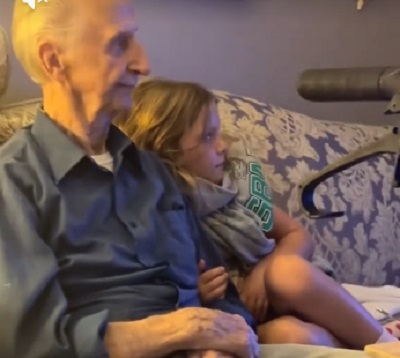
Viral TikTok video shows 7-year-old cuddling great-grandfather before he’s euthanized

Politicians should be honest about environmental pros and cons of electric vehicles
-
 Agriculture1 day ago
Why is Canada paying for dairy ‘losses’ during a boom?
-
 Automotive2 days ago
Ford’s EV Fiasco Fallout Hits Hard
-
 Alberta1 day ago
Alberta’s new diagnostic policy appears to meet standard for Canada Health Act compliance
-
 Business16 hours ago
State of the Canadian Economy: Number of publicly listed companies in Canada down 32.7% since 2010
-
 Alberta17 hours ago
Housing in Calgary and Edmonton remains expensive but more affordable than other cities
-
 Censorship Industrial Complex14 hours ago
Canadian university censors free speech advocate who spoke out against Indigenous ‘mass grave’ hoax
-
 Bruce Dowbiggin18 hours ago
Hunting Poilievre Covers For Upcoming Demographic Collapse After Boomers
-
 Censorship Industrial Complex1 day ago
Top constitutional lawyer warns against Liberal bills that could turn Canada into ‘police state’