
Daily Caller
Obama Made Watergate Look Like A Parking Ticket



From the Daily Caller News Foundation
Richard Nixon resigned in disgrace for a third-rate burglary he tried to cover up. Barack Obama weaponized the federal government against his political enemies – and the media gave him a Nobel Peace Prize and a Netflix deal.
When historians rank presidential scandals, they love to circle back to Watergate. But in terms of long-lasting damage to the rule of law and public trust, nothing Nixon did even touches what happened under Obama. The left’s favorite president didn’t just break norms – he shattered the constitutional guardrails designed to keep power in check, and, in doing so, made Watergate look like a parking ticket compared to his crimes.
Start with the IRS scandal. Obama’s IRS targeted conservative nonprofits – especially Tea Party groups – right as they were mobilizing against his administration. The agency delayed their applications, demanded donor lists, and intimidated citizens into silence. Imagine the outrage if Donald Trump’s IRS had slow-walked liberal organizations like Black Lives Matter or Planned Parenthood. There would have been wall-to-wall CNN coverage and impeachment calls within the hour.
Instead, Obama’s media allies downplayed it, calling it a “misstep” and a “bureaucratic error.” But make no mistake: this was the full force of the federal government being turned against everyday Americans for their political beliefs. And nobody at the top was held accountable.
Then came the spying. Under Obama, the FBI used phony opposition research funded by the Clinton campaign – the Steele Dossier – to justify surveillance of the Trump campaign. Obama’s DOJ and intelligence agencies signed off on secret FISA warrants against American citizens based on evidence they knew was sketchy at best and fabricated at worst. That’s not just unethical – it’s authoritarian.
Watergate was a bad scandal because Nixon tried to cover up a crime. Under Obama, the intelligence community itself became the weapon. It was a full-blown abuse of surveillance power – something straight out of a banana republic. And yet again, no real consequences.
And let’s not forget Fast and Furious. The Obama administration ran guns to Mexican cartels – yes, cartels – with the harebrained idea that they could trace the weapons back to criminal networks. Instead, those guns were used to kill people, including a U.S. Border Patrol agent. When Congress demanded documents, Obama’s Attorney General Eric Holder refused – and Obama shielded him with an executive privilege claim. If that had happened under a Republican president, we’d still be hearing about it in every history class.
The Obama White House also leaned heavily on journalists. James Rosen, a Fox News reporter, was labeled a criminal co-conspirator so the DOJ could secretly monitor his emails and movements. All while Obama claimed to be the most “transparent” president in history.

In Nixon’s case, at least the system worked. Investigative journalism exposed the wrongdoing, Congress took action, and Nixon resigned. But under Obama, the media largely looked the other way, Congress was stonewalled, and the public was fed spin instead of truth.
We were told Obama’s administration was “scandal-free.” That was the sales pitch. But the reality is, Obama normalized a dangerous trend: using the government itself as a political weapon. Not against foreign enemies. Against fellow Americans.
That precedent matters. Because once one side opens that door, the other side feels justified in doing the same. And the next thing you know, trust in our institutions is completely gone – and the republic starts to crack.
Watergate was a dark moment, yes. But Obama’s legacy of institutional abuse, political surveillance, and targeted intimidation has had far more dangerous consequences. It taught a generation of political leaders that the ends justify the means – if you have the right media allies.
If Nixon was forced to resign for a cover-up, then Obama’s behavior deserves far more than a glowing Netflix documentary. It deserves scrutiny, outrage, and, yes, accountability.
Because if we don’t call it what it was, we’re not just rewriting history.
We’re erasing the Constitution.
Brilyn Hollyhand is a 19-year-old political commentator, bestselling author of “One Generation Away: Why Now is the Time to Restore American Freedom”, and host of “The Brilyn Hollyhand Show”. For more of his hot takes you can follow him on socials @Brilyn Hollyhand or visit BrilynHollyhand.com.

From the Daily Caller News Foundation
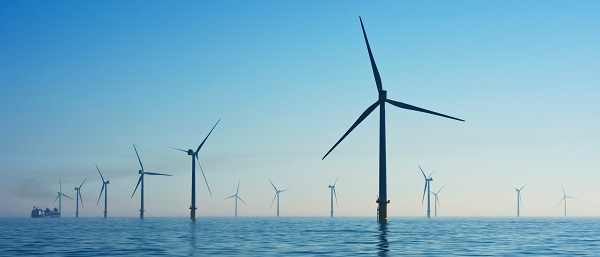
Interior Secretary Doug Burgum leveled the Trump administration’s latest broadside at the struggling U.S. offshore wind industry on Monday, ordering an immediate suspension of activities at the five big wind projects currently in development.
“Today we’re sending notifications to the five large offshore wind projects that are under construction that their leases will be suspended due to national security concerns,” Burgum told Fox Business host Maria Bartiromo. “During this time of suspension, we’ll work with the companies to try to find a mitigation. But we completed the work that President Trump has asked us to do. The Department of War has come back conclusively that the issues related to these large offshore wind programs have created radar interference that creates a genuine risk for the U.S.”
Predictably, reaction to Burgum’s order was immediate, with opponents of offshore wind praising the move, and industry supporters slamming it. In Semafor’s energy-related newsletter on Tuesday, energy and climate editor Tim McDowell quotes an unnamed ex-Energy Department official as claiming, “the Pentagon and intelligence services, which are normally sensitive to even extremely low-probability risks, never flagged this as a concern previously.” (RELATED: Trump Admin Orders Offshore Wind Farm Pauses Over ‘National Security Risks’)
Yet, a simple 30-second Google search finds a wealth of articles going back to as early as October 2014 discussing ways to mitigate the long-ago identified issue of interference with air defense radars by these enormous windmills, some of which are taller than the Eiffel Tower. It is a simple fact that the issue was repeatedly raised during the Biden Administration’s mad rush to speed these giant windmill operations into the construction phase by cutting corners in the permitting process.
In May, 2024, the Bureau of Ocean Energy Management’s (BOEM) own analysis related to the Atlantic Shores South project contains a detailed discussion of the potential impacts and suggests multiple ways to mitigate for them. An Oct. 29, 2024 memo of understanding between BOEM and the Biden Department of Defense calls for increased collaboration between the two departments as a response to concerns from members of Congress and others related to these very long-known potential impacts.
The Georgia Tech Research Institute published a study dated June 6, 2022 detailing “Radar Impacts, Potential Mitigation, from Offshore Wind Turbines.” That study was in fact commissioned by the National Academies of Sciences, Engineering, and Medicine (NASEM), a private non-profit that functions as an advisory group to the federal government.
Oh.
A report published in February 2024 by International Defense Security & Technology, Inc. describes the known issues thusly:
“Wind turbines can create clutter on radar screens in a number of ways. First, the metal towers and blades of wind turbines can reflect radar signals. This can create false returns on radar screens, which can make it difficult to detect and track real targets.
“Second, the rotating blades of wind turbines can create a Doppler effect on radar signals. This can cause real targets to appear to be moving at different speeds than they actually are. This can also make it difficult to track real targets.”
The simple Google search I conducted returns hundreds of articles dating all the way back to 2006 related to this long-known yet unresolved issue that could present a very real threat to national security. The fact that the Biden administration, in its religious zeal to speed these enormous offshore industrial projects into the construction phase, chose to downplay and ignore this threat in no way obligates his successor in office to commit the same dereliction of duty.
Some wind proponents are cynically raising concerns that a future Democratic administration could use this example as justification for cancelling oil and gas projects. It’s as if they’ve all forgotten about the previous four years of the Autopen presidency, which featured Joe Biden’s Day 1 order cancelling the 80% completed Keystone XL pipeline, a year-long moratorium on LNG export permitting, an attempt to set aside more than 200 million acres of the U.S. offshore from future leasing, and too many other destructive moves to detail here.
Again, a simple web search reveals that experts all over the world believe this is a real problem. If so, it needs to be addressed as a matter of national security. Burgum is intent on doing that. All half-baked talking points aside, this really isn’t complicated.
David Blackmon is an energy writer and consultant based in Texas. He spent 40 years in the oil and gas business, where he specialized in public policy and communications.
Daily Caller
While Western Nations Cling to Energy Transition, Pragmatic Nations Produce Energy and Wealth

From the Daily Caller News Foundation
History will likely remember 2025 as the year energy corporatists finally stopped pretending there is a climate crisis. For a decade, a bizarre theater of the absurd played out as titans of the oil and gas industry apologized for their core business while pledging allegiance to a “green transition” that existed mostly in the imaginations of Western bureaucrats. But the curtain has seemingly fallen.
ExxonMobil, one of the world’s largest energy producers, has slashed $10 billion from its low-carbon investment commitments through 2030. Simultaneously, the company announced that it expects $25 billion in earnings growth from 2024 to 2030 to be powered primarily by increases in oil and gas production, which will push daily output to 5.5 million barrels of oil equivalent by the end of the decade.
This is not a company abandoning climate responsibility but rather at last recognizing what has long been obvious: The path prescribed by the climate industrial complex is economically destructive and operationally impossible – even with massive government subsidies.
Dear Readers:
As a nonprofit, we are dependent on the generosity of our readers.
Please consider making a small donation of any amount here.
Thank you!
For years, the global energy strategy has been surreal. Companies that built the modern world on the back of energy-dense hydrocarbons indulged those celebrating the arrival of wind turbines and solar panels to power civilization. But reality, stubborn and unforgiving, has interrupted the psychedelic revelry.
ExxonMobil’s low-carbon investments will be paced to policy support and customer demand, says the company. That is corporate speak meaning that spending on green projects is paused unless the government – using our tax dollars – subsidizes the risk or until a market exists.
Megaprojects, once heralded as the future, are now in line for deferral. Why? Because without taxpayer handouts, the economics of trying to bury underground a plant food like carbon dioxide simply do not work – and defy common sense.
The energy sector is pivoting from a strategy of “grow clean at all costs” to “returns first, transition last.” “Green” projects are being relegated to a secondary capital bucket – a token for good PR instead of a core activity.
Europe’s Shell and Aker BP and Canada’s Enbridge have withdrawn from the Science Based Targets initiative to establish “science-based emissions reductions.” This was a retreat from what is described as a “credible, science-based net-zero framework” because there was neither credibility nor science. It was a political suicide pact. The energy giants looked at the cliff’s edge and refused to jump.
British multinational BP, having abandoned its promise to go “Beyond Petroleum,” has raised its oil and gas spending and softened its renewable targets.
ENEOS Holdings, a Japanese refiner, has discarded hydrogen production targets, with CEO Tomohide Miyata explaining that “the shift toward a carbon-neutral society appears to be slowing.”
These U-turns represent a renaissance in policy realism. Energy needs do not disappear because politicians make speeches at climate summits or corporations allocate funds to ESG programs or governments attempt to control consumption and choices of appliances and automobiles.
Second thoughts about an inevitably doomed “green” transition is a victory for the single mother in the U.S. trying to budget for winter heating and for the small business owner in the U.K. whose margins are crushed by one of the highest commercial electricity rates in the world. And for the billions of people in developing nations, this pivot could be salvation from generational poverty.
The question now is whether governments will recognize what corporations have made clear: that the energy transition was a fantasy infused with scientific language and draped in moralistic gingerbread. Or will they continue to increase subsidies and regulations?
Very likely, there will be a bifurcation: on the one hand, western bureaucracies, particularly in Europe, continuing an economic decline under mandates and taxes, and on the other, pragmatic governments, many of them in Asia, pursuing prosperity with fuels and technologies that work.
Vijay Jayaraj is a Science and Research Associate at the CO2 Coalition, Fairfax, Va. He holds an M.S. in environmental sciences from the University of East Anglia and a postgraduate degree in energy management from Robert Gordon University, both in the U.K., and a bachelor’s in engineering from Anna University, India. He served as a research associate with the Changing Oceans Research Unit at University of British Columbia, Canada.

Alberta Next Panel calls to reform how Canada works

Canadian government launches trial version of digital ID for certain licenses, permits
Georgia county admits illegally certifying 315k ballots in 2020 presidential election

End Supply Management—For the Sake of Canadian Consumers
-
International2 days ago
Georgia county admits illegally certifying 315k ballots in 2020 presidential election
-
 Energy2 days ago
‘The electric story is over’
-
 Energy2 days ago
The Top News Stories That Shaped Canadian Energy in 2025 and Will Continue to Shape Canadian Energy in 2026
-
Daily Caller1 day ago
US Halts Construction of Five Offshore Wind Projects Due To National Security
-
 Alberta1 day ago
Alberta Next Panel calls for less Ottawa—and it could pay off
-
Daily Caller1 day ago
While Western Nations Cling to Energy Transition, Pragmatic Nations Produce Energy and Wealth
-
 Fraser Institute2 days ago
Carney government sowing seeds for corruption in Ottawa
-
 Business2 days ago
What Do Loyalty Rewards Programs Cost Us?