
International
Obama Declines To Endorse Harris In Lengthy Statement On Biden’s Withdrawal


 From the Daily Caller News Foundation
By HAILEY GOMEZ
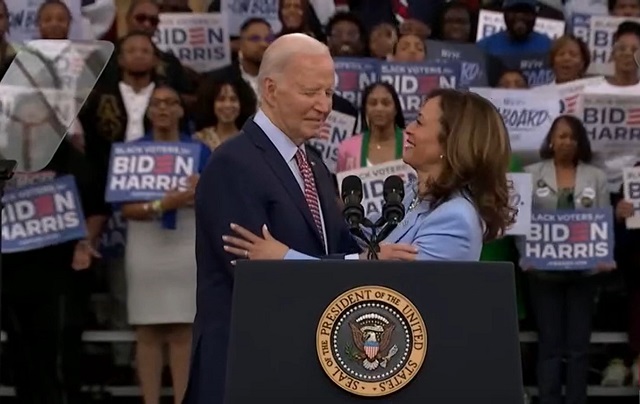
Former President Barack Obama declined to endorse Vice President Kamala Harris on Sunday in a lengthy statement on President Joe Biden dropping out of the presidential race.
Obama praised Biden’s career and time in office as president, and called him “a patriot of the highest order” following the former vice president’s decision to bow out of the 2024 presidential race.
Shortly after announcing he would not seek the Democratic nomination, Biden endorsed Harris. But rather than endorsing Harris, Obama wrote that he was confident Democratic leadership would “create a process from which an outstanding nominee emerges” at the upcoming Democratic National Committee convention in Chicago next month.
“I believe that Joe Biden’s vision of a generous, prosperous, and united America that provides opportunity for everyone will be on full display at the Democratic Convention in August. And I expect that every single one of us are prepared to carry that message of hope and progress forward into November and beyond,” Obama said.
“We will be navigating uncharted waters in the days ahead. But I have extraordinary confidence that the leaders of our party will be able to create a process from which an outstanding nominee emerges,” Obama continued. “I believe that Joe Biden’s vision of a generous, prosperous, and united America that provides opportunity for everyone will be on full display at the Democratic Convention in August. And I expect that every single one of us are prepared to carry that message of hope and progress forward into November and beyond,” Obama said.
Obama said Biden’s decision to withdraw from the race exemplified his former vice president’s love for the country.

“For him to look at the political landscape and decide that he should pass the torch to a new nominee is surely one of the toughest in his life. But I know he wouldn’t make this decision unless he believed it was right for America,” Obama wrote. “It’s a testament to Joe Biden’s love of country — and a historic example of a genuine public servant once again putting the interests of the American people ahead of his own that future generations of leaders will do well to follow.”
Joe Biden has been one of America’s most consequential presidents, as well as a dear friend and partner to me. Today, we’ve also been reminded – again – that he’s a patriot of the highest order.
Here’s my full statement: https://t.co/Bs2ZumFXxe
— Barack Obama (@BarackObama) July 21, 2024
The statement from the former president came shortly after both former Democratic presidential nominee Hillary Clinton and former President Bill Clinton announced they would be throwing their support behind Harris.
“We join millions of Americans in thanking President Biden for all he has accomplished, standing up for America time and again, with his North Star always being what’s best for the country. We are honored to join the President in endorsing Vice President Harris and will do whatever we can to support her,” the couple said in a joint statement on X.
Biden released his announcement to drop from the 2024 race Sunday afternoon on X, posting a letter in which he expressed his belief that it would be best for the Democratic Party and the country for him to “stand down and to focus solely on fulfilling my duties as president for the remainder of my term.” The president’s withdrawal comes after weeks of a steady trickle of Democratic lawmakers publicly urging him to step down.
Despite the concerns from his party, Biden and his team had insisted for weeks that he would stay in the race, despite reports indicating that major Democratic donors would pause contributions totaling an estimated $90 million to the largest pro-Biden super PAC if he remained the nominee.
Endorsements for Harris have rolled through from party lawmakers since the announcement, but some have proposed a “mini primary process” to select a nominee ahead of the Democratic convention in August.
(Featured image credit: Screen Capture/CSPAN)


A Minneapolis day care run by Somali immigrants is claiming that a mysterious break-in wiped out its most sensitive records, even as police say officers were never told that anything was actually stolen — a discrepancy that’s drawing sharp attention amid Minnesota’s spiraling child care fraud scandal.
According to the center’s manager, Nasrulah Mohamed, someone forced their way into Nakomis Day Care Center earlier this week by entering through a rear kitchen area, damaging a wall and accessing the office. Mohamed told reporters the intruder made off with “important documentation,” including children’s enrollment records, employee files, and checkbooks tied to the facility’s operations.
But a preliminary report from the Minneapolis Police Department tells a different story. Police say no loss was reported to officers at the time of the call. While the department confirmed the center later contacted police with additional information, an updated report was not immediately available.
Video released by the day care purporting to show damage from the incident depicts a hole punched through drywall inside what appears to be a utility closet, with stacks of cinder blocks visible just behind the wall — imagery that has only fueled skepticism as investigators continue to unravel what authorities have described as one of the largest fraud schemes ever tied to Minnesota’s human services programs.
Mohamed blamed the alleged break-in on fallout from a viral investigation by YouTuber Nick Shirley, who recently toured nearly a dozen Minnesota day care sites while questioning whether they were legitimately operating. Shirley’s video has racked up more than 110 million views. Mohamed insisted the coverage unfairly targeted Somali operators and said his center has since received what he described as hateful and threatening messages.
A manager at the Nokomis Daycare Center in Minneapolis detailed "extensive vandalism" at the facility during a Wednesday news conference.
Manager Nasrulah Mohamed reported that the suspect stole important employee and client documents, an incident he attributed to YouTuber Nick… pic.twitter.com/71nNTSXdTT
— FOX 9 (@FOX9) December 31, 2025
“This is devastating news, and we don’t know why this is targeting our Somali community,” Mohamed said, calling Shirley’s reporting false. Nakomis Day Care Center was not among the facilities featured in the video.
The break-in claim surfaced as law enforcement and federal officials continue to expose a massive fraud network centered in Minneapolis, involving food assistance, housing, and child care payments. Authorities say at least $1 billion has already been identified as fraudulent, with federal prosecutors warning the total could climb as high as $9 billion. Ninety-two people have been charged so far, 80 of them Somali immigrants.
Late Tuesday, the U.S. Department of Health and Human Services announced it was freezing all federal child care payments to Minnesota unless the state can prove the funds are being used lawfully. The payments totaled roughly $185 million in 2025 alone.
Minnesota Gov. Tim Walz, under intensifying scrutiny for allowing fraud to metastasize for years, responded by attacking the Trump administration rather than addressing the substance of the findings. “This is Trump’s long game,” Walz wrote on X Tuesday night, claiming the administration was politicizing fraud enforcement to defund programs — despite federal officials pointing to documented abuse and ongoing criminal cases.
Meanwhile, questions continue to swirl around facilities already flagged by investigators. Reporters visiting several sites highlighted in Shirley’s video found at least one — Quality “Learing” Center — operating with children inside despite state officials previously saying it had been shut down. The Minnesota Department of Children, Youth, and Families later issued a confusing clarification, saying the center initially reported it would close but later claimed it would remain open.
As Minnesota scrambles to respond to the funding freeze and mounting arrests, the conflicting accounts surrounding the Nakomis Day Care incident underscore a broader problem confronting state leaders: a system so riddled with gaps and contradictions that even basic facts — like whether records were actually stolen — are now in dispute, while taxpayers are left holding the bill.
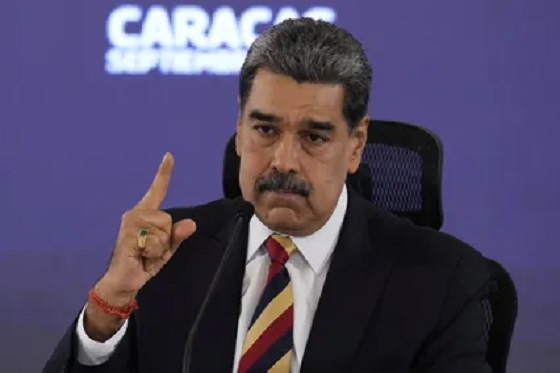
President Trump confirmed Friday that U.S. forces have carried out what he described as the first American land strike on a Venezuelan smuggling facility, marking a significant escalation in his administration’s campaign against narco-terror networks tied to the regime of Nicolás Maduro.
The disclosure came unexpectedly during a live radio broadcast on New York’s WABC Radio, when billionaire businessman and guest host John Catsimatidis told listeners his phone was ringing mid-segment — and that the caller was the president. Catsimatidis, who was filling in on Sid and Friends in the Morning, said he had been exchanging text messages with Trump the night before about U.S. military action against Islamic State targets in northern Nigeria. Trump, he said, decided to call in unannounced to discuss a range of global security issues, including maritime drug interdictions in the Caribbean and Pacific.
During that conversation, Trump revealed that U.S. forces had already struck a key Venezuelan smuggling hub on land. “I don’t know if you read it or saw it — they have a big plant or a big facility where the ships come from,” Trump said on air. “Two nights ago we knocked that out. So we hit them very hard.”
The president did not identify the location of the facility or detail how the operation was carried out. Still, the comment appeared to confirm what Trump had been signaling publicly for weeks — that his crackdown on Venezuelan narco-terror operations would soon move beyond sea interdictions. Trump ordered U.S. forces to begin targeting drug-running boats in September and has repeatedly warned that land-based operations were coming.
In a Thanksgiving Day call with U.S. military personnel, Trump said efforts to stop Venezuelan traffickers “by land” would begin “very soon,” adding that “the land is easier.” He reiterated that message on December 11, telling reporters at the White House that land operations were imminent. If the timeline Trump laid out Friday is accurate, the strike took place less than two weeks after those remarks.
The left-leaning New York Times later reported that unnamed officials had confirmed the strike occurred but declined to provide specifics. According to the paper, U.S. officials would not disclose where the site was located, how it was targeted, or what precise role it played in drug trafficking, and there has been no public acknowledgment from Maduro’s government or other regional authorities.
Even with those details still under wraps, Trump’s remarks represent the clearest confirmation yet that U.S. military action against Venezuelan smuggling networks has expanded onto sovereign territory — a move that underscores how far his administration is willing to go to dismantle drug pipelines tied to hostile regimes in the Western Hemisphere.
Georgia county admits illegally certifying 315k ballots in 2020 presidential election
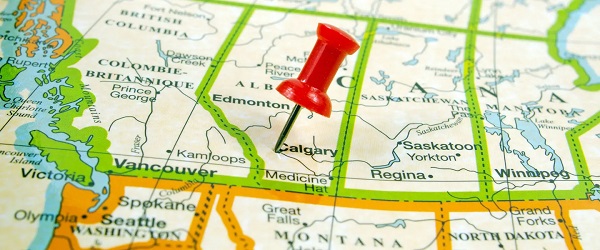
Alberta Next Panel calls to reform how Canada works

Canadian government launches trial version of digital ID for certain licenses, permits

End Supply Management—For the Sake of Canadian Consumers
-
International1 day ago
Georgia county admits illegally certifying 315k ballots in 2020 presidential election
-
 Alberta2 days ago
Alberta project would be “the biggest carbon capture and storage project in the world”
-
 Energy2 days ago
Canada’s debate on energy levelled up in 2025
-
 Haultain Research1 day ago
Sweden Fixed What Canada Won’t Even Name
-
 Business1 day ago
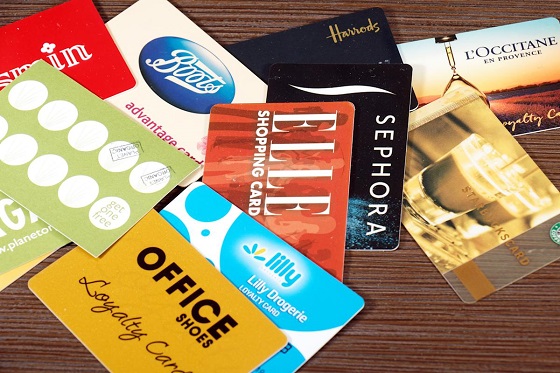
What Do Loyalty Rewards Programs Cost Us?
-
 Energy2 days ago
New Poll Shows Ontarians See Oil & Gas as Key to Jobs, Economy, and Trade
-
 Business2 days ago
Socialism vs. Capitalism
-
 Energy1 day ago
Why Japan wants Western Canadian LNG