
COVID-19
Nurses’ termination for refusing COVD shot was ‘unreasonable,’ arbitrator rules


From LifeSiteNews
‘They should have been offered the option of an unpaid leave of absence and must, therefore, be reinstated as Quinte employees if that be their wish,’ Ontario arbitrator James Hayes said.
Nine Ontario nurses fired for refusing the COVID shot could be reinstated thanks to a new ruling.
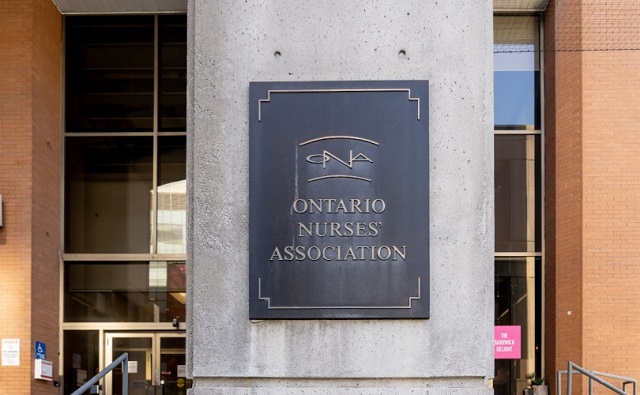
On February 28, Ontario arbitrator James Hayes ruled in favor of nine nurses, represented by the Ontario Nurses’ Association (ONA), who were fired by Quinte for refusing to take the experimental COVID vaccine.
“They should have been offered the option of an unpaid leave of absence and must, therefore, be reinstated as Quinte employees if that be their wish,” Hayes wrote.
“Nurses intent on remaining unvaccinated are a small minority everywhere but their employee rights may not be ignored,” he added.
Quinte Health, which oversees Belleville General Hospital, North Hastings Hospital in Bancroft, Prince Edward County Memorial Hospital in Picton, and Trenton Memorial Hospital, required all employees to be fully vaccinated against COVID-19 beginning in September 2021.
Under the new policy, Quinte’s employees were expected to provide proof of receiving their first dose by October 1, 2021 and the second dose by October 31, 2021.
Staff who refused the experimental shots faced automatic termination, resulting in nine nurses being let go in 2022, and one was fired after returning from parental leave in 2023.
According to an emailed statement from Quinte Health, the policy was enforced “as an important measure to protect health-care workers, prevent transmission, maintain health-care capacity, promote public health, and fulfill our ethical obligation to prioritize patient safety and well-being.”
Susan Rowe, vice president of people and strategy at Quinte Health, claimed that the decision to fire the unvaccinated nurses was due to recruitment concerns while admitting that Quinte Health had 100 job openings across its hospitals.
“If we did not terminate, we would have to hold positions for people and could only backfill those on a temporary basis,” she testified. “It would have been challenging to recruit … and retain individuals with temporary roles.”

She further explained that Quinte Health did not place the nurses on unpaid leave because “we did not foresee any short or mid-term change for a vaccine requirement.”
Despite the vaccine mandate, hospital statistics from Quinte Health “indicated that of the 335 staff infections between April 2021 and March 2022, only 60 were between April and December 2021. The other 275 (and likely some of the 60) were with a fully vaccinated workforce.”
After the arbitrator’s ruling, Quinte Health announced that it “respects the arbitrator’s ruling and will work with our ONA partners on next steps.”
“Hopefully, the ruling will lead to more hospitals abandoning their vaccine mandates,” an Ontario nurse told LifeSiteNews under the condition of anonymity. “Considering the nursing shortages across Canada, it would be amazing if more nurses could return to work.”
A recent Health Canada memo revealed that a shortage of 90,000 doctors, nurses and other front-line healthcare workers has caused a “health worker crisis” in Canada.
As a result of the healthcare worker shortage, wait times to receive care in Canada have increased to an average of 27.7 weeks, causing some to despair and end their lives via euthanasia rather than wait for treatment.
Currently, vaccine mandates for healthcare workers are still in place in many jurisdictions across Canada despite a critical staff shortage in many hospitals. While some provincial governments have lifted their mandates, a number of hospitals still require the experimental vaccine as a condition of employment.
Additionally, a recently unveiled survey found that a significant number of Canadian healthcare workers, including most nurses, were hesitant to take the experimental COVID shots and only did so because it was mandated across the sector.
However, many healthcare workers have refused the vaccine and are appealing the mandates. In November, hundreds of British Columbia healthcare workers joined together to sue Provincial Health Officer Dr. Bonnie Henry for ongoing COVID shot mandates preventing them from working.
Similarly, Ontario pro-freedom Dr. Mark Trozzi plans to appeal after he was stripped of his license for critiquing the mainstream narrative around the COVID-19 so-called “pandemic” and the associated vaccines.

From LifeSiteNews
A judge ruled that the Ontario Court of Justice is already ‘satisfied’ with Chris Barber’s sentence and taking away his very livelihood would be ‘disproportionate.’
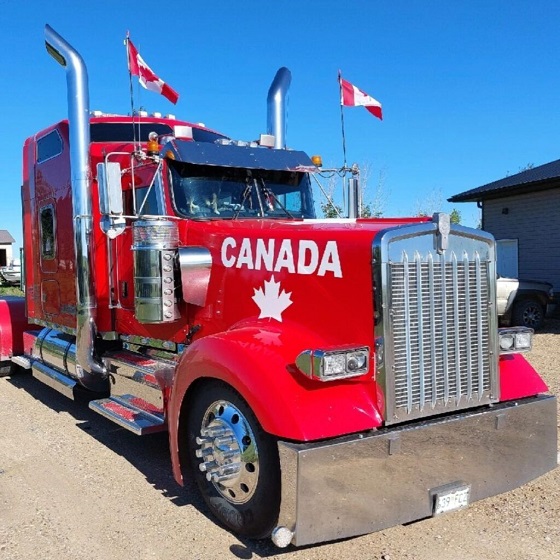
A Canadian judge has dismissed a demand from Canadian government lawyers to seize Freedom Convoy leader Chris Barber’s “Big Red” semi-truck.
On Friday, Ontario Court of Justice Judge Heather Perkins-McVey denied the Crown’s application seeking to forfeit Barber’s truck.
She ruled that the court is already “satisfied” with Barber’s sentence and taking away his very livelihood would be “disproportionate.”
“This truck is my livelihood,” said Barber in a press release sent to LifeSiteNews.
“Trying to permanently seize it for peacefully protesting was wrong, and I’m relieved the court refused to allow that to happen,” he added.
Criminal defense lawyer Marwa Racha Younes was welcoming of the ruling as well, stating, “We find it was the right decision in the circumstances and are happy with the outcome.”
John Carpay, president of the Justice Centre for Constitutional Freedoms (JCCF), said the decision is “good news for all Canadians who cherish their Charter freedom to assemble peacefully.”
READ: Freedom Convoy protester appeals after judge dismissed challenge to frozen bank accounts
“Asset forfeiture is an extraordinary power, and it must not be used to punish Canadians for participating in peaceful protest,” he added in the press release.
As reported recently by LifeSiteNews, the Canadian government claimed that Barber’s truck is an “offence-related property” relating to his involvement in the 2022 protests against Canada’s COVID mandates.
At this time, the court ruling ends any forfeiture proceedings for the time being, however Barber will continue to try and appeal his criminal conviction and house arrest sentence.
Barber’s truck, a 2004 Kenworth long-haul he uses for business, was a focal point in the 2022 protests. He drove it to Ottawa, where it was parked for an extended period of time, but he complied when officials asked him to move it.
On October 7, 2025, after a long trial, Ontario Court Justice Perkins-McVey sentenced Barber and Tamara Lich, the other Freedom Convoy leader, to 18 months’ house arrest. They had been declared guilty of mischief for their roles as leaders of the 2022 protest against COVID mandates, and as social media influencers.
Lich and Barber have filed appeals of their own against their house arrest sentences, arguing that the trial judge did not correctly apply the law on their mischief charges.
Government lawyers for the Crown have filed an appeal of the acquittals of Lich and Barber on intimidation charges.
The pair’s convictions came after a nearly two-year trial despite the nonviolent nature of the popular movement.
From LifeSiteNews
Protestor Evan Blackman’s legal team argues Trudeau’s Emergencies Act-based bank account freezes were punitive state action tied directly to protest participation.
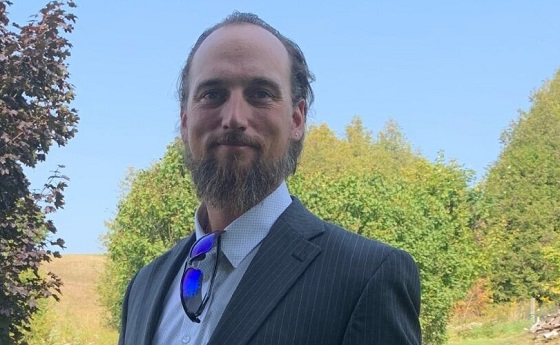
A Freedom Convoy protester whose bank accounts were frozen by the Canadian government says a judge erred after his ruling did not consider the fact that the funds were frozen under the Emergencies Act, as grounds for a stay of proceedings.
In a press release sent out earlier this week, the Justice Centre for Constitutional Freedoms (JCCF) said that Freedom Convoy protestor Evan Blackman will challenge a court ruling in his criminal case via an appeal with the Ontario Superior Court of Justice.
“This case raises serious questions about how peaceful protest is treated in Canada and about the lasting consequences of the federal government’s unlawful use of the Emergencies Act,” noted constitutional lawyer Chris Fleury. “The freezing of protestors’ bank accounts was part of a coordinated effort to suppress dissent, and courts ought to be willing to scrutinize that conduct.”
Blackman was arrested on February 18, 2022, during the police crackdown on Freedom Convoy protests against COVID restrictions, which was authorized by the Emergencies Act (EA). The EA was put in place by former Prime Minister Justin Trudeau’s Liberal government, which claimed the protests were violent, despite no evidence that this was the case.
Blackman’s three bank accounts with TD Bank were frozen due to his participation in the Freedom Convoy, following a directive ordered by Trudeau.
As reported by LifeSiteNews, in November of this year, Blackman was convicted at his retrial even though he had been acquitted at his original trial. In 2023, Blackman’s “mischief” and “obstructing police” charges were dismissed by a judge due to lack of evidence and the “poor memory of a cop regarding key details of the alleged criminal offences.”
His retrial resulted in Blackman getting a conditional discharge along with 12 months’ probation and 122 hours of community service, along with a $200 victim fine surcharge.
After this, Blackman’s application for a stay of proceedings was dismissed by the court. He had hoped to have his stay of proceedings, under section 24(1) of the Charter of Rights and Freedoms, allowed. However, the judge ruled that the freezing of his bank accounts was legally not related to his arrest, and because of this, the stay of proceedings lacked standing.
The JCCF disagreed with this ruling, noting, it “stands in contrast to a Federal Court decision finding that the government’s invocation of the Emergencies Act was unreasonable and violated Canadians’ Charter rights, including those targeted by the financial measures used against Freedom Convoy protestors.”
As of press time, a hearing date has not been scheduled.
In 2024, Federal Court Justice Richard Mosley ruled that Trudeau was “not justified” in invoking the Emergencies Act.
In early 2022, the Freedom Convoy saw thousands of Canadians from coast to coast come to Ottawa to demand an end to COVID mandates in all forms. Despite the peaceful nature of the protest, Trudeau’s federal government enacted the EA in mid-February.
After the protesters were cleared out, which was achieved through the freezing of bank accounts of those involved without a court order as well as the physical removal and arrest of demonstrators, Trudeau revoked the EA on February 23, 2022.


Death by a thousand clicks – government censorship of Canada’s internet

Chinese Billionaire Tried To Build US-Born Baby Empire As Overseas Elites Turn To American Surrogates
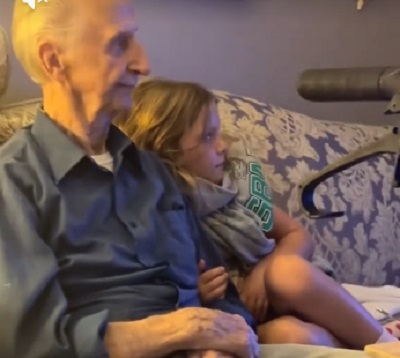
Viral TikTok video shows 7-year-old cuddling great-grandfather before he’s euthanized

Politicians should be honest about environmental pros and cons of electric vehicles
-
 Agriculture1 day ago
Why is Canada paying for dairy ‘losses’ during a boom?
-
 Automotive2 days ago
Ford’s EV Fiasco Fallout Hits Hard
-
 Alberta2 days ago
Alberta’s new diagnostic policy appears to meet standard for Canada Health Act compliance
-
 Business18 hours ago
State of the Canadian Economy: Number of publicly listed companies in Canada down 32.7% since 2010
-
 Bruce Dowbiggin20 hours ago
Hunting Poilievre Covers For Upcoming Demographic Collapse After Boomers
-
 Alberta19 hours ago
Housing in Calgary and Edmonton remains expensive but more affordable than other cities
-
 Censorship Industrial Complex16 hours ago
Canadian university censors free speech advocate who spoke out against Indigenous ‘mass grave’ hoax
-
 Censorship Industrial Complex2 days ago
Top constitutional lawyer warns against Liberal bills that could turn Canada into ‘police state’