
Automotive
Nissan, Honda scrap $60B merger talks amid growing tensions




Quick Hit:
Nissan is reportedly abandoning merger talks with Honda, scrapping a $60 billion deal that would have created the world’s third-largest automaker. The collapse raises questions about Nissan’s turnaround strategy as it faces challenges from electric vehicle competitors and potential U.S. tariffs.
Key Details:
- Nissan shares dropped over 4% following the news, while Honda’s stock surged more than 8%, signaling investor relief.
- Honda reportedly proposed making Nissan a subsidiary, a move Nissan rejected as it was initially framed as a merger of equals.
- Nissan is struggling with financial challenges and the transition to EVs, still reeling from the 2018 scandal involving former chairman Carlos Ghosn.
Diving Deeper:

Merger talks between Nissan and Honda have collapsed, according to sources, after months of negotiations to form an auto giant capable of competing with Chinese EV makers like BYD. The proposed deal, valued at over $60 billion, would have created the world’s third-largest automaker. However, differences in strategy and control ultimately derailed the discussions.
Reports indicate that Honda, Japan’s second-largest automaker, wanted Nissan to become a subsidiary rather than an equal merger partner. Nissan balked at the idea, leading to the collapse of negotiations. Honda’s market valuation of approximately $51.9 billion dwarfs Nissan’s, which may have fueled concerns about control. The failure of talks sent Nissan’s stock tumbling more than 4% in Tokyo, while Honda’s shares rose over 8%, reflecting investor confidence in Honda’s independent strategy.
Nissan, already in the midst of a turnaround plan involving 9,000 job cuts and a 20% reduction in global capacity, now faces mounting pressure to restructure on its own. Analysts warn that the failed merger raises uncertainty about Nissan’s ability to compete in an industry rapidly shifting toward EVs. “Investors may get concerned about Nissan’s future [and] turnaround,” Morningstar analyst Vincent Sun said.
Complicating matters further, Nissan faces heightened risks from U.S. tariffs under President Donald Trump’s trade policies. Potential tariffs on vehicles manufactured in Mexico could hit Nissan harder than competitors like Honda and Toyota. The stalled deal also impacts Nissan’s existing alliance with Renault, which had expressed openness to the merger. Renault holds a 36% stake in Nissan, including 18.7% through a French trust.
While both Nissan and Honda have stated they will finalize a direction by mid-February, the collapse of this deal signals deep divisions in Japan’s auto industry. With Nissan’s financial struggles and the growing dominance of Chinese EV makers, the company must now navigate an increasingly challenging market without external support.


From the Daily Caller News Foundation
I’ve written frequently here in recent years about the financial fiasco that has hit Ford Motor Company and other big U.S. carmakers who made the fateful decision to go in whole hog in 2021 to feed at the federal subsidy trough wrought on the U.S. economy by the Joe Biden autopen presidency. It was crony capitalism writ large, federal rent seeking on the grandest scale in U.S. history, and only now are the chickens coming home to roost.
Ford announced on Monday that it will be forced to take $19.5 billion in special charges as its management team embarks on a corporate reorganization in a desperate attempt to unwind the financial carnage caused by its failed strategies and investments in the electric vehicles space since 2022.
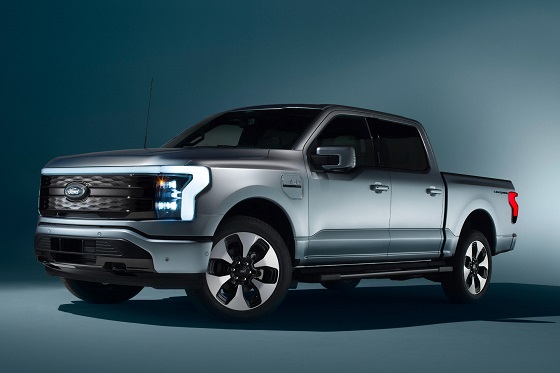
Cancelled is the Ford F-150 Lightning, the full-size electric pickup that few could afford and fewer wanted to buy, along with planned introductions of a second pricey pickup and fully electric vans and commercial vehicles. Ford will apparently keep making its costly Mustang Mach-E EV while adjusting the car’s features and price to try to make it more competitive. There will be a shift to making more hybrid models and introducing new lines of cheaper EVs and what the company calls “extended range electric vehicles,” or EREVs, which attach a gas-fueled generator to recharge the EV batteries while the car is being driven.
Dear Readers:
As a nonprofit, we are dependent on the generosity of our readers.
Please consider making a small donation of any amount here.
Thank you!
“The $50k, $60k, $70k EVs just weren’t selling; We’re following customers to where the market is,” Farley said. “We’re going to build up our whole lineup of hybrids. It’s gonna be better for the company’s profitability, shareholders and a lot of new American jobs. These really expensive $70k electric trucks, as much as I love the product, they didn’t make sense. But an EREV that goes 700 miles on a tank of gas, for 90% of the time is all-electric, that EREV is a better solution for a Lightning than the current all-electric Lightning.”
It all makes sense to Mr. Farley, but one wonders how much longer the company’s investors will tolerate his presence atop the corporate management pyramid if the company’s financial fortunes don’t turn around fast.
To Ford’s and Farley’s credit, the company has, unlike some of its competitors (GM, for example), been quite transparent in publicly revealing the massive losses it has accumulated in its EV projects since 2022. The company has reported its EV enterprise as a separate business unit called Model-E on its financial filings, enabling everyone to witness its somewhat amazing escalating EV-related losses since 2022:
• 2022 – Net loss of $2.2 billion
• 2023 – Net loss of $4.7 billion
• 2024 – Net loss of $5.1 billion
Add in the company’s $3.6 billion in losses recorded across the first three quarters of 2025, and you arrive at a total of $15.6 billion net losses on EV-related projects and processes in less than four calendar years. Add to that the financial carnage detailed in Monday’s announcement and the damage from the company’s financial electric boogaloo escalates to well above $30 billion with Q4 2025’s damage still to be added to the total.
Ford and Farley have benefited from the fact that the company’s lineup of gas-and-diesel powered cars have remained strongly profitable, resulting in overall corporate profits each year despite the huge EV-related losses. It is also fair to point out that all car companies were under heavy pressure from the Biden government to either produce battery electric vehicles or be penalized by onerous federal regulations.
Now, with the Trump administration rescinding Biden’s harsh mandates and canceling the absurdly unattainable fleet mileage requirements, Ford and other companies will be free to make cars Americans actually want to buy. Better late than never, as they say, but the financial fallout from it all is likely just beginning to be made public.
- David Blackmon is an energy writer and consultant based in Texas. He spent 40 years in the oil and gas business, where he specialized in public policy and communications.
From the Fraser Institute
By Annika Segelhorst and Elmira Aliakbari
According to Steven Guilbeault, former environment minister under Justin Trudeau and former member of Prime Minister Carney’s cabinet, “Switching to an electric vehicle is one of the most impactful things Canadians can do to help fight climate change.”
And the Carney government has only paused Trudeau’s electric vehicle (EV) sales mandate to conduct a “review” of the policy, despite industry pressure to scrap the policy altogether.
So clearly, according to policymakers in Ottawa, EVs are essentially “zero emission” and thus good for environment.
But is that true?
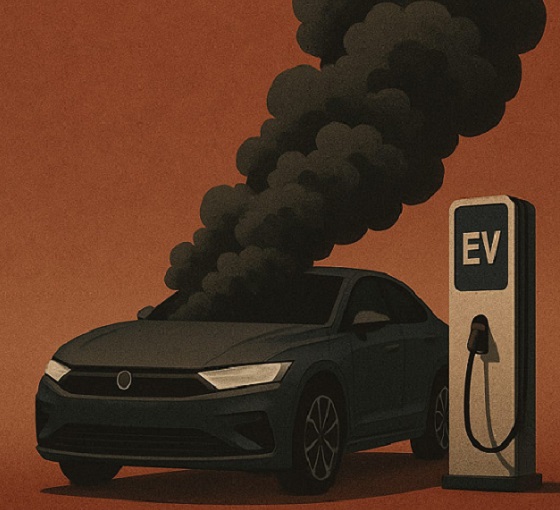
Clearly, EVs have some environmental advantages over traditional gasoline-powered vehicles. Unlike cars with engines that directly burn fossil fuels, EVs do not produce tailpipe emissions of pollutants such as nitrogen dioxide and carbon monoxide, and do not release greenhouse gases (GHGs) such as carbon dioxide. These benefits are real. But when you consider the entire lifecycle of an EV, the picture becomes much more complicated.
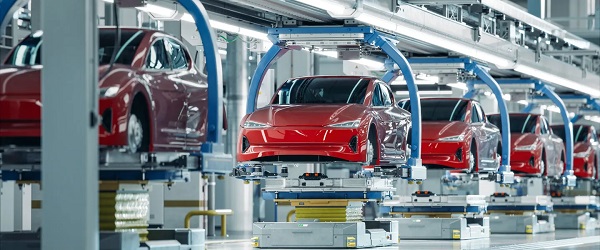
Unlike traditional gasoline-powered vehicles, battery-powered EVs and plug-in hybrids generate most of their GHG emissions before the vehicles roll off the assembly line. Compared with conventional gas-powered cars, EVs typically require more fossil fuel energy to manufacture, largely because to produce EVs batteries, producers require a variety of mined materials including cobalt, graphite, lithium, manganese and nickel, which all take lots of energy to extract and process. Once these raw materials are mined, processed and transported across often vast distances to manufacturing sites, they must be assembled into battery packs. Consequently, the manufacturing process of an EV—from the initial mining of materials to final assembly—produces twice the quantity of GHGs (on average) as the manufacturing process for a comparable gas-powered car.
Once an EV is on the road, its carbon footprint depends on how the electricity used to charge its battery is generated. According to a report from the Canada Energy Regulator (the federal agency responsible for overseeing oil, gas and electric utilities), in British Columbia, Manitoba, Quebec and Ontario, electricity is largely produced from low- or even zero-carbon sources such as hydro, so EVs in these provinces have a low level of “indirect” emissions.
However, in other provinces—particularly Alberta, Saskatchewan and Nova Scotia—electricity generation is more heavily reliant on fossil fuels such as coal and natural gas, so EVs produce much higher indirect emissions. And according to research from the University of Toronto, in coal-dependent U.S. states such as West Virginia, an EV can emit about 6 per cent more GHG emissions over its entire lifetime—from initial mining, manufacturing and charging to eventual disposal—than a gas-powered vehicle of the same size. This means that in regions with especially coal-dependent energy grids, EVs could impose more climate costs than benefits. Put simply, for an EV to help meaningfully reduce emissions while on the road, its electricity must come from low-carbon electricity sources—something that does not happen in certain areas of Canada and the United States.
Finally, even after an EV is off the road, it continues to produce emissions, mainly because of the battery. EV batteries contain components that are energy-intensive to extract but also notoriously challenging to recycle. While EV battery recycling technologies are still emerging, approximately 5 per cent of lithium-ion batteries, which are commonly used in EVs, are actually recycled worldwide. This means that most new EVs feature batteries with no recycled components—further weakening the environmental benefit of EVs.
So what’s the final analysis? The technology continues to evolve and therefore the calculations will continue to change. But right now, while electric vehicles clearly help reduce tailpipe emissions, they’re not necessarily “zero emission” vehicles. And after you consider the full lifecycle—manufacturing, charging, scrapping—a more accurate picture of their environmental impact comes into view.

Annika Segelhorst
Junior Economist

Elmira Aliakbari


Common Vaccines Linked to 38-50% Increased Risk of Dementia and Alzheimer’s

Trump DOJ seeks to quash Pfizer whistleblower’s lawsuit over COVID shots

Alberta introducing three “all-season resort areas” to provide more summer activities in Alberta’s mountain parks
The $50 Billion Question: EVs Never Delivered What Ottawa Promised
-
 Community2 days ago
Charitable giving on the decline in Canada
-
 Business2 days ago
Canada’s recent economic growth performance has been awful
-
 Alberta2 days ago
Canada’s New Green Deal
-
 armed forces2 days ago
Ottawa’s Newly Released Defence Plan Crosses a Dangerous Line
-
 Health1 day ago
Saskatchewan woman approved for euthanasia urged to seek medical help in Canada rather than US
-
 Indigenous1 day ago
Residential school burials controversy continues to fuel wave of church arsons, new data suggests
-
 Alberta1 day ago
Alberta’s huge oil sands reserves dwarf U.S. shale
-
 Business2 days ago
COP30 finally admits what resource workers already knew: prosperity and lower emissions must go hand in hand