
International
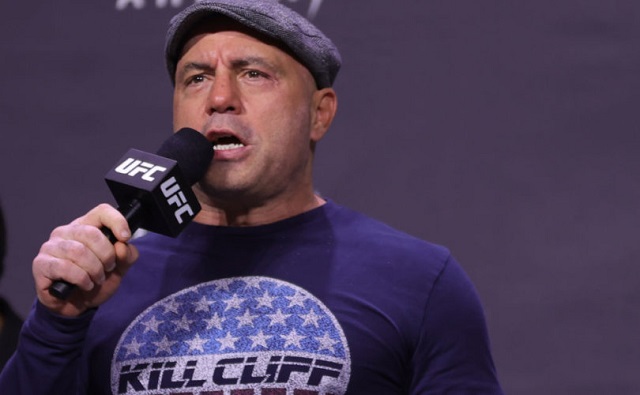
MSNBC caught deceptively editing clip that made it seem Joe Rogan was praising Kamala Harris


From LifeSiteNews
By Stephen Kokx
MSNBC has admitted to misleading viewers into thinking popular podcaster Joe Rogan was praising Vice President Kamala Harris when he was really expressing admiration for former Democratic Congresswoman Tulsi Gabbard.
Liberal cable news network MSNBC has admitted to misleading viewers into thinking popular podcaster Joe Rogan was praising Vice President Kamala Harris when he was really expressing admiration for former Democratic Congresswoman Tulsi Gabbard.
The original video of Rogan’s remarks was published on MSNBC’s TikTok account on August 2. It shows Rogan saying he believes “she can win” and that “she is a strong woman.”
The words “Joe Rogan predicts Harris will win the presidency” appeared on the top of the video in black letters.
As noted by both Rogan and Gabbard, Rogan was actually speaking about Gabbard’s own run for the presidency.
“One part of the video @joerogan was talking about Kamala; on another part of the video, he was talking about me,” Gabbard said in an X post.
“MSNBC combined it together to make it look like everything said was about Kamala and that he was endorsing her. Of course this is completely false.”

MSNBC is again EXPOSED as a propaganda machine for the Democrat Elite, and how they will brazenly try to deceive the American people.
One part of the video @joerogan was talking about Kamala; on another part of the video, he was talking about me. MSNBC combined it together to… pic.twitter.com/E8701iZ8dh
— Tulsi Gabbard 🌺 (@TulsiGabbard) August 2, 2024
Rogan himself said he was speaking about Gabbard and her being “a congresswoman for eight years and about how she served overseas [as part of] two deployments.”
He added that MSNBC didn’t “care about the truth” and that they “just want a narrative to get out there amongst enough people because most people are just surface readers.”
MSNBC issued a correction to the TikTok video and re-edited it so it was not misleading, further stating that they “removed an earlier version of this post that incorrectly implied Joe Rogan was talking more about Vice President Kamala Harris. He was referring to Tulsi Gabbard.”
While Gabbard has endorsed former President Donald Trump in his re-election bid, Rogan, who previously expressed appreciation for Robert F. Kennedy Jr., has so far resisted doing so, even though Kennedy has dropped out and endorsed Trump.
Trump did not take kindly to Rogan’s praise for Kennedy. In a Truth Social post in early August, Trump said, “It will be interesting to see how loudly Joe Rogan gets BOOED the next time he enters the UFC Ring??? MAGA2024.”
Rogan is the main color commentator for UFC, or Ultimate Fighting Championship, which is run by Trump supporter Dana White. Rogan shares insights and interviews fighters after their matches. Trump himself often attends the fights as a spectator to much fanfare.
Both former Democrats, Kennedy Jr. and Gabbard will help shape the potential next Trump administration, with the former president announcing their addition to his transition team. Both endorsed Trump following long-standing and highly publicized breaks from their former party over free speech, medical freedom, and foreign policy issues.


A Minneapolis day care that went viral last week as a symbol of alleged state-funded fraud suddenly appeared busy on Monday — a sharp departure from what neighbors say is its usual state of near-total inactivity.
The Quality “Learing” Center Minneapolis, flagged in a widely shared video by YouTuber Nick Shirley, had cars filling its parking lot and roughly 20 children coming and going as reporters observed the site. But a nearby resident said the scene was anything but normal.
“We’ve never seen kids go in there until today,” the local resident told the New York Post, describing the center as typically so quiet it appeared permanently closed. “That parking lot is empty all the time. I honestly thought the place was shut down.”
NEW: The Quality Learing Center in Minneapolis is now "trucking" in children after Nick Shirley's viral video, according to the New York Post.
The Post reports that the parking lot at the infamous Quality Learing Center is now "bustling with kids."
"We’ve never seen kids go… pic.twitter.com/K578UTvLXG
— Collin Rugg (@CollinRugg) December 30, 2025
The sudden activity stood in contrast to Shirley’s footage, posted Friday, which showed what appeared to be a dormant facility. In the clip, Shirley confronts a man at the door, pointing out that the center is reportedly approved for nearly 100 children but appeared completely empty at the time. No children were visible during his visit.
The center lists its operating hours as Monday through Thursday from 2 p.m. to 10 p.m. Ibrahim Ali, 26, who identified himself as the manager and said he is the owner’s son, told reporters Monday that Shirley arrived before the center opened. He dismissed the video as misleading.
“You don’t go to a coffee shop at 11 p.m. and say, ‘They’re not working,’” Ali said, arguing the timing explained the empty building. He claimed around 16 children were inside later that afternoon.
Ali also addressed the misspelled word “Learing” on the facility’s exterior sign — a detail that fueled online skepticism — blaming it on a graphic designer. He said the error would be corrected and downplayed its significance, though it was unclear how long the sign had been displayed.
While Quality Learning has not been publicly identified by federal authorities as a target, the center has drawn scrutiny amid a sprawling investigation into what officials say could be a multibillion-dollar fraud scheme involving government-funded programs meant to serve vulnerable populations. Estimates have put the alleged fraud as high as $9 billion, with businesses accused of billing the state for services never rendered.
When asked about the accusations, a woman opening the center at 2 p.m. Monday forcefully denied any wrongdoing. “We don’t have fraud. That’s a lie,” she said before refusing further comment and saying she wanted to speak with an attorney. Another employee became confrontational with reporters outside the building, recording on his phone and demanding they leave the area.
Elsewhere in Minneapolis, ICE agents visited ABC Learning Center, several miles from Quality Learning, requesting attendance records as part of the broader probe. Ahmed Hasan, the center’s director, said agents asked for two months of documentation to verify compliance.
Hasan said the heightened scrutiny has created fear within the local community, particularly among Somali immigrants, who he said feel unfairly targeted. He recalled a recent visit from Shirley’s team that initially caused panic among staff, who believed masked individuals at the door might be federal agents.
“That time ICE was coming for the Somali community. We were scared to open the door,” Hasan said, adding that the allegations surrounding day care fraud have become “a political game.”
As investigators continue digging into the alleged misuse of taxpayer dollars, the sudden appearance of children at a center long described as empty has only intensified questions — and skepticism — surrounding Minnesota’s oversight of publicly funded child care programs.
From the Frontier Centre for Public Policy
By Lee Harding
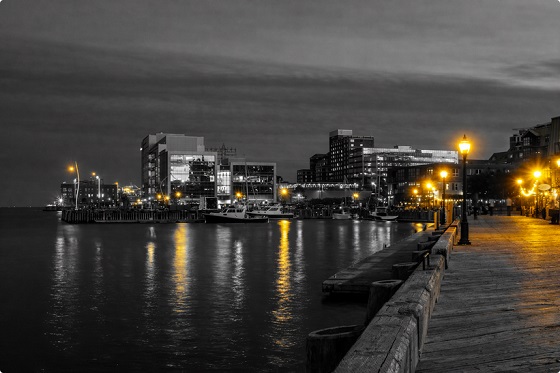
Alarming claims out of P.E.I. point to deep foreign interference, and the federal government keeps stalling. Why?
Explosive new allegations of Chinese interference in Prince Edward Island show Canada’s institutions may already be compromised and Ottawa has been slow to respond.
The revelations came out in August in a book entitled “Canada Under Siege: How PEI Became a Forward Operating Base for the Chinese Communist Party.” It was co-authored by former national director of the RCMP’s proceeds of crime program Garry Clement, who conducted an investigation with CSIS intelligence officer Michel Juneau-Katsuya.
In a press conference in Ottawa on Oct. 8, Clement referred to millions of dollars in cash transactions, suspicious land transfers and a network of corporations that resembled organized crime structures. Taken together, these details point to a vulnerability in Canada’s immigration and financial systems that appears far deeper than most Canadians have been told.
P.E.I.’s Provincial Nominee Program allows provinces to recommend immigrants for permanent residence based on local economic needs. It seems the program was exploited by wealthy applicants linked to Beijing to gain permanent residence in exchange for investments that often never materialized. It was all part of “money laundering, corruption, and elite capture at the highest levels.”
Hundreds of thousands of dollars came in crisp hundred-dollar bills on given weekends, amounting to millions over time. A monastery called Blessed Wisdom had set up a network of “corporations, land transfers, land flips, and citizens being paid under the table, cash for residences and property,” as was often done by organized crime.
Clement even called the Chinese government “the largest transnational organized crime group in the history of the world.” If true, the allegation raises an obvious question: how much of this activity has gone unnoticed or unchallenged by Canadian authorities, and why?
Dean Baxendale, CEO of the China Democracy Fund and Optimum Publishing International, published the book after five years of investigations.
“We followed the money, we followed the networks, and we followed the silence,” Baxendale said. “What we found were clear signs of elite capture, failed oversight and infiltration of Canadian institutions and political parties at the municipal, provincial and federal levels by actors aligned with the Chinese Communist Party’s United Front Work Department, the Ministry of State Security. In some cases, political donations have come from members of organized crime groups in our country and have certainly influenced political decision making over the years.”
For readers unfamiliar with them, the United Front Work Department is a Chinese Communist Party organization responsible for influence operations abroad, while the Ministry of State Security is China’s main civilian intelligence agency. Their involvement underscores the gravity of the allegations.
It is a troubling picture. Perhaps the reason Canada seems less and less like a democracy is that it has been compromised by foreign actors. And that same compromise appears to be hindering concrete actions in response.
One example Baxendale highlighted involved a PEI hotel. “We explore how a PEI hotel housed over 500 Chinese nationals, all allegedly trying to reclaim their $25,000 residency deposits, but who used a single hotel as their home address. The owner was charged by the CBSA, only to have the trial shut down by the federal government itself,” he said. The case became a key test of whether Canadian authorities were willing to pursue foreign interference through the courts.
The press conference came 476 days after Bill C-70 was passed to address foreign interference. The bill included the creation of Canada’s first foreign agent registry. Former MP Kevin Vuong rightly asked why the registry had not been authorized by cabinet. The delay raises doubts about Ottawa’s willingness to confront the problem directly.
“Why? What’s the reason for the delay?” Vuong asked.
Macdonald-Laurier Institute foreign policy director Christopher Coates called the revelations “beyond concerning” and warned, “The failures to adequately address our national security challenges threaten Canada’s relations with allies, impacting economic security and national prosperity.”
Former solicitor general of Canada and Prince Edward Island MP Wayne Easter called for a national inquiry into Beijing’s interference operations.
“There’s only one real way to get to the bottom of what is happening, and that would be a federal public inquiry,” Easter said. “We need a federal public inquiry that can subpoena witnesses, can trace bank accounts, can bring in people internationally, to get to the bottom of this issue.”
Baxendale called for “transparency, national scrutiny, and most of all for Canadians to wake up to the subtle siege under way.” This includes implementing a foreign influence transparency commissioner and a federal registry of beneficial owners.
If corruption runs as deeply as alleged, who will have the political will to properly respond? It will take more whistleblowers, changes in government and an insistent public to bring accountability. Without sustained pressure, the system that allowed these failures may also prevent their correction.
Lee Harding is a research fellow for the Frontier Centre for Public Policy.


Canadian government launches trial version of digital ID for certain licenses, permits

Alberta Next Panel calls to reform how Canada works
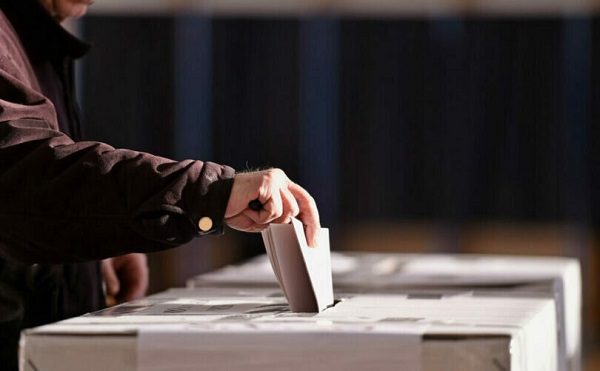
Georgia county admits illegally certifying 315k ballots in 2020 presidential election

End Supply Management—For the Sake of Canadian Consumers
-
International2 days ago
Georgia county admits illegally certifying 315k ballots in 2020 presidential election
-
 Energy2 days ago
‘The electric story is over’
-
 Business2 hours ago
ICYMI: Largest fraud in US history? Independent Journalist visits numerous daycare centres with no children, revealing massive scam
-
 Energy2 days ago
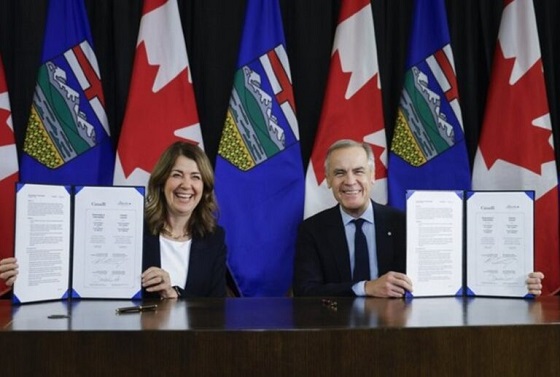
The Top News Stories That Shaped Canadian Energy in 2025 and Will Continue to Shape Canadian Energy in 2026
-
 Daily Caller1 day ago
US Halts Construction of Five Offshore Wind Projects Due To National Security
-
 Alberta1 day ago
Alberta Next Panel calls for less Ottawa—and it could pay off
-
 Daily Caller1 day ago
While Western Nations Cling to Energy Transition, Pragmatic Nations Produce Energy and Wealth
-
 Fraser Institute2 days ago
Carney government sowing seeds for corruption in Ottawa