
International
Media Suffers Complete MELTDOWN Over USAID

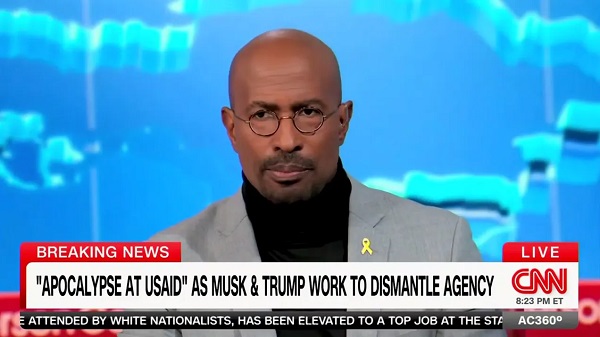


Reflect on this for a moment. Van Jones literally argued that the Chinese Communist Party is more reliable for humanitarian aid than the U.S. government—all because Trump dared to add oversight to a bloated, unaccountable agency.
President Trump has moved to dismantle USAID, merging it into the State Department under Marco Rubio to enforce oversight, stop taxpayer dollars from fueling corruption, and ensure U.S. aid serves American interests.
As expected, the media and Democrats are in full meltdown mode, framing Trump’s crackdown on wasteful spending as a “coup.”
This particular take came from MSNBC’s Joy Reid, who convinced herself that reining in USAID corruption was equivalent to overthrowing a government.
“If this were happening in any other country right now, I promise you, I’d be on the air calling it a coup,” she declared.
Join 100K+ Substack readers and 1.5 million 𝕏 users who follow the work of Vigilant Fox. Subscribe to Vigilant News for exclusive stories you won’t find anywhere else.
In an equally ridiculous media moment, former White House Press Secretary Jen Psaki suggested that Elon Musk targeted USAID because he was “uncomfortable” with how the agency combatted “corruption.”
“[USAID] not only leads on humanitarian assistance around the world but also works to combat corruption and foreign aid programs. I kind of see how that could make Elon Musk a bit uncomfortable,” Psaki said.
Perhaps Psaki is just panicking because Musk and Trump just shut down one of the Deep State’s favorite laundering machines.
After all, a bombshell FOIA request by the White Coat Waste Project revealed that Fauci’s NIAID and USAID funneled over $40 million in U.S. taxpayer funds to a Wuhan scientist researching bat coronavirus emergence—who later became “patient zero” for COVID-19.
The funding, which ended in 2019, backed risky gain-of-function research at the Wuhan Institute of Virology, raising major concerns that U.S. tax dollars may have helped create the infamous COVID-19 virus that triggered mass lockdowns, forced vaccinations, and an unprecedented global health crackdown.

The most hysterical take of the night came from CNN’s Van Jones, who claimed that Donald Trump is telling the rest of the world to “DIE” by adding oversight to USAID.

“Donald Trump says, ‘We don’t care. You go die.’ That’s the message from the United States government,” Jones declared, claiming that cutting off its massive foreign aid programs will lead to “people dying in very large numbers around the world.”
Jones warned that Trump’s actions against USAID open the door for China to say, “At least we’re a stable government who’s not going to leave you out here to die.”
Reflect on this for a moment. Van Jones literally argued that the Chinese Communist Party is more reliable for humanitarian aid than the U.S. government—all because Trump dared to add oversight to a bloated, unaccountable agency.
Now, that’s a very bold statement.
The only moment of clarity from the mainstream press came when Scott Jennings methodically schooled his fellow CNN panelists as they vainly tried to defend USAID.
“There is a difference between smart soft power and dumb spending by the leftwing ideologues who inhabit this bureaucracy,” Jennings quickly pointed out.
“There is a difference between soft power and soft stupidity. So whether you’re funding like DEI musicals in some country or transgender surgery somewhere or whatever, that is not what most Americans would say is an effective part of U.S. foreign policy,” he reminded everyone.
The media’s meltdown proves Elon Musk and Trump hit the Deep State right where it hurts.
When oversight is called a “coup,” and the people fixing corruption are painted as villains, you know the regime is in full panic mode.
Because if USAID was just another harmless aid agency, why are they melting down like their slush fund just got nuked?

Thanks for reading! If you enjoyed this post, subscribe for more reports like this one.

From the Fraser Institute
A report published by the Fraser Institute reaffirms just how much more economically free some states are compared with others. These are places where citizens are allowed to make more of their economic choices. Their taxes are lighter, and their regulatory burdens are easier. The benefits for workers, consumers and businesses have been clear for a long time.
There’s another group of states to watch: “movers” that have become much freer in recent decades. These are states that may not be the freest, but they have been cutting taxes and red tape enough to make a big difference.
How do they fare?
I recently explored this question using 22 years of data from the same Economic Freedom of North America index. The index uses 10 variables encompassing government spending, taxation and labour regulation to assess the degree of economic freedom in each of the 50 states.
Some states, such as New Hampshire, have long topped the list. It’s been in the top five for three decades. With little room to grow, the Granite State’s level of economic freedom hasn’t budged much lately. Others, such as Alaska, have significantly improved economic freedom over the last two decades. Because it started so low, it remains relatively unfree at 43rd out of 50.
Three states—North Carolina, North Dakota and Idaho—have managed to markedly increase and rank highly on economic freedom.
In 2000, North Carolina was the 19th most economically free state in the union. Though its labour market was relatively unhindered by the state’s government, its top marginal income tax rate was America’s ninth-highest, and it spent more money than most states.
From 2013 to 2022, North Carolina reduced its top marginal income tax rate from 7.75 per cent to 4.99 per cent, reduced government employment and allowed the minimum wage to fall relative to per-capita income. By 2022, it had the second-freest labour market in the country and was ninth in overall economic freedom.
North Dakota took a similar path, reducing its 5.54 per cent top income tax rate to 2.9 per cent, scaling back government employment, and lowering its minimum wage to better reflect local incomes. It went from the 27th most economically free state in the union in 2000 to the 10th freest by 2022.
Idaho saw the most significant improvement. The Gem State has steadily improved spending, taxing and labour market freedom, allowing it to rise from the 28th most economically free state in 2000 to the eighth freest in 2022.
We can contrast these three states with a group that has achieved equal and opposite distinction: California, Delaware, New Jersey and Maryland have managed to decrease economic freedom and end up among the least free overall.
What was the result?
The economies of the three liberating states have enjoyed almost twice as much economic growth. Controlling for inflation, North Carolina, North Dakota and Idaho grew an average of 41 per cent since 2010. The four repressors grew by just 24 per cent.
Among liberators, statewide personal income grew 47 per cent from 2010 to 2022. Among repressors, it grew just 26 per cent.
In fact, when it comes to income growth per person, increases in economic freedom seem to matter even more than a state’s overall, long-term level of freedom. Meanwhile, when it comes to population growth, placing highly over longer periods of time matters more.
The liberators are not unique. There’s now a large body of international evidence documenting the freedom-prosperity connection. At the state level, high and growing levels of economic freedom go hand-in-hand with higher levels of income, entrepreneurship, in-migration and income mobility. In economically free states, incomes tend to grow faster at the top and bottom of the income ladder.
These states suffer less poverty, homelessness and food insecurity and may even have marginally happier, more philanthropic and more tolerant populations.
In short, liberation works. Repression doesn’t.

From the Daily Caller News Foundation
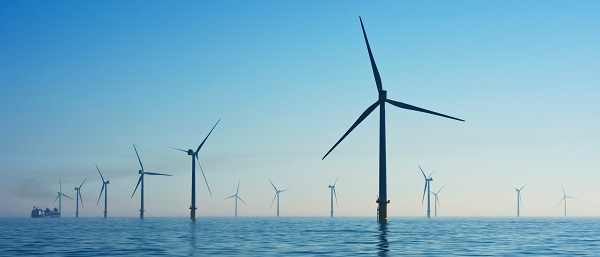
Interior Secretary Doug Burgum leveled the Trump administration’s latest broadside at the struggling U.S. offshore wind industry on Monday, ordering an immediate suspension of activities at the five big wind projects currently in development.
“Today we’re sending notifications to the five large offshore wind projects that are under construction that their leases will be suspended due to national security concerns,” Burgum told Fox Business host Maria Bartiromo. “During this time of suspension, we’ll work with the companies to try to find a mitigation. But we completed the work that President Trump has asked us to do. The Department of War has come back conclusively that the issues related to these large offshore wind programs have created radar interference that creates a genuine risk for the U.S.”
Predictably, reaction to Burgum’s order was immediate, with opponents of offshore wind praising the move, and industry supporters slamming it. In Semafor’s energy-related newsletter on Tuesday, energy and climate editor Tim McDowell quotes an unnamed ex-Energy Department official as claiming, “the Pentagon and intelligence services, which are normally sensitive to even extremely low-probability risks, never flagged this as a concern previously.” (RELATED: Trump Admin Orders Offshore Wind Farm Pauses Over ‘National Security Risks’)
Yet, a simple 30-second Google search finds a wealth of articles going back to as early as October 2014 discussing ways to mitigate the long-ago identified issue of interference with air defense radars by these enormous windmills, some of which are taller than the Eiffel Tower. It is a simple fact that the issue was repeatedly raised during the Biden Administration’s mad rush to speed these giant windmill operations into the construction phase by cutting corners in the permitting process.
In May, 2024, the Bureau of Ocean Energy Management’s (BOEM) own analysis related to the Atlantic Shores South project contains a detailed discussion of the potential impacts and suggests multiple ways to mitigate for them. An Oct. 29, 2024 memo of understanding between BOEM and the Biden Department of Defense calls for increased collaboration between the two departments as a response to concerns from members of Congress and others related to these very long-known potential impacts.
The Georgia Tech Research Institute published a study dated June 6, 2022 detailing “Radar Impacts, Potential Mitigation, from Offshore Wind Turbines.” That study was in fact commissioned by the National Academies of Sciences, Engineering, and Medicine (NASEM), a private non-profit that functions as an advisory group to the federal government.
Oh.
A report published in February 2024 by International Defense Security & Technology, Inc. describes the known issues thusly:
“Wind turbines can create clutter on radar screens in a number of ways. First, the metal towers and blades of wind turbines can reflect radar signals. This can create false returns on radar screens, which can make it difficult to detect and track real targets.
“Second, the rotating blades of wind turbines can create a Doppler effect on radar signals. This can cause real targets to appear to be moving at different speeds than they actually are. This can also make it difficult to track real targets.”
The simple Google search I conducted returns hundreds of articles dating all the way back to 2006 related to this long-known yet unresolved issue that could present a very real threat to national security. The fact that the Biden administration, in its religious zeal to speed these enormous offshore industrial projects into the construction phase, chose to downplay and ignore this threat in no way obligates his successor in office to commit the same dereliction of duty.
Some wind proponents are cynically raising concerns that a future Democratic administration could use this example as justification for cancelling oil and gas projects. It’s as if they’ve all forgotten about the previous four years of the Autopen presidency, which featured Joe Biden’s Day 1 order cancelling the 80% completed Keystone XL pipeline, a year-long moratorium on LNG export permitting, an attempt to set aside more than 200 million acres of the U.S. offshore from future leasing, and too many other destructive moves to detail here.
Again, a simple web search reveals that experts all over the world believe this is a real problem. If so, it needs to be addressed as a matter of national security. Burgum is intent on doing that. All half-baked talking points aside, this really isn’t complicated.
David Blackmon is an energy writer and consultant based in Texas. He spent 40 years in the oil and gas business, where he specialized in public policy and communications.

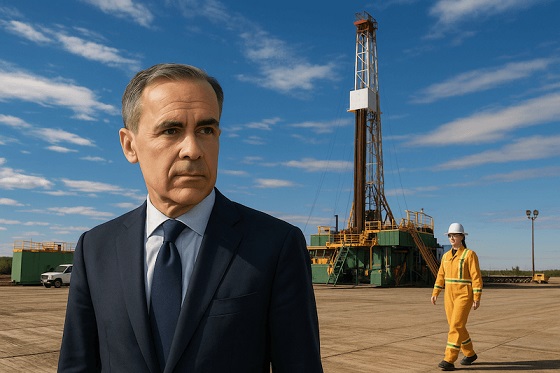
Canada’s sudden rediscovery of energy ambition has been greeted with a familiar charge: hypocrisy

Why is Canada paying for dairy ‘losses’ during a boom?

Ottawa’s Newly Released Defence Plan Crosses a Dangerous Line
Ottawa Pretends To Pivot But Keeps Spending Like Trudeau
-
armed forces1 day ago
Ottawa’s Newly Released Defence Plan Crosses a Dangerous Line
-
 espionage1 day ago
Carney Floor Crossing Raises Counterintelligence Questions aimed at China, Former Senior Mountie Argues
-
 Health1 day ago
All 12 Vaccinated vs. Unvaccinated Studies Found the Same Thing: Unvaccinated Children Are Far Healthier
-
 Energy1 day ago
75 per cent of Canadians support the construction of new pipelines to the East Coast and British Columbia
-
 Opinion1 day ago
Pope Leo XIV’s Christmas night homily
-
 armed forces1 day ago
Remembering Afghanistan and the sacrifices of our military families
-
 Fraser Institute12 hours ago
Carney government sowing seeds for corruption in Ottawa
-
 Fraser Institute1 day ago
How to talk about housing at the holiday dinner table