
Alberta
Maxime Bernier says it’s ‘astounding’ Alberta is ‘pushing’ COVID boosters, tells Danielle Smith to stop it


From LifeSiteNews
The People’s Party of Canada leader tells the Alberta government: ‘It’s over! Get over it!’
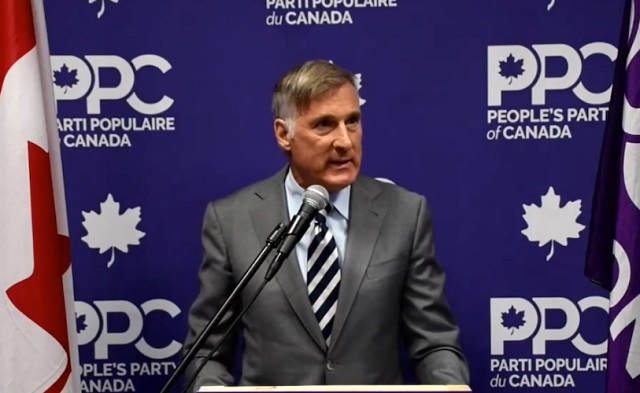
People’s Party of Canada (PPC) leader Maxime Bernier said Alberta Premier Danielle Smith should tell provincial health bureaucrats to “back off” and stop “pushing” the mRNA COVID boosters on “anyone,” considering a recent announcement from health officials recommending yet more COVID shots.
“I find it astounding that Alberta public health bureaucrats are still pushing the mRNA boosters on anyone, and especially on children who have never been at risk, almost two years after almost all other pandemic measures have been ended,” Bernier told LifeSiteNews.
“Danielle Smith’s government should tell its bureaucrats to back off and stop stupidly feeding a needless sense of fear surrounding the virus that lingers among certain groups of society. It’s over! Get over it!”
Earlier this week, officials from Alberta Health Services (AHS), whose chief medical officer throughout the COVID crisis, Dr. Deena Hinshaw, was fired by Smith in 2022, updated its COVID booster recommendations to every “three months” starting at babies only six months old.
“Starting April 15, 2024, select groups of Albertans at high risk of severe outcomes from COVID-19 will be eligible for an additional dose,” the AHS noted on its website.
AHS health officials still assert that all “vaccines are safe, effective and save lives,” and that one can get a COVID shot at the same time as a flu vaccine.
On April 16, Bernier commented on the AHS’s new COVID jab guideline changes on X, in which he asked, “What’s going on in Alberta with their “conservative” government?
Bernier, who was a firm opponent of both the COVID shots and mandates, told LifeSiteNews that AHS’s recommendations are puzzling, given “more and more scientific evidence is emerging of dangerous side effects when injecting from these experimental substances.”
“Even though these are only recommendations, and nothing is mandated, this ‘guidance’ by government agencies influences people’s decisions,” Bernier said.
AHS claims that the booster shots “are anticipated to provide a good immune response against currently circulating strains.”
Those under 18 still need written or verbal consent from their parents to get the shot.
AHS is recommending booster jabs for seniors, healthcare workers as well as those with underlying medical conditions. They also recommend that First Nations people and “members of racialized and other equity-denied communities,” as well as pregnant women get the shots as well.
The COVID shots were heavily promoted by the federal government as well as all provincial governments in Canada, with the Alberta government under former Premier Jason Kenney being no exception.
The mRNA shots themselves have been linked to a multitude of negative and often severe side effects in children.

Danielle Smith took over from Kenney as leader of the United Conservative Party (UCP) on October 11, 2022, after winning the leadership. Kenney was ousted due to low approval ratings and for reneging on promises not to lock Alberta down as well as enacting a vaccine passport. Smith was opposed to COVID jab mandates.
Bernier: It’s ‘deplorable’ some provinces still mandate COVID shot for Heathcare workers
While Alberta does not mandate the COVID shots for healthcare workers anymore, British Columbia still does as well as some health regions in Ontario, a fact that Bernier called “deplorable.”
“I find it deplorable that nurses, doctors and other healthcare workers in B.C. and Ontario still have to be vaccinated to work in hospitals and that thousands of them have not been reintegrated,” Bernier told LifeSiteNews.
“The authoritarian covid measures adopted by all governments have been traumatic enough for millions of Canadians. All of them should be lifted.”
Last year, LifeSiteNews reported on how the details of the Canadian federal government’s COVID-19 vaccine contract with Pfizer for millions of doses of the mRNA-based experimental shots were recently disclosed after being hidden for over three years.
The contract with Pfizer shows the government agreed to accept the unknown long-term safety and efficacy of the shots. The details of the Pfizer contract do not disclose how much the government spent on the jabs.
A bill introduced by Conservative Party leader Pierre Poilievre that would have given Canadians back their “bodily autonomy” by banning future jab mandates was voted down last year after Trudeau’s Liberals and other parties rejected it.
Adverse effects from the first round of COVID shots have resulted in a growing number of Canadians filing for financial compensation over injuries from the jabs via the federal Vaccine Injury Program (VISP).
VISP has already paid well over $11 million to those injured by COVID injections.
Earlier this year, LifeSiteNews reported on how officials from Health Canada have admitted that there is “residual plasmid DNA” in the COVID shots after a Conservative MP asked the agency through an official information request if the DNA fragments were in the shots.
As for Bernier, earlier this month he called out Poilievre for dodging a question regarding Canada’s participation in the United Nations’ pro-abortion Paris Climate Agreement.
Throughout most of the COVID crisis, Canadians from coast to coast were faced with COVID mandates, including jab dictates, put in place by both the provincial and federal governments.
After much pushback, thanks to the Freedom Convoy, most provincial mandates were eliminated by the summer of 2022.
There are currently multiple ongoing class-action lawsuits filed by Canadians adversely affected by COVID mandates.


From the Fraser Institute
By Nadeem Esmail and Mackenzie Moir
It’s an exciting time in Canadian health-care policy. But even the slew of new reforms in Alberta only go part of the way to using all the policy tools employed by high performing universal health-care systems.
For 2026, for the sake of Canadian patients, let’s hope Alberta stays the path on changes to how hospitals are paid and allowing some private purchases of health care, and that other provinces start to catch up.
While Alberta’s new reforms were welcome news this year, it’s clear Canada’s health-care system continued to struggle. Canadians were reminded by our annual comparison of health care systems that they pay for one of the developed world’s most expensive universal health-care systems, yet have some of the fewest physicians and hospital beds, while waiting in some of the longest queues.
And speaking of queues, wait times across Canada for non-emergency care reached the second-highest level ever measured at 28.6 weeks from general practitioner referral to actual treatment. That’s more than triple the wait of the early 1990s despite decades of government promises and spending commitments. Other work found that at least 23,746 patients died while waiting for care, and nearly 1.3 million Canadians left our overcrowded emergency rooms without being treated.
At least one province has shown a genuine willingness to do something about these problems.
The Smith government in Alberta announced early in the year that it would move towards paying hospitals per-patient treated as opposed to a fixed annual budget, a policy approach that Quebec has been working on for years. Albertans will also soon be able purchase, at least in a limited way, some diagnostic and surgical services for themselves, which is again already possible in Quebec. Alberta has also gone a step further by allowing physicians to work in both public and private settings.
While controversial in Canada, these approaches simply mirror what is being done in all of the developed world’s top-performing universal health-care systems. Australia, the Netherlands, Germany and Switzerland all pay their hospitals per patient treated, and allow patients the opportunity to purchase care privately if they wish. They all also have better and faster universally accessible health care than Canada’s provinces provide, while spending a little more (Switzerland) or less (Australia, Germany, the Netherlands) than we do.
While these reforms are clearly a step in the right direction, there’s more to be done.
Even if we include Alberta’s reforms, these countries still do some very important things differently.
Critically, all of these countries expect patients to pay a small amount for their universally accessible services. The reasoning is straightforward: we all spend our own money more carefully than we spend someone else’s, and patients will make more informed decisions about when and where it’s best to access the health-care system when they have to pay a little out of pocket.
The evidence around this policy is clear—with appropriate safeguards to protect the very ill and exemptions for lower-income and other vulnerable populations, the demand for outpatient healthcare services falls, reducing delays and freeing up resources for others.
Charging patients even small amounts for care would of course violate the Canada Health Act, but it would also emulate the approach of 100 per cent of the developed world’s top-performing health-care systems. In this case, violating outdated federal policy means better universal health care for Canadians.
These top-performing countries also see the private sector and innovative entrepreneurs as partners in delivering universal health care. A relationship that is far different from the limited individual contracts some provinces have with private clinics and surgical centres to provide care in Canada. In these other countries, even full-service hospitals are operated by private providers. Importantly, partnering with innovative private providers, even hospitals, to deliver universal health care does not violate the Canada Health Act.
So, while Alberta has made strides this past year moving towards the well-established higher performance policy approach followed elsewhere, the Smith government remains at least a couple steps short of truly adopting a more Australian or European approach for health care. And other provinces have yet to even get to where Alberta will soon be.
Let’s hope in 2026 that Alberta keeps moving towards a truly world class universal health-care experience for patients, and that the other provinces catch up.

From LifeSiteNews
It is not yet clear if the flag motion applies to other flags, such as LGBT ones.
Western Canada’s largest city has put in place what amounts to a ban on politically charged flags from flying at city-owned buildings.
“Calgary’s Flag Policy means any country recognized by Canada may have their flag flown at City Hall on their national day,” said Calgary’s new mayor Jeromy Farkas on X last month.
“But national flag-raisings are now creating division. Next week, we’ll move to end national flag-raisings at City Hall to keep this a safe, welcoming space for all.”
The motion to ban foreign flags from flying at government buildings was introduced on December 15 by Calgary councilor Dan McLean and passed by a vote of 8 to 7. He had said the previous policy to allow non-Canadian flags to fly, under former woke mayor Jyoti Gondek, was “source of division within our community.”
“In recent months, this practice has been in use in ways that I’ve seen have inflamed tensions, including instances where flag raisings have been associated with anti-Semitic behavior and messaging,” McLean said during a recent council meeting.
The ban on flag raising came after the Palestinian flag was allowed to be raised at City Hall for the first time.
Farkas, shortly after being elected mayor in the fall of 2025, had promised that he wanted a new flag policy introduced in the city.
It is not yet clear if the flag motion applies to other flags, such as LGBT ones.
Despite Farkas putting forth the motion, as reported by LifeSiteNews he is very much in the pro-LGBT camp. However, he has promised to focus only on non-ideological issues during his term.
McLean urged that City Hall must be a place of “neutrality, unity, and respect” for everyone.
“When City Hall becomes a venue for geopolitical expressions, it places the city in the middle of conflicts that are well beyond our municipal mandates,” he said.
As reported by LifeSiteNews, other jurisdictions in Canada are considering banning non-Canadian flags from flying over public buildings.
Recently a political party in British Columbia, OneBC, introduced legislation to ban non-domestic government flags at public buildings in British Columbia.
Across Canada there has also been an ongoing issue with so-called “Pride” flags being raised at schools and city buildings.


Death by a thousand clicks – government censorship of Canada’s internet

Chinese Billionaire Tried To Build US-Born Baby Empire As Overseas Elites Turn To American Surrogates

Viral TikTok video shows 7-year-old cuddling great-grandfather before he’s euthanized

Politicians should be honest about environmental pros and cons of electric vehicles
-
 Agriculture1 day ago
Why is Canada paying for dairy ‘losses’ during a boom?
-
 Automotive2 days ago
Ford’s EV Fiasco Fallout Hits Hard
-
 Alberta2 days ago
Alberta’s new diagnostic policy appears to meet standard for Canada Health Act compliance
-
 Business19 hours ago
State of the Canadian Economy: Number of publicly listed companies in Canada down 32.7% since 2010
-
 Bruce Dowbiggin21 hours ago
Hunting Poilievre Covers For Upcoming Demographic Collapse After Boomers
-
 Alberta20 hours ago
Housing in Calgary and Edmonton remains expensive but more affordable than other cities
-
 Censorship Industrial Complex17 hours ago
Canadian university censors free speech advocate who spoke out against Indigenous ‘mass grave’ hoax
-
 Censorship Industrial Complex2 days ago
Top constitutional lawyer warns against Liberal bills that could turn Canada into ‘police state’