
Alberta
Maritime provinces can enact policies to reduce reliance on Alberta… ehem.. Ottawa

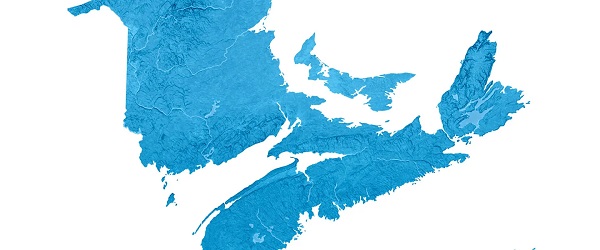

From the Fraser Institute
By Alex Whalen
Nova Scotia’s Finance Minister John Lohr recently took the rare step of publicly commenting on the province’s reliance on transfer payments from Ottawa. For decades, the Maritime provinces have heavily relied on federal transfers, and the equalization program in particular, to fund provincial budgets.
Ottawa collects taxes from across Canada and then redistributes money to different provinces and/or individual Canadians through various programs, including equalization. The MacDonald Notebook recently reported that Lohr told a Halifax Chamber of Commerce audience “we’re very aware that we are very dependent on transfer payments from other parts of the country… we can’t continue to take that for granted… we have the resources here.”
Lohr makes an important point. Consider equalization, a federal program that, in effect, provides payments to provinces with weaker economies and a lower ability to raise tax revenues, with the goal of ensuring all provinces can deliver comparable services at comparable tax rates.
Premiers in other provinces have often lobbied for changes including reform or outright elimination of the program. In fact, Newfoundland and Labrador (backed by Alberta, British Columbia and Saskatchewan) is currently challenging the program in court. These provinces believe the program is unfair given how equalization payments are calculated on an annual basis. And this is a serious political concern because at some point these provinces could force reforms to equalization that would result in reduced payments to recipient provinces.
Such a move would have a major impact on provincial finances in the Maritimes. In 2024/25, Prince Edward Island, New Brunswick and Nova Scotia are the three provinces most dependent on equalization funds, ranging between $3,718 per person in P.E.I. to $3,252 per person in Nova Scotia. Equalization represents between 19.4 per cent and 21.9 per cent of provincial revenue in these provinces. Put differently, without this federal transfer program, these provinces would lose roughly one-fifth of their revenue. Only Manitoba comes close to this level of reliance on equalization.

But why should the Maritime provinces wait to have reform forced upon them? Moreover, it shouldn’t be a goal to be a long-term recipient province for the same reason one wouldn’t want to be a long-term welfare recipient. Regardless of what Alberta and Saskatchewan wants, we in the east should want to be off equalization for our own reasons. Strengthening provincial economies in the Maritimes would raise living standards and incomes, while strengthening provincial finances and reducing reliance on programs such as equalization.
So, what can be done?
First, the Nova Scotia government’s recent shift in policy to permit more natural resource development in areas such as mining and natural gas is a strong first step. The province is sitting on billions of dollars in economic opportunity in this sector, while the sector’s wages tend to be among the highest of any industry. Other provinces should follow suit and develop their natural resource sectors.
More broadly, governments in the region should trim their bloated bureaucracies to make way for broad-based tax relief. The Maritime provinces have the largest governments in Canada, with government spending (at all levels—federal, provincial and local) exceeding 57 per cent of provincial economies. A consequence of this large government sector is some of the highest taxes in North America (across all types of taxation). Reducing the size of government to national-average levels would make room for substantial tax relief that would boost growth in the region.
Long-term dependence on federal transfers does not need to be a given in the Maritimes. With the right policy environment in place, the governments of Nova Scotia, P.E.I. and New Brunswick can strengthen their economies while reducing reliance on the rest of Canada. On this front, Minister Lohr is on the right track.

Alex Whalen
Director, Atlantic Canada Prosperity, Fraser Institute


From the Canadian Energy Centre
By Will Gibson
Oil sands could maintain current production rates for more than 140 years
Investor interest in Canadian oil producers, primarily in the Alberta oil sands, has picked up, and not only because of expanded export capacity from the Trans Mountain pipeline.
Enverus Intelligence Research says the real draw — and a major factor behind oil sands equities outperforming U.S. peers by about 40 per cent since January 2024 — is the resource Trans Mountain helps unlock.
Alberta’s oil sands contain 167 billion barrels of reserves, nearly four times the volume in the United States.
Today’s oil sands operators hold more than twice the available high-quality resources compared to U.S. shale producers, Enverus reports.
“It’s a huge number — 167 billion barrels — when Alberta only produces about three million barrels a day right now,” said Mike Verney, executive vice-president at McDaniel & Associates, which earlier this year updated the province’s oil and gas reserves on behalf of the Alberta Energy Regulator.
Already fourth in the world, the assessment found Alberta’s oil reserves increased by seven billion barrels.
Verney said the rise in reserves despite record production is in part a result of improved processes and technology.
“Oil sands companies can produce for decades at the same economic threshold as they do today. That’s a great place to be,” said Michael Berger, a senior analyst with Enverus.
BMO Capital Markets estimates that Alberta’s oil sands reserves could maintain current production rates for more than 140 years.
The long-term picture looks different south of the border.
The U.S. Energy Information Administration projects that American production will peak before 2030 and enter a long period of decline.
Having a lasting stable source of supply is important as world oil demand is expected to remain strong for decades to come.
This is particularly true in Asia, the target market for oil exports off Canada’s West Coast.
The International Energy Agency (IEA) projects oil demand in the Asia-Pacific region will go from 35 million barrels per day in 2024 to 41 million barrels per day in 2050.
The growing appeal of Alberta oil in Asian markets shows up not only in expanded Trans Mountain shipments, but also in Canadian crude being “re-exported” from U.S. Gulf Coast terminals.
According to RBN Energy, Asian buyers – primarily in China – are now the main non-U.S. buyers from Trans Mountain, while India dominates purchases of re-exports from the U.S. Gulf Coast. .
BMO said the oil sands offers advantages both in steady supply and lower overall environmental impacts.
“Not only is the resulting stability ideally suited to backfill anticipated declines in world oil supply, but the long-term physical footprint may also be meaningfully lower given large-scale concentrated emissions, high water recycling rates and low well declines,” BMO analysts said.

From Resource Works
Nuclear power a key piece of Western Canadian energy transition
Just reading the headlines, Canadians can be forgiven for thinking last week’s historic agreement between Alberta and Ottawa was all about oil and pipelines, and all about Alberta.
It’s much bigger than that.
The memorandum of understanding signed between Canada and Alberta is an ambitious Western Canadian industrial, energy and decarbonization strategy all in one.
The strategy aims to decarbonize the oil and gas sectors through large-scale carbon capture and storage, industrial carbon pricing, methane abatement, industrial electrification, and nuclear power.
It would also provide Canadian “cloud sovereignty” through AI computing power, and would tie B.C. and Saskatchewan into the Alberta dynamo with beefed up power transmission interties.
A new nuclear keystone
Energy Alberta’s Peace River Nuclear Power Project could be a keystone to the strategy.
The MOU sets January 1, 2027 as the date for a new nuclear energy strategy to provide nuclear power “to an interconnected market” by 2050.
Scott Henuset, CEO for Energy Alberta, was pleased to see the nuclear energy strategy included in the MOU.
“We, two years ago, went out on a limb and said we’re going to do this, really believing that this was the path forward, and now we’re seeing everyone coming along that this is the path forward for power in Canada,” he said.
The company proposes to build a four-unit, 4,800-megawatt Candu Monark power plant in Peace River, Alberta. That’s equivalent to four Site C dams worth of power.
The project this year entered a joint review by the Impact Assessment Agency and Canadian Nuclear Safety Commission.
If approved, and all goes to schedule, the first 1,000-MW unit could begin producing power in 2035.
Indigenous consultation and experienced leadership
“I think that having this strategy broadly points to a cleaner energy future, while at the same time recognizing that oil still is going to be a fundamental driver of economies for decades to come,” said Ian Anderson, the former CEO of Trans Mountain Corporation who now serves as an advisor to Energy Alberta.
Energy Alberta is engaged with 37 First Nations and Metis groups in Alberta on the project. Anderson was brought on board to help with indigenous consultation.
While working on the Trans Mountain pipeline expansion, Anderson spent a decade working with more than 60 First Nations in B.C. and Alberta to negotiate impact benefit agreements.
In addition to indigenous consultations, Anderson is also helping out with government relations, and has met with B.C. Energy Minister Adrian Dix, BC Hydro chairman Glen Clark and the head of Powerex to discuss the potential for B.C. beef up interties between the two provinces.
“I’ve done a lot of political work in B.C. over the decade, so it’s a natural place for me to assist,” Anderson said. “Hopefully it doesn’t get distracted by the pipeline debate. They’re two separate agendas and objectives.”
Powering the grid and the neighbours
B.C. is facing a looming shortage of industrial power, to the point where it now plans to ration it.
“We see our project as a backbone to support renewables, support industrial growth, support data centres as well as support larger interties to B.C. which will also strengthen the Canadian grid as a whole,” Henuset said.
Despite all the new power generation B.C. has built and plans to build, industrial demand is expected to far exceed supply. One of the drivers of that future demand is requests for power for AI data centres.
The B.C. government recently announced Bill 31 — the Energy Statutes Amendment Act – which will prioritize mines and LNG plants for industrial power.
Other energy intensive industries, like bitcoin mining, AI data centres and green hydrogen will either be explicitly excluded or put on a power connection wait list.
Beefed up grid connections with Alberta – something that has been discussed for decades – could provide B.C. with a new source of zero-emission power from Alberta, though it might have to loosen its long-standing anti-nuclear power stance.
Energy Minister Adrian Dix was asked in the Legislature this week if B.C. is open to accessing a nuclear-powered grid, and his answer was deflective.
“The member will know that we have been working with Alberta on making improvements to the intertie,” Dix answered. “Alberta has made commitments since 2007 to improve those connections. It has not done so.
“We are fully engaged with the province of Alberta on that question. He’ll also know that we are, under the Clean Electricity Act, not pursuing nuclear opportunities in B.C. and will not be in the future.”
The B.C. NDP government seems to be telling Alberta, “not only do we not want Alberta’s dirty oil, we don’t want any of its clean electricity either.”
Interconnected markets
Meanwhile, BC Hydro’s second quarter report confirms it is still a net importer of electricity, said Barry Penner, chairman of the Energy Futures Initiative.
“We have been buying nuclear power from the United States,” he said. “California has one operating power plant and there’s other nuclear power plants around the western half of the United States.”
In a recent blog post, Penner notes: “BC Hydro had to import power even as 7,291 megawatts of requested electrical service was left waiting in our province.”
If the NDP government wants B.C. to participate in an ambitious Western Canadian energy transition project, it might have to drop its holier-than-thou attitude towards Alberta, oil and nuclear power.
“We’re looking at our project as an Alberta project that has potential to support Western Canada as a whole,” Henuset said.
“We see our project as a backbone to support renewables, support industrial growth, support data centres, as well as support larger interties to B.C., which will also strengthen the Canadian grid as a whole.”
The investment challenge
The strategy that Alberta and Ottawa have laid out is ambitious, and will require tens of billions in investment.
“The question in the market is how much improvement in the regulatory prospects do we need to see in order for capital to be committed to the projects,” Anderson said.
The federal government will need to play a role in derisking the project, as it has done with the new Darlington nuclear project, with financing from the Canada Growth Fund and Canadian Infrastructure Bank.
“There will be avenues of federal support that will help derisk the project for private equity investors, as well as for banks,” Henuset said.
One selling point for the environmental crowd is that a combination of carbon capture and nuclear power could facilitate a blue and green hydrogen industry.
But to really sell this plan to the climate concerned, what is needed is a full assessment of the potential GHG reductions that may accrue from things like nuclear power, CCS, industrial carbon pricing and all of the other measures for decarbonization.
Fortunately, the MOU also scraps greenwashing laws that prevent those sorts of calculations from being done.
Resource Works News


Death by a thousand clicks – government censorship of Canada’s internet

Chinese Billionaire Tried To Build US-Born Baby Empire As Overseas Elites Turn To American Surrogates

Viral TikTok video shows 7-year-old cuddling great-grandfather before he’s euthanized

Politicians should be honest about environmental pros and cons of electric vehicles
-
Alberta1 day ago
Alberta’s huge oil sands reserves dwarf U.S. shale
-
Alberta1 day ago
Canada’s New Green Deal
-
 Energy20 hours ago
Canada’s sudden rediscovery of energy ambition has been greeted with a familiar charge: hypocrisy
-
 Business1 day ago
COP30 finally admits what resource workers already knew: prosperity and lower emissions must go hand in hand
-
 armed forces1 day ago
Ottawa’s Newly Released Defence Plan Crosses a Dangerous Line
-
 Business18 hours ago
Ottawa Pretends To Pivot But Keeps Spending Like Trudeau
-
 Indigenous1 day ago
Residential school burials controversy continues to fuel wave of church arsons, new data suggests
-
 Daily Caller19 hours ago
Paris Climate Deal Now Decade-Old Disaster