
Alberta
Made in Alberta! Province makes it easier to support local products with Buy Local program


Show your Alberta side. Buy Local. |
When the going gets tough, Albertans stick together. That’s why Alberta’s government is launching a new campaign to benefit hard-working Albertans.
Global uncertainty is threatening the livelihoods of hard-working Alberta farmers, ranchers, processors and their families. The ‘Buy Local’ campaign, recently launched by Alberta’s government, encourages consumers to eat, drink and buy local to show our unified support for the province’s agriculture and food industry.
The government’s ‘Buy Local’ campaign encourages consumers to buy products from Alberta’s hard-working farmers, ranchers and food processors that produce safe, nutritious food for Albertans, Canadians and the world.
“It’s time to let these hard-working Albertans know we have their back. Now, more than ever, we need to shop local and buy made-in-Alberta products. The next time you are grocery shopping or go out for dinner or a drink with your friends or family, support local to demonstrate your Alberta pride. We are pleased tariffs don’t impact the ag industry right now and will keep advocating for our ag industry.”
Alberta’s government supports consumer choice. We are providing tools to help folks easily identify Alberta- and Canadian-made foods and products. Choosing local products keeps Albertans’ hard-earned dollars in our province. Whether it is farm-fresh vegetables, potatoes, honey, craft beer, frozen food or our world-renowned beef, Alberta has an abundance of fresh foods produced right on our doorstep.
Quick facts
- This summer, Albertans can support local at more than 150 farmers’ markets across the province and meet the folks who make, bake and grow our food.
- In March 2023, the Alberta government launched the ‘Made in Alberta’ voluntary food and beverage labelling program to support local agriculture and food sectors.
- Through direct connections with processors, the program has created the momentum to continue expanding consumer awareness about the ‘Made in Alberta’ label to help shoppers quickly identify foods and beverages produced in our province.
- Made in Alberta product catalogue website
Related information



From the Fraser Institute
Recently, amid the backdrop of a teacher strike, an Alberta high school teacher began collecting signatures for a petition to end government funding of independent schools in the province. If she gets enough people to sign—10 per cent of the number of Albertans who voted in the last provincial election—Elections Alberta will consider launching a referendum about the issue.
In other words, the critical funding many Alberta families rely on for their children’s educational needs may be in jeopardy.
In Alberta, the provincial government partially funds independent schools and charter schools. The Alberta Teachers’ Association (ATA), whose members are currently on strike, opposes government funding of independent and charter schools.
But kids are not one-size-fits-all, and schools should reflect that reality, particularly in light of today’s increasing classroom complexity where different kids have different needs. Unlike government-run public schools, independent schools and charter schools have the flexibility to innovate and find creative ways to help students thrive.
And things aren’t going very well for all kids or teachers in government-run pubic school classrooms. According to the ATA, 93 per cent of teachers report encountering some form of aggression or violence at school, most often from students. Additionally, 85 per cent of unionized teachers face an increase in cognitive, social/emotional and behavioural issues in their classrooms. In 2020, one-quarter of students in Edmonton’s government-run public schools were just learning English, and immigration to Canada—and Alberta especially—has exploded since then. It’s not easy to teach a classroom of kids where a significant proportion do not speak English, many have learning disabilities or exceptional needs, and a few have severe behavioural problems.
Not surprisingly, demand for independent schools in Alberta is growing because many of these schools are designed for students with special needs, Autism, severe learning disabilities and ADHD. Some independent schools cater to students just learning English while others offer cultural focuses, expanded outdoor time, gifted learning and much more.
Which takes us back to the new petition—yet the latest attempt to defund independent schools in Alberta.
Wealthy families will always have school choice. But if the Alberta government wants low-income and middle-class kids to have the ability to access schools that fit them, too, it’s crucial to maintain—or better yet, increase—its support for independent and charter schools.
Consider a fictional Alberta family: the Millers. Their daughter, Lucy, is struggling at her local government-run public school. Her reading is below grade level and she’s being bullied. It’s affecting her self-esteem, her sleep and her overall wellbeing. The Millers pay their taxes. They don’t take vacations, they rent, and they haven’t upgraded their cars in many years. They can’t afford to pay full tuition for Lucy to attend an independent school that offers the approach to education she needs to succeed. However, because the Alberta government partially funds independent schools—which essentially means a portion of the Miller family’s tax dollars follow Lucy to the school of their choice—they’re able to afford the tuition.
The familiar refrain from opponents is that taxpayers shouldn’t pay for independent school tuition. But in fact, if you’re concerned about taxpayers, you should encourage school choice. If Lucy attends a government-run public school, taxpayers pay 100 per cent of her education costs. But if she attends an independent or charter school, taxpayers only pay a portion of the costs while her parents pay the rest. That’s why research shows that school choice saves tax dollars.
If you’re a parent with a child in a government-run public school in Alberta, you now must deal with another teacher strike. If you have a child in an independent or charter school, however, it’s business as usual. If Albertans are ever asked to vote on whether or not to end government funding for independent schools, they should remember that students are the most important stakeholder in education. And providing parents more choices in education is the solution, not the problem.

Paige MacPherson
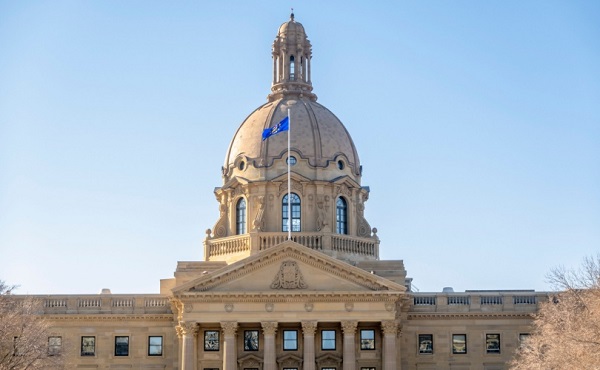
From LifeSiteNews
Under the proposed law, international treaties or accords signed by the federal government would not apply in Alberta unless approved through its own legislation.
Alberta’s Conservative government introduced a new law to protect “constitutional rights” that would allow it to essentially ignore International Agreements, including those by the World Health Organization (WHO), signed by the federal Liberal government.
The new law, Bill 1, titled International Agreements Act and introduced Thursday, according to the government, “draws a clear line: international agreements that touch on provincial areas of jurisdiction must be debated and passed into law in Alberta.”
Should the law pass, which is all but certain as Alberta Premier Danielle Smith’s Conservatives hold a majority government, it would mean that any international treaties or accords signed by the federal government would not apply in Alberta unless approved through its own legislation.
“As we return to the legislature, our government is focused on delivering on the mandate Albertans gave us in 2023 to stand up for this province, protect our freedoms and chart our path forward,” Smith said.
“We will defend our constitutional rights, protect our province’s interests and make sure decisions that affect Albertans are made by Albertans. The federal government stands at a crossroads. Work with us, and we’ll get things done. Overstep, and Alberta will stand its ground.”
According to the Alberta government, while the feds have the “power to enter into international agreements on behalf of Canada,” it “does not” have the “legal authority to impose its terms on provinces.”
“The International Agreements Act reinforces that principle, ensuring Alberta is not bound by obligations negotiated in Ottawa that do not align with provincial priorities,” the province said.
The new Alberta law is not without precedent. In 2000, the province of Quebec passed a similar law, allowing it to ignore international agreements unless approved by local legislators.
The Smith government did not say which current federal agreements it would ignore, but in theory, it could apply to any agreement Canada has signed with the United Nations or the WHO.



Disabled Canadians increasingly under pressure to opt for euthanasia during routine doctor visits
Petition threatens independent school funding in Alberta

From Underdog to Top Broodmare
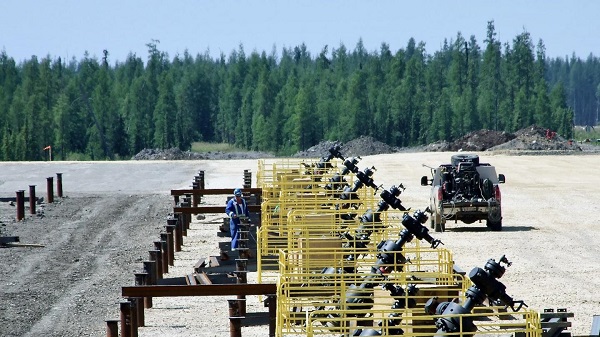
Busting five myths about the Alberta oil sands

-
MAiD20 hours ago
Disabled Canadians increasingly under pressure to opt for euthanasia during routine doctor visits
-
Alberta22 hours ago
Petition threatens independent school funding in Alberta
-
Alberta2 days ago
Busting five myths about the Alberta oil sands
-
 Courageous Discourse2 days ago
No Exit Wound – EITHER there was a very public “miracle” OR Charlie Kirk’s murder is not as it appears
-
 Business21 hours ago
Canada Revenue Agency found a way to hit “Worse Than Rock Bottom”
-
 Business2 days ago
Quebecers want feds to focus on illegal gun smuggling not gun confiscation
-
 Energy2 days ago
Minus Forty and the Myth of Easy Energy
-
 Health2 days ago
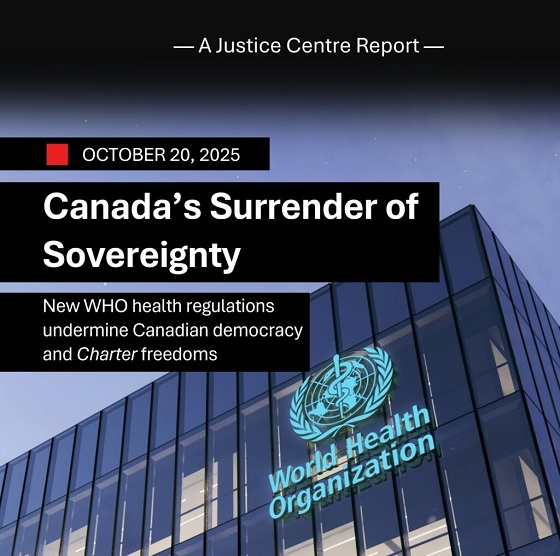
New report warns WHO health rules erode Canada’s democracy and Charter rights