
MacDonald Laurier Institute
Macdonald should not be judged through the warped lens of presentism

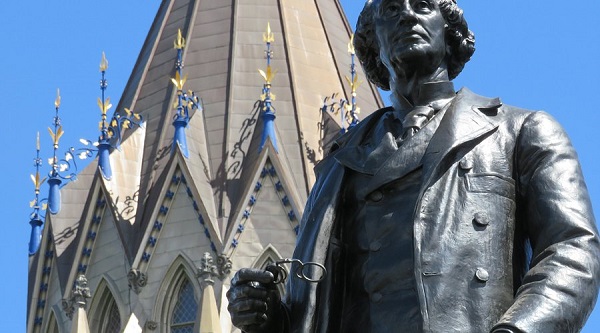

From the Macdonald Laurier Institute
By Patrice Dutil for Inside Policy
Sir John A. Macdonald was born January 11, in 1815 – but too often he is judged as if he was born in the late 20th century, not 210 years ago.
It seems that for many politicians, school officials, and members of the media, this is sometimes a difficult feat.
It’s not a new habit of mind – in the mid-nineteenth century, the eminent German philosopher and historian Leopold Ranke was so outraged by those who arrogantly dismissed the motives of historical figures that he dedicated a series of lectures on the topic. He declared that “every age is next to God,” explaining that historical periods had to be judged by how the almighty would have seen the events unfold; man’s actions would be measured by His commandments and in their own time, not by the standards of a new age.
The temptation to dismiss the past as “inferior” stood against reason itself. One could not condemn previous generations for their weak knowledge and prejudices. History could not be read “backwards,” and the “Middle Ages,” for instance, could only be considered as undeveloped by people who simply did not have the knowledge to appreciate them. Times were different and progress, whatever that was, was something that happened by fits and starts. “History is no criminal court,” Ranke declared.
Over the past fifteen years a number of commentators and scholars, including the collective leadership of the Canadian Historical Association, have condemned Macdonald and his governments as particularly unworthy. His memory has been erased from schools and streets, while nine of the eleven monuments erected in his memory across the country have been removed from public view. Macdonald is seen as source of shame because he inaugurated a new wave of residential schools and because of his treatment of Métis and Indigenous communities in the West.
This is fundamentally wrong-minded because Macdonald cannot be held responsible for things he did not do. His goal in establishing residential schools was to offer an education to Indigenous children – boys and girls – who could not go to school because their numbers in remote communities were too small. There is no evidence that children perished in those schools during his tenure in power though it is undeniable that many of them were ill.
The evidence also shows that Macdonald and his government were highly responsive in reacting to the transformative crisis that beset the Indigenous peoples on the Prairies during the late 1870s and 1880s by providing food rations, inoculations and instructors as well as tools to help communities learn the hard art of farming.

Were there unintended victims? Did Indigenous peoples lose a part of their culture as a result of the grand transformation imposed on them in the second half of the nineteenth century? Undeniably. But it is also undeniable that without the blanket of protection provided by Macdonald, the consequences would have been far worse.
Did he succeed unequivocally? Hardly. But he tried. He spent the money, elaborated new programs, and sought the best outcomes possible during an era when governments simply did not venture into social and economic policy.

Macdonald’s behaviour in 1885 – the most trying year of his career – is an effective prism through which to examine his career. In 1885, he faced a series of crises, including pressure from Great Britain to join a military campaign in Sudan, a new US president that sought to rip up commercial deals with Canada, a smallpox epidemic in Quebec, an insurrection in the North-West, led by Metis firebrand Louis Riel, and a backlash in Quebec when Riel was hanged for treason. He also needed to rescue a financially floundering Canadian Pacific Railway.
That year was incredibly trying for Canada’s first prime minister: it consisted of a cascade of twists, controversies, triumphs, and violence. Through it all, Macdonald creatively dealt with foreign affairs, Indigenous questions, democratic rights, nationhood, immigration, critical infrastructure, the role of the state, of memory, environmental issues, and life and death.
In this messy, chaotic world of politics, Macdonald acted sometimes strategically, sometimes improvisationally. He was at times entirely cerebral; sometimes he performed his emotions in order to convince more people. The journalist Edward Farrer observed that Macdonald had a knack for appearing “frail,” and always “asked people to support him on that account.” It worked. Writing in 1910, Farrer conceded that Macdonald had “a sagacity for meeting each political situation as it arose” and that, in hindsight, his policies were clearly popular with the voters (he won six majorities in his years as prime minister).
Commentators and historians should be dedicated to the task of explaining how Macdonald maintained his popularity during his long career, instead of viewing – and dismissing – his accomplishments through the warped lens of presentism.
Patrice Dutil is a senior fellow at the Macdonald-Laurier Institute. His new book is Sir John A. Macdonald and the Apocalyptic Year 1885 (Sutherland House).

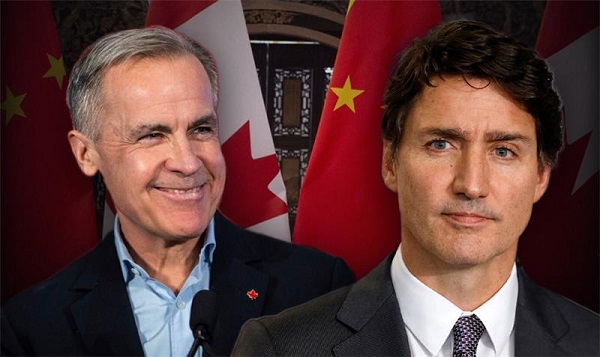

By Stephen Nagy for Inside Policy
For several decades, China has pursued a sophisticated campaign to fracture the world’s most integrated defense partnership—that between Canada and the United States.
Beijing’s strategy goes beyond typical diplomatic pressure: it systematically exploits every Canada-US disagreement, transforming routine alliance friction into seemingly irreconcilable divisions. This has become a degree of magnitude easier under US President Donald Trump, with his mercurial policy shifts towards Ottawa. The revelations about Chinese interference in Canadian elections from the Security and Intelligence Threats to Elections (SITE) Task Force – a body comprised of Canadian government and security officials which monitors elections threats – illuminate only one dimension of this comprehensive assault on North American solidarity.
Beijing’s strategic logic is to divide and conquer. By portraying Canada as sacrificing sovereignty for American interests while simultaneously painting legitimate Canadian security concerns as US-driven paranoia, Beijing paralyzes Ottawa’s decision-making and undermines continental defense cooperation.
The 2018 arrest of Huawei CFO Meng Wanzhou crystallized China’s approach. When Canada honored its extradition treaty with the US by detaining Meng at the Vancouver airport, Beijing immediately framed this routine legal cooperation as evidence of Canadian subservience. Chinese state media didn’t simply criticize the arrest, they specifically portrayed Canada as “a pathetic clown” and “running dog of the US.”
Within nine days, China retaliated by detaining Michael Kovrig and Michael Spavor, holding them for 1,019 days. But Beijing’s messaging revealed its true objective. Chinese diplomats repeatedly demanded Canada “correct its mistake” by defying the U.S. extradition request. Ambassador Lu Shaye explicitly stated Canada could resolve the crisis by demonstrating “independence” from Washington.
The economic pressure followed the same pattern. China banned canola imports from two major Canadian companies in March 2019, citing “pests” but Chinese officials privately linked the ban to the Meng case. When targeting Canadian meat exports, Beijing’s timing again coincided with moments of US-Canada cooperation on Huawei restrictions.
China’s wedge strategy extends beyond retaliation to proactive exploitation of bilateral tensions. During the Keystone XL pipeline disputes, Chinese state media amplified Canadian grievances while offering Beijing as an “alternative partner” for energy exports. When the Biden administration cancelled the pipeline in 2021, Chinese diplomats and media immediately highlighted American “betrayal” of Canadian interests.
Similarly, during US-Canada disputes over softwood lumber tariffs and Buy American provisions, Chinese officials consistently present themselves as more reliable economic partners. The message is always the same: American protectionism harms Canadian workers, while China offers stable market access conveniently omitting Beijing’s own coercive trade practices.
On defense, China exploits Canadian concerns about Arctic sovereignty vis-à-vis the United States. When Washington challenges Canada’s claims over the Northwest Passage, Chinese media amplify these disagreements while positioning Beijing as respecting Canadian Arctic sovereignty – even as China declares itself a “near-Arctic state” and seeks military access to the region.
Recent intelligence revelations confirm China’s systematic attempts to influence Canadian politics specifically to create US-Canada friction. According to CSIS documents, Chinese intelligence assessed that a Liberal minority government would be less likely to follow Washington’s harder line on China. Beijing’s interference operations during the 2019 and 2021 elections specifically targeted Conservative candidates perceived as pro-American on China policy.
The Chinese United Front Work Department cultivates Canadian political and business figures through seemingly innocent organizations. A 2020 National Security and Intelligence Committee report found these groups specifically encouraged narratives about American “bullying” of Canada and promoted “made-in-Canada” foreign policies that coincidentally aligned with Chinese interests.
Chinese diplomats regularly exploit Canadian media to amplify anti-American sentiments. During USMCA negotiations, Chinese officials gave exclusive interviews to Canadian outlets sympathizing with “American strong-arm tactics.” When Canada considered banning Huawei from 5G networks, Chinese embassy officials published op-eds in Canadian newspapers warning against following “US tech hegemony.”
China’s wedge strategy carries profound implications for NORAD and continental defense. By creating friction between Ottawa and Washington, Beijing undermines the trust essential for integrated aerospace warning and maritime domain awareness. Chinese military academics have explicitly written about exploiting contradictions in US-Canada defense relations to complicate American force projection.
The stakes are rising as Arctic ice melts. China’s 2018 Arctic strategy specifically mentions differences between Arctic states as creating opportunities for Chinese involvement. Every US-Canada disagreement over Arctic waters provides Beijing openings to position itself as a stakeholder in North American approaches.
Canada and the United States must recognize that their occasional disagreements, normal in any alliance, are systematically weaponized by Beijing. In light of this, at least four responses are essential.
First, Canada and the United States should establish a joint commission on foreign interference that specifically monitors and publicly exposes attempts to exploit bilateral tensions. When China amplifies US-Canada disagreements, coordinated responses can demonstrate alliance resilience rather than division.
Second, create alliance resilience mechanisms that automatically trigger consultations when third parties attempt to exploit bilateral disputes. The Two Michaels crisis revealed how Beijing uses hostage-taking to pressure alliance relationships. A joint response protocol could reduce such leverage.
Third, strengthen Track II dialogues between Canadian and American civil society, business, and academic communities. These networks can maintain relationship continuity even during governmental tensions, reducing Beijing’s ability to exploit temporary political friction.
Fourth, develop coordinated strategic communications that acknowledge legitimate bilateral differences while emphasizing shared values and interests. Honest discussion of disagreements, paired with clear statements about alliance solidarity, can inoculate against external manipulation.
Canada faces the delicate balance of maintaining sovereign decision-making while recognizing that Beijing systematically exploits any daylight between Ottawa and Washington. This isn’t about choosing between independence and alliance. It’s about understanding how Canada’s adversaries weaponize that false choice.
The empirical evidence is clear. From the Meng affair to election interference, from trade coercion to Arctic maneuvering, China consistently pursues the same objective: transforming America from Canada’s closest ally into a source of resentment and suspicion. Every success in this strategy weakens not just bilateral ties but the entire democratic alliance system.
As the Chinese saying goes, 笑里藏刀—a dagger hidden behind a smile. While professing respect for Canadian sovereignty and offering economic partnerships, Beijing wages sophisticated political warfare designed to isolate democratic allies from each other. Recognizing this strategy is the first step toward defeating it. The strength of North American democracy lies not in the absence of disagreements but in the ability to resolve them without external exploitation. In an era of systemic rivalry, the US-Canada partnership must evolve from unconscious integration to conscious solidarity – as different nations with sovereign interests, but united in defending democratic values against authoritarian manipulation.
Stephen Nagy is a professor of politics and international studies at the International Christian University in Tokyo, and a senior fellow at the Macdonald Laurier Institute. The tentative title for his forthcoming monograph is “Navigating U.S. China Strategic Competition: Japan as an International Adapter Middle Power.”
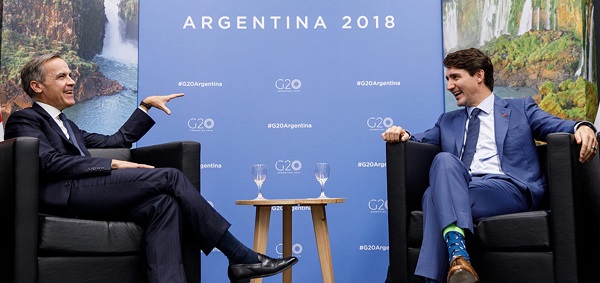

By Joe Varner for Inside Policy
Our allies no longer doubt our values – they doubt our value.
Ten years after promising a return to global relevance, Canada’s foreign policy is defined not by what we do – but by what we fail to do – or fail to show up for.
When Prime Minister Justin Trudeau declared in 2015 that “Canada is back,” he promised to restore the country’s global voice and moral leadership. Ten years later, Canada is indeed back – but not in the way he intended. We are back to irrelevance, back to strategic incoherence, and back to being ignored by allies and adversaries alike. Across a decade of shifting crises, Canadian foreign policy under Prime Ministers Trudeau and Carney have become a case study in good intentions, miserable excuses, poor execution, and chronic unseriousness.
Nowhere was this clearer than in the fight against the Islamic State (ISIS). In October 2014, Stephen Harper’s government committed six CF-18 Hornets, two CP-140 Auroras, and a CC-150 Polaris refueller to the US-led coalition against ISIS, forming the backbone of Canada’s Operation Impact. Canadian aircraft conducted 251 airstrikes in the first six months, striking ISIS positions in Iraq and later Syria. When Trudeau took office in November 2015, his first major foreign-policy act was to withdraw the CF-18s, formally announced on February 8, 2016. The air campaign ended within weeks, replaced by a “train-advise-assist” mission that expanded our trainers in northern Iraq but sharply reduced our combat capability and influence. The decision was framed as moral sophistication but in practice it was viewed as a marked retreat.
The Syrian refugee crisis that erupted in 2015 became the emotional centrepiece of the Trudeau Liberals’ election campaign and his government’s first term – a symbolic gesture of compassion that ignored operational realities. Within weeks of taking office, Ottawa pledged to bring 25,000 Syrian refugees by February 2016, compressing a process that normally took a year into just 100 days. The first flights landed in Toronto and Montreal on December 10, 2015, to global and domestic applause. Behind the scenes, the RCMP and CSIS officials warned that the accelerated timeline left gaps in security screening, and the provinces struggled to provide housing and integration services. It was in the end humanitarian theatre – an election promise kept at the expense of process, capacity, and Canadian national security.
The Syrian refugee crisis saw the Trudeau government jettison Canada’s immigration policy for domestic political purposes. A few years later, when Canadians who had joined ISIS – so-called “foreign fighters” – began to return home between 2017 and 2023, the same government that had championed compassion responded with confusion. Roughly 60 foreign fighters returned to Canada, yet very few were successfully prosecuted under federal anti-terrorism laws. Instead, Ottawa relied on peace bonds, deradicalization programs, and surveillance costing millions of dollars per case. The spectacle intensified in 2022 and 2023 with the repatriation, under court order, of dozens of ISIS brides and their children from Kurdish detention camps. Many arrivals required extensive monitoring and support while families of ISIS victims protested that justice had been denied. The government’s oft-repeated line that “a Canadian is a Canadian” sounded inclusive; it came to symbolize moral inconsistency and policy drift. Critics viewed the hospitality bill reported in the popular press for ISIS Brides and children as an irresponsible fiscal and moral outrage.
Afghanistan was the ultimate test of Canada’s so-called “feminist foreign policy,” and it failed dramatically. When Kabul fell on August 15, 2021, Ottawa was unprepared despite months of intelligence warnings about the Taliban’s advance, and a knowledge of the Biden administration’s draw down and withdrawal. Operation Aegis, Canada’s evacuation effort, began late and ended early. Between August 4 and 26, the Canadian Armed Forces managed three evacuation flights, moving about 3,700 people while allies such as the US and the UK moved tens of thousands. The final RCAF flight departed before the US withdrawal on August 30, leaving hundreds of locally employed interpreters, contractors, and NGO partners stranded. Subsequent reports confirmed that internal direction from the defence minister led officials to prioritize select religious minorities like Sikhs with political connections over interpreters and Afghan women who had worked with Canadian agencies. Veterans and civil-society groups accused Ottawa of politicizing rescue lists while publicly boasting of compassion. For all the talk of empowering women and girls, the people most at risk were left behind in favour of Canadian domestic political interests in the Liberals’ Sikh support base.
In the Middle East, the 2018 rupture with Saudi Arabia remains one of the costliest self-inflicted diplomatic crises in recent memory. A tweet from the Foreign Minister calling for the release of a dissident sparked sweeping retaliation from Riyadh: the expulsion of Canada’s ambassador, suspension of trade and investment, cancellation of flights, and the withdrawal of thousands of Saudi students from Canadian universities. The Gulf Cooperation Council sided with Riyadh, leaving Canada isolated. It took more than four years to rebuild relations, and during that period Ottawa was excluded from key regional energy and security discussions. The episode became a cautionary tale of social-media diplomacy without strategy.
Canada’s approach to Israel and Palestine mirrored the pattern of ambiguity that has defined our broader foreign policy under the Trudeau and Carney liberals. Beginning in 2019, Ottawa reversed a long-standing position by supporting a UN resolution condemning Israeli settlements and endorsing Palestinian statehood – Canada’s first such vote in 14 years. When Hamas launched its October 7, 2023, terrorist attacks against Israel that killed more than 1,200 people, Canada’s initial response was cautious and slow. Statements emphasized proportionality and restraint rather than moral clarity. Two years later, in April 2025, Ottawa recognized a Palestinian state while hostilities with Hamas and other Iranian-backed groups were ongoing. The move alienated allies in Washington and Jerusalem, who warned that premature recognition risked legitimizing a territory still controlled by organizations committed to Israel’s destruction. President Trump went as far as to suggest that Canada had rewarded Hamas for the October 7 terror attack on Israel.
On Iran, engagement drifted into accommodation. After years of delay, Ottawa finally listed Iran’s Islamic Revolutionary Guard Corps (IRGC) as a terrorist entity in 2025 – long after allies such as the United States had done so and only following sustained pressure from Parliament and the families of victims of Flight PS752, which the Iranian Islamic Revolutionary Guard Corps (IRGC) shot down in January 2020, killing 55 Canadian citizens and 30 Canadian permanent residents. The long-overdue designation was more symbolic than strategic. Canada has become, by default, a refuge for individuals linked to the Iranian regime, including relatives of senior officials who live and invest here with impunity. Members of the Iranian diaspora report regular intimidation, surveillance, and threats from Tehran’s proxies operating on Canadian soil – activities that persist despite repeated calls for stronger counterintelligence and enforcement. For all its rhetorical commitment to human rights, Ottawa has failed to translate outrage into action. What passes for engagement with Iran today is less diplomacy than moral fatigue disguised as principle.

Relations with the US fared little better. The renegotiation of NAFTA in 2017–18 produced the United States-Mexico-Canada Agreement (USMCA) – a deal that preserved supply management but conceded ground on automotive exports and dispute-resolution mechanisms. Tariffs on steel and aluminum followed in 2025, and Canada’s retaliatory levies could not hide the reality of diminished leverage. Chronic under–investment in defence and intelligence further eroded trust. When the United States, the United Kingdom, and Australia formed the AUKUS pact in 2021 to share advanced defence technology, Canada was not consulted. In 2022, after years of frustrating delays, NORAD modernization hedged forward but by 2025 Canada had yet committed the full $38 billion required to upgrade continental defences. Years of delay in replacing the CF-18 fighter fleet key to NORAD – starting during the 2015 election campaign by the Trudeau Liberals – only resolved when Ottawa reversed course and ordered the same F-35s in 2023, the same planes that Trudeau once derided. In 2025, Prime Minister Carney placed the F-35 purchase under an election campaign review – reinforcing the impression of drift. To allies, Canada increasingly appeared as a moral commentator rather than a security contributor.
The federal government’s misreading of China compounded the damage. While allies recalibrated against Beijing’s coercion, Ottawa continued to chase trade and investment under the illusion that China could be both partner and rival to play off against the US. That fiction collapsed in December 2018 when Beijing detained Canadians Michael Kovrig and Michael Spavor in retaliation for Canada’s arrest of Huawei executive Meng Wanzhou. The two men spent 1,020 days in secret detention under harsh conditions before their release in September 2021 – the same day Meng returned to China. Ottawa’s response throughout was hesitant, relying on “quiet diplomacy.” Even as other democracies expelled Chinese diplomats and banned Huawei, Canada delayed until 2022, becoming the last member of the “Five Eyes” intelligence alliance to act. Beijing’s execution and death sentences for Canadian citizens in 2019 elicited only muted protest by the Trudeau government. Despite fresh warnings of political interference in domestic affairs and elections campaigns, progress toward a foreign-influence registry remains halting. The cumulative impression is of a government reluctant to confront reality even as its allies in North America, Europe, and Asia are hardening their stance against Beijing.
Europe tells a similar story. The war in Ukraine has exposed the gulf between Canada’s rhetoric and its resources. Although NATO adopted its two-per cent-of-GDP defence-spending target in 2014, successive Canadian governments have treated it more as aspiration than obligation. Publicly, the Trudeau government endorsed the goal; privately, Trudeau told NATO leaders in 2017 that Canada would “never” reach it, a remark later reported in the Washington Post and confirmed by alliance officials. Eight years on, the numbers bear him out. Canada’s defence spending has hovered near 1.4 per cent of GDP, third from the bottom in NATO, even as Poland and the Baltic states have surged past four per cent and re-armed against Russia.
Under Prime Minister Carney, Ottawa now insists that the target will finally be met – on paper at least. In June 2025, the Carney government pledged to reach the spending benchmark by March 31, 2026, under what officials describe as a “re-baselined” accounting framework. In practice, much of the projected increase relies on broad definitions of “defence-related” spending – everything from veterans’ benefits and pensions to Arctic infrastructure and cybersecurity initiatives – that many allies may not accept as true military expenditure. To use a polite phrase, there is considerable voodoo math involved.
Equally puzzling is Ottawa’s rhetorical commitment to a new NATO 5-per cent-of-GDP goal without any credible path or plan to achieve it. Since Russia’s full-scale invasion in February 2022, Canada’s military aid to Ukraine has remained constant but promised weapons shipments have been delayed or cancelled and participation in major NATO exercises curtailed by personnel and equipment shortages. At home, procurement paralysis has left the Canadian Army, Royal Canadian Navy and Royal Canadian Air Force under-equipped and increasingly unready for its primary role of defending Canada. Meanwhile, Ottawa refused for years to leverage Canada’s vast natural-gas reserves to help Europe reduce dependence on Russian energy, insisting there was “no business case” for Atlantic Liquified Natural Gas (LNG) exports. Only after 2025, under Carney, did talk of trade and energy re-engagement resume – too late to shape outcomes. In Brussels, Canada is now viewed less as a dependable ally than as a rhetorical one: a country that still talks like a middle power but spends like a minor one.
The sum of these choices is a Canada that no longer matters as it once did. We are too hesitant to deter, too divided to lead, and too sanctimonious to partner effectively. The language of virtue has replaced the practice of real strategy. Foreign policy is not theatre; it is the disciplined pursuit of national interest, backed by capability and clarity. For ten years we have confused applause at home and sometimes abroad with achievement and hashtags with hard power. The result is a diminished country adrift in an age of international danger – irrelevant in Washington, distrusted in Jerusalem, ignored in Riyadh, dismissed in Beijing, and barely tolerated in Brussels. Our allies no longer doubt our values – they doubt our value.
So, how do we not lose the next decade too? If Canada is to regain its standing, it must first rediscover seriousness. That means returning to the fundamentals of statecraft: credible defence spending, strong military power, clear strategic priorities, and the courage to act rather than advertise. Meeting NATO’s two-per cent commitment must be a floor, not a mirage built on creative accounting. Canada must modernize its armed forces, rebuild its defence industrial base, and restore operational readiness in the Arctic and abroad.
Diplomatically, Ottawa must re-anchor itself within the democratic alliance system – treating Washington, London, and Brussels as indispensable partners rather than convenient props. Engagement with China should be rooted in deterrence and human-rights enforcement, not wishful economics. Canada needs to field a well-equipped brigade in Latvia and lead by example to deter Russia. In the Middle East, Canada must again stand firmly with Israel’s right to exist while pushing back on Iran and its regional proxies.
Canada must once again take a principled stance on human rights and targeted economic development compatible with our national interests and the strategic realities on the ground in regions like Africa.
At home, foreign policy should once again serve national interest rather than transactional domestic political theatre. Canada’s influence was never built on slogans but on capability, credibility, and sacrifice – from Vimy Ridge to Juno Beach and from Kapyong to Kandahar. Those qualities are not lost; they are merely dormant. The path back is not through hashtags or press conferences, but through purpose, power, and principle. Only when Canada stops pretending to lead and starts preparing to lead will the world take us seriously again. If “Canada is back” is ever to mean something again, it must be said not from a podium, but from a position of strength. Power respects power – and until Canada remembers that – no one will remember us.
Joe Varner is a senior fellow at the Macdonald-Laurier Institute and the Center for North American Prosperity and Security, and deputy director of the Conference of Defence Associations.


Health Canada pauses plan to sell unlabeled cloned meat

Is there a cure for Alzheimer’s Disease?

Google denies scanning users’ email and attachments with its AI software
Learning the Truth about “Children’s Graves” and Residential Schools is More Important than Ever
-
 Alberta2 days ago
This new Canada–Alberta pipeline agreement will cost you more than you think
-
 MAiD1 day ago
From Exception to Routine. Why Canada’s State-Assisted Suicide Regime Demands a Human-Rights Review
-
 Automotive2 days ago
Power Struggle: Governments start quietly backing away from EV mandates
-
 Business2 days ago
New Chevy ad celebrates marriage, raising children
-
 Business1 day ago
Carney government should privatize airports—then open airline industry to competition
-
 Energy2 days ago
Unceded is uncertain
-
 Alberta1 day ago
Carney’s pipeline deal hits a wall in B.C.
-
 Alberta1 day ago
Alberta Sports Hall of Fame Announces Class of 2026 Inductees