
Daily Caller
Like Administrative Arson, California’s Bad Ideas Spread Like Wildfires



From the Daily Caller News Foundation
By Frank Ricci
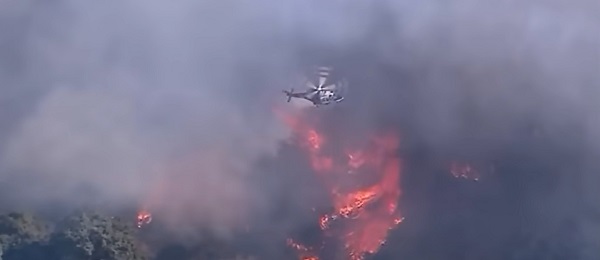
California’s wildfire crisis is a result of a mix of poor public policy, excuses and administrative overreach. This crisis is not solely due to natural phenomena but is exacerbated by years of misguided priorities and policy mismanagement.
In California, regulation has often been elevated to a near-religious status, where compliance with progressive ideals sometimes comes at the expense of public safety. This regulatory environment turns practical solutions into bureaucratic nightmares, where even simple tasks require navigating an endless maze of permissions and paperwork.
The result is a state where water resources are mismanaged, from inadequate retention to failing to have sound contingency plans for pumping when power is out or ensuring the system is designed to handle the fire load.
There is an overemphasis on environmentally friendly policies without adequately balancing the needs of the population or accurately measuring their impact and effectiveness.
When your home is on fire, you need a quick, competent response, properly supported by staffing, resources and clear lines of authority.
The prioritization of Diversity, Equity and Inclusion (DEI) over merit-based hiring is evident in places like the Los Angeles Fire Department under Chief Kristin Crowley. Her commitment to DEI is often highlighted, leading one to question if this has potentially compromised operational readiness.
The primary focus of fire departments should be on the priority of life safety, incident stabilization and property conservation. When diversity overshadows meritocracy, there’s a shift from equal opportunity to equal outcomes.
Across blue states, there is a trend where HR managers focus more on diversity and soft quotas than ensuring applicants have the necessary physical strength, mechanical aptitude and cognitive ability for the job, regardless of immutable characteristics.
LAFD Assistant Chief Kristine Larson, in a recorded statement, responded to a query about her ability to rescue someone from a fire by saying, “Am I able to carry your husband out of a fire? Well, my response is he got himself in the wrong place if I have to carry him out of a fire.”
In the same clip, she focused on the racial composition of firefighters rather than their competence.
Merit should be blind to race or sex; it is about ensuring that firefighters or officers can master the skills, knowledge and ability needed to do the job.

Victor Davis Hanson has commented: “It was a total systems collapse from the idea of not spending money on irrigation, storage, water, fire prevention, force management, a viable insurance industry, a DEI hierarchy. You put it all together and it’s something like a DEI-Green New Deal hydrogen bomb.”
Moreover, fire departments in cities like Los Angeles, Seattle and New York are still dealing with the aftermath of the pandemic. There is a call for the reinstatement of firefighters who were dismissed for not being vaccinated, suggesting this was an opportunity to purge viewpoint diversity.
Elected officials should not socially engineer fire departments. True diversity comes from educational opportunities like school choice, opportunity scholarships and breaking the stranglehold of teachers’ unions while holding superintendents accountable.
Qualified personnel and proper water management alone won’t mitigate fires. Congress and California need to untangle the web of conflicting government agencies in wildland fire and forest management, ensuring clear lines of authority for public safety.
Environmentally friendly logging and cooperation with fire services for forest management could provide jobs, create fire lines, and ensure quicker response times.
Advanced technology for early detection, such as sensing fire towers, drones and satellites, should be utilized to direct air assets, allowing for a rapid response with helicopters or fixed-wing aircraft to stop or slow the spread of fire from the onset.
America does not have enough staffed air assets stationed, properly geographically deployed and on alert to respond at a moment’s notice. This means deploying air assets throughout the West Coast and in some cases changing policy to allow flying at night and ensuring availability seven days a week. The same applies to bulldozers and other heavy equipment; they must be pre-approved and ready to respond before any incident occurs, cutting through the red tape.
California Gov. Gavin Newsom (D), Los Angeles Mayor Karen Bass (D) and the federal government have not met expectations, offering excuses rather than solutions. The public demands accountability not just promises. It is time for California to adopt common-sense wildfire management, focus on merit, manage natural resources wisely and reduce the bureaucratic hurdles that hinder effective action.
Only then can we address this crisis with the urgency and efficiency it demands.
Frank Ricci is a Fellow at Yankee Institute and was the lead plaintiff in the landmark Supreme Court case Ricci v Destefano. He retired as a Battalion Chief in New Haven CT. He has testified before Congress and is the author of the book, Command Presence.

From the Daily Caller News Foundation
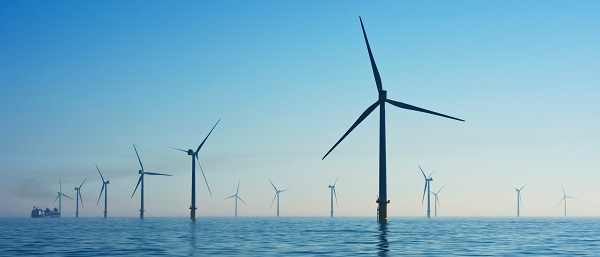
Interior Secretary Doug Burgum leveled the Trump administration’s latest broadside at the struggling U.S. offshore wind industry on Monday, ordering an immediate suspension of activities at the five big wind projects currently in development.
“Today we’re sending notifications to the five large offshore wind projects that are under construction that their leases will be suspended due to national security concerns,” Burgum told Fox Business host Maria Bartiromo. “During this time of suspension, we’ll work with the companies to try to find a mitigation. But we completed the work that President Trump has asked us to do. The Department of War has come back conclusively that the issues related to these large offshore wind programs have created radar interference that creates a genuine risk for the U.S.”
Predictably, reaction to Burgum’s order was immediate, with opponents of offshore wind praising the move, and industry supporters slamming it. In Semafor’s energy-related newsletter on Tuesday, energy and climate editor Tim McDowell quotes an unnamed ex-Energy Department official as claiming, “the Pentagon and intelligence services, which are normally sensitive to even extremely low-probability risks, never flagged this as a concern previously.” (RELATED: Trump Admin Orders Offshore Wind Farm Pauses Over ‘National Security Risks’)
Yet, a simple 30-second Google search finds a wealth of articles going back to as early as October 2014 discussing ways to mitigate the long-ago identified issue of interference with air defense radars by these enormous windmills, some of which are taller than the Eiffel Tower. It is a simple fact that the issue was repeatedly raised during the Biden Administration’s mad rush to speed these giant windmill operations into the construction phase by cutting corners in the permitting process.
In May, 2024, the Bureau of Ocean Energy Management’s (BOEM) own analysis related to the Atlantic Shores South project contains a detailed discussion of the potential impacts and suggests multiple ways to mitigate for them. An Oct. 29, 2024 memo of understanding between BOEM and the Biden Department of Defense calls for increased collaboration between the two departments as a response to concerns from members of Congress and others related to these very long-known potential impacts.
The Georgia Tech Research Institute published a study dated June 6, 2022 detailing “Radar Impacts, Potential Mitigation, from Offshore Wind Turbines.” That study was in fact commissioned by the National Academies of Sciences, Engineering, and Medicine (NASEM), a private non-profit that functions as an advisory group to the federal government.
Oh.
A report published in February 2024 by International Defense Security & Technology, Inc. describes the known issues thusly:
“Wind turbines can create clutter on radar screens in a number of ways. First, the metal towers and blades of wind turbines can reflect radar signals. This can create false returns on radar screens, which can make it difficult to detect and track real targets.
“Second, the rotating blades of wind turbines can create a Doppler effect on radar signals. This can cause real targets to appear to be moving at different speeds than they actually are. This can also make it difficult to track real targets.”
The simple Google search I conducted returns hundreds of articles dating all the way back to 2006 related to this long-known yet unresolved issue that could present a very real threat to national security. The fact that the Biden administration, in its religious zeal to speed these enormous offshore industrial projects into the construction phase, chose to downplay and ignore this threat in no way obligates his successor in office to commit the same dereliction of duty.
Some wind proponents are cynically raising concerns that a future Democratic administration could use this example as justification for cancelling oil and gas projects. It’s as if they’ve all forgotten about the previous four years of the Autopen presidency, which featured Joe Biden’s Day 1 order cancelling the 80% completed Keystone XL pipeline, a year-long moratorium on LNG export permitting, an attempt to set aside more than 200 million acres of the U.S. offshore from future leasing, and too many other destructive moves to detail here.
Again, a simple web search reveals that experts all over the world believe this is a real problem. If so, it needs to be addressed as a matter of national security. Burgum is intent on doing that. All half-baked talking points aside, this really isn’t complicated.
David Blackmon is an energy writer and consultant based in Texas. He spent 40 years in the oil and gas business, where he specialized in public policy and communications.
Daily Caller
While Western Nations Cling to Energy Transition, Pragmatic Nations Produce Energy and Wealth

From the Daily Caller News Foundation
History will likely remember 2025 as the year energy corporatists finally stopped pretending there is a climate crisis. For a decade, a bizarre theater of the absurd played out as titans of the oil and gas industry apologized for their core business while pledging allegiance to a “green transition” that existed mostly in the imaginations of Western bureaucrats. But the curtain has seemingly fallen.
ExxonMobil, one of the world’s largest energy producers, has slashed $10 billion from its low-carbon investment commitments through 2030. Simultaneously, the company announced that it expects $25 billion in earnings growth from 2024 to 2030 to be powered primarily by increases in oil and gas production, which will push daily output to 5.5 million barrels of oil equivalent by the end of the decade.
This is not a company abandoning climate responsibility but rather at last recognizing what has long been obvious: The path prescribed by the climate industrial complex is economically destructive and operationally impossible – even with massive government subsidies.
Dear Readers:
As a nonprofit, we are dependent on the generosity of our readers.
Please consider making a small donation of any amount here.
Thank you!
For years, the global energy strategy has been surreal. Companies that built the modern world on the back of energy-dense hydrocarbons indulged those celebrating the arrival of wind turbines and solar panels to power civilization. But reality, stubborn and unforgiving, has interrupted the psychedelic revelry.
ExxonMobil’s low-carbon investments will be paced to policy support and customer demand, says the company. That is corporate speak meaning that spending on green projects is paused unless the government – using our tax dollars – subsidizes the risk or until a market exists.
Megaprojects, once heralded as the future, are now in line for deferral. Why? Because without taxpayer handouts, the economics of trying to bury underground a plant food like carbon dioxide simply do not work – and defy common sense.
The energy sector is pivoting from a strategy of “grow clean at all costs” to “returns first, transition last.” “Green” projects are being relegated to a secondary capital bucket – a token for good PR instead of a core activity.
Europe’s Shell and Aker BP and Canada’s Enbridge have withdrawn from the Science Based Targets initiative to establish “science-based emissions reductions.” This was a retreat from what is described as a “credible, science-based net-zero framework” because there was neither credibility nor science. It was a political suicide pact. The energy giants looked at the cliff’s edge and refused to jump.
British multinational BP, having abandoned its promise to go “Beyond Petroleum,” has raised its oil and gas spending and softened its renewable targets.
ENEOS Holdings, a Japanese refiner, has discarded hydrogen production targets, with CEO Tomohide Miyata explaining that “the shift toward a carbon-neutral society appears to be slowing.”
These U-turns represent a renaissance in policy realism. Energy needs do not disappear because politicians make speeches at climate summits or corporations allocate funds to ESG programs or governments attempt to control consumption and choices of appliances and automobiles.
Second thoughts about an inevitably doomed “green” transition is a victory for the single mother in the U.S. trying to budget for winter heating and for the small business owner in the U.K. whose margins are crushed by one of the highest commercial electricity rates in the world. And for the billions of people in developing nations, this pivot could be salvation from generational poverty.
The question now is whether governments will recognize what corporations have made clear: that the energy transition was a fantasy infused with scientific language and draped in moralistic gingerbread. Or will they continue to increase subsidies and regulations?
Very likely, there will be a bifurcation: on the one hand, western bureaucracies, particularly in Europe, continuing an economic decline under mandates and taxes, and on the other, pragmatic governments, many of them in Asia, pursuing prosperity with fuels and technologies that work.
Vijay Jayaraj is a Science and Research Associate at the CO2 Coalition, Fairfax, Va. He holds an M.S. in environmental sciences from the University of East Anglia and a postgraduate degree in energy management from Robert Gordon University, both in the U.K., and a bachelor’s in engineering from Anna University, India. He served as a research associate with the Changing Oceans Research Unit at University of British Columbia, Canada.


Georgia county admits illegally certifying 315k ballots in 2020 presidential election

Alberta Next Panel calls to reform how Canada works

End Supply Management—For the Sake of Canadian Consumers

Canadian government launches trial version of digital ID for certain licenses, permits
-
 Business1 day ago
ICYMI: Largest fraud in US history? Independent Journalist visits numerous daycare centres with no children, revealing massive scam
-
 Alberta18 hours ago
Alberta project would be “the biggest carbon capture and storage project in the world”
-
 Energy15 hours ago
Canada’s debate on energy levelled up in 2025
-
 Energy17 hours ago
New Poll Shows Ontarians See Oil & Gas as Key to Jobs, Economy, and Trade
-
 Business16 hours ago
Socialism vs. Capitalism
-
 Business2 days ago
Feds pull the plug on small business grants to Minnesota after massive fraud reports
-
 Business2 days ago
DOOR TO DOOR: Feds descend on Minneapolis day cares tied to massive fraud
-
 Business1 day ago
Canada needs serious tax cuts in 2026