
Alberta
‘Liberal’ parents of gender-confused kids among supporters of Alberta’s proposed ‘transitioning’ ban



From LifeSiteNews
Parents whose kids have undergone medical or surgical ‘transitioning’ say that Premier Danielle Smith’s policies will spare other families from ‘the heartache their families have been through.’
As highlighted in a recent Epoch Times report, parents whose kids have undergone medical or surgical “transitioning” say that Smith’s new policies will only benefit families in general and spare them from “the heartache their families have been through.”
On January 31, Smith announced what is perhaps the strongest pro-family legislation in Canada, protecting kids from life-altering so-called “top and bottom” surgeries as well as other extreme forms of transgender ideology.
According to Crystal, a mom from Calgary, her son Noah, when he was in Grade 9, had a friend who made a “transition” from a female to a male. Her son had noted he was what is called a “trans ally,” but suddenly he began to identify himself as “she/they.”
“Fast forward to the early part of Grade 10, and out of the blue I get a text from my kid while he’s at school saying, ‘I’m now identifying as she/they,’” said Crystal, who said she is “quite a liberal parent.”
However, despite being a “liberal,” she admitted that she did not have an easy time with her son changing names and using different pronouns.
“Out of the blue is this vitriol towards me when I didn’t get it right,” she said, adding she then just decided to call her son “kiddo.”
However, Noah then told her he wanted hormones. Crystal and her ex-husband had thought Noah was just going through a phase, as he was “well known” for this.
“He would try on different so-called ‘identities’ like a jock, a nerd, a rapper,” Crystal said, and even as he was supposed to be “transitioning,” took on a look of a “goth.”
According to Crystal, her son did not “even remotely” show signs of wanting to change genders before.
Alberta’s forthcoming regulations include a ban on so-called “top” surgeries (mastectomies, breast constructions) as well as “bottom” surgeries (vaginoplasties, phalloplasties) for children ages 17 and under. Puberty blockers and cross-sex hormones are also restricted to those age 16 and older but only with parental consent.
Smith said her United Conservative Party (UCP) government will soon introduce legislation that, if passed, would bar doctors in the province from medically or surgically “transitioning” children under age 17. The new legislation will also mandate parental consent for pronoun changes in school. Coming in the fall will be additional legislation that bans men who claim to be women from competing in women’s sports.
Campaign Life Coalition (CLC) praised Smith’s decision to introduce legislation to ban doctors from chemically or surgically “transitioning” children, calling it a “political miracle.”
Crystal’s line in the sand for her son: ‘No medical affirmation’
When the Alberta government was researching its new policy regarding banning surgically or chemically “transitioning” children, Crystal said she was one of the parents they talked with to get feedback.
She admits at the time she was not a fan of Smith or her party, but now says she is “doing this right.”
Crystal noted that if this policy had been in place only three years ago, all the heartache could have been avoided.
“This is blowing up relationships,” she said.
When speaking to her son, Crystal noted that her “line in the sand will always be [that] there will be no medical affirmation.”
As a result, she then said she was “hit with the vitriol.”
Due to Crystal having had to deal with her son wanting to become something other than his birth sex, she contacted parents with similar situations via a group called Our Duty.

After connecting with parents on the site, Crystal noted how her son Noah “checks a lot of the boxes” with other kids who say they are transgender.
She said that kids in these situations all use the same “script” of saying they are going to “kill myself if I don’t get the proper medical intervention if you don’t use the pronouns.”
“It’s the constant threat of suicide,” she noted.
Complaint filed against doctor who gave hormones
Despite Crystal trying to delay her son wanting to undergo a “medical transitioning,” she did book an appointment with a doctor to talk about hormones.
However, after being referred to a clinic to further talk about her son’s matter, she said the personnel were “aggressive.”
Crystal noted how the clinic was constantly emailing and calling her to make an appointment for her son, and she was told she had to have all the paperwork and blood work done before the meeting.
She said that this made “no sense,” so she told the clinic that she was “not signing a consent form.”
When she went to the appointment with her son, she was taken to a room with a doctor alone and was told that this appointment was not for her but for Noah.
The doctor only spoke with her for 10 minutes and was already willing to prescribe her son hormones. At this point, she confronted the doctor for not doing a thorough psychological assessment or any other screening. The doctor mentioned to her that while she was able to oppose the treatment, she could end up in the courts and that he would testify on Noah’s behalf. He then said he had always won in similar situations with other parents.
Crystal filed a complaint with the College of Physicians and Surgeons of Alberta against the doctor regarding her experience with her son, but for the time being, is not making public his name.
Her son later went to that doctor alone and started to take hormones. It was at this point she realized she had no control over the situation.
Crystal said that in the past her family doctor along with a child psychologist did not affirm Noah’s gender dysphoria. She noted that it was only the “gender experts,” all of whom had “zero history with my child,” who suggested this.
“They did not solicit the qualified professionals we had in place,” she said.
As for Noah, who is now in grade 12, the doctor who had the complaint against him told Noah that it was his mom who did this, which made her son mad.
“I will never forgive you for this,” he told her.
He then ran away from home and told people that he was not “safe” at home with his mom.
“I just want to be your mom,” she had mentioned to him.
While many so-called “gender-affirming care” workers claim that the effects of puberty blockers can be reversed, according to Dr. Jane Anderson, vice president of the American College of Pediatricians, as per The Epoch Times, the hormones can severely impact brain development.
Puberty blockers can cause heightened depression, severe mood swings, and weight gain.


From the Fraser Institute
By Tegan Hill and Austin Thompson
In cities across the country, modest homes have become unaffordable for typical families. Calgary and Edmonton have not been immune to this trend, but they’ve weathered it better than most—largely by making it easier to build homes.
Specifically, faster permit approvals, lower municipal fees and fewer restrictions on homebuilders have helped both cities maintain an affordability edge in an era of runaway prices. To preserve that edge, they must stick with—and strengthen—their pro-growth approach.
First, the bad news. Buying a home remains a formidable challenge for many families in Calgary and Edmonton.
For example, in 2023 (the latest year of available data), a typical family earning the local median after-tax income—$73,420 in Calgary and $70,650 in Edmonton—had to save the equivalent of 17.5 months of income in Calgary ($107,300) or 12.5 months in Edmonton ($73,820) for a 20 per cent down payment on a typical home (single-detached house, semi-detached unit or condominium).
Even after managing such a substantial down payment, the financial strain would continue. Mortgage payments on the remaining 80 per cent of the home’s price would have required a large—and financially risky—share of the family’s after-tax income: 45.1 per cent in Calgary (about $2,757 per month) and 32.2 per cent in Edmonton (about $1,897 per month).
Clearly, unless the typical family already owns property or receives help from family, buying a typical home is extremely challenging. And yet, housing in Calgary and Edmonton remains far more affordable than in most other Canadian cities.
In 2023, out of 36 major Canadian cities, Edmonton and Calgary ranked 8th and 14th, respectively, for housing affordability (relative to the median after-tax family income). That’s a marked improvement from a decade earlier in 2014 when Edmonton ranked 20th and Calgary ranked 30th. And from 2014 to 2023, Edmonton was one of only four Canadian cities where median after-tax family income grew faster than the price of a typical home (in Calgary, home prices rose faster than incomes but by much less than in most Canadian cities). As a result, in 2023 typical homes in Edmonton cost about half as much (again, relative to the local median after-tax family income) as in mid-sized cities such as Windsor and Kelowna—and roughly one-third as much as in Toronto and Vancouver.
To be clear, much of Calgary and Edmonton’s improved rank in affordability is due to other cities becoming less and less affordable. Indeed, mortgage payments (as a share of local after-tax median income) also increased since 2014 in both Calgary and Edmonton.
But the relative success of Alberta’s two largest cities shows what’s possible when you prioritize homebuilding. Their approach—lower municipal fees, faster permit approvals and fewer building restrictions—has made it easier to build homes and helped contain costs for homebuyers. In fact, homebuilding has been accelerating in Calgary and Edmonton, in contrast to a sharp contraction in Vancouver and Toronto. That’s a boon to Albertans who’ve been spared the worst excesses of the national housing crisis. It’s also a demographic and economic boost for the province as residents from across Canada move to Alberta to take advantage of the housing market—in stark contrast to the experience of British Columbia and Ontario, which are hemorrhaging residents.
Alberta’s big cities have shown that when governments let homebuilders build, families benefit. To keep that advantage, policymakers in Calgary and Edmonton must stay the course.

Tegan Hill
Director, Alberta Policy, Fraser Institute

Austin Thompson
Senior Policy Analyst, Fraser Institute
Alberta
Danielle Smith slams Skate Canada for stopping events in Alberta over ban on men in women’s sports
From LifeSiteNews
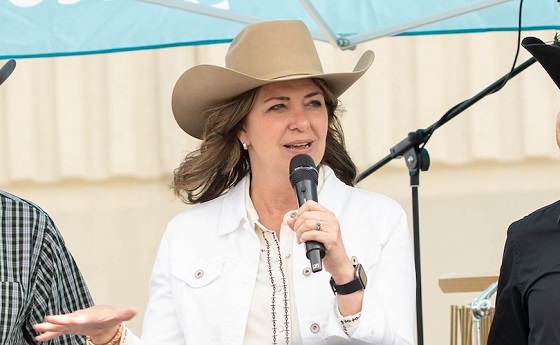
The Alberta premier has denounced Skate Canada as ‘disgraceful’ for refusing to host events in the province because of a ban on ‘transgender’ men in women’s sports.
Alberta Premier Danielle Smith has demanded an apology after Skate Canada refused to continue holding events in Alberta.
In a December 16 post on X, Smith denounced Skate Canada’s recent decision to stop holding competitions in Alberta due to a provincial law keeping gender-confused men from competing in women’s sports.
“Women and girls have the right to play competitive sports in a safe and fair environment against other biological females,” Smith declared. “This view is held by a vast majority of Albertans and Canadians. It is also common sense and common decency.”
Women and girls have the right to play competitive sports in a safe and fair environment against other biological females.
This view is held by a vast majority of Albertans and Canadians. It is also common sense and common decency.
Skate Canada‘s refusal to hold events in… pic.twitter.com/n4vbkTx6B0
— Danielle Smith (@ABDanielleSmith) December 16, 2025
“Skate Canada‘s refusal to hold events in Alberta because we choose to protect women and girls in sport is disgraceful,” she declared.
“We expect they will apologize and adjust their policies once they realize they are not only compromising the fairness and safety of their athletes, but are also offside with the international community, including the International Olympic Committee, which is moving in the same direction as Alberta,” Smith continued.
Earlier this week, Skate Canada announced their decision in a statement to CBC News, saying, “Following a careful assessment of Alberta’s Fairness and Safety in Sport Act, Skate Canada has determined that we are unable to host events in the province while maintaining our national standards for safe and inclusive sport.”
Under Alberta’s Fairness and Safety in Sport Act, passed last December, biological men who claim to be women are prevented from competing in women’s sports.
Notably, Skate Canada’s statement failed to address safety and fairness concerns for women who are forced to compete against stronger, and sometimes violent, male competitors who claim to be women.
Under their 2023 policy, Skate Canada states “skaters in domestic events sanctioned by Skate Canada who identify as trans are able to participate in the gender category in which they identify.”
While Skate Canada maintains that gender-confused men should compete against women, the International Olympic Committee is reportedly moving to ban gender-confused men from women’s Olympic sports.
The move comes after studies have repeatedly revealed what almost everyone already knew was true, namely that males have a considerable innate advantage over women in athletics.
Indeed, a recent study published in Sports Medicine found that a year of “transgender” hormone drugs results in “very modest changes” in the inherent strength advantages of men.
Additionally, male athletes competing in women’s sports are known to be violent, especially toward female athletes who oppose their dominance in women’s sports.
Last August, Albertan male powerlifter “Anne” Andres was suspended for six months after a slew of death threats and harassments against his female competitors.
In February, Andres ranted about why men should be able to compete in women’s competitions, calling for “the Ontario lifter” who opposes this, apparently referring to powerlifter April Hutchinson, to “die painfully.”
Interestingly, while Andres was suspended for six months for issuing death threats, Hutchinson was suspended for two years after publicly condemning him for stealing victories from women and then mocking his female competitors on social media. Her suspension was later reduced to a year.


Trump DOJ seeks to quash Pfizer whistleblower’s lawsuit over COVID shots
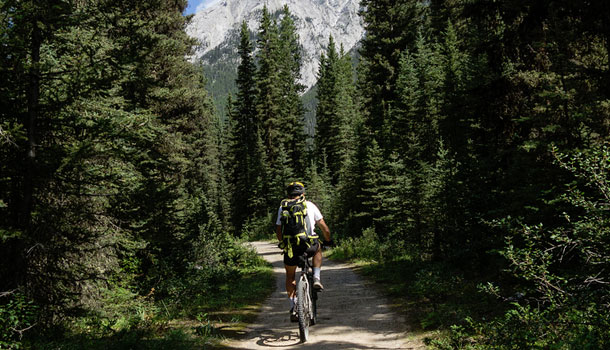
Alberta introducing three “all-season resort areas” to provide more summer activities in Alberta’s mountain parks
Trump admin wants to help Canadian woman rethink euthanasia, Glenn Beck says

Growing Alberta’s fresh food future
-
 International2 days ago
Bondi Beach Shows Why Self-Defense Is a Vital Right
-
 Business2 days ago
Ottawa Pretends To Pivot But Keeps Spending Like Trudeau
-
 Censorship Industrial Complex2 days ago
How Wikipedia Got Captured: Leftist Editors & Foreign Influence On Internet’s Biggest Source of Info
-
 Crime1 day ago
Bondi Beach Survivor Says Cops Prevented Her From Fighting Back Against Terrorists
-
 Automotive1 day ago
Ford’s EV Fiasco Fallout Hits Hard
-
 Energy2 days ago
Liberals Twisted Themselves Into Pretzels Over Their Own Pipeline MOU
-
 Frontier Centre for Public Policy20 hours ago
Canada Lets Child-Porn Offenders Off Easy While Targeting Bible Believers
-
 Crime2 days ago
The Uncomfortable Demographics of Islamist Bloodshed—and Why “Islamophobia” Deflection Increases the Threat