Connect with us

National

Liberal MPs stop police commissioner from testifying about SNC-Lavalin scandal

Published

6 minute read

From LifeSiteNews

By Anthony Murdoch

RCMP commissioner Michael Duheme was set to testify about whether Justin Trudeau blocked police from obtaining cabinet documents in the SNC-Lavalin affair when MPs on the ethics committee voted 7-3 to adopt a Liberal motion to abruptly adjourn the meeting

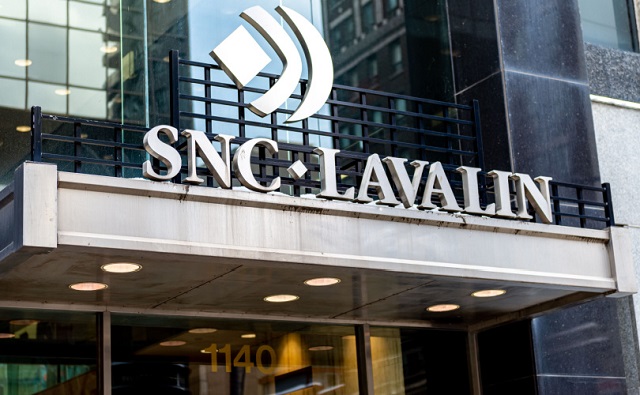
Canadian Liberal MPs on the ethics committee voted to stop the Royal Canadian Mounted Police (RCMP) commissioner from testifying about a bribery scandal involving the large Canadian engineering firm SNC-Lavalin and the federal Liberal government of Prime Minister Justin Trudeau.

RCMP commissioner Michael Duheme was set to testify about the bribery scandal to speak about whether Trudeau blocked the police from obtaining certain cabinet documents, which might have implicated him regarding his obstruction of justice charges that stemmed from the SNC-Lavalin affair.

Liberal, New Democrat (NDP), and Bloc Québécois MPs on the ethics committee voted 7-3 to adopt a Liberal motion to abruptly adjourn the meeting with Duheme only minutes after it began.

Conservative MP Michael Barrett called the abrupt meeting cancellation “unacceptable.”

“Witnesses were to give testimony and now we have government members looking to shut down a hearing on a very serious matter with respect to a criminal investigation into the Prime Minister and we have the Commissioner of the RCMP at this table,” Barrett said.

Liberal MP Mona Fortier, who serves as the ethics committee vice chair, claimed the SNC-Lavalin scandal had not been “discussed whatsoever by the committee.”

“I think the committee should at least have had the opportunity to debate the motion presented in due form. I don’t think this is necessarily the best way to go forward, having committees unable to make their decisions. So based on this reasoning, I would like to adjourn the meeting,” she said.

In June, LifeSiteNews reported on how the RCMP denied it was looking into whether Trudeau and his cabinet committed obstruction of justice concerning the SNC-Lavalin bribery scandal.

SNC-Lavalin was faced with charges of corruption and fraud concerning about $48 million in payments made to officials with the Libyan government between 2001 and 2011. The company had hoped to be spared both a trial and prosecution deferred prosecution agreement.

However, then-Attorney General Jody Wilson-Raybould did not go along with Trudeau’s plan, which would have allegedly appeared to help SNC-Lavalin. Back in 2019, she contended that both Trudeau and his top Liberal officials had inappropriately applied pressure to her for four months to directly intervene in the criminal prosecution relating to corruption and bribery charges connected to SNC’s government contracts in Libya.

Wilson-Raybould testified in early 2019 to Canada’s justice committee that she believed she was moved from her then-justice cabinet posting to veterans’ affairs due to the fact she did not grant a request from SNC-Lavalin for a deferred prosecution agreement rather than a criminal trial.

Of note is that a criminal conviction would have banned the company from getting any government contracts for 10 years.

Trudeau flat-out denied it was being investigated by the RCMP.

A little less than four years ago, Trudeau was found to have broken the federal ethics laws, or Section 9 of the Conflict of Interest Act, for his role in pressuring Wilson-Raybould.

MPs were hoping Duheme’s testimony would clear up many questions

Conservative MPs were hoping that Duheme’s testimony would have cleared up more questions about the SNC-Lavalin scandal after the group Democracy Watch on October 16 revealed a host of records regarding it.

These records show that the RCMP was stopped by Trudeau’s top cabinet members via a restricted disclosure order. This order stated that authorization to waive solicitor-client privilege would not be allowed in regard to information concerning communications between Wilson-Raybould and the director of public prosecutions regarding SNC-Lavalin.

The records released by Democracy Watch involve about 1,815 pages of records from 19 documents that the RCMP recently disclosed after an Access to Information Act (ATIA) request.

In July 2022, the group filed an Access to Information Act (ATIA) request with the RCMP about the SNC-Lavalin affair and Trudeau.

As for SNC-Lavalin, which now goes by the name “AtkinsRéalis,” in 2019 it pleaded guilty to committing fraud in a Québec Provincial Court and was hit with a $280 million fine. Company executives also admitted that they had paid some $47.7 million in bribes to get contracts in Libya.

Todayville is a digital media and technology company. We profile unique stories and events in our community. Register and promote your community event for free.

Follow Author

Energy

Unceded is uncertain

Published on

Tsawwassen Speaker Squiqel Tony Jacobs arrives for a legislative sitting. THE CANADIAN PRESS/Darryl Dyck

From Resource Works

Cowichan case underscores case for fast-tracking treaties

If there are any doubts over the question of which route is best for settling aboriginal title and reconciliation – the courts or treaty negotiations – a new economic snapshot on the Tsawwassen First Nation should put the question to rest.

Thanks to a modern day treaty, implemented in 2009, the Tsawwassen have leveraged land, cash and self-governance to parlay millions into hundreds of millions a year, according to a new report by Deloitte on behalf of the BC Treaty Commission.

With just 532 citizens, the Tsawwassen First Nation now provides $485 million in annual employment and 11,000 permanent retail and warehouse jobs, the report states.

Deloitte estimates modern treaties will provide $1 billion to $2 billion in economic benefits over the next decade.

“What happens, when you transfer millions to First Nations, it turns into billions, and it turns into billions for everyone,” Sashia Leung, director of international relations and communication for the BC Treaty Commission, said at the Indigenous Partnership Success Showcase on November 13.

“Tsawwassen alone, after 16 years of implementing their modern treaty, are one of the biggest employers in the region.”

BC Treaty Commission’s Sashia Leung speaks at the Indigenous Partnerships Success Showcase 2025.

Nisga’a success highlights economic potential

The Nisga’a is another good case study. The Nisga’a were the first indigenous group in B.C. to sign a modern treaty.

Having land and self-governance powers gave the Nisga’a the base for economic development, which now includes a $22 billion LNG and natural gas pipeline project – Ksi Lisims LNG and the Prince Rupert Gas Transmission line.

“This is what reconciliation looks like: a modern Treaty Nation once on the sidelines of our economy, now leading a project that will help write the next chapter of a stronger, more resilient Canada,” Nisga’a Nation president Eva Clayton noted last year, when the project received regulatory approval.

While the modern treaty making process has moved at what seems a glacial pace since it was established in the mid-1990s, there are some signs of gathering momentum.

This year alone, three First Nations signed final treaty settlement agreements: Kitselas, Kitsumkalum and K’omoks.

“That’s the first time that we’ve ever seen, in the treaty negotiation process, that three treaties have been initialed in one year and then ratified by their communities,” Treaty Commissioner Celeste Haldane told me.

Courts versus negotiation

When it comes to settling the question of who owns the land in B.C. — the Crown or First Nations — there is no one-size-fits-all pathway.

Some First Nations have chosen the courts. To date, only one has succeeded in gaining legal recognition of aboriginal title through the courts — the Tsilhqot’in.

The recent Cowichan decision, in which a lower court recognized aboriginal title to a parcel of land in Richmond, is by no means a final one.

That decision opened a can of worms that now has private land owners worried that their properties could fall under aboriginal title. The court ruling is being appealed and will almost certainly end up having to go to the Supreme Court.

This issue could, and should, be resolved through treaty negotiations, not the courts.

The Cowichan, after all, are in the Hul’qumi’num treaty group, which is at stage 5 of a six-stage process in the BC Treaty process. So why are they still resorting to the courts to settle title issues?

The Cowichan title case is the very sort of legal dispute that the B.C. and federal governments were trying to avoid when it set up the BC Treaty process in the mid-1990s.

Accelerating the process

Unfortunately, modern treaty making has been agonizingly slow.

To date, there are only seven modern implemented treaties to show for three decades of works — eight if you count the Nisga’a treaty, which predated the BC Treaty process.

Modern treaty nations include the Nisga’a, Tsawwassen, Tla’amin and five tribal groups in the Maa-nulth confederation on Vancouver Island.

It takes an average of 10 years to negotiate a final treaty settlement. Getting a court ruling on aboriginal title can take just as long and really only settles one question: Who owns the land?

The B.C. government has been trying to address rights and title through other avenues, including incremental agreements and a tripartite reconciliation process within the BC Treaty process.

It was this latter tripartite process that led to the Haida agreement, which recognized Haida title over Haida Gwaii earlier this year.

These shortcuts chip away at issues of aboriginal rights and title, self-governance, resource ownership and taxation and revenue generation.

Modern treaties are more comprehensive, settling everything from who owns the land and who gets the tax revenue from it, to how much salmon a nation is entitled to annually.

Once modern treaties are in place, it gives First Nations a base from which to build their own economies.

The Tsawwassen First Nation is one of the more notable case studies for the economic and social benefits that accrue, not just to the nation, but to the local economy in general.

The Tsawwassen have used the cash, land and taxation powers granted to them under treaty to create thousands of new jobs. This has been done through the development of industrial, commercial and residential lands.

This includes the development of Tsawwassen Mills and Tsawwassen Commons, an Amazon warehouse, a container inspection centre, and a new sewer treatment plant in support of a major residential development.

“They have provided over 5,000 lease homes for Delta, for Vancouver,” Leung noted. “They have a vision to continue to build that out to 10,000 to 12,000.”

Removing barriers to agreement

For First Nations, some of the reticence in negotiating a treaty in the past was the cost and the loss of tax exemptions. But those sticking points have been removed in recent years.

First Nations in treaty negotiations were originally required to borrow money from the federal government to participate, and then that loan amount was deducted from whatever final cash settlement was agreed to.

That requirement was eliminated in 2019, and there has been loan forgiveness to those nations that concluded treaties.

Another sticking point was the loss of tax exemptions. Under Section 87 of Indian Act, sales and property taxes do not apply on reserve lands.

But under modern treaties, the Indian Act ceases to apply, and reserve lands are transferred to title lands. This meant giving up tax exemptions to get treaty settlements.

That too has been amended, and carve-outs are now allowed in which the tax exemptions can continue on those reserve lands that get transferred to title lands.

“Now, it’s up to the First Nation to determine when and if they want to phase out Section 87 protections,” Haldane said.

Haldane said she believes these recent changes may account for the recent progress it has seen at the negotiation table.

“That’s why you’re seeing K’omoks, Kitselas, Kitsumkalum – three treaties being ratified in one year,” she said. “It’s unprecedented.”

The Mark Carney government has been on a fast-tracking kick lately. But we want to avoid the kind of uncertainty that the Cowichan case raises, and if the Carney government is looking for more things to fast-track that would benefit First Nations and the Canadian economy, perhaps treaty making should be one of them.

Resource Works News

Continue Reading

Automotive

Power Struggle: Governments start quietly backing away from EV mandates

Published on

From Resource Works

Barry Penner doesn’t posture – he brings evidence. And lately, the evidence has been catching up fast to what he’s been saying for months.

Penner, chair of the Energy Futures Institute and a former B.C. environment minister and attorney-general, walked me through polling that showed a decisive pattern: declining support for electric-vehicle mandates, rising opposition, and growing intensity among those pushing back.

That was before the political landscape started shifting beneath our feet.

In the weeks since our conversation, the B.C. government has begun retreating from its hardline EV stance, softening requirements and signalling more flexibility. At the same time, Ottawa has opened the door to revising its own rules, acknowledging what the market and motorists have been signalling for some time.

Penner didn’t need insider whispers to see this coming. He had the data.

Barry Penner, Chair of the Energy Futures Institute 

B.C.’s mandate remains the most aggressive in North America: 26 per cent ZEV sales by 2026, 90 per cent by 2030, and 100 per cent by 2035. Yet recent sales paint a different picture. Only 13 per cent of new vehicles sold in June were electric. “Which means 87 per cent weren’t,” Penner notes. “People had the option. And 87 per cent chose a non-electric.”

Meanwhile, Quebec has already adjusted its mandate to give partial credit for hybrids. Polling shows 76 per cent of British Columbians want the same. The trouble? “There’s a long waiting list to get one,” Penner says.

Cost, charging access and range remain the top barriers for consumers. And with rebates shrinking or disappearing altogether, the gap between policy ambition and practical reality is now impossible for governments to ignore.

Penner’s advice is simple, and increasingly unavoidable: “Recognition of reality is in order.”

  • Now watch Barry Penner’s full video interview with Stewart Muir on Power Struggle here:

Continue Reading

Trending

X