Connect with us

National

Liberal House Leader tells gov’t-funded media they must ‘scrutinize’ Conservatives

Published

4 minute read

From LifeSiteNews

By Clare Marie Merkowsky

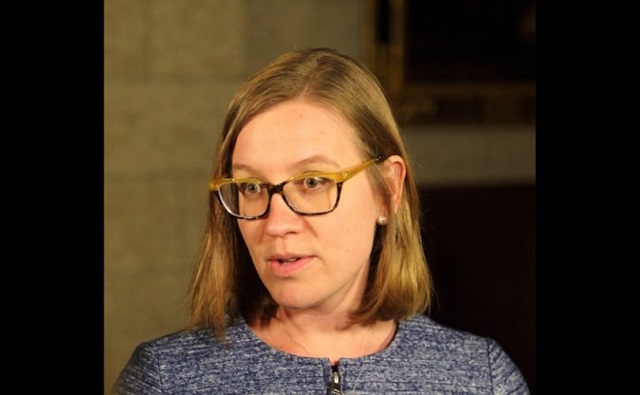
Liberal House leader Karina Gould told government-funded reporters to ‘scrutinize’ Conservative Party leader Pierre Poilievre, who has repeatedly condemned government-funded media as being an arm of the Liberals.

The Liberal House Leader told government- funded media that it is their job to the scrutinize the Conservative Party.   

In a September 16 news conference, Government House leader Karina Gould directed mainstream media reporters to “scrutinize” Conservative Party leader Pierre Poilievre, who has repeatedly condemned government-funded media as being an arm of the Liberals. 

“Make sure we are holding (Pierre Poilievre) to account, to ensure he faces the proper scrutiny, because as Canadians get closer and closer to an election he has to answer those tough questions,” Gould instructed.   

“Instead of answering legitimate questions from journalists – that’s his job – what does he do to journalists?” she questioned. “He attacks them. This is not something done by a responsible leader,” she asserted. 

Gould’s comments were in reference to Poilievre’s promise to defund the Canadian Broadcasting Corporation (CBC) if elected prime minister. Poilievre is a long-time critic of government-funded media, especially the CBC.

Gould claimed that Poilievre’s suggestion would deny Canadians access to important information, ignoring the fact that Prime Minister Justin Trudeau’s new legislation blocked all access to news content on Facebook and Instagram.  

“When it comes to making sure that Canadians have access to good quality information in a time of incredible disinformation, what does he propose to do?” Gould questioned.  

“Defund the CBC. And all of you as journalists have experienced firsthand how he treats people who try to ask him tough questions, who try to have him face the scrutiny of what he puts forward,” she continued.   

“How does he react?” asked Gould. “As a bully, as someone who will not stand to scrutiny, who will not respond respectfully, not just to you as journalists but on the questions you’re asking on behalf of Canadians because your job is to get that information to Canadians. There is a reason why he doesn’t want Canadians to know what his true agenda is.”

While the reporters did not respond to her demands in the moment, mainstream media in Canada relies on government subsidies to stay afloat, and is often criticized for its left-wing bias. In fact, there have been multiple instances of the CBC pushing what appears to be ideological content, including the creating of pro-LGBT material for kids, tacitly endorsing the gender mutilation of children, promoting euthanasia, and even seeming to justify the burning of mostly Catholic churches throughout the country.

Despite this, beginning in 2019, Parliament changed the Income Tax Act to give yearly rebates of 25 percent for each news employee in cabinet-approved media outlets earning up to $55,000 a year, to a maximum of $13,750.   

The Canadian Heritage Department since admitted that the payouts are not even sufficient to keep legacy media outlets running, and recommended that the rebates be doubled to a maximum of $29,750 annually.    

Last November, Trudeau again announced increased payouts for legacy media outlets, payouts which coincide with the lead-up to the 2025 election. The subsidies are expected to cost taxpayers $129 million over the next five years.      

Similarly, Trudeau’s 2024 budget outlined $42 million in increased funding for the CBC for 2024-25.    

The $42 million to the CBC is in addition to massive media payouts which already make up roughly 70 percent of its operating budget, and total more than $1 billion annually.    

Todayville is a digital media and technology company. We profile unique stories and events in our community. Register and promote your community event for free.

Follow Author

Energy

Energy security matters more than political rhetoric

Published on

From Resource Works

By

If we force a transition that increases the cost of living, threatens grid reliability, and denies developing nations the dense energy they need to rise out of poverty, what have we actually achieved?

Finance expert warns that political timelines for transition defy the laws of physics and economics while threatening living standards.

In the polarized world of energy policy, it is becoming increasingly difficult to find conversations that prioritize practical reality over political idealism. We are often presented with a binary choice: either you are for the planet, or you are against it. But as I often find when digging deeper into these issues on the Power Struggle podcast, the real world is far too complex for such simple narratives.

I recently had the opportunity to sit down with Jerome Gessaroli to strip away the rhetoric and look at the hard numbers. For those who don’t know him, Gessaroli is a finance professor at the British Columbia Institute of Technology, a senior fellow with the Macdonald-Laurier Institute, and a valued member of the Resource Works Advisory Council. He is a thinker who deals in data, not daydreams.

Stewart Muir with Jerome Gesaroli on Power Struggle Podcast

Our conversation focused on a topic that makes many policymakers uncomfortable: the widening gap between our energy transition targets and the physical capacity to meet them.

The Fundamental Equation

We began with a premise that should be obvious but is frequently forgotten in the halls of government in Ottawa or Brussels. Gessaroli laid it out as a fundamental fact that underscores every economic decision a nation makes.

“There is a direct link, a direct correlation, between energy consumption and living standards,” Gessaroli told me. “And so if we expect to improve our living standards in the future, then we will likely be expending more energy.”

This is the inescapable equation of modern life. In the West, where we have enjoyed stable grids and abundant fuel for a century, we sometimes delude ourselves into thinking we can maintain our prosperity while shrinking our energy footprint. But globally, the trend is moving in the opposite direction.

Gessaroli pointed out that while we debate carbon taxes and caps here, the majority of the planet is focused on survival and advancement.

“A lot of the growth in energy consumption will be through the Third World,” he explained. “They’ve just got a huge population, and they want to pursue economic growth, have a better standard of living, and that will require a lot more energy.”

The View from the Developing World

To illustrate this, Gessaroli drew on his observations from India. He described seeing farmers burning dung to create heat and energy—a practice born of necessity, but one that traps populations in poverty and creates localized health hazards. The path out of that poverty isn’t found in wishful thinking; it’s found in density.

“Now, if they expect to have a better standard of living in the future . . . they’re going to be looking at more intensive sources of energy, like coal, natural gas, nuclear, whatever,” Gessaroli said. “They need to use more energy in order to raise their living standards.”

This brings us to one of the most contentious points in the global climate dialogue. We often hear Western politicians ask, with a mix of confusion and frustration, why nations like China and India are still building new coal-power plants. If the technology for wind and solar exists, why aren’t they leaping straight to it?

I found Gessaroli’s answer to be a necessary dose of realism. It isn’t that these nations hate the environment; it’s that they love stability.

“They know how to do it extremely efficiently. They have the local domestic sources,” Gessaroli noted, referring to coal reserves. “There’s a source of energy security in that they don’t have to import the product.”

In an era of geopolitical instability, energy security is national security. Relying on domestic coal provides a safety net that imported fuels or intermittent renewables cannot yet match. As Gessaroli put it: “The type of power that is generated by a coal plant, for instance, is stable, reliable power.”

The Timeline Mismatch

This doesn’t mean the world isn’t changing. It is. Gessaroli was quick to acknowledge that the green energy sector is booming. Innovation is happening. But there is a massive disconnect between the pace of engineering and the pace of political promises.

“There is a lot of growth in terms of other types of energy production. They’re growing quite rapidly and they’re improving over time,” Gessaroli said. “But it’s just not in line with the time frames that our politicians and policymakers are telling us that the targets have to be met by.”

This is the crux of the “power struggle.” We are being sold a vision of the future with a delivery date that defies the laws of physics and economics.

The EV Challenge and the Scale of Site C

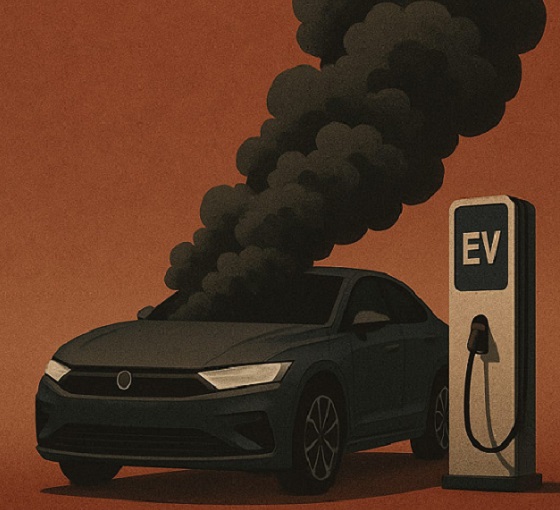
Perhaps nowhere is this disconnect more visible than in the push for electric vehicles (EVs). Governments are setting aggressive target dates to ban the sale of internal combustion engines. On paper, it looks like a victory for the climate. But as a finance professor, Gessaroli looks at the balance sheet of power generation.

“What they don’t realize is the activity, the investment, required to actually make that happen,” he said. “Where is all that extra power going to come from?”

This is not a rhetorical question. It is a logistical nightmare. To put it in a local context, we looked at British Columbia. We have just spent years and billions of dollars completing the Site C hydro dam, a massive engineering project designed to secure our grid for the future.

However, Gessaroli’s calculations suggest that the new power demand from a full EV transition alone means we would need two times the amount of power currently generated by the new Site C hydro dam.

Let that sink in. It took us decades of planning, regulatory hurdles, and construction to build one Site C. To meet the government’s EV mandates, we effectively need to build two more, immediately. And that doesn’t even account for the rest of the economy.

“If we want to decarbonize mines and other industrial projects as well, then we’re going to have to find the extra power,” Gessaroli added.

If we cannot build the generation capacity in time, the demand will simply outstrip supply. Prices will skyrocket, and reliability will plummet.

The Unintended Consequences

Towards the end of our discussion, Gessaroli posed a question that has stuck with me. It challenges the moral high ground often claimed by the most aggressive climate activists.

If we force a transition that increases the cost of living, threatens grid reliability, and denies developing nations the dense energy they need to rise out of poverty, what have we actually achieved?

It all leads to his key question: What if the green revolution is hurting the people it aims to protect?

It is a question that deserves an honest answer, not more slogans. As we look toward a future of increased energy demand, we need to listen to experts like Gessaroli who understand that you cannot legislate your way around the laws of thermodynamics.

Watch the video on Power Struggle

Power Struggle on social media

Resource Works News


Continue Reading

Energy

Canada’s sudden rediscovery of energy ambition has been greeted with a familiar charge: hypocrisy

Published on

From Resource Works

By

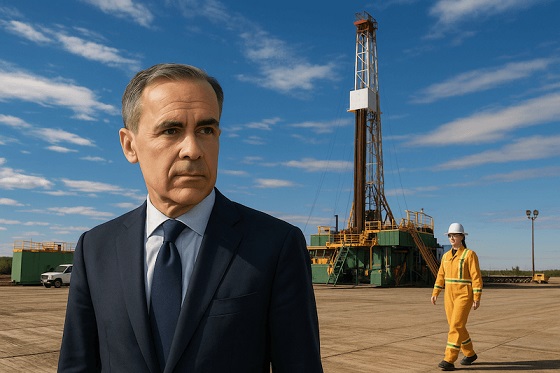
Carney didn’t betray climate ambition. He confronted reality

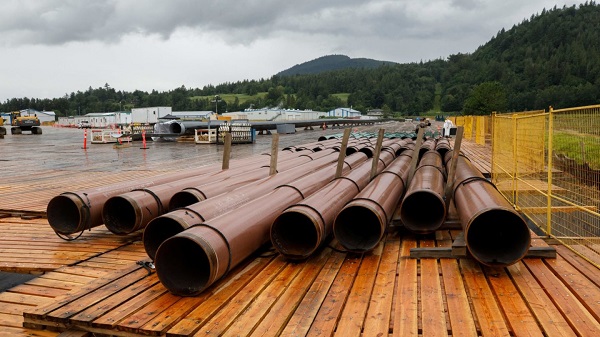
Playing politics with pipelines is a time-honored Canadian tradition. Recent events in the House of Commons offered a delightful twist on the genre.


Get the Latest Canadian Focused Energy News Delivered to You! It’s FREE: Quick Sign-Up Here


The Conservatives introduced a motion quoting the Liberals’ own pipeline promises laid out in the Memorandum of Understanding (MOU) with Alberta, nearly verbatim. The Liberals, true to form, killed it 196–139 with enthusiastic help from the NDP, Bloc, and Greens.

We all knew how this would end. Opposition motions like this never pass; no government, especially not one led by Mark Carney, is going to let the opposition dictate the agenda. There’s not much use feigning outrage that the Liberals voted it down. The more entertaining angle has been watching closely as Liberal MPs twist themselves into pretzels explaining why they had to vote “no” on a motion that cheers on a project they claim to support in principle.

Liberal MP Corey Hogan dismissed the motion as “game-playing” designed to “poke at people”.

And he’s absolutely right to call it a “trap” for the Liberals. But traps only work when you walk into them.

Indigenous Services Minister Mandy Gull-Masty deemed the motion an “immature waste of parliamentary time” and “clearly an insult towards Indigenous Peoples” because it didn’t include every clause of the original agreement. Energy Minister Tim Hodgson decried it as a “cynical ploy to divide us” that “cherry-picked” the MOU.

Yet the prize for the most tortured metaphor goes to the prime minister himself. Defending his vote against his own pipeline promise, Carney lectured the House that “you have to eat the entire meal, not just the appetizer.”

It’s a clever line, and it also reveals the problem. The “meal” Carney is serving is stuffed with conditions. Environmental targets or meaningful engagement with Indigenous communities aren’t unrealistic asks. A crippling industrial carbon price as a precondition might be though.

But the prime minister has already said the quiet part out loud.

​Speaking in the House a few weeks ago, Carney admitted that the agreement creates “necessary conditions, but not sufficient conditions,” before explicitly stating: “We believe the government of British Columbia has to agree.”

​There is the poison pill. Handing a de facto veto to a provincial government that has spent years fighting oil infrastructure is neither constitutionally required nor politically likely. Elevating B.C.’s “agreement” to a condition, which is something the MOU text itself carefully avoids doing, means that Carney has made his own “meal” effectively inedible.

Hodgson’s repeated emphasis that the Liberal caucus supports “the entire MOU, the entire MOU” only reinforces this theory.

This entire episode forces us to ask whether the MOU is a real plan to build a pipeline, or just a national unity play designed to cool down the separatist temperature in Alberta. My sense is that Ottawa knew they had to throw a bone to Premier Danielle Smith because the threat of the sovereignty movement is gaining real traction. But you can’t just create the pretense of negotiation to buy time.

With the MOU getting Smith boo’ed at her own party’s convention by the separatists, it’s debatable whether that bone was even an effective one to throw.

There is a way. The federal government has the jurisdiction. If they really wanted to, they could just do it, provided the duty to consult with and accommodate Indigenous peoples was satisfied. Keep in mind: no reasonable interpretation equates Section 35 of the Charter to a veto.

Instead, the MOU is baked with so many conditions that the Liberals have effectively laid the groundwork for how they’re going to fail.

With overly-hedged, rather cryptic messaging, Liberals have themselves given considerable weight to a cynical theory, that the MOU is a stalling tactic, not a foundation to get more Canadian oil to the markets it’s needed in. Maybe Hodgson is telling the truth, and caucus is unified because the radicals are satisfied that “the entire MOU” ensures that a new oil pipeline will never reach tidewater through BC.

So, hats off to the legislative affairs strategists in the Conservative caucus. The real test of Carney’s political power continues: can he force a caucus that prefers fantasy economics into a mold of economic literacy to deliver on the vision Canadians signed off on? Or will he be hamstrung trying to appease the radicals from within?


Margareta Dovgal is managing director of Resource Works Society.

Continue Reading

Trending

X