
Daily Caller
Key Trump Cabinet Nominees Face A Daunting Energy Policy Mess



From the Daily Caller News Foundation
By David Blackmon
Just so we can frame this for everyone in the room, China will build 100 new coal plants this year. There is not a clean energy race. There is an energy race.
After a week spent watching hours of the various Senate confirmation hearings for some of President-elect Donald Trump’s cabinet nominees, one compelling thought lingers with me more than any other: Does Democrat Sen. Mazie Hirono of Hawaii have a seat on every Senate committee?
The answer to that is “no,” but it seemed that way as the Senator began her questioning of nominees ranging from Pete Hegseth (Defense) to former Florida Attorney General Pam Bondi (Justice) to former Republican North Dakota Gov. Doug Burgum (Interior) to Chris Wright (Energy) by posing some iteration of the following question: “ … since you became a legal adult, have you ever made unwanted requests for sexual favors or committed any verbal or physical harassment or assault of a sexual nature?”
Sadly, Hirono’s farcical style of questioning turned out to be less of an exception than a rule among the Democratic members of these committees as the week wore on. Democrat Sen. Tim Kaine of Virginia ended his questioning of Hegseth by literally asking if he had ever beaten his wife, an obvious smear which Hegseth denied.
It was all sad to witness, a troubling indicator of the health of both the Democratic Party and the American Republic. But what it all revealed by Friday is that the Democrats are unlikely to claim any scalps from among this week’s slate of nominees. Where energy policy is concerned, that means that the three departments/agencies that are most impactful in that realm are likely to be led by former Republican Rep. Lee Zeldin of New York at the Environmental Protection Agency (EPA), Burgum at the Department of the Interior and Wright at the Department of Energy.
Seldom if ever in this country’s history have three more capable, knowledgeable and effective individuals been in positions of leadership to help reform and recover from the waste and misallocation of taxpayer dollars that have characterized President Joe Biden’s 4-year presidency.
I have written several times here that the inevitable outcome that will result from pretty much every aspect of the Biden Green New Deal policies will be to render America dependent on China for its energy security, due to Chinese dominance of global processing and supply chains for all forms of and raw materials for renewable energy and electric vehicles. This is obviously not a sustainable situation, and it is clear that Trump and his key nominees fully understand that reality.
U.S. dependency on foreign adversaries is not limited to China. One such area involving a different country holds high stakes related to the goal of a renaissance in nuclear power often touted by Republicans and some Democrats alike.

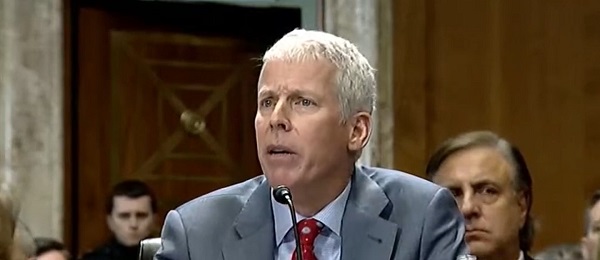
In a revealing exchange, Wright and Republican Sen. John Barrasso of Wyoming discussed America’s recent dependence on Russia, of all countries, for imports of enriched uranium. As Wright pointed out, this is a technology first invented in the United States, but our country has virtually no existing capacity for uranium enrichment today. This is, as Wright called it, “a sad state of affairs” that has been caused in large part by wrong-headed federal environmental and permitting policies.
Unfortunately, the Biden cure for this pressing energy security matter could be even worse. As U.S. and NATO sanctions have gradually shut down Russia’s exports of enriched uranium, the U.S. nuclear industry has become reliant on imports from — you guessed it — China.
“As those [sanctions] shut down Russian uranium … we see more imports from China,” Wright testified. “We need to get beyond that … without shutting down the nuclear power plants we have running today. It is an area that requires urgent action.”
In another revealing exchange, Trump’s nominee for Treasury Secretary, Scott Bessent, disagreed with Democrat Sen. Ron Wyden of Oregon about the Senator’s claim that the United States is involved in “an arms race on clean energy” with China.
“Senator Wyden, just so we can frame this for everyone in the room, China will build 100 new coal plants this year. There is not a clean energy race. There is an energy race,” Bessent replied. Truer words were never spoken, and it is impossible to win that energy race when the United States is increasingly dependent on China for its very energy needs.
These and other Trump nominees have an enormous mess to clean up from the profligate spending and waste of the Biden years. Fortunately for the country, their work begins Monday. Not a moment too soon.
David Blackmon is an energy writer and consultant based in Texas. He spent 40 years in the oil and gas business, where he specialized in public policy and communications.

Business
Some Of The Wackiest Things Featured In Rand Paul’s New Report Alleging $1,639,135,969,608 In Gov’t Waste

From the Daily Caller News Foundation
Republican Kentucky Sen. Rand Paul released the latest edition of his annual “Festivus” report Tuesday detailing over $1 trillion in alleged wasteful spending in the U.S. government throughout 2025.
The newly released report found an estimated $1,639,135,969,608 total in government waste over the past year. Paul, a prominent fiscal hawk who serves as the chairman of the Senate Homeland Security and Governmental Affairs Committee, said in a statement that “no matter how much taxpayer money Washington burns through, politicians can’t help but demand more.”
“Fiscal responsibility may not be the most crowded road, but it’s one I’ve walked year after year — and this holiday season will be no different,” Paul continued. “So, before we get to the Feats of Strength, it’s time for my Airing of (Spending) Grievances.”
Dear Readers:
As a nonprofit, we are dependent on the generosity of our readers.
Please consider making a small donation of any amount here.
Thank you!
The 2025 “Festivus” report highlighted a spate of instances of wasteful spending from the federal government, including the Department of Health and Human Services (HHS) spent $1.5 million on an “innovative multilevel strategy” to reduce drug use in “Latinx” communities through celebrity influencer campaigns, and also dished out $1.9 million on a “hybrid mobile phone family intervention” aiming to reduce childhood obesity among Latino families living in Los Angeles County.
The report also mentions that HHS spent more than $40 million on influencers to promote getting vaccinated against COVID-19 for racial and ethnic minority groups.
The State Department doled out $244,252 to Stand for Peace in Islamabad to produce a television cartoon series that teaches children in Pakistan how to combat climate change and also spent $1.5 million to promote American films, television shows and video games abroad, according to the report.
The Department of Veterans Affairs (VA) spent more than $1,079,360 teaching teenage ferrets to binge drink alcohol this year, according to Paul’s report.
The report found that the National Science Foundation (NSF) shelled out $497,200 on a “Video Game Challenge” for kids. The NSF and other federal agencies also paid $14,643,280 to make monkeys play a video game in the style of the “Price Is Right,” the report states.
Paul’s 2024 “Festivus” report similarly featured several instances of wasteful federal government spending, such as a Las Vegas pickleball complex and a cabaret show on ice.
The Trump administration has been attempting to uproot wasteful government spending and reduce the federal workforce this year. The administration’s cuts have shrunk the federal workforce to the smallest level in more than a decade, according to recent economic data.
Festivus is a humorous holiday observed annually on Dec. 23, dating back to a popular 1997 episode of the sitcom “Seinfeld.” Observance of the holiday notably includes an “airing of grievances,” per the “Seinfeld” episode of its origin.

From the Daily Caller News Foundation
I’ve written frequently here in recent years about the financial fiasco that has hit Ford Motor Company and other big U.S. carmakers who made the fateful decision to go in whole hog in 2021 to feed at the federal subsidy trough wrought on the U.S. economy by the Joe Biden autopen presidency. It was crony capitalism writ large, federal rent seeking on the grandest scale in U.S. history, and only now are the chickens coming home to roost.
Ford announced on Monday that it will be forced to take $19.5 billion in special charges as its management team embarks on a corporate reorganization in a desperate attempt to unwind the financial carnage caused by its failed strategies and investments in the electric vehicles space since 2022.
Cancelled is the Ford F-150 Lightning, the full-size electric pickup that few could afford and fewer wanted to buy, along with planned introductions of a second pricey pickup and fully electric vans and commercial vehicles. Ford will apparently keep making its costly Mustang Mach-E EV while adjusting the car’s features and price to try to make it more competitive. There will be a shift to making more hybrid models and introducing new lines of cheaper EVs and what the company calls “extended range electric vehicles,” or EREVs, which attach a gas-fueled generator to recharge the EV batteries while the car is being driven.
Dear Readers:
As a nonprofit, we are dependent on the generosity of our readers.
Please consider making a small donation of any amount here.
Thank you!
“The $50k, $60k, $70k EVs just weren’t selling; We’re following customers to where the market is,” Farley said. “We’re going to build up our whole lineup of hybrids. It’s gonna be better for the company’s profitability, shareholders and a lot of new American jobs. These really expensive $70k electric trucks, as much as I love the product, they didn’t make sense. But an EREV that goes 700 miles on a tank of gas, for 90% of the time is all-electric, that EREV is a better solution for a Lightning than the current all-electric Lightning.”
It all makes sense to Mr. Farley, but one wonders how much longer the company’s investors will tolerate his presence atop the corporate management pyramid if the company’s financial fortunes don’t turn around fast.
To Ford’s and Farley’s credit, the company has, unlike some of its competitors (GM, for example), been quite transparent in publicly revealing the massive losses it has accumulated in its EV projects since 2022. The company has reported its EV enterprise as a separate business unit called Model-E on its financial filings, enabling everyone to witness its somewhat amazing escalating EV-related losses since 2022:
• 2022 – Net loss of $2.2 billion
• 2023 – Net loss of $4.7 billion
• 2024 – Net loss of $5.1 billion
Add in the company’s $3.6 billion in losses recorded across the first three quarters of 2025, and you arrive at a total of $15.6 billion net losses on EV-related projects and processes in less than four calendar years. Add to that the financial carnage detailed in Monday’s announcement and the damage from the company’s financial electric boogaloo escalates to well above $30 billion with Q4 2025’s damage still to be added to the total.
Ford and Farley have benefited from the fact that the company’s lineup of gas-and-diesel powered cars have remained strongly profitable, resulting in overall corporate profits each year despite the huge EV-related losses. It is also fair to point out that all car companies were under heavy pressure from the Biden government to either produce battery electric vehicles or be penalized by onerous federal regulations.
Now, with the Trump administration rescinding Biden’s harsh mandates and canceling the absurdly unattainable fleet mileage requirements, Ford and other companies will be free to make cars Americans actually want to buy. Better late than never, as they say, but the financial fallout from it all is likely just beginning to be made public.
- David Blackmon is an energy writer and consultant based in Texas. He spent 40 years in the oil and gas business, where he specialized in public policy and communications.


Alberta’s huge oil sands reserves dwarf U.S. shale
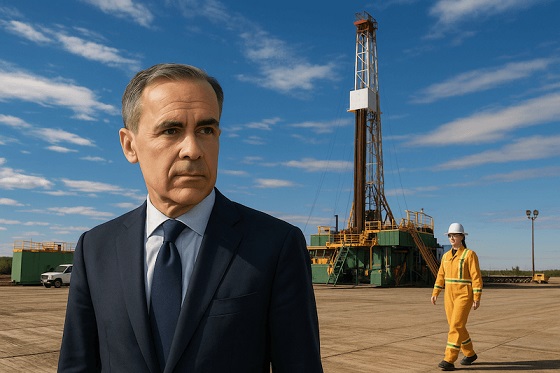
Canada’s sudden rediscovery of energy ambition has been greeted with a familiar charge: hypocrisy
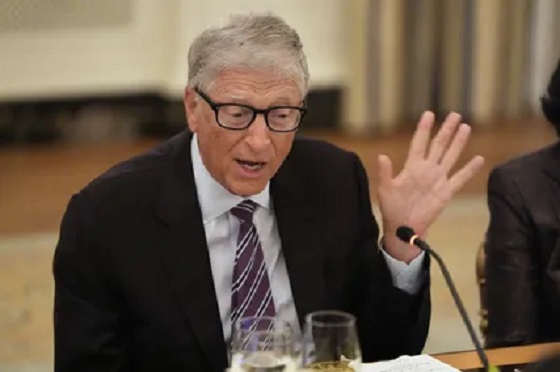
COP30 finally admits what resource workers already knew: prosperity and lower emissions must go hand in hand

Ottawa’s Newly Released Defence Plan Crosses a Dangerous Line
-
armed forces6 hours ago
Ottawa’s Newly Released Defence Plan Crosses a Dangerous Line
-
 Business2 days ago
State of the Canadian Economy: Number of publicly listed companies in Canada down 32.7% since 2010
-
 Censorship Industrial Complex2 days ago
Canadian university censors free speech advocate who spoke out against Indigenous ‘mass grave’ hoax
-
 espionage5 hours ago
Carney Floor Crossing Raises Counterintelligence Questions aimed at China, Former Senior Mountie Argues
-
 Health4 hours ago
All 12 Vaccinated vs. Unvaccinated Studies Found the Same Thing: Unvaccinated Children Are Far Healthier
-
 Energy7 hours ago
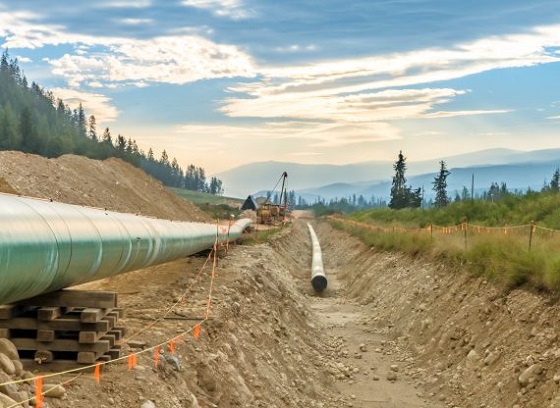
75 per cent of Canadians support the construction of new pipelines to the East Coast and British Columbia
-
 Energy1 day ago
‘The electric story is over’
-
 International2 days ago
Georgia county admits illegally certifying 315k ballots in 2020 presidential election