
Daily Caller
Kevin O’Leary Says Trump’s Tariffs A Gateway To US-Canada Economic Unity



From the Daily Caller News Foundation
By Mariane Angela
‘It’s The Beginning Of A Giant Negotiation’
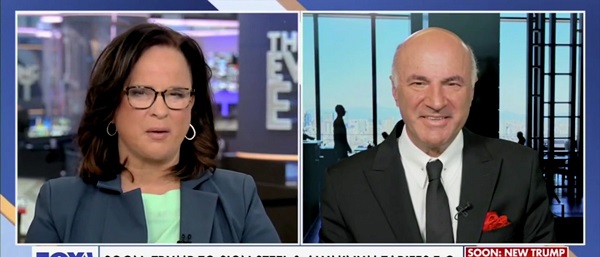
“Shark Tank” co-star Kevin O’Leary said Monday on Fox Business that President Donald Trump’s looming tariff on steel and aluminum imports have broader implications for US-Canada relations.
During an appearance on “The Evening Edit,” O’Leary discussed the impact of tariffs as the start of significant negotiations. He said there is potential for broader economic integration between the U.S. and Canada. Trump plans to impose tariffs of 25% on imports from Mexico and Canada, along with an additional 10% tariff on Canadian oil, natural gas, and electricity. Despite these significant figures, Trump has imposed only a 10% tariff on oil, the cheapest U.S. imports. O’Leary said this is merely the opening move in what could be a transformative economic negotiation.
“So all of this to me, if you separate the signal from the noise, forget the noise. The signal is, let’s get an economic union together,” O’Leary said. O’Leary said there is a global uproar over the U.S.’s proposed 25% tariffs and the reciprocal tariffs from countries like India, which have set their tariffs on some U.S. products at up to 23%.
“Those are two different baskets. Obviously, the one that people are talking about quite a bit tonight is India. They’ve got certain product services in different sectors, up to 23%. Now we’re going to have reciprocal tariffs in the U.S. against them. [Indian Prime Minister Narendra] Modi will immediately fly to Washington. The negotiations will begin,” O’Leary said.
O’Leary, however, said Canada’s situation differs from others.
“It’s the same everywhere. The Canadian situation is unique. Almost the entire 200 million deficit that the president’s talking about comes from one single source. That’s energy coming out of Irving Refineries on the east coast down to Boston, and all of that oil, 4.3 million barrels a day coming in at Alberta into the west,” O’Leary said. “And so that’s the most inexpensive oil [that] the U.S. imports. That’s why he only put a 10% tariff on it. But it’s the beginning of a giant negotiation. Aluminum, 70% of aluminum comes in the U.S. It’s made in Canada for one singular reason.”
While some skeptics doubt Canada’s willingness to merge economies, a growing number of Canadians, O’Leary said, are open to exploring such a possibility.
“What is on the table that now 43% of Canadians want to explore more of? Forget all these tariffs. Let’s join the two economies, become a behemoth, common currency perhaps, and then take on China,” O’Leary added. “I mean, that’s really what we’re talking about here. We’re talking about the security of the north, not the 49th parallel.”

When asked about what the U.S. could gain from such tariffs beyond economic leverage, O’Leary said it’s about the broader geopolitical benefits:
“Let me assure you that 11 out of 10 Canadians would rather trade their Trudeau pesos for American dollars. They already have American dollar accounts. Trudeau has wiped out 41% of their net worth the last nine years. They want an economic union because it’s good for business. Everybody understands that. The two countries are so intertwined, and they both believe in democracy and free speech and freedom and all the rest,” O’Leary said.
O’Leary was asked what can Trump get for the American consumer and the American voter in return for these tariffs.
“Security on energy,” O’Leary said.
“Alberta has five times more oil and gas than the entire United States. Complete security on uranium, aluminum, all of the incredible resources Canada has with only 41 million people there and access to it in a free flow. No tariffs.”
Trump aggressively employed tariffs to coerce Canada and Mexico into making concessions aimed at resolving the crisis at the southern border. In response, Canada has committed to bolstering security along its northern border, while Mexico has agreed to station 10,000 National Guard troops at the border.
During former President Joe Biden’s tenure, approximately 8.5 million migrants were encountered at the U.S.-Mexico border, and this period also saw an increase in fentanyl seizures, primarily driven by Chinese chemical companies. Meanwhile, even though less frequent, illegal crossings at the northern border also surged during the Biden administration.

From the Daily Caller News Foundation
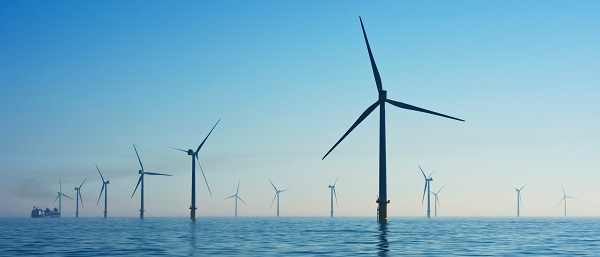
Interior Secretary Doug Burgum leveled the Trump administration’s latest broadside at the struggling U.S. offshore wind industry on Monday, ordering an immediate suspension of activities at the five big wind projects currently in development.
“Today we’re sending notifications to the five large offshore wind projects that are under construction that their leases will be suspended due to national security concerns,” Burgum told Fox Business host Maria Bartiromo. “During this time of suspension, we’ll work with the companies to try to find a mitigation. But we completed the work that President Trump has asked us to do. The Department of War has come back conclusively that the issues related to these large offshore wind programs have created radar interference that creates a genuine risk for the U.S.”
Predictably, reaction to Burgum’s order was immediate, with opponents of offshore wind praising the move, and industry supporters slamming it. In Semafor’s energy-related newsletter on Tuesday, energy and climate editor Tim McDowell quotes an unnamed ex-Energy Department official as claiming, “the Pentagon and intelligence services, which are normally sensitive to even extremely low-probability risks, never flagged this as a concern previously.” (RELATED: Trump Admin Orders Offshore Wind Farm Pauses Over ‘National Security Risks’)
Yet, a simple 30-second Google search finds a wealth of articles going back to as early as October 2014 discussing ways to mitigate the long-ago identified issue of interference with air defense radars by these enormous windmills, some of which are taller than the Eiffel Tower. It is a simple fact that the issue was repeatedly raised during the Biden Administration’s mad rush to speed these giant windmill operations into the construction phase by cutting corners in the permitting process.
In May, 2024, the Bureau of Ocean Energy Management’s (BOEM) own analysis related to the Atlantic Shores South project contains a detailed discussion of the potential impacts and suggests multiple ways to mitigate for them. An Oct. 29, 2024 memo of understanding between BOEM and the Biden Department of Defense calls for increased collaboration between the two departments as a response to concerns from members of Congress and others related to these very long-known potential impacts.
The Georgia Tech Research Institute published a study dated June 6, 2022 detailing “Radar Impacts, Potential Mitigation, from Offshore Wind Turbines.” That study was in fact commissioned by the National Academies of Sciences, Engineering, and Medicine (NASEM), a private non-profit that functions as an advisory group to the federal government.
Oh.
A report published in February 2024 by International Defense Security & Technology, Inc. describes the known issues thusly:
“Wind turbines can create clutter on radar screens in a number of ways. First, the metal towers and blades of wind turbines can reflect radar signals. This can create false returns on radar screens, which can make it difficult to detect and track real targets.
“Second, the rotating blades of wind turbines can create a Doppler effect on radar signals. This can cause real targets to appear to be moving at different speeds than they actually are. This can also make it difficult to track real targets.”
The simple Google search I conducted returns hundreds of articles dating all the way back to 2006 related to this long-known yet unresolved issue that could present a very real threat to national security. The fact that the Biden administration, in its religious zeal to speed these enormous offshore industrial projects into the construction phase, chose to downplay and ignore this threat in no way obligates his successor in office to commit the same dereliction of duty.
Some wind proponents are cynically raising concerns that a future Democratic administration could use this example as justification for cancelling oil and gas projects. It’s as if they’ve all forgotten about the previous four years of the Autopen presidency, which featured Joe Biden’s Day 1 order cancelling the 80% completed Keystone XL pipeline, a year-long moratorium on LNG export permitting, an attempt to set aside more than 200 million acres of the U.S. offshore from future leasing, and too many other destructive moves to detail here.
Again, a simple web search reveals that experts all over the world believe this is a real problem. If so, it needs to be addressed as a matter of national security. Burgum is intent on doing that. All half-baked talking points aside, this really isn’t complicated.
David Blackmon is an energy writer and consultant based in Texas. He spent 40 years in the oil and gas business, where he specialized in public policy and communications.
Daily Caller
While Western Nations Cling to Energy Transition, Pragmatic Nations Produce Energy and Wealth

From the Daily Caller News Foundation
History will likely remember 2025 as the year energy corporatists finally stopped pretending there is a climate crisis. For a decade, a bizarre theater of the absurd played out as titans of the oil and gas industry apologized for their core business while pledging allegiance to a “green transition” that existed mostly in the imaginations of Western bureaucrats. But the curtain has seemingly fallen.
ExxonMobil, one of the world’s largest energy producers, has slashed $10 billion from its low-carbon investment commitments through 2030. Simultaneously, the company announced that it expects $25 billion in earnings growth from 2024 to 2030 to be powered primarily by increases in oil and gas production, which will push daily output to 5.5 million barrels of oil equivalent by the end of the decade.
This is not a company abandoning climate responsibility but rather at last recognizing what has long been obvious: The path prescribed by the climate industrial complex is economically destructive and operationally impossible – even with massive government subsidies.
Dear Readers:
As a nonprofit, we are dependent on the generosity of our readers.
Please consider making a small donation of any amount here.
Thank you!
For years, the global energy strategy has been surreal. Companies that built the modern world on the back of energy-dense hydrocarbons indulged those celebrating the arrival of wind turbines and solar panels to power civilization. But reality, stubborn and unforgiving, has interrupted the psychedelic revelry.
ExxonMobil’s low-carbon investments will be paced to policy support and customer demand, says the company. That is corporate speak meaning that spending on green projects is paused unless the government – using our tax dollars – subsidizes the risk or until a market exists.
Megaprojects, once heralded as the future, are now in line for deferral. Why? Because without taxpayer handouts, the economics of trying to bury underground a plant food like carbon dioxide simply do not work – and defy common sense.
The energy sector is pivoting from a strategy of “grow clean at all costs” to “returns first, transition last.” “Green” projects are being relegated to a secondary capital bucket – a token for good PR instead of a core activity.
Europe’s Shell and Aker BP and Canada’s Enbridge have withdrawn from the Science Based Targets initiative to establish “science-based emissions reductions.” This was a retreat from what is described as a “credible, science-based net-zero framework” because there was neither credibility nor science. It was a political suicide pact. The energy giants looked at the cliff’s edge and refused to jump.
British multinational BP, having abandoned its promise to go “Beyond Petroleum,” has raised its oil and gas spending and softened its renewable targets.
ENEOS Holdings, a Japanese refiner, has discarded hydrogen production targets, with CEO Tomohide Miyata explaining that “the shift toward a carbon-neutral society appears to be slowing.”
These U-turns represent a renaissance in policy realism. Energy needs do not disappear because politicians make speeches at climate summits or corporations allocate funds to ESG programs or governments attempt to control consumption and choices of appliances and automobiles.
Second thoughts about an inevitably doomed “green” transition is a victory for the single mother in the U.S. trying to budget for winter heating and for the small business owner in the U.K. whose margins are crushed by one of the highest commercial electricity rates in the world. And for the billions of people in developing nations, this pivot could be salvation from generational poverty.
The question now is whether governments will recognize what corporations have made clear: that the energy transition was a fantasy infused with scientific language and draped in moralistic gingerbread. Or will they continue to increase subsidies and regulations?
Very likely, there will be a bifurcation: on the one hand, western bureaucracies, particularly in Europe, continuing an economic decline under mandates and taxes, and on the other, pragmatic governments, many of them in Asia, pursuing prosperity with fuels and technologies that work.
Vijay Jayaraj is a Science and Research Associate at the CO2 Coalition, Fairfax, Va. He holds an M.S. in environmental sciences from the University of East Anglia and a postgraduate degree in energy management from Robert Gordon University, both in the U.K., and a bachelor’s in engineering from Anna University, India. He served as a research associate with the Changing Oceans Research Unit at University of British Columbia, Canada.

Alberta Next Panel calls to reform how Canada works

Canadian government launches trial version of digital ID for certain licenses, permits
Georgia county admits illegally certifying 315k ballots in 2020 presidential election

End Supply Management—For the Sake of Canadian Consumers
-
 Business14 hours ago
ICYMI: Largest fraud in US history? Independent Journalist visits numerous daycare centres with no children, revealing massive scam
-
Daily Caller2 days ago
US Halts Construction of Five Offshore Wind Projects Due To National Security
-
Daily Caller2 days ago
While Western Nations Cling to Energy Transition, Pragmatic Nations Produce Energy and Wealth
-
 Alberta2 days ago
Alberta Next Panel calls for less Ottawa—and it could pay off
-
 Bruce Dowbiggin2 days ago
Be Careful What You Wish For In 2026: Mark Carney With A Majority
-
 Business2 days ago
Mainstream media missing in action as YouTuber blows lid off massive taxpayer fraud
-
 Energy2 days ago
Rulings could affect energy prices everywhere: Climate activists v. the energy industry in 2026
-
 International2 days ago
China Stages Massive Live-Fire Encirclement Drill Around Taiwan as Washington and Japan Fortify