
Energy
Kamala Harris is still for banning fracking—as is everyone who advocates the net-zero agenda


From Energy Talking Points
By Alex Epstein
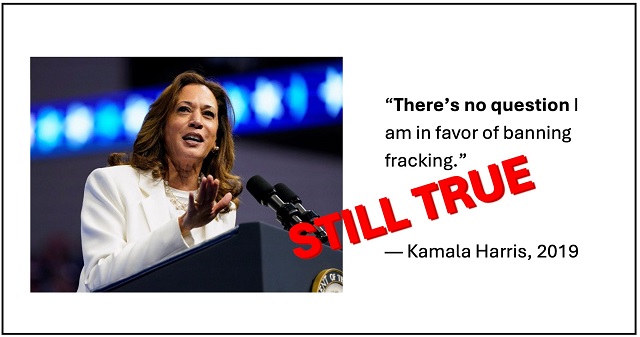
Myth: Kamala Harris used to be for banning fracking, but now she supports fracking.

Truth: Kamala Harris is still for banning fracking—because she is still for the net-zero agenda that requires banning fracking along with all other fossil fuel activities.
- Kamala Harris, who in 2019 said, “There is no question I am in favor of banning fracking,” now tells voters in fracking-dependent states like Pennsylvania that she is no longer wants to ban fracking.They shouldn’t believe her, since Harris’s net-zero agenda requires banning fracking.¹
- To know what to make of Harris’s reversal on a fracking ban, we need to first recognize that banning fracking would have been one of the most harmful policies in US history. It would have destroyed 60% of our oil production and 75% of our natural gas production.²
- Fracking is very likely the single most beneficial technological development of the last 25 years. By extracting cheap, abundant oil and natural gas from once useless rock, it has made energy far cheaper than it would otherwise be.
- Fracking and agriculture: The availability of food is highly determined by the cost of oil, which powers crucial machinery, and gas, which is the basis of the fertilizer that allows us to feed 8 billion people. Thanks to fracking, the world is far better fed than it would otherwise be.
- Given how life-giving fracking is to humanity and how essential it is to the prosperity and security of the US, any politician who has ever suggested banning fracking should be considered an energy menace until and unless they issue a deeply reflective apology.
- Harris and others who have advocated banning fracking should apologize along the following lines: “I called for banning something crucial because I listened only to exaggerated claims about its negatives and ignored its huge benefits. I am deeply sorry, and pledge to do better.”
- Someone who comes to understand why it’s wrong to ban fracking—because the benefits you would destroy are far greater than the harms you would avoid—should also understand that the same problem exists with the broader anti-fossil-fuel, “net zero” agenda.
- Harris has not apologized whatsoever for her support of a murderous fracking ban.And far from questioning the anti-fossil-fuel, “net zero” agenda, she has remained 100% committed to it.
Which means she’s an enemy of not just fracking but all fossil fuel use.
- The guiding energy goal of Biden/Harris is “net zero by 2050”—rapidly banning activities that add CO2 to the atmosphere.Since there’s no scalable way to capture CO2, burning fossil fuels necessarily means more CO2.
“Net zero” = “ban most fossil fuel use”—including fracking.³
- Given that “net zero by 2050” requires banning virtually all fossil fuel activity, the whole conversation about whether Kamala Harris wants to ban fracking is absurd.You can’t be for fracking and for net-zero anymore than you can be for penicillin and for banning all antibiotics.
- For “net zero by 2050” advocates there’s no question of if they want to ban particular fossil fuel activities such as fracking in the next 25 years, just when and in what order.If Harris doesn’t try to ban fracking soon she’ll just try to ban other vital fossil fuel activities.
- The Biden-Harris administration has already shown us that they will try to do everything they can to ban fossil fuels in pursuit of net-zero—and that they will only be limited by pro-fossil-fuel political opponents’ opposition and the resistance of voters.
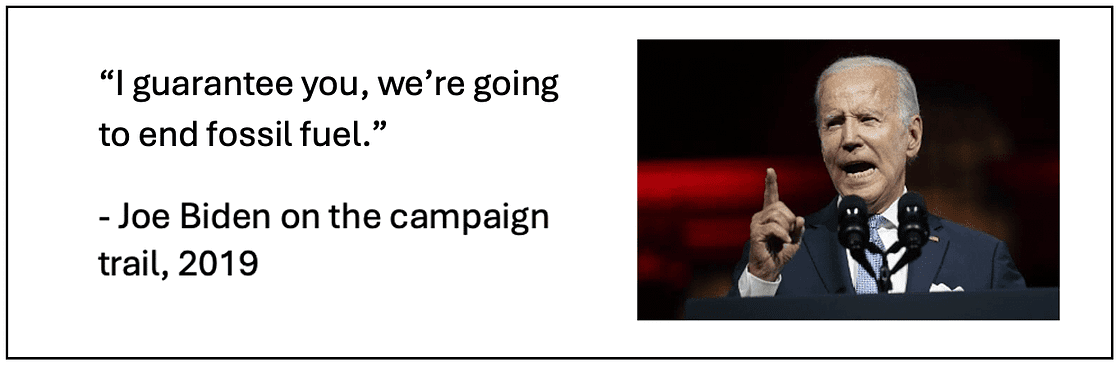
- Both Biden and Harris made it clear when campaigning that their guiding energy goal was “net zero by 2050” and that meant rapidly banning fossil fuels.Biden: “I guarantee you, we’re going to end fossil fuel.” Harris’s cosponsored Green New Deal called for banning fossil fuels.⁴
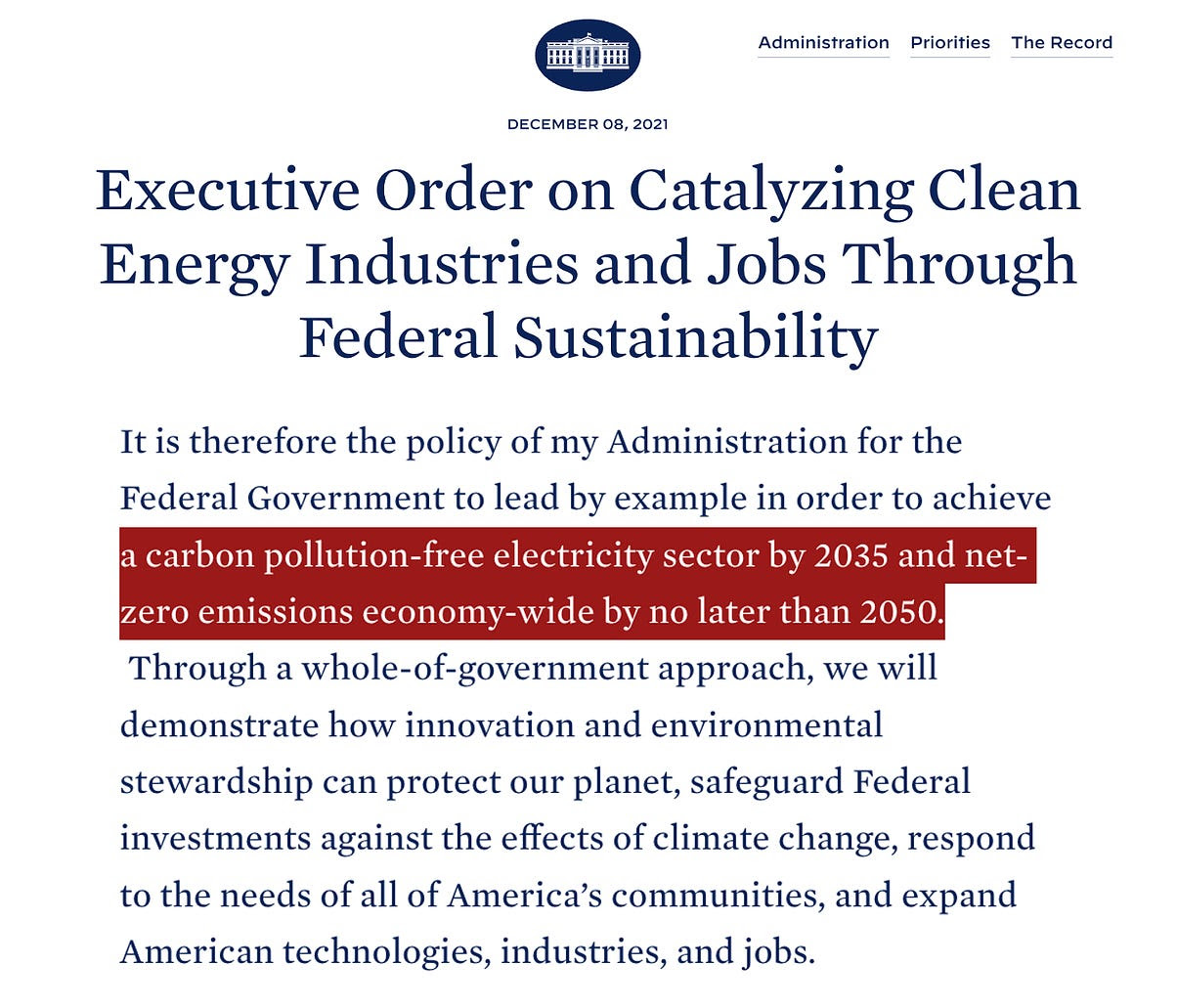
- When they entered office, Biden and Harris continued to make “net zero by 2050” their guiding goal by rejoining the Paris Agreement that committed us to it and by announcing a “whole of government” focus on “climate”—code for: rapidly getting rid of fossil fuels.⁵
- In action after action, the Biden-Harris administration has shown us that it will do anything it can get away with politically to rapidly eliminate fossil fuels: pipeline blocking, Federal leasing bans, LNG prohibitions, power plant shutdowns, EV mandates, SEC rules, etc, etc.
8 ways the Biden administration is working to increase gasoline prices
·Jun 14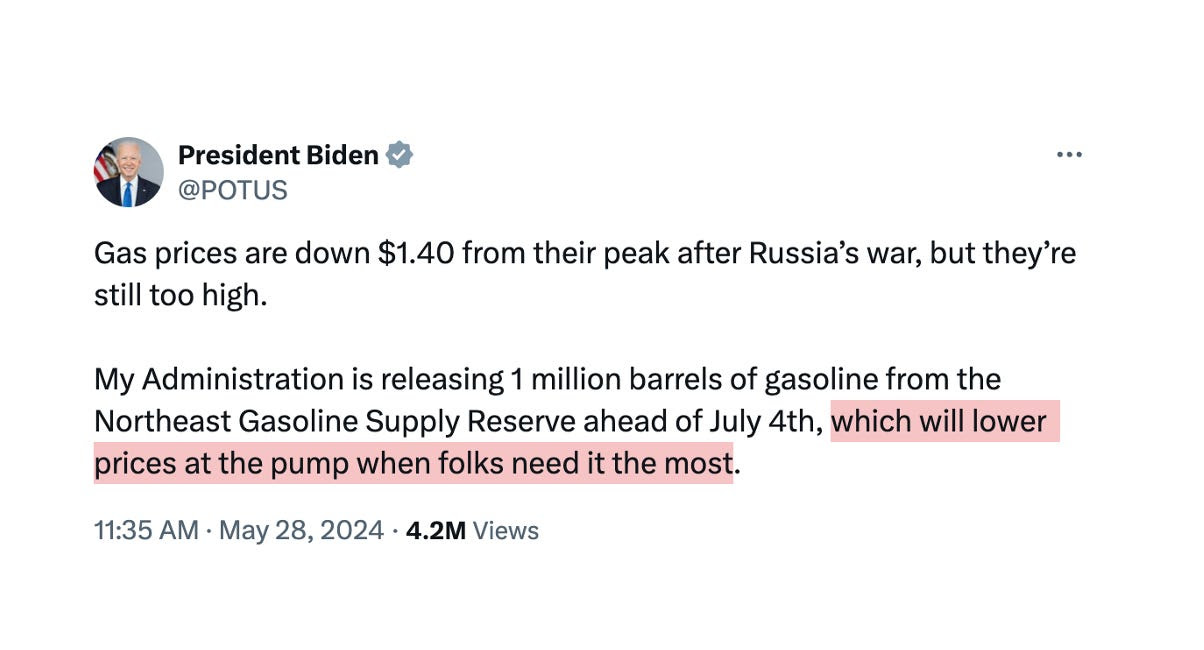
The Biden administration claims that draining the Northeast Gasoline Supply Reserve shows its commitment to low gas prices.
Read full story - Americans have already paid a high price for the Biden-Harris administration’s net-zero agenda—high energy bills, power shortages, and inflation.But we’d be paying a far higher price had pro-fossil-fuel politicians and voters not opposed and dramatically slowed the agenda.⁶
- Most of what Biden-Harris have tried to do to rapidly eliminate fossil fuel use has been, thankfully, slowed by opposition: lawsuits over power plant shutdowns, courts reversing illegal leasing bans, etc.Without this opposition they would have already caused energy ruin.⁷
- Consider: America desperately needs more reliable power plants given huge demand from AI and (Biden-mandated) EVs.But the Biden-Harris EPA has tried to shut down all coal—1/6 of reliable capacity!
Were it not for Biden-Harris opponents we’d already have a 3rd-world grid.⁸
How EPA’s power plant rule will destroy our grid
·May 22
4 reasons EPA’s power plant rule will destroy our grid:
Read full story - Harris tries to act reassure us that she’s “moderate” because Biden-Harris hasn’t destroyed oil and gas—e.g., fracking is allowed and oil production has actually increased.But that’s because opposition has moderated her insanely destructive net-zero ambitions.
- The only way Kamala Harris can validly convince the public that she’s not an energy threat is to renounce not only her support of a fracking ban but of the “net zero” agenda—and to correct the anti-fossil-fuel bias that leads to both of these murderous policy ideas.
- Whenever you hear a politician claim to be a friend of oil and gas, fracking, or any other aspect of fossil fuels, ask one simple question: Do you renounce the “net zero” agenda?If not, they will work to destroy fossil fuels—and with them our energy, prosperity, and security.

From Energy Now
By Stewart Muir
For years, a conservation NGO supported by major foreign foundations has taken on the guise of Indigenous governance authority on British Columbia’s north coast. Meanwhile, rights-holding First Nations with an economic agenda are reshaping the region, yet their equal weight is overlooked. A clash of values has resulted.
For more than a decade, British Columbians have been told — mostly by well-meaning journalists and various pressure groups — that an organization called Coastal First Nations speaks with authority for the entire coast. The name sounds official. It sounds governmental. It sounds like a coalition of Indigenous governments with jurisdiction over marine waters.
It isn’t any of those things.
Coastal First Nations (CFN) is a non-governmental organization, incorporated under the BC Societies Act as The Great Bear Initiative Society. It doesn’t hold Indigenous rights or title. It has no legislated role to provide benefits or services to First Nations members. It has no jurisdiction over shipping, marine safety, forestry, fisheries, energy development, or environmental regulation. Yet its statements are frequently treated as if they carry the weight of sovereign authority.
It’s time to say out loud what many leaders — municipal, Indigenous, and industry — already know: CFN is an advocacy group, not a government. Case in point, a recent news story with the following lede: “B.C.’s Coastal First Nations say they will use ‘every tool in their toolbox’ to keep oil tankers out of the northern coastal waters.” A spokesperson claimed to represent “the Rights and Title Holders of the Central and North Coast and Haida Gwaii,” yet notwithstanding the rights of any individual First Nation, CFN does not hold any formal authority.
Here’s why this matters. The truth is, Alberta has already struck its grand bargain with the rest of Canada. Now it’s time to confront the uncomfortable truth that the country is still one bargain short of a functioning national deal.
In 2026, with Canadians increasingly alert to who is shaping national conversations, there is a reasonable expectation that debates affecting our economic future should be led and conducted by Canadians — not by foreign foundations, not by out-of-country campaign strategists, and not by NGOs built to advance someone else’s policy objectives.
Where the confusion came from
CFN’s rise in public visibility traces back to the “Great Bear Rainforest” era, when U.S. philanthropic foundations poured large sums of money into environmental campaigns in British Columbia. A Senate of Canada committee document notes that the Gordon & Betty Moore Foundation alone provided approximately $25 million directly to Coastal First Nations, delivered as twenty-five nearly $1 million installments.
CFN also played a central role in the Great Bear Rainforest negotiations, which were financed by a coalition of foreign philanthropies including the Packard Foundation, Hewlett Foundation, Wilburforce Foundation, Rockefeller Brothers Fund, Nature Conservancy/Nature United, and Tides Canada Foundation. These foundations collectively contributed tens of millions of dollars to the “conservation financing” model that anchored CFN’s operating environment.
This history isn’t speculative. It’s well documented in foundation reports, Canadian Parliamentary evidence, and the publicly disclosed financial architecture behind the Great Bear Rainforest. For a generation, well-funded U.S. environmental campaigns have worked to make Canadians afraid of their own shadow by seeding doubt, stoking paralysis, and teaching a resource nation to second-guess the very wealth that built it.
Between 2010 and 2018, an independent forensic accounting review by Deloitte Forensic (backed by the Alberta government) found that foreign foundations provided roughly $788.1 million in grants for Canadian environmental initiatives. The largest single category — by a wide margin — was marine-based initiatives, totalling $297.2 million. In Deloitte’s categorization, “marine-based” overwhelmingly refers to coastal campaigns: Great Bear Rainforest–related advocacy, anti-tanker/shipping activism, marine-use regulation campaigns, marine ecological programs, and other coastal political work.

Land-based initiatives were the second-largest category ($191 million), followed by wildlife preservation ($173 million).
The forensic review also showed that of the $427.2 million that physically entered Canada, 82% — approximately $350.3 million — was spent in British Columbia, with the dominant share directed specifically toward coastal and marine initiatives.
Taken together, these findings confirm that foreign-funded environmental activity in Canada has been geographically concentrated in British Columbia and thematically concentrated on the coast – exactly the domain where CFN has been positioned as a public-facing authority.
The real authority lies with the nations themselves
If British Columbians want to understand who truly governs the coast, they should look to the Indigenous governments that hold rights, title, citizens, and accountability — not NGOs that comment from the sidelines. That means not overlooking:
- Haisla Nation, leaders of Cedar LNG
- Nisga’a Nation, co-developers of Ksi Lisims LNG
- Gitxaala Nation, asserting legal and territorial authority
- Kitselas and Kitsumkalum, both shaping regional development
These governments are also coastal First Nations. They negotiate major economic partnerships, steward lands and waters, and make decisions grounded in their own legal orders. Moreover, representation is the key measure of accountability in a democracy: First Nations governing councils are elected by their members. The CFN is not elected. The nations are accountable to their own people — not to U.S. philanthropies or to the strategic objectives of foreign-backed environmental campaigns.
The Haisla Nation once belonged to CFN, but quit in protest in 2012 when the body opposed LNG. The Haisla council went on to fully embrace economic development via liquefied natural gas and own the upcoming Cedar LNG project.
Meanwhile, the central and northern coastal regions where CFN has opposed numerous economic opportunities continue to suffer the worst child poverty in British Columbia.
In the delicate politics of the region’s First Nations alliances, relationships are constantly in motion and governed by inviolable traditions of mutual respect. From these threads, it has to be said that the CFN’s strategy of weaving the appearance of unanimity is truly a fabrication. In point of fact, CFN represents just one half of the story. My data source tells the story, by drawing together the latest available economic and demographic information for 216 British Columbia First Nations:
- Status Indian residents of CFN communities on the north coast number 5,484, with a total membership near and far of 20,447.
- The pro-development group noted earlier numbers 5,505 living local out of a total membership of 16,830.
In other words, virtually equal. Hence it’s obvious that any media report citing CFN as the singular authority for local First Nations interests is a misleading one. CFN speaks for only a slice of the North Coast, not the whole, and the numbers make that impossible to ignore.
When a CFN motion opposing responsible resource development was adopted by the Assembly of First Nations (see Dec. 2 news), it was further evidence that the deck is stacked against First Nations that are accountable and position themselves as having broad responsibilities, including but not limited to raising the standard of living of their members.
The future belongs to the nations
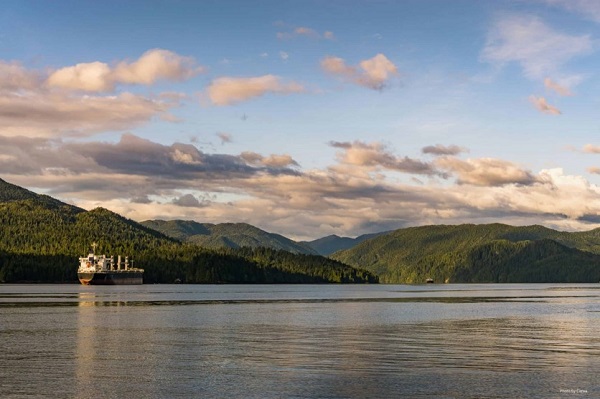
The politics of LNG on the North Coast can’t be grasped without staring directly at the tanker ban — not as scripture, but as the political curiosity it has become. Anyone who knows these waters understands it’s mostly theatre: it doesn’t question letting Alaska oil tanker ships transit our exclusive economic zone when we cannot, and it doesn’t touch the real risks coastal people actually worry about. Yet waving it away is naïve. The ban behaves like a trickster spirit in our public life — capricious, emotionally loaded, and capable of turning a routine policy debate into a cultural conflagration with barely a flick of its tail.
This is why Coastal First Nations retain such gravitational pull. For years, the ban has served as the moral architecture of their Great Bear Sea campaign. CFN represents a long-game strategy — build legitimacy, occupy the moral high ground, and shape the destiny of a nation by holding the symbolic centre. Their concerns seem genuine and rooted in lived stewardship – yet were shaped by Madison Avenue minds hired by American philanthropists to affect our politics. But a near equal number of coastal nation residents unified by a different outlook also have skin in the game. They are charting futures grounded in prosperity, environmental care, and sovereignty on their own terms, and their authority is the real thing — born of title, law, and accountability to their own people.
And here is the irony worth heeding: the tanker ban’s pageantry masks a solution. It is dragging into daylight a conversation the province has avoided for decades — a conversation that will soon prove inevitable as court rulings unsettle the very foundation of property rights in British Columbia. This is the hinge that the moment turns on.
Canada cannot resolve its growing national contradictions without moving its energy to global markets. Alberta has already made its grand bargain with the country. Now British Columbia must craft its own — harnessing the prosperity of energy development to discharge political debts and finally settle the title question that has defined the province’s modern era.
Stewart Muir

From Energy Now
By Canada Powered by Women
Canada has entered a new period of energy cooperation, marking one of the biggest shifts in federal–provincial alignment on energy priorities in years.
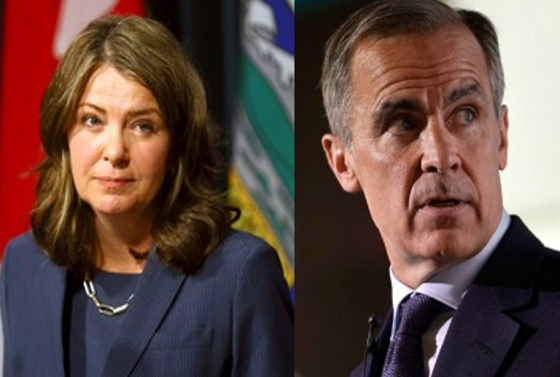
Last week as Prime Minister Mark Carney and Alberta Premier Danielle Smith signed a memorandum of understanding (MOU) that outlines how both governments will approach a potential pipeline to British Columbia’s coast.
The agreement, which has been described as a “new starting point” after years of tension, lays the groundwork for a privately financed pipeline while also linking this commitment to a broader set of infrastructure priorities across oil and gas, LNG, renewables, critical minerals and electricity transmission.
It also sets out how a privately financed project, moving roughly 300,000 to 400,000 barrels of oil to global markets each day, will be reviewed.
Now that the announcement is behind us, attention has turned to how (or if) a pipeline is going to get built.
Alberta has set out its ambitions, British Columbia has its conditions, and the federal government has its own expectations. Together, these positions are shaping what some are calling a “grand bargain” which will be made up of trade-offs.
Trade-offs are not a new concept for the engaged women that Canada Powered by Women (CPW) represents, as they’ve been showing up in our research for several years now. And anyone who reads us also knows we like to look at what the data says.
According to new polling from the Angus Reid Institute, a clear majority of Canadians support a pipeline, with national backing above 60 per cent. And there’s strong support for the pipeline among those in B.C. This aligns with other emerging data points that show Canadians are looking for practical solutions that strengthen affordability and long-term reliability.
By the numbers:
• 60 per cent of Canadians support the pipeline concept, while 25 per cent oppose it.
• 53 per cent of people support in British Columbia, compared to 37 percent opposed.
• 74 per cent of people in Alberta and Saskatchewan support the pipeline.

Our research shows the same trends.
A large majority (85 per cent) of engaged women agree that building pipelines and refining capacity within the country should be prioritized. They favour policies that will progress stability, affordability and long-term economic opportunity.
A key feature of the MOU is the expectation of Indigenous ownership and benefit sharing, which Alberta and B.C. governments identify as essential, and which aligns with public opinion. As of right now, Indigenous groups remain split on support for a pipeline.
The agreement also signals that changes to the federal Oil Tanker Moratorium Act may need to be considered. The moratorium, in place since 2019, is designed to limit large tanker traffic on the North Coast of B.C. because of navigation risks in narrow channels and the need to protect sensitive coastal ecosystems.
Those in favour of the pipeline point to this as a critical barrier to moving Canadian oil to international markets.
Polling from the Angus Reid Institute shows that 47 per cent of Canadians believe the moratorium could be modified or repealed if stronger safety measures are in place. Again, we come back to trade-offs.
The MOU is a starting point and does not replace consultation, environmental review or provincial alignment. These steps are still required before any project can advance. Taken together, the agreement and the data show broad support for strengthening Canada’s energy options.
This will be an issue that engaged women are no doubt going to watch, and the conversation is likely to move from ideas to discussing what trade-offs can be made to bring this opportunity to life.


Is there a cure for Alzheimer’s Disease?

Learning the Truth about “Children’s Graves” and Residential Schools is More Important than Ever

The Unmasking of Vaccine Science

Media bound to pay the price for selling their freedom to (selectively) offend
-
 Alberta2 days ago
Alberta Sports Hall of Fame Announces Class of 2026 Inductees
-
 Censorship Industrial Complex2 days ago
Conservative MP Leslyn Lewis slams Liberal plan targeting religious exemption in hate speech bil
-
 Energy2 days ago
Canada following Europe’s stumble by ignoring energy reality
-
 Business2 days ago
Canada’s climate agenda hit business hard but barely cut emissions
-
 Health2 days ago
News RFK Jr.’s vaccine committee to vote on ending Hepatitis B shot recommendation for newborns
-
 Bruce Dowbiggin1 day ago
Integration Or Indignation: Whose Strategy Worked Best Against Trump?
-
 International1 day ago
FBI may have finally nabbed the Jan. 6 pipe bomber
-
 Health2 days ago
23,000+ Canadians died waiting for health care in one year as Liberals pushed euthanasia