
David Clinton
Is Marriage the Strongest Predictor of Wealth in Canada?




Love, they say, is a many-splendored thing. But I can tell you with confidence that, in Canada at least, it also pays handsomely.
Sharp downward trends in fertility rates are pointing to a bleak future. And as we’re discovering, immigration isn’t necessarily going to save us. Working on the reasonable assumption that the high costs of raising kids were holding us back, governments have been working for decades to encourage childbirth through programs like the Canada Child Tax Benefit. Their hearts were in the right place, but the result haven’t been great.
The Audit is a reader-supported publication. To receive new posts and support my work, consider becoming a free or paid subscriber.
The child and family support programs have been significant. For example, the average total of government support transfers in inflation-adjusted dollars paid to single parents have grown from $11,600 in 1976 to $19,400 in 2022. That amounts to around 29 percent of their average total earned income. Benefits for couples with children nearly tripled from a 1976 average of $5,800 to $15,300 by 2022. Those transfers included child benefits, employment insurance benefits, and social assistance.
But it turns out that even without government programs, marriage and parenting are both financially rewarding endeavors. In 2022, According to Statistics Canada, the average individual “not in an economic family” earned just $53,400 from both market (i.e., earned) income and government support. That same year, couples earned $135,600 – an increase of around 51 percent over what they would have earned in 1976. And the average couple with children took $169,900 home. For comparison, single parents earned just $80,100.
Of course it’s possible that couples who happen to be wealthier are more likely consider themselves capable of raising children, so to some extent they’re self-selecting. And some singles feel unable to start families because of crazy housing costs. Nevertheless, it seems that marriage and, to a lesser degree, parenthood are important predictors of higher income.
Are government social support programs behind the imbalance? Not so much. The average couple in 2022 received $7,300 in benefits, but that’s significantly less than the $9,800 that the average singles (without kids) got. In fact, it’s also a lot less than the $10,400 childless couples would have received from the government in 1976.
It’s clearly earned income that’s driving the greater wealth of both couples as a whole and couples with children.
This isn’t a new development. Throughout the half century since 1976 – when you exclude government benefits – couples have out-earned singles by an average of 140 percent. And couples with children have earned an average of 12.5 percent more than couples in general.
The bottom line is that couples – both with and without children – earn significantly more than both single parents and singles living outside of a family unit. This economic reality has persisted through financial crises, evolving government policy standards, and social upheavals.
That knowledge could play a role in young peoples’ thinking as they plan their lives. But it’s also one of many reasons that we, as a society, should aggressively protect the integrity of the family as an institution. All things being equal, families lead to better outcomes.
This idea is something found in no less a source than the United Nation’s Universal Declaration of Human Rights (Article 16):
The family is the natural and fundamental group unit of society and is entitled to protection by society and the State.
There is something a bit strange about all this data that I can’t explain. between 1990 and 2004, the difference between total income of couples with children and total income of single parents was significantly greater than the years either before or since.
Many things happened in the early 90’s that might have triggered the growing disparity (like the introduction of the Canada Child Tax Benefit, increasing access to childcare, or a narrowing gender pay gap), but none of them suddenly stopped in 2004. And one could imagine similar social and policy changes that might have reduced the disparity after 2004 (like increased female workforce participation), but none of them really began in 2005.
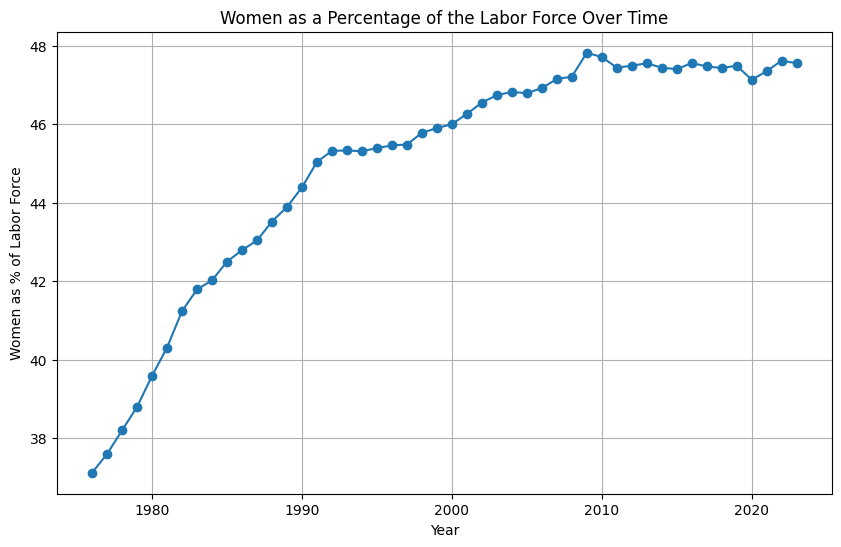 |
That odd differential certainly looks real. But maybe it doesn’t mean anything. Sometimes a cigar is just a cigar. Any thoughts to share?
Subscribe to The Audit. If you already subscribe to the newsletter there’s more.. For the full experience, upgrade your subscription.

Thanks for considering The Audit. It also helps if you Refer a friend


It’s been nearly a year since I last wrote about the CBC. In the intervening months, the Prescott memo on bias at the BBC was released, whose stunning allegations of systemic journalistic malpractice “inspired” multiple senior officials to leave the corporation. Given how the institutional bias driving problems at the BBC is undoubtedly widely shared by CBC employees, I’d be surprised if there weren’t similar flaws embedded inside the stuff we’re being fed here in Canada.
Apparently, besides receiving nearly two billion dollars¹ annually in direct and indirect government funding, CBC also employs around a third of all of Canada’s full time journalists. So taxpayers have a legitimate interest in knowing what we’re getting out of the deal.
Naturally, corporate president Marie-Philippe Bouchard has solemnly denied the existence of any bias in CBC reporting. But I’d be more comfortable seeing some evidence of that with my own eyes. Given that I personally can easily go multiple months without watching any CBC programming or even visiting their website, “my own eyes” will require some creative redefinition.
So this time around I collected the titles and descriptions from nearly 300 stories that were randomly chosen from the CBC Top Stories RSS feed from the first half of 2025. You can view the results for yourself here. I then used AI tools to analyze the data for possible bias (how events are interpreted) and agendas (which events are selected). I also looked for:
- Institutional viewpoint bias
- Public-sector framing
- Cultural-identity prioritization
- Government-source dependency
- Social-progressive emphasis
Here’s what I discovered.
Story Selection Bias
Millions of things happen every day. And many thousands of those might be of interest to Canadians. Naturally, no news publisher has the bandwidth to cover all of them, so deciding which stories to include in anyone’s Top Story feed will involve a lot of filtering. To give us a sense of what filtering standards are used at the CBC, let’s break down coverage by topic.
Of the 300 stories covered by my data, around 30 percent – month after month – focused on Donald Trump and U.S.- Canada relations. Another 12-15 percent related to Gaza and the Israel-Palestine conflict. Domestic politics – including election coverage – took up another 12 percent, Indigenous issues attracted 9 percent, climate and the environment grabbed 8 percent, and gender identity, health-care worker assaults, immigrant suffering, and crime attracted around 4 percent each.
Now here’s a partial list of significant stories from the target time frame (the first half of 2025) that weren’t meaningfully represented in my sample of CBC’s Top Stories:
- Housing affordability crisis barely appears (one of the top voter concerns in actual 2025 polls).
- Immigration levels and labour-market impact.
- Crime-rate increases or policing controversies (unless tied to Indigenous or racialized victims).
- Private-sector investment success stories.
- Any sustained positive coverage of the oil/gas sector (even when prices are high).
- Critical examination of public-sector growth or pension liabilities.
- Chinese interference or CCP influence in Canada (despite ongoing inquiries in real life).
- The rest of the known galaxy (besides Gaza and the U.S.)
Interpretation Bias
There’s an obvious pattern of favoring certain identity narratives. The Indigenous are always framed as victims of historic injustice, Palestinian and Gazan actions are overwhelmingly sympathetic, while anything done by Israelis is “aggression”. Transgender representation in uniformly affirmative while dissent is bigotry.
By contrast, stories critical of immigration policy, sympathetic to Israeli/Jewish perspectives, or skeptical of gender medicine are virtually non-existent in this sample.
That’s not to say that, in the real world, injustice doesn’t exist. It surely does. But a neutral and objective news service should be able to present important stories using a neutral and objective voice. That obviously doesn’t happen at the CBC.
Consider these obvious examples:
- “Trump claims there are only ‘2 genders.’ Historians say that’s never been true” – here’s an overt editorial contradiction in the headline itself.
- “Trump bans transgender female athletes from women’s sports” which is framed as an attack rather than a policy debate.
And your choice of wording counts more than you might realize. Verbs like “slams”, “blasts”, and “warns” are used almost exclusively describing the actions of conservative figures like Trump, Poilievre, or Danielle Smith, while “experts say”, “historians say”, and “doctors say” are repeatedly used to rebut conservative policy.
Similarly, Palestinian casualties are invariably “killed“ by Israeli forces – using the active voice – while Israeli casualties, when mentioned at all, are described using the passive voice.
Institutional Viewpoint Bias
A primary – perhaps the primary job – of a serious journalist is to challenge the government’s narrative. Because if journalists don’t even try to hold public officials to account, then no one else can. Even the valuable work of the Auditor General or the Parliamentary Budget Officer will be wasted, because there will be no one to amplify their claims of wrongdoing. And Canadians will have no way of hearing the bad news.
So it can’t be a good sign when around 62 percent of domestic political stories published by the nation’s public broadcaster either quote government (federal or provincial) sources as the primary voice, or are framed around government announcements, reports, funding promises, or inquiries.
 |
In other words, a majority of what the CBC does involves providing stenography services for their paymasters.
Here are just a few examples:
- “Federal government apologizes for ‘profound harm’ of Dundas Harbour relocations”
- “Jordan’s Principle funding… being extended through 2026: Indigenous Services”
- “Liberal government announces dental care expansion the day before expected election call”
Agencies like the Bank of Canada, Indigenous Services Canada, and Transportation Safety Board are routinely presented as authoritative and neutral. By contrast, opposition or industry critiques are usually presented as secondary (“…but critics say”) or are simply invisible. Overall, private-sector actors like airlines, oil companies, or developers are far more likely to be criticized.
All this is classic institutional bias: the state and its agencies are the default lens through which reality is filtered.
Not unlike the horrors going on at the BBC, much of this bias is likely unconscious. I’m sure that presenting this evidence to CBC editors and managers would evoke little more than blank stares. This stuff flies way below the radar.
But as one of the AI tools I used concluded:
In short, this 2025 CBC RSS sample shows a very strong and consistent left-progressive institutional bias both in story selection (agenda) and in framing (interpretation). The outlet functions less as a neutral public broadcaster and more as an amplifier of government, public-sector, and social-progressive narratives, with particular hostility reserved for Donald Trump, Canadian conservatives, and anything that could be construed as “right-wing misinformation.”
And here’s the bottom line from a second tool:
The data reveals a consistent editorial worldview where legitimate change flows from institutions downward, identity group membership is newsworthy, and systemic intervention is the default solution framework.
You might also enjoy:
Is Updating a Few Thousand Readers Worth a Half Million Taxpayer Dollars? |
||||||
|
||||||
 |
||||||
| Plenty has been written about the many difficulties faced by legacy news media operations. You might even recall reading about the troubled CBC and the Liberal government’s ill-fated Online News Act in these very pages. Traditional subscription and broadcast models are drying up, and on-line ad-based revenues are in sharp decline. | ||||||
|
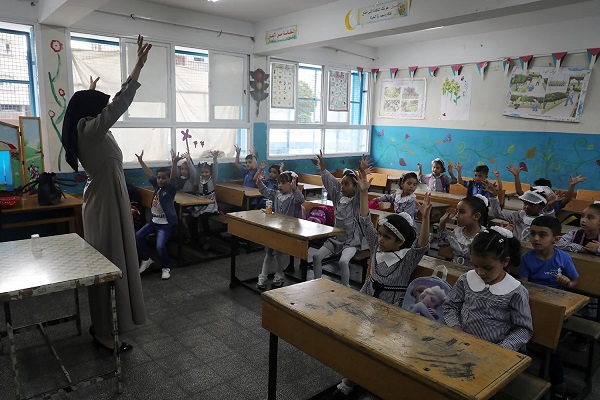

IMPACT-se just released their Review of the 2025-2026 Palestinian Authority School Curriculum (Grades 1-12). They reviewed 290 text books and 71 teacher guides (both printed and digital) currently in use by schools charged with educating Palestinian children. The results were unambiguous:
“The review finds that the 2025–2026 Palestinian Authority curriculum continues to systematically violate UNESCO principles and educational standards. Published in September 2025, the curriculum incites antisemitism and violence, promotes jihad and martyrdom, glorifies terrorism, rejects peacemaking and the two-state solution, and erases Israel from maps. It has not been substantively modified since the 2020–2021 school year, maintaining the same ideological framework first established in the 2016 reform cycle.”
In other words, the glorification of violence and deep racial hatred is, by design, woven into the fabric of every topic and virtually every lesson Palestinian children are taught.
The offensive examples were hardly rare exceptions throughout those 361 books. There were, for example:
- 50 examples (taking up a full 70 pages in the report) depicting Israelis or Jews as demonic or motiveless aggressors
- 47 examples of erasure of Israel from maps and language (declaring Palestine “from river to sea”)
- 56 examples of the encouragement of martyrdom and violent jihad
- 12 examples of the overt politicization of science and math
In addition, since 2016, 29 references to peace agreements, Israel, and Jews were removed from PA curriculum texts.
Overall, around 60 percent of the report’s examples come from material aimed at grades 9-11. Nevertheless, 17 examples of indoctrination (around 4 percent of the total) came from grades 1-4.
But what does all that have to do with Canada? Well, Canada has been a steady and reliable funder for UNRWA (United Nations Relief and Works Agency for Palestine Refugees in the Near East), UNICEF (United Nations Children’s Fund), UNESCO (United Nations Educational, Scientific and Cultural Organization), and the World Bank’s provision of educational services to Palestinians.
So what? Don’t all Western nations provide the same support? Not exactly.
- A May 2025 resolution adopted by the European Parliament demanded that EU financial assistance be made conditional on removal of hate material, and urged full compliance with standards of peace and tolerance for education.
- The U.K. has, in past years, cut or reduced its funding to UNRWA over concerns about incitement in educational textbooks.
- The U.S. hasn’t provided any support for UNRWA since the Biden administration paused funding in January, 2024.
- It seems that both Sweden and the Netherlands have either cut or are phasing out their UNRWA funding.
But in May 2024, Canada committed to $65 million in new funding – which follows a brief and meaningless “pause” in UNRWA funding (where no scheduled payments were actually interrupted). That brings the funding total since 2016 to $259 million. And there’s no public record of any of that money being conditional on changes to educational textbooks.
The Global Affairs Canada officials who make these spending decisions are the ones responsible for applying official government policy. And the message driving that policy is pretty clear (pro forma “antisemitism is not who we are” press releases notwithstanding). The Government of Canada is absolutely down with pouring millions into the promotion of race-driven violence.
Is Global Affairs Canada Wasting Your Tax Dollars Abroad?

It seems like forever since I last wrote about program spending at Global Affairs Canada (GAC). I’m not aware of any big-picture changes to department policy in the meantime, but their Project Browser tool is still there – and it’s still a welcome resource for transparency.
How Does UNRWA Spend the Funding it Receives From the Canadian Government?

The government of Canada – through Global Affairs Canada – has long been among the major financial supporters of The United Nations Relief and Works Agency for Palestine Refugees in the Near East (UNRWA). The 75 year-old United Nations agency has a yearly budget that’s grown to more than 900 million US dollars, and has long been accused of antisemitism,…
Paying for Bad Government Choices

Who picks up the tab when budgetary bets go horribly wrong? Taxpayers, of course. Duh.


Why is Canada paying for dairy ‘losses’ during a boom?

Ottawa’s Newly Released Defence Plan Crosses a Dangerous Line

Ford’s EV Fiasco Fallout Hits Hard

Hunting Poilievre Covers For Upcoming Demographic Collapse After Boomers
-
 espionage2 days ago
Carney Floor Crossing Raises Counterintelligence Questions aimed at China, Former Senior Mountie Argues
-
 Health2 days ago
All 12 Vaccinated vs. Unvaccinated Studies Found the Same Thing: Unvaccinated Children Are Far Healthier
-
 International13 hours ago
Ottawa is still dodging the China interference threat
-
Business11 hours ago
There’s No Bias at CBC News, You Say? Well, OK…
-
 Automotive10 hours ago
Canada’s EV gamble is starting to backfire
-
 International12 hours ago
2025: The Year The Narrative Changed
-
 Opinion2 days ago
Pope Leo XIV’s Christmas night homily
-
 armed forces2 days ago
Remembering Afghanistan and the sacrifices of our military families