
Also Interesting
How to Improve Your Poker Skills While Living in Canada?



Do you want to take your poker skill to a whole new level? If yes, search no further! Poker is a game of skill; however, it is interesting and you can walk your way through from being a newbie to a professional. No matter how badly you perform at the poker table at present, there are easy-to-learn strategies you can quickly use to improve your skills.
Even though becoming a professional player takes time and consistent practice, adding a few strategies or tips to your skillset can upgrade your game. There is no better time to enhance your skills than now. This article provides you with some tips to improve your skills while living in Canada Here are the proven ways to improve your poker skills:
Understand the Game
The first step towards improving your poker skill is doing some research to understand the game. You have to invest a lot of time to study poker books. The goal is to equip yourself with the background knowledge, which is a prerequisite for learning how to play poker . There are platforms – forums and blogs – where you can find exhaustive tutorials and quick tips on playing poker.
Choose the Right Games

Check out all the game variants, from Texas Hold’em, Pot-Limit Omaha (PLO), Omaha Hi-Lo to Stud Poker, and so on, to know the ones you will be good at. Trying out unpopular games will enable you to find a niche you can dominate.
Be Conversant With the Rules
You should also strive to have the rules of the games at your fingertips. Knowing the rules can be daunting if you are a beginner. This is because there are many variations of the game. You have got the responsibility to learn and understand the rules of the types of poker you love to play.
Concepts like hand rankings, positional play, and blinds are a must-learn. There are terminology and best practices you need to know to avoid grave mistakes or penalties. It is a golden rule to play real money casinos Canada only after you have learned the rules of the games. Anything other than that may lead to severe losses. Whether you are playing online or at a physical casino, learn your way
around the table. This will boost your confidence and ability to make informed decisions.
Play Winning Hands
Knowing when to play and when to hold or fold is key. One of the important poker skills is the ability to avoid playing hands your opponent wants you to play. You have to be patient and manage your stake appropriately to boost your chances of success from the very beginning.

Use a Consistent Strategy
One of the ways to get better at playing poker is to identify a strategy that works for you and stick to it. Apply a winning strategy consistently. No matter what your recent results (win or loss) are, use the same winning strategy all the time. It will be difficult to master a strategy if you keep switching from one to another.
Observe Your Opponents
Learn to “read” your opponents and look out for some behavioral indicators. Watching the expressions of other players can help you know where the game is headed. Apply the old saying: play the player, not your cards. You can make favorable decisions based on the signals you pick from an opponent.
Set Limits & Do Not Chase Losses

Knowing when to stop playing can make a lot of difference in the long term. Set personal rules to guide you while playing. Each time you play with real money, make sure to set a budget of the maximum number of bets to place. Chasing losses is a bad gambling habit that leads to massive losses. Do not strive to recover losses all the time. It always leads to more losses!
Bankroll Management
Money management is one of the most important skills in gambling. Avoid staking an amount of money higher than what you can afford. Good bankroll management can improve your financial decisions. The amount you stake when playing with real cash should be determined by the size of your bankroll. Staking too high will make you blow up your account.
Practice Consistently
The best way to get better is to keep practicing. You can use free tables, low-level stakes games, and freeroll tournaments to apply your strategies and experience what it feels like to win or lose. Consistent practice will enable you to learn faster and build confidence at the tables.
Conclusion
Do you want to become a professional poker player? Or do you just need a good level of skill to enjoy poker games while living in Canada? Whatever your goal is, it is attainable. Being an easy game to get started with, you can quickly learn the basics and improve on your skills from there.
With the tips outlined above, you can definitely improve your skills and increase your chances of having consistent wins in the long run. If you want to continue to get better, consistent practice is the way forward. In addition, studying poker resources and being active in relevant forums are proven ways to hone your skills.


The Toronto Blue Jays are certainly keeping things interesting this winter. While the calendar might say late December, the front office shows no signs of slowing down. They have already made waves across MLB with some massive acquisitions earlier in the month.
Rather than packing it in for the holidays, the management team is seemingly working overtime. Their goal is to build a roster that can truly compete for a championship in 2026.
Although there are no more signing announcements for the end of the year, the silence is likely temporary. Reports indicate that the team is actively pursuing several more roster improvements before the new year begins.
A Rotation Built To Dominate
The team made their intentions clear in early December. They successfully signed Dylan Cease to a massive seven-year, $210 million contract. This deal, which became official around December 8, instantly transforms the Toronto rotation into one of the strongest in MLB.
Moreover, they did not stop with just one big arm. The front office added significant depth by bringing in KBO MVP Cody Ponce on a three-year deal worth $30 million. This gives the team a level of stability that was missing in previous seasons.
With such dramatic changes to the roster, fans might be looking for a clear overview of licensed Ontario sportsbooks to understand how these moves have impacted the team’s championship odds. It is certainly a different looking team than the one that ended the last season.
Targets for the Bullpen and Lineup
It seems that the focus has now shifted from the starting rotation to other needs. Agents around the league note that the Jays remain “everywhere” in trade talks. The priority is now on finding high-leverage arms and position players to round out the squad.
The front office is reportedly looking at several specific targets:
- Robert Suarez is a primary target to help lock down the late innings.
- Luke Weaver is being considered to add veteran versatility to the staff.
- Depth pieces for the lineup are being sought to support the core hitters.
- Internal extensions remain a key part of the winter strategy.
Due to the heavy spending on Cease and Ponce, these next moves will likely be strategic. The team is looking for the right fit to complement their new stars.
The Future of the Infield and Management
Conversations are actively continuing with free agent Bo Bichette. Bringing him back is a major topic of discussion among the fanbase, even if no deal is imminent yet. Furthermore, the team has been linked to prospect Kyle Tucker, suggesting they are keeping an eye on the future as well as the present.
Manager John Schneider has also expressed optimism regarding his own contract extension. However, he made it clear that building the team comes first. Therefore, while the heavy lifting might seem done, the work continues behind the scenes.
To be sure, the MLB offseason is long. But the Toronto Blue Jays have started fast, and they seem determined to finish strong.

We wanted to know what to do if you came to Canada for temporary or permanent residence. Many Ukrainians have arrived in the country, and many don’t know where to begin their financial journey. People often turn to traditional banks, where they encounter problems due to a lack of language skills and basic understanding of Canadian financial processes. We found an alternative – a credit union in Toronto. Today, we’ll look at one of the most well-known and learn more about what they have to offer Ukrainians.
What is a Credit Union in Toronto
These organisations differ from the typical bank for Ukrainians. They offer more flexible conditions, convenient online management, and a personalised approach.
However, these organisations are just as safe and reliable as banks. Let’s look at reliability using the example of the well-known BCU Financial:
- With over 70 years on the market. This credit union in Toronto has a dedicated client base with decades of experience.
- Extensive experience. Indeed, over more than 7 decades, its specialists have become experts in financial matters.
- Branches available. You can visit the office for face-to-face interaction.
- Active in the social life of the Ukrainian community. Buduchnist Credit Union provides financial support to schools, churches, and communication centres for Ukrainian newcomers.
As you can see, such companies have stability and experience. Now let’s look at how they differ from banks in financial matters.
Ukrainian Credit Union Toronto: Differences from a Traditional Bank
Firstly, such organizations welcome a personalized approach to Ukrainians. They are more flexible when it comes to obtaining a loan. Newcomers in Canada are working on receiving a good credit history. Banks always request one when reviewing a loan application.
Secondly, you can receive advice in your native language. Most Canadian banks don’t have multilingual consultants and respond only to inquiries in English or French. If, for example, you need help with a scholarship card, you’ll have to call a translator.
Third, you’ll get more flexible and understated banking for Ukrainians. It includes the ability to submit an app online. It provides such services as ordering credit cards, applying for a loan, or opening an account.
Conclusions
Credit unions are much easier for Ukrainians to work with. They speak your language, can provide advice on finances and their specific needs in Canada, and offer flexible terms. They also provide full-fledged online banking, so familiar to Ukrainians. You also become part of the community because, as a credit union member, you are, to a certain extent, its co-owner.

Georgia county admits illegally certifying 315k ballots in 2020 presidential election

The “Disruptor-in-Chief” places Canada in the crosshairs

UK Police Pilot AI System to Track “Suspicious” Driver Journeys

‘The electric story is over’
-
International2 days ago
Georgia county admits illegally certifying 315k ballots in 2020 presidential election
-
 Haultain Research2 days ago
Sweden Fixed What Canada Won’t Even Name
-
 Business2 days ago
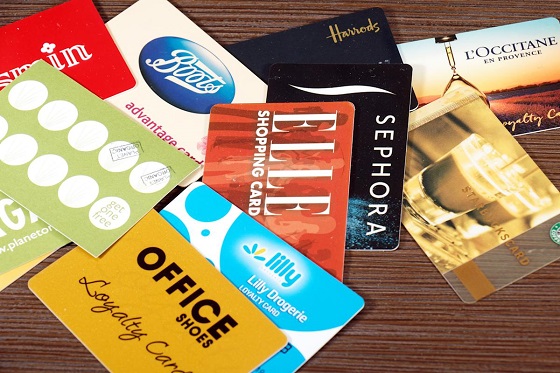
What Do Loyalty Rewards Programs Cost Us?
-
 Energy2 days ago
Why Japan wants Western Canadian LNG
-
 Business2 days ago
Land use will be British Columbia’s biggest issue in 2026
-
 Business2 days ago
The Real Reason Canada’s Health Care System Is Failing
-
 Business2 days ago
Dark clouds loom over Canada’s economy in 2026
-
 Business2 days ago
Federal funds FROZEN after massive fraud uncovered: Trump cuts off Minnesota child care money