
Connect with us

Censorship Industrial Complex

How the left helped boost a little-known U.S. musician’s career

Published

9 minute read

This article supplied by Troy Media.

Troy Media By Michael Taube

Sean Feucht’s tour sparked a political storm in Canada, giving him more exposure than he ever sought

Most readers are likely familiar with this phrase, “making a mountain out of a molehill.” It’s taken directly from a line in English playwright Nicholas Udall’s translation of The first tome or volume of the Paraphrase of Erasmus vpon the newe testamente (1548). To wit, “the Sophistes of Grece coulde through their copiousness make an Elephant of a ye, and a mountaine of a mollehill.”

What does the phrase mean? It’s a massive overreaction to something that should have been regarded as nothing. Many molehills have been turned into mountains in our world. Once that happens, it’s nearly impossible to turn these mountains back into the molehills they should have always been and remained.

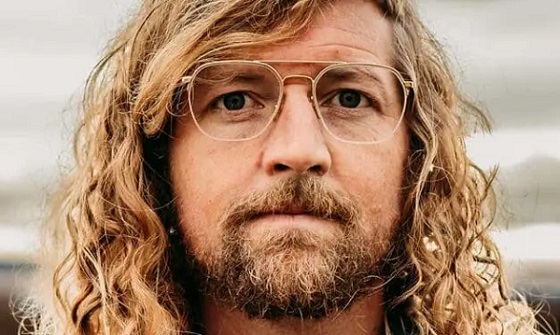
Canada is dealing with one right now. It comes on the heels of a left-wing explosion related to Sean Feucht, a little-known U.S.-based Christian musician with a small planned tour of our country.

Feucht is a singer and songwriter. His music has mostly been self-published, with the exception of his moderately successful album, Wild, through Bethel Music in 2018. He used to be a worship leader at Bethel Church in Redding, Calif., and founded the Let Us Worship movement during COVID-19. He finished a distant third in a Republican primary for California’s 3rd congressional district in 2020.

There’s nothing in this list that really stands out. What caught some people’s attention was his association with U.S. President Donald Trump.

Feucht was part of a group of 50 pastors and worship leaders who met Trump in the White House for a faith briefing on Dec. 11, 2019. This was during the time that the president’s first impeachment probe was underway. Feucht was quoted in a Fox News piece related to this gathering. “All 50 of us crammed into the Oval Office,” the singer-songwriter said. “He sat at his desk and he said pray for me. We just laid our hands on him and prayed for him. It was like a real intense, hardcore prayer. It was so wild. I could not believe he invited us in. That he carved out time to meet with us.”

There’s nothing in this interview that would be classified as egregious, either. These were his personal observations about the meeting with Trump, plain and simple.

Alas, the story didn’t end there.

Feucht’s rallies and events were determined to be quite political in nature. His Let Us Worship concerts expanded from protesting government restrictions about COVID-19 lockdowns to focus on cities affected by the Black Lives Matter protests. Concerts were held in cities with racial unrest under the umbrella “Riots to Revival,” including the site of George Floyd’s murder in Minneapolis, Minn., as well as Cal Anderson Park, which was linked with Seattle’s Capitol Hill Organized Protest. He was part of a protest against The Walt Disney Company for its rejection of anti-LGBTQ legislation in Florida. He joined the ReAwaken America Tour that mixed Christian principles and ideas with controversial topics like election
denialism, QAnon and frustration with COVID-19.

There were also several right-leaning political events. Feucht arranged a Let Us Worship memorial service in September 2021 that included a pre-recorded address by Trump. He also performed at campaign rallies in support of Republican politicians Kari Lake and Doug Mastriano.

Canada’s left began to take notice, too.

When word spread that Feucht was going to appear on shows at six Canadian venues, they pushed back. Parks Canada cancelled his concert in Halifax’s York Redoubt National Historic Site and cited “heightened public safety concerns” as the reason. A concert scheduled for Charlottetown’s Confederation Landing was cancelled due to “evolving public safety and security concerns.” The four remaining venues followed suit and denied his permits. Smaller locations have served as replacements, although the City of Montreal recently issued a $2,500 fine to the Ministerios Restauración Church for doing this.

Feucht has been labelled as being akin to Public Enemy No. 1 by some Canadian columnists and media organizations. CBC described him as a “MAGA-affiliated musician.” CTV borrowed liberally from The Atlantic magazine in the U.S. and called him a “MAGA superstar.” He’s been mentioned in the print and electronic media for days, with no end in sight for the time being.

If you’re puzzled by this situation, you’re not alone.

Feucht isn’t a well-known entity in either mainstream or Christian music circles. He wasn’t going to play at large venues in front of massive audiences. His concerts weren’t going to disrupt the daily lives of Christians and non-Christians alike. He has different viewpoints about COVID-19, the 2020 U.S. presidential election, Trump’s leadership and so forth. He’s allowed to have conservative ideas and beliefs and promote them as he sees fit. He has the right to free speech, freedom of expression and freedom of religion in his country—and ours.

Canada’s left, including some Liberal and NDP politicians, clearly think otherwise. They can’t handle dissenting ideas and opinions. They despise Trump due to the tariff battle and would like to restrict his, as well as supporters like Feucht, entry to Canada. They likely believe they speak for the majority of Canadians on this matter, which is a dubious claim at best.

Meanwhile, there’s now a huge spotlight on Feucht. It’s given him enormous publicity he wasn’t seeking out or intending to receive during this small Canadian tour. The political left transformed him into a short-term media celebrity, which obviously wasn’t their original intention. Things will gradually settle down in Canada, but Feucht will likely be able to use this unexpected controversy to his advantage for many years to come.

An enormous mountain has been made out of a microscopic molehill in the Great White North for no good reason. The Paraphrases of Erasmus have been validated once more.

Michael Taube is a political commentator, Troy Media syndicated columnist and former speechwriter for Prime Minister Stephen Harper. He holds a master’s degree in comparative politics from the London School of Economics, lending academic rigour to his political insights.

Troy Media empowers Canadian community news outlets by providing independent, insightful analysis and commentary. Our mission is to support local media in helping Canadians stay informed and engaged by delivering reliable content that strengthens community connections and deepens understanding across the country. 

Todayville is a digital media and technology company. We profile unique stories and events in our community. Register and promote your community event for free.

Follow Author

Business

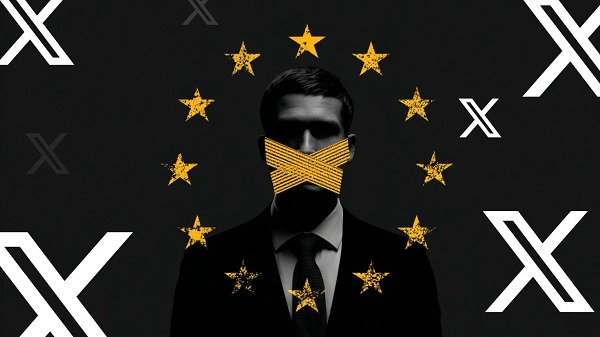
The EU Insists Its X Fine Isn’t About Censorship. Here’s Why It Is.

Published on

logo

By

Europe calls it transparency, but it looks a lot like teaching the internet who’s allowed to speak.

When the European Commission fined X €120 million on December 5, officials could not have been clearer. This, they said, was not about censorship. It was just about “transparency.”
They repeat it so often you start to wonder why.
The fine marks the first major enforcement of the Digital Services Act, Europe’s new censorship-driven internet rulebook.
It was sold as a consumer protection measure, designed to make online platforms safer and more accountable, and included a whole list of censorship requirements, fining platforms that don’t comply.
The Commission charged X with three violations: the paid blue checkmark system, the lack of advertising data, and restricted data access for researchers.
None of these touches direct content censorship. But all of them shape visibility, credibility, and surveillance, just in more polite language.
Musk’s decision to turn blue checks into a subscription feature ended the old system where establishment figures, journalists, politicians, and legacy celebrities got verification.
The EU called Musk’s decision “deceptive design.” The old version, apparently, was honesty itself. Before, a blue badge meant you were important. After, it meant you paid. Brussels prefers the former, where approved institutions get algorithmic priority, and the rest of the population stays in the queue.
The new system threatened that hierarchy. Now, anyone could buy verification, diluting the aura of authority once reserved for anointed voices.
Reclaim The Net is sustained by its readers.
Your support fuels the fight for privacy, free speech and digital civil liberties while giving you access to exclusive content, practical how to guides, premium features and deeper dives into freedom-focused tech.
Become a supporter here.
However, that’s not the full story. Under the old Twitter system, verification was sold as a public service, but in reality it worked more like a back-room favor and a status purchase.
The main application process was shut down in 2010, so unless you were already famous, the only way to get a blue check was to spend enough money on advertising or to be important enough to trigger impersonation problems.
Ad Age reported that advertisers who spent at least fifteen thousand dollars over three months could get verified, and Twitter sales reps told clients the same thing. That meant verification was effectively a perk reserved for major media brands, public figures, and anyone willing to pay. It was a symbol of influence rationed through informal criteria and private deals, creating a hierarchy shaped by cronyism rather than transparency.
Under the new X rules, everyone is on a level playing field.
Government officials and agencies now sport gray badges, symbols of credibility that can’t be purchased. These are the state’s chosen voices, publicly marked as incorruptible. To the EU, that should be a safeguard.
The second and third violations show how “transparency” doubles as a surveillance mechanism. X was fined for limiting access to advertising data and for restricting researchers from scraping platform content. Regulators called that obstruction. Musk called it refusing to feed the censorship machine.
The EU’s preferred researchers aren’t neutral archivists. Many have been documented coordinating with governments, NGOs, and “fact-checking” networks that flagged political content for takedown during previous election cycles.
They call it “fighting disinformation.” Critics call it outsourcing censorship pressure to academics.
Under the DSA, these same groups now have the legal right to demand data from platforms like X to study “systemic risks,” a phrase broad enough to include whatever speech bureaucrats find undesirable this month.
The result is a permanent state of observation where every algorithmic change, viral post, or trending topic becomes a potential regulatory case.
The advertising issue completes the loop. Brussels says it wants ad libraries to be fully searchable so users can see who’s paying for what. It gives regulators and activists a live feed of messaging, ready for pressure campaigns.
The DSA doesn’t delete ads; it just makes it easier for someone else to demand they be deleted.
That’s how this form of censorship works: not through bans, but through endless exposure to scrutiny until platforms remove the risk voluntarily.
The Commission insists, again and again, that the fine has “nothing to do with content.”
That may be true on a direct level, but the rules shape content all the same. When governments decide who counts as authentic, who qualifies as a researcher, and how visibility gets distributed, speech control doesn’t need to be explicit. It’s baked into the system.
Brussels calls it user protection. Musk calls it punishment for disobedience. This particular DSA fine isn’t about what you can say, it’s about who’s allowed to be heard saying it.
TikTok escaped similar scrutiny by promising to comply. X didn’t, and that’s the difference. The EU prefers companies that surrender before the hearing. When they don’t, “transparency” becomes the pretext for a financial hammer.
The €120 million fine is small by tech standards, but symbolically it’s huge.
It tells every platform that “noncompliance” means questioning the structure of speech the EU has already defined as safe.
In the official language of Brussels, this is a regulation. But it’s managed discourse, control through design, moderation through paperwork, censorship through transparency.
And the louder they insist it isn’t, the clearer it becomes that it is.
Reclaim The Net Needs Your Help
With your help, we can do more than hold the line. We can push back. We can expose censorship, highlight surveillance overreach, and amplify the voices of those being silenced.
If you have found value in our work, please consider becoming a supporter.
Your support does more than keep us independent. It also gives you access to exclusive content, deep dive exploration of freedom focused technology, member-only features, and practical how-to posts that help you protect your rights in the real world.
You help us expand our reach, educate more people, and continue this fight.
Please become a supporter today.
Thank you for your support.
Continue Reading

Censorship Industrial Complex

US Condemns EU Censorship Pressure, Defends X

Published on

US Vice President JD Vance criticized the European Union this week after rumors reportedly surfaced that Brussels may seek to punish X for refusing to remove certain online speech.

In a post on X, Vance wrote, “Rumors swirling that the EU commission will fine X hundreds of millions of dollars for not engaging in censorship. The EU should be supporting free speech not attacking American companies over garbage.”

His remarks reflect growing tension between the United States and the EU over the future of online speech and the expanding role of governments in dictating what can be said on global digital platforms.

Screenshot of a verified social-media post with a profile photo, reading: "Rumors swirling that the EU commission will fine X hundreds of millions of dollars for not engaging in censorship. The EU should be supporting free speech not attacking American companies over garbage." Timestamp Dec 4, 2025, 5:03 PM and "1.1M Views" shown.

Vance was likely referring to rumors that Brussels intends to impose massive penalties under the bloc’s Digital Services Act (DSA), a censorship framework that requires major platforms to delete what regulators define as “illegal” or “harmful” speech, with violations punishable by fines up to six percent of global annual revenue.

For Vance, this development fits a pattern he’s been warning about since the spring.

In a May 2025 interview, he cautioned that “The kind of social media censorship that we’ve seen in Western Europe, it will and in some ways, it already has, made its way to the United States. That was the story of the Biden administration silencing people on social media.”

He added, “We’re going to be very protective of American interests when it comes to things like social media regulation. We want to promote free speech. We don’t want our European friends telling social media companies that they have to silence Christians or silence conservatives.”

Yet while the Vice President points to Europe as the source of the problem, a similar agenda is also advancing in Washington under the banner of “protecting children online.”

This week’s congressional hearing on that subject opened in the usual way: familiar talking points, bipartisan outrage, and the recurring claim that online censorship is necessary for safety.

The House Subcommittee on Commerce, Manufacturing, and Trade convened to promote a bundle of bills collectively branded as the “Kids Online Safety Package.”

The session, titled “Legislative Solutions to Protect Children and Teens Online,” quickly turned into a competition over who could endorse broader surveillance and moderation powers with the most moral conviction.

Rep. Gus Bilirakis (R-FL) opened the hearing by pledging that the bills were “mindful of the Constitution’s protections for free speech,” before conceding that “laws with good intentions have been struck down for violating the First Amendment.”

Despite that admission, lawmakers from both parties pressed ahead with proposals requiring digital ID age verification systems, platform-level content filters, and expanded government authority to police online spaces; all similar to the EU’s DSA censorship law.

Vance has cautioned that these measures, however well-intentioned, mark a deeper ideological divide. “It’s not that we are not friends,” he said earlier this year, “but there’re gonna have some disagreements you didn’t see 10 years ago.”

That divide is now visible on both sides of the Atlantic: a shared willingness among policymakers to restrict speech for perceived social benefit, and a shrinking space for those who argue that freedom itself is the safeguard worth protecting.


If you’re tired of censorship and surveillance, join Reclaim The Net.

Fight censorship and surveillance. Reclaim your digital freedom.

Get news updates, features, and alternative tech explorations to defend your digital rights.

Continue Reading

Trending

X