
Community
Hazlett Lake


Hey everyone,
What is the biggest lake in Red Deer? You guessed it, Hazlett Lake! It’s right there, just north of HWY 11A. Plans to develop this area are in the works as we speak. It has been projected that over the next 20 years or so this area will become home to about 20,000+ new Red Deerians.
Hazlett lake has the potential to be the great equalizer for our city. Let’s be honest, over the years, the south side of the river has gotten most of the attention. To put it lightly, there is a split in our city that is cultural as well as geographical. The natural barrier of the river need not demarcate where our city invests and how our city grows.
So, let’s talk about the potential of this area. My first thought is that there could be a high school near Hazlett Lake. This would service the growing north side of Red Deer. Also, there is potential to benefit the county and nearby communities by partnering and sharing resources. Maybe Blackfalds would benefit from this?
There could be a recreation centre near Hazlett Lake that would bring the same level of service to the residents of Johnstone and Kentwood as people in Inglewood and Anders receive. On a side note, I say LEAVE the downtown recreation centre as it is, don’t go ahead with plans to build a giant aquatic centre on the park behind the current outdoor pool. That park has immense value to our downtown and we need to preserve natural assets like that.
As another side note if Camrose can do it, Red Deer can do it as well, when we build a new aquatic centre it should have solar panels on its roof. It’ll save money and lower our carbon footprint. Win! Win! But that’s another conversation.
The road that will eventually be built to better connect North and South will open up the entire region north of HWY 11A. But we need to be cautious to not design for urban sprawl. We need to balance all mobility options upfront so that we’re not trying to retrofit in bike lanes and jam in busses after-the-fact. We really have the potential to design a mobility efficient neighbourhood that is pleasant and safe to walk, bike, ride the bus and/or drive in. As you know I am a huge fan of walkability, I made a 10 part video series about walking in Red Deer. Check them out and you’ll see what I mean. (YouTube: Wieler4RD).

Hazlett Lake is an environmental asset that we need to protect and enhance. As we develop this area we would be well served to do so in a way that restores this delicate wetland and preserves it for the future. There needs to be sufficient buffer space between roads and buildings and the waters edge. Runoff needs to be managed so that there isn’t contamination and erosion problems. Wildlife habitat needs to be taken into consideration.
Environmental challenges aside there will be other obstacles. Road access will be one of the biggest as there are only 2 major access points; one straight through Taylor Drive and the other off HWY 2A near Precision Drilling. So it will be even more important to make this area sufficiently walkable and balance all mobility options so we don’t create a traffic jam dystopia.
Another challenge is emergency services, especially to the area across the river from the golf course to the North East, as there will only be one way in and emergency response times will be stretched. One way to overcome this is to design for sufficient density in this area and create a sustainable tax base to meet the required level of service. Another way, perhaps better, is to design for minimal density and not make emergency access to the North East corner an issue to begin with.
Hazlett lake in terms of environmental and social capital could rival what we Red Deerians love so much about our river valley. Let’s build on the success of the past and place the same standards of environmental and social sustainability into our plans to develop Hazlett lake that we put into natural assets like Heritage Ranch and Kerry Wood Nature Centre.
I would love to hear your thoughts on all this. Twitter works great (@Wieler4RD) and Facebook too, or let’s have coffee!
Cheers,
For more info see: North Of 11A Major Area Structure Plan



From the Fraser Institute
By Jake Fuss and Grady Munro
There would have been 1.5 million more Canadians who donated to charity in 2023—and $755.5 million more in donations—had Canadians given to the same extent they did 10 years prior
According to recent polling, approximately one in five Canadians have skipped paying a bill over the past year so they can buy groceries. As families are increasingly hard-pressed to make ends meet, this undoubtedly means more and more people must seek out food banks, shelters and other charitable organizations to meet their basic necessities.
And each year, Canadians across the country donate their time and money to charities to help those in need—particularly around the holiday season. Yet at a time when the relatively high cost of living means these organizations need more resources, new data published by the Fraser Institute shows that the level of charitable giving in Canada is actually falling.
Specifically, over the last 10 years (2013 to 2023, the latest year of available data) the share of tax-filers who reported donating to charity fell from 21.9 per cent to 16.8 per cent. And while fewer Canadians are donating to charity, they’re also donating a smaller share of their income—during the same 10-year period, the share of aggregate income donated to charity fell from 0.55 per cent to 0.52 per cent.
To put this decline into perspective, consider this: there would have been 1.5 million more Canadians who donated to charity in 2023—and $755.5 million more in donations—had Canadians given to the same extent they did 10 years prior. Simply put, this long-standing decline in charitable giving in Canada ultimately limits the resources available for charities to help those in need.
On the bright side, despite the worrying long-term trends, the share of aggregate income donated to charity recently increased from 0.50 per cent in 2022 to 0.52 per cent in 2023. While this may seem like a marginal improvement, 0.02 per cent of aggregate income for all Canadians in 2023 was $255.7 million.
The provinces also reflect the national trends. From 2013 to 2023, every province saw a decline in the share of tax-filers donating to charity. These declines ranged from 15.4 per cent in Quebec to 31.4 per cent in Prince Edward Island.
Similarly, almost every province recorded a drop in the share of aggregate income donated to charity, with the largest being the 24.7 per cent decline seen in P.E.I. The only province to buck this trend was Alberta, which saw a 3.9 per cent increase in the share of aggregate income donated over the decade.
Just as Canada as a whole saw a recent improvement in the share of aggregate income donated, so too did many of the provinces. Indeed, seven provinces (except Manitoba, Nova Scotia and Newfoundland and Labrador) saw an increase in the share of aggregate income donated to charity from 2022 to 2023, with the largest increases occurring in Saskatchewan (7.9 per cent) and Alberta (6.7 per cent).
Canadians also volunteer their time to help those in need, yet the latest data show that volunteerism is also on the wane. According to Statistics Canada, the share of Canadians who volunteered (both formally and informally) fell by 8 per cent from 2018 to 2023. And the total numbers of hours volunteered (again, both formal and informal) fell by 18 per cent over that same period.
With many Canadians struggling to make ends meet, food banks, shelters and other charitable organizations play a critical role in providing basic necessities to those in need. Yet charitable giving—which provides resources for these charities—has long been on the decline. Hopefully, we’ll see this trend turn around swiftly.


|

|
|

|
|
|


Georgia county admits illegally certifying 315k ballots in 2020 presidential election
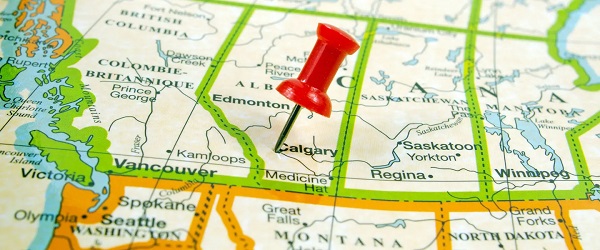
Alberta Next Panel calls to reform how Canada works

End Supply Management—For the Sake of Canadian Consumers

Canadian government launches trial version of digital ID for certain licenses, permits
-
 Business1 day ago
ICYMI: Largest fraud in US history? Independent Journalist visits numerous daycare centres with no children, revealing massive scam
-
 Alberta22 hours ago
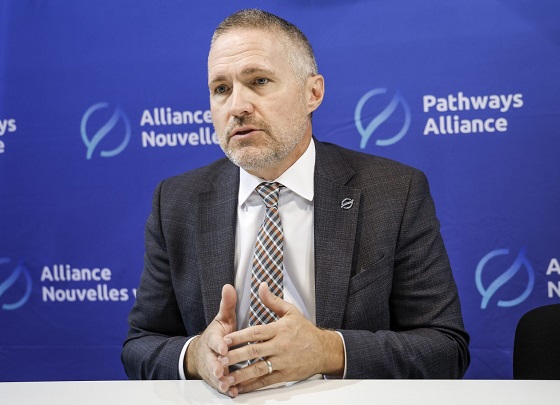
Alberta project would be “the biggest carbon capture and storage project in the world”
-
 Energy19 hours ago
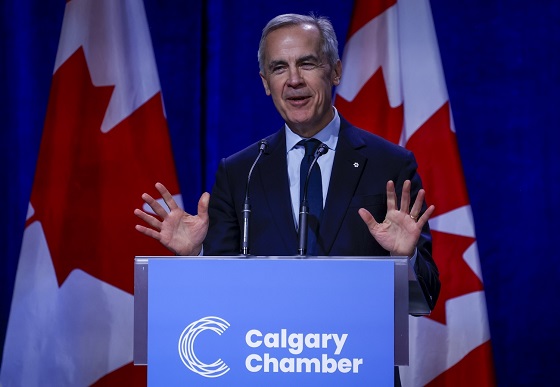
Canada’s debate on energy levelled up in 2025
-
 Business20 hours ago
Socialism vs. Capitalism
-
 Energy21 hours ago
New Poll Shows Ontarians See Oil & Gas as Key to Jobs, Economy, and Trade
-
 Business2 days ago
DOOR TO DOOR: Feds descend on Minneapolis day cares tied to massive fraud
-
 Business2 days ago
Canada needs serious tax cuts in 2026
-
 Bruce Dowbiggin2 days ago
In Contentious Canada Reality Is Still Six Degrees Of Hockey