
Business
Have We Lost the Ability to Build Infrastructure?




The Empire Statue Building was, for its time, monumental. The New York landmark may not be such a big deal these days, but its construction history in often invoked as a sign that we’ve lost the capacity to do big stuff.
After all, the iconic skyscraper’s builders brought the project to completion $19 million under budget, 12 days ahead of schedule, and in just over a year.
At the height of the depression.
The Audit is a reader-supported publication. To receive new posts and support my work, consider becoming a free or paid subscriber.
By contrast, California’s High-Speed Rail project – designed to ultimately link San Diego with Sacramento – was authorized in 2008. Construction on Phase 1 didn’t being until 2015. As of now, $11.2 billion has been spent without a single train having left a single station. The total budget was originally in the $33-40 billion range, although it’s now anticipated to run past $128 billion. And no one’s expecting project completion any time in the next decade.
Closer to home, we can compare the original 7.4 kilometer Yonge Line of Toronto’s subway system (fully-functional by 1954 after just five years’ work) with its grandson, the Eglinton Crosstown LRT. The Eglinton line was announced in 2007, work began in 2011 and, 13 years later, completion is still nowhere in sight. Since I live just a few blocks from what might one day become an LRT station, I’ll be sure to let you know if anything changes.
In the grand scheme of things, North America might not even have it so bad. Lately, everyone (and by “everyone” I mean everyone besides my wife, children, or even a single person I have ever met) has been buzzing about a 17,000-word article called “Foundations: Why Britain Has Stagnated”. I strongly encourage you to read the whole thing have ChatGPT summarize it for you.
The main takeaway from Foundations is that the UK’s excessive regulations, high energy and labour costs, bureaucratic delays, and outdated tax incentives led to an application process requiring 360,000 pages and nearly £300 million for the Lower Thames Crossing project before any work was even approved!

The rot that lies behind Britain’s paralysis has been building since the 1990’s, through both Conservative and Labour governments.
But things might not be so bad here at home. For one thing, we probably don’t have a regulatory bureaucracy that’s quite so extreme as Britain’s. I’m aware of nothing in Canada that’s analogous to the UK’s “nutrient neutrality” requirements.
And while our energy costs are certainly not cheap, they’re a whole lot better here than in the UK. Commercial electricity, for instance, costs an average of USD 0.117 per kWh in Canada, far below the USD 0.485 per kWh they’re paying in the UK. And the cost of natural gas for home heating in Canada (USD 0.038 per kWh) isn’t even close to what they shell out across the pond (USD 0.092 per kWh).
Which might at least partially explain why, despite all the delays, cost overruns, and unexpected service failures involved, some major infrastructure projects have reached a (broadly) happy conclusion.
For every expensive failure (like the Eglinton Crosstown LRT or the Ottawa Confederation Line), there have also been successes (like Confederation Bridge and Vancouver’s Canada Line). Things are far from perfect, but it’s not all doom and gloom either.
The Foundations article ends on a positive note:
We believe that Britain can enjoy such a renewal once more. To do so, it need simply remove the barriers that stop the private sector from doing what it already wants to do: build homes, bridges, tunnels, roads, trams, railways, nuclear power plants, grid connections, prisons, aqueducts, reservoirs, and more.
Removing barriers. Or even better, resisting the erection of new barriers before they’re in place. We can always hope.
The Audit is a reader-supported publication. To receive new posts and support my work, consider becoming a free or paid subscriber.


From the Daily Caller News Foundation
A resurfaced 2018 video from a Minneapolis-area TV station shows how Somali scammers allegedly bilked Minnesota out of millions of dollars for services that they never provided.
Independent journalist Nick Shirley touched off a storm on social media Friday after he posted a photo of one day-care center, which displayed a banner calling it “The Greater Learing Center” on X, along with a 42-minute video that went viral showing him visiting that and other day-care centers. The surveillance video, which aired on Fox 9 in 2018 after being taken in 2015, showed parents taking kids into the center, then leaving with them minutes later, according to Fox News.
“They were billing too much, they went up to high,” Hennepin County attorney Mike Freeman told Fox 9 in 2018. “It’s hard to imagine they were serving that many people. Frankly if you’re going to cheat, cheat little, because if you cheat big, you’re going to get caught.”
Dear Readers:
As a nonprofit, we are dependent on the generosity of our readers.
Please consider making a small donation of any amount here.
Thank you!
Democratic Gov. Tim Walz of Minnesota was accused of engaging in “systemic” retaliation against whistleblowers in a Nov. 30 statement by state employees. Assistant United States Attorney Joe Thompson announced on Dec. 18 that the amount of suspected fraud in Minnesota’s Medicaid program had reached over $9 billion.
After Shirley’s video went viral, FBI Director Kash Patel announced the agency was already sending additional resources in a Sunday post on X, citing the case surrounding Feeding Our Future, which at one point accused the Minnesota government of racism during litigation over the suspension of funds after earlier allegations of fraud.
KSTP reported that the Quality Learning Center, one of the centers visited by Shirley, had 95 citations for violations from one Minnesota agency between 2019 to 2023.
President Donald Trump announced in a Nov. 21 post on Truth Social that he would end “Temporary Protected Status” for Somalis in the state in response to allegations of welfare fraud and said that the influx of refugees had “destroyed our country.”
Business
Disclosures reveal Minnesota politician’s husband’s companies surged thousands-fold amid Somali fraud crisis


Rep. Ilhan Omar’s latest financial disclosures reveal seemingly sudden wealth accumulation inside her household, even as Minnesota grapples with revelations of massive fraud that may have siphoned more than $9 billion from government programs. The numbers, drawn from publicly filed congressional reports, show two companies tied to Omar’s husband, Tim Mynett, surging in value at a pace that raises more questions than answers.
According to the filings, Rose Lake Capital LLC — a business advisory firm Mynett co-founded in 2022 — jumped from an assessed range of $1 to $1,000 in 2023 to between $5 million and $25 million in 2024. Even using the most conservative assumptions allowed under Congress’ broad valuation ranges, the company’s value would have increased thousands of times in a single year. The firm advertises itself as a facilitator of “deal-making, mergers and acquisitions, banking, politics and diplomacy.”
Archived versions of Rose Lake’s website once showcased an eye-catching lineup of political heavyweights: former Ambassador to Bahrain Adam Ereli, former Sen. Max Baucus, and prominent Democratic National Committee alumni William Derrough and Alex Hoffman. But as scrutiny surrounding Omar intensifies — particularly over whether her political network intersected with sprawling fraud schemes exposed in Minnesota — the company has quietly scrubbed its online footprint. Names and biographies of team members have vanished, and the firm has not clarified whether these figures remain involved. Omar’s office offered no comment when asked to explain the company’s sudden growth or the removal of its personnel listings.
Mynett, Omar’s third husband, has long been a controversial presence in her political orbit, but the dramatic swell in his business holdings comes at a moment when trust in Minnesota’s oversight systems is already badly shaken. Federal and state investigators now estimate that fraud involving pandemic-era and nonprofit programs may exceed $9 billion, a staggering figure for a state often held up as a model of progressive governance. For many residents, the revelation that Omar’s household wealth soared during the same period only deepens skepticism about who benefited from Minnesota’s expansive social-spending apparatus.
The financial story doesn’t stop with Rose Lake. A second Mynett-linked entity, ESTCRU LLC — a boutique winery registered in Santa Rosa, California — reported an assessed value of $1 million to $5 million in 2024. Just a year earlier, Omar disclosed its worth at $15,000 to $50,000. Despite the dramatic valuation spike, ESTCRU’s online storefront does not appear to function, its last social media activity dates back to early 2023, and the phone number listed on its website is no longer in service. As with Rose Lake, Omar’s office declined to comment on the winery’s sudden rise in reported value.
The House clerk has yet to release 2025 disclosures, leaving unanswered how these companies are performing today — and how such explosive growth materialized in the first place.

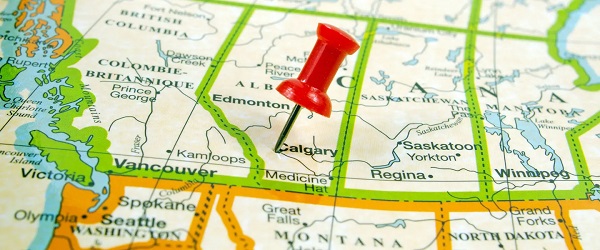
Alberta Next Panel calls to reform how Canada works

Canadian government launches trial version of digital ID for certain licenses, permits

Georgia county admits illegally certifying 315k ballots in 2020 presidential election

End Supply Management—For the Sake of Canadian Consumers
-
 Business10 hours ago
ICYMI: Largest fraud in US history? Independent Journalist visits numerous daycare centres with no children, revealing massive scam
-
 Daily Caller2 days ago
While Western Nations Cling to Energy Transition, Pragmatic Nations Produce Energy and Wealth
-
 Daily Caller2 days ago
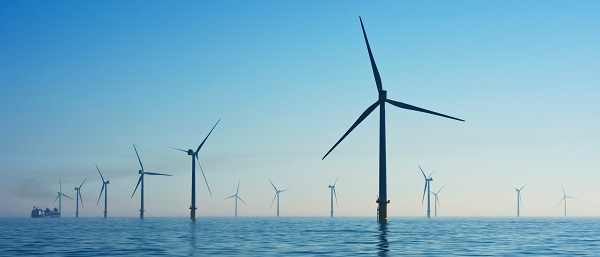
US Halts Construction of Five Offshore Wind Projects Due To National Security
-
 Alberta2 days ago
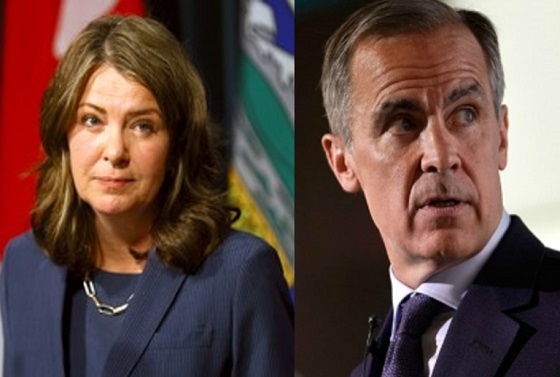
Alberta Next Panel calls for less Ottawa—and it could pay off
-
 Bruce Dowbiggin1 day ago
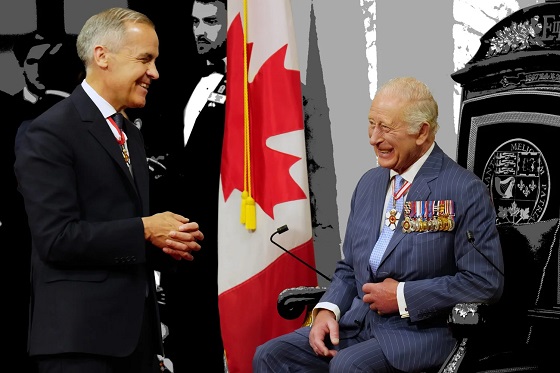
Be Careful What You Wish For In 2026: Mark Carney With A Majority
-
 Energy2 days ago
Why Japan wants Western Canadian LNG
-
 Business2 days ago
Mainstream media missing in action as YouTuber blows lid off massive taxpayer fraud
-
 Business2 days ago
Land use will be British Columbia’s biggest issue in 2026