
Business
Fuelled by federalism—America’s economically freest states come out on top



From the Fraser Institute
Do economic rivalries between Texas and California or New York and Florida feel like yet another sign that America has become hopelessly divided? There’s a bright side to their disagreements, and a new ranking of economic freedom across the states helps explain why.
As a popular bumper sticker among economists proclaims: “I heart federalism (for the natural experiments).” In a federal system, states have wide latitude to set priorities and to choose their own strategies to achieve them. It’s messy, but informative.
New York and California, along with other states like New Mexico, have long pursued a government-centric approach to economic policy. They tax a lot. They spend a lot. Their governments employ a large fraction of the workforce and set a high minimum wage.
They aren’t socialist by any means; most property is still in private hands. Consumers, workers and businesses still make most of their own decisions. But these states control more resources than other states do through taxes and regulation, so their governments play a larger role in economic life.
At the other end of the spectrum, New Hampshire, Tennessee, Florida and South Dakota allow citizens to make more of their own economic choices, keep more of their own money, and set more of their own terms of trade and work.
They aren’t free-market utopias; they impose plenty of regulatory burdens. But they are economically freer than other states.
These two groups have, in other words, been experimenting with different approaches to economic policy. Does one approach lead to higher incomes or faster growth? Greater economic equality or more upward mobility? What about other aspects of a good society like tolerance, generosity, or life satisfaction?

For two decades now, we’ve had a handy tool to assess these questions: The Fraser Institute’s annual “Economic Freedom of North America” index uses 10 variables in three broad areas—government spending, taxation, and labor regulation—to assess the degree of economic freedom in each of the 50 states and the territory of Puerto Rico, as well as in Canadian provinces and Mexican states.
It’s an objective measurement that allows economists to take stock of federalism’s natural experiments. Independent scholars have done just that, having now conducted over 250 studies using the index. With careful statistical analyses that control for the important differences among states—possibly confounding factors such as geography, climate, and historical development—the vast majority of these studies associate greater economic freedom with greater prosperity.
In fact, freedom’s payoffs are astounding.
States with high and increasing levels of economic freedom tend to see higher incomes, more entrepreneurial activity and more net in-migration. Their people tend to experience greater income mobility, and more income growth at both the top and bottom of the income distribution. They have less poverty, less homelessness and lower levels of food insecurity. People there even seem to be more philanthropic, more tolerant and more satisfied with their lives.
New Hampshire, Tennessee, and South Dakota topped the latest edition of the report while Puerto Rico, New Mexico, and New York rounded out the bottom. New Mexico displaced New York as the least economically free state in the union for the first time in 20 years, but it had always been near the bottom.
The bigger stories are the major movers. The last 10 years’ worth of available data show South Carolina, Ohio, Wisconsin, Idaho, Iowa and Utah moving up at least 10 places. Arizona, Virginia, Nebraska, and Maryland have all slid down 10 spots.
Over that same decade, those states that were among the freest 25 per cent on average saw their populations grow nearly 18 times faster than those in the bottom 25 per cent. Statewide personal income grew nine times as fast.
Economic freedom isn’t a panacea. Nor is it the only thing that matters. Geography, culture, and even luck can influence a state’s prosperity. But while policymakers can’t move mountains or rewrite cultures, they can look at the data, heed the lessons of our federalist experiment, and permit their citizens more economic freedom.

From the Fraser Institute
By Annika Segelhorst and Elmira Aliakbari
According to Steven Guilbeault, former environment minister under Justin Trudeau and former member of Prime Minister Carney’s cabinet, “Switching to an electric vehicle is one of the most impactful things Canadians can do to help fight climate change.”
And the Carney government has only paused Trudeau’s electric vehicle (EV) sales mandate to conduct a “review” of the policy, despite industry pressure to scrap the policy altogether.
So clearly, according to policymakers in Ottawa, EVs are essentially “zero emission” and thus good for environment.
But is that true?
Clearly, EVs have some environmental advantages over traditional gasoline-powered vehicles. Unlike cars with engines that directly burn fossil fuels, EVs do not produce tailpipe emissions of pollutants such as nitrogen dioxide and carbon monoxide, and do not release greenhouse gases (GHGs) such as carbon dioxide. These benefits are real. But when you consider the entire lifecycle of an EV, the picture becomes much more complicated.
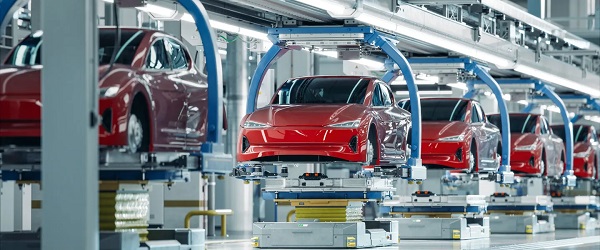
Unlike traditional gasoline-powered vehicles, battery-powered EVs and plug-in hybrids generate most of their GHG emissions before the vehicles roll off the assembly line. Compared with conventional gas-powered cars, EVs typically require more fossil fuel energy to manufacture, largely because to produce EVs batteries, producers require a variety of mined materials including cobalt, graphite, lithium, manganese and nickel, which all take lots of energy to extract and process. Once these raw materials are mined, processed and transported across often vast distances to manufacturing sites, they must be assembled into battery packs. Consequently, the manufacturing process of an EV—from the initial mining of materials to final assembly—produces twice the quantity of GHGs (on average) as the manufacturing process for a comparable gas-powered car.
Once an EV is on the road, its carbon footprint depends on how the electricity used to charge its battery is generated. According to a report from the Canada Energy Regulator (the federal agency responsible for overseeing oil, gas and electric utilities), in British Columbia, Manitoba, Quebec and Ontario, electricity is largely produced from low- or even zero-carbon sources such as hydro, so EVs in these provinces have a low level of “indirect” emissions.
However, in other provinces—particularly Alberta, Saskatchewan and Nova Scotia—electricity generation is more heavily reliant on fossil fuels such as coal and natural gas, so EVs produce much higher indirect emissions. And according to research from the University of Toronto, in coal-dependent U.S. states such as West Virginia, an EV can emit about 6 per cent more GHG emissions over its entire lifetime—from initial mining, manufacturing and charging to eventual disposal—than a gas-powered vehicle of the same size. This means that in regions with especially coal-dependent energy grids, EVs could impose more climate costs than benefits. Put simply, for an EV to help meaningfully reduce emissions while on the road, its electricity must come from low-carbon electricity sources—something that does not happen in certain areas of Canada and the United States.
Finally, even after an EV is off the road, it continues to produce emissions, mainly because of the battery. EV batteries contain components that are energy-intensive to extract but also notoriously challenging to recycle. While EV battery recycling technologies are still emerging, approximately 5 per cent of lithium-ion batteries, which are commonly used in EVs, are actually recycled worldwide. This means that most new EVs feature batteries with no recycled components—further weakening the environmental benefit of EVs.
So what’s the final analysis? The technology continues to evolve and therefore the calculations will continue to change. But right now, while electric vehicles clearly help reduce tailpipe emissions, they’re not necessarily “zero emission” vehicles. And after you consider the full lifecycle—manufacturing, charging, scrapping—a more accurate picture of their environmental impact comes into view.

Annika Segelhorst
Junior Economist

Elmira Aliakbari


We’ve all seen the headlines — such as the below — loudly proclaiming that due to climate change the insurance industry is in crisis, and even that total economic collapse may soon follow. For instance, since 2019, the New York Times, one of the primary champions of this narrative, has published more than 1,250 articles on climate change and insurance.
 |
Climate advocates have embraced the idea of a climate-fueled insurance crisis as it neatly ties together the hyping of extreme weather and alleged financial consequences for ordinary people. The oft-cited remedy to the claimed crisis is, of course, to be found in energy policy: “The only long-term solution to preserve an insurable future is to transition from fossil fuels and other greenhouse-gas-emitting industries.”
However, it is not just climate advocates promoting the notion that climate change is fundamentally threatening the insurance industry. A climate-risk industrial complex has emerged in this space and a lot of money is being made by a lot of people. The virtuous veneer of climate advocacy serves to discourage scrutiny and accountability.
In this series, I take a deep dive into the “crisis,” its origins, its politics, and its tenuous relationship with actual climate science.¹ Today, I kick things off by sharing three fundamental, and perhaps surprising, facts that go a long way to explaining why insurance prices have increased and who benefits:
- Property/casualty insurance is raking in record profits;
- Insurance underwriting returns vary year-to-year but show no trend;
- “Climate” risk assessments are unreliable and a cause of higher insurance prices.
Grab a cup of coffee, settle in, and let’s go . . .
If you value the deep dives such as this one, which you will find no where else,
please consider supporting THB with a paid subscription!
Property/casualty insurance is raking in record profits
This year is shaping up to be an extremely profitable year for the property/casualty (P/C) insurance industry. In a report covering the first six months of 2025, the National Association of Insurance Commissioners (NAIC) shares the good news (emphasis added):
Despite heavy catastrophe losses, including the costliest wildfires on record, the U.S. Property & Casualty (P&C) industry recorded its best mid-year underwriting gain in nearly 20 years.
In the second half of 2025, returns got even better for the P/C industry. According to a new report from S&P Global Intelligence, as reported by Carrier Management (emphases added):
For U.S. P/C insurers, it just doesn’t get any better than this. . . With a combined ratio of 89.1 for third-quarter 2025, the U.S. property/casualty insurance industry had its best quarter in at least a quarter of a century—and maybe longer, S&P Market Intelligence said.
Taking a longer view, the extremely profitable 2025 follows significant industry profitability in 2023 and 2024, according to the National Association of Insurance Commissioners (NAIC), as shown in the figure below.
 |
What accounts for the high profits?
The NAIC explains:
Strong premium growth, driven largely by rate increases, coupled with abating economic inflation . . . Net income nearly doubled compared to last year, attributed to the underwriting profit and healthy investment returns.
Below, I’ll pick up the issue of rate increases and explore one big reason why they have occurred.
If there is a P/C insurance crisis, it may be in figuring out how to explain its impressive returns at the same time that the climate lobby is telling everyone that the industry is collapsing.
Insurance underwriting returns vary year-to-year but show no trend
The P/C industry makes money primarily in two ways — underwriting of insurance policies and investment income. Typically, insurance companies seek to break even, or lose little, on insurance underwriting and earn profits on investment income.
Warren Buffet, in his 2009 letter to Berkshire Hathaway shareholders, explained concisely how the P/C industry works:
Our property-casualty (P/C) insurance business has been the engine behind Berkshire’s growth and will continue to be. It has worked wonders for us. We carry our P/C companies on our books at $15.5 billion more than their net tangible assets, an amount lodged in our “Goodwill” account. These companies, however, are worth far more than their carrying value– and the following look at the economic model of the P/C industry will tell you why.
Insurers receive premiums upfront and pay claims later. In extreme cases, such as those arising from certain workers’ compensation accidents, payments can stretch over decades. This collect-now, pay-later model leaves us holding large sums– money we call “float”– that will eventually go to others. Meanwhile, we get to invest this float for Berkshire’s benefit. Though individual policies and claims come and go, the amount of float we hold remains remarkably stable in relation to premium volume. Consequently, as our business grows, so does our float.
If premiums exceed the total of expenses and eventual losses, we register an underwriting profit that adds to the investment income produced from the float. This combination allows us to enjoy the use of free money– and, better yet, get paid for holding it. Alas, the hope of this happy result attracts intense competition, so vigorous in most years as to cause the P/C industry as a whole to operate at a significant underwriting loss. This loss, in effect, is what the industry pays to hold its float. Usually this cost is fairly low, but in some catastrophe-ridden years the cost from underwriting losses more than eats up the income derived from use of float.
The figure below, using data from the Insurance Information Institute, shows the underwriting performance of the P/C industry from 2004 to 2024.

The time series shows lots of ups and downs, but no trend — by design, as Buffet explained. There are certainly no signs of an underwriting crisis, much less indications of a coming collapse. The P/C industry looks both well-managed and healthy.
“Climate” risk assessments are unreliable and a cause of higher insurance prices
 |
If profits are high and underwriting is steady, then what then accounts for increasing insurance prices — which, as of the end of 2024, increased 29 consecutive quarters in a row (above)?
A big part of the answer is Climate Change. But not how you might think.
A decade ago, Mark Carney — then Governor of the Bank of England and today Prime Minister of Canada — gave an influential speech titled, Breaking the Tragedy of the Horizon – climate change and financial stability.
Carney argued that the insurance industry was at risk due to changes in the climatology of extreme events that were not properly understood by experts in the industry:
[T]here are some estimates that currently modelled losses could be undervalued by as much as 50% if recent weather trends were to prove representative of the new normal. . . Such developments have the potential to shift the balance between premiums and claims significantly, and render currently lucrative business non-viable.
Coincident with Carney’s 2015 speech, the Bank of England released a report on the impacts of climate change on the insurance industry, and noted that conventional catastrophe modeling did not effectively consider a changing climate. The Bank of England kicked off a longstanding campaign to convince people that extreme weather events were changing dramatically in the near term.
Subsequently, in 2019, the Bank of England required firms to assess their “climate risks.” This guidance was updated last week. In (a coordinated) parallel effort, national and international organizations focused on “climate risk” to the financial sector started multiplying — such as the Climate Financial Risk Forum and the Network for Greening the Financial System.
The climate-risk industry was born circa 2019.
There is an incredible story to be told here (and Jessica Weinkle is the go-to expert), but for today, the key takeaways are that (a) the notion of “climate risk” to finance, including insurance, led to the creation of a “climate risk” industry, and (b) within this industry, a new family of risk assessment vendors emerged, promising to satisfy the new demands for climate risk disclosure and risk modeling.
The Global Association of Risk Professionals (GARP) explains:
As this [“climate risk”] was a new discipline for most financial firms, many turned to third party providers (“vendors”) to help them with different areas of expertise. There are now many physical risk data vendors, which offer a variety of services to financial institutions. While vendor offerings often sound alike — providing projections of how physical risk could evolve for locations across a range of risks and climate scenarios — they can differ significantly in terms of features, approach, or suitability for specific needs, and the underlying models that these providers use differ in methodology and assumptions.
GARP just published an incredibly important study that assessed how 13 different “climate risk” vendors modeled physical risk and risk of loss across 100 individual structures around the world.²
The results are shocking — given how they are used in industry, but should not be surprising — given what we know about modeling.
There is absolutely no consensus across vendors about “climate risk” in terms of either physical risks or risks of loss.
The figure below shows, for 100 different properties around the world, the differences in modeled 200-year flood risk across the 13 vendors, as refelcted in modeled flood heights. The maximum difference among the properties across vendors is about 12 meters and the median difference is about 2.7 meters — These are huge differences.
 |
In terms of risk of loss, the models have an even greater spread. The figure below shows that for a modeled 200-year flood, 10 properties are modeled by at least one vendor to have total losses (100%) while another vendor models the same properties to have no losses, under the exact same event. The median difference between minimum and maximum modeled loss ratio is 30% — Another huge number.³
 |
Insurance pricing does not scale linearly with increasing modeled loss ratios. Consider that the difference between a modeled 10% loss ratio and a 40% loss ratio (i.e., the 30% median difference across vendors from above) might result in a 10x increase in insurance rates. Risk adverse insurers have incentives to price at the most extreme modeled loss.
Model inaccuracies, unceratinties, spread, and ambiguity are feature not flaws when it comes to making money. “Climate risk” modeling has resulted in a financial windfall not just for the newly created climate analytics industry, but also for insurers and reinsurers who have seen the envelope of modeled losses expand. The need for new models, of questionabl fidelity, are necessary to satisfy industry guidance and government regulators.
The net result has been a seemingly scientific justification for increasing insurance rates.⁴
There are of course real changes in physical risk, exposure, and vulnerability as well as the regulatory and political contexts within which the P/C industry must operate. The discipline of catastrophe modeling has long integrated these factors to assess risks. As insurance policies and reinsurance contracts are typically implemented on a one-year basis, and this well-positioned to incorporate changng perceptions of risk, this series will explore why a new “climate risk” assessment industry was even needed in the first place.
What about that “climate risk”? THB readers will be very familiar with the science of extreme events and climate change, which, as reported here, happens to be consistent with both the Intergovernmental Panel on Climate Change and those in the legacy catastrophe modeling community.
One of those modeling firms, Verisk, gets the last word for today:
We estimate about 1% of year-on-year increases in AAL [Average Annual Loss] are attributable to climate change. Such small shifts can easily get lost behind other sources of systematic loss increase discussed in this report, such as inflation and exposure growth. The random volatility from internal climate variability also dwarfs the small positive climate change signal.
Before you go — If you learned something from this post, please click that “ Like” button — More likes mean that THB rises in the Substack algorithm and gets in front of more readers. More readers mean that THB reaches more people in more places, broadening understandings and discussions of complex issues where science meets politics. Thanks!
Comments, questions, discussion, critique — all welcome!
If you value THB please consider subscribing. Paid subscribers make THB go and also have access to THB Pro, with PDFs of some of my books, THB Insider, Five Figures, and paywalled THB posts. Plus you get to participate in the lively, diverse, and informed discussions under every post. Thank you!


Wayne Gretzky’s Terrible, Awful Week.. And Soccer/ Football.

Western Campuses Help Build China’s Digital Dragnet With U.S. Tax Funds, Study Warns
Surgery Denied. Death Approved.
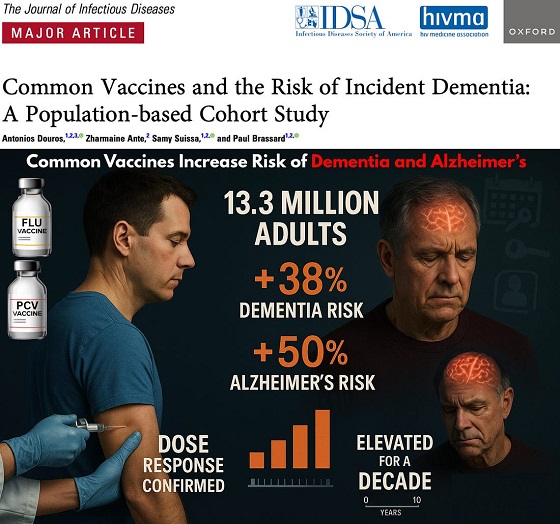
Common Vaccines Linked to 38-50% Increased Risk of Dementia and Alzheimer’s
-
Bruce Dowbiggin23 hours ago
Wayne Gretzky’s Terrible, Awful Week.. And Soccer/ Football.
-
espionage12 hours ago
Western Campuses Help Build China’s Digital Dragnet With U.S. Tax Funds, Study Warns
-
Focal Points3 hours ago
Common Vaccines Linked to 38-50% Increased Risk of Dementia and Alzheimer’s
-
 Opinion21 hours ago
The day the ‘King of rock ‘n’ roll saved the Arizona memorial
-
 Agriculture22 hours ago
Canada’s air quality among the best in the world
-
 Business10 hours ago
Canada invests $34 million in Chinese drones now considered to be ‘high security risks’
-
 Health36 mins ago
The Data That Doesn’t Exist
-
 Economy11 hours ago
Affordable housing out of reach everywhere in Canada