
COVID-19
Florida Surgeon General’s Call to Halt Use of the Vaccines Sparks Debate

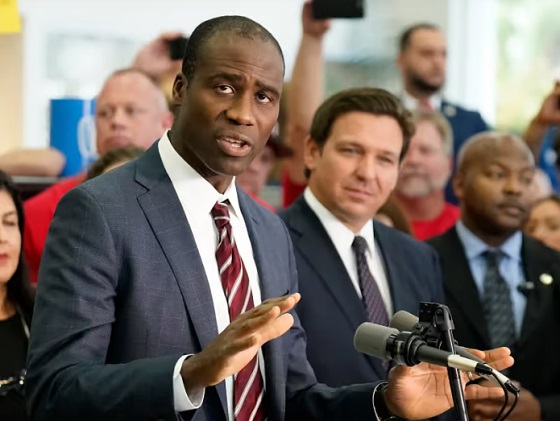
Dr Joseph Ladapo, Florida’s Surgeon General at the microphone
From the Brownstone Institute

On January 3, 2024, Florida Surgeon General Joseph Ladapo called for a halt in the use of the mRNA Covid-19 vaccines after US health agencies failed to adequately address his concerns about DNA contamination in the products.
In a statement on X, Ladapo accused the FDA and CDC of always playing it “fast and loose” with Covid-19 safety, but their failure to test whether DNA fragments in the vaccine could integrate into a person’s genome was “intolerable.”
As I and others have pointed out on numerous occasions, the FDA’s own guidance on regulatory limits for residual DNA in vaccines states “there are several potential mechanisms by which residual DNA could be oncogenic [cause cancer], including the integration and expression of encoded oncogenes or insertional mutagenesis following DNA integration.”
In a letter, Ladapo had also asked the two agencies if they’d carried out any risk assessment regarding the presence of the “SV40 promoter” in the vaccines, which is thought to enhance DNA integration into host cells.
But the FDA’s top vaccine official Peter Marks responded to Ladapo’s demand for answers with intransigence and obfuscation.
Similar to how the FDA shut down my previous enquiries into this matter, the agency failed to provide Ladapo with any evidence that it had even conducted tests to address the risk of genomic integration.
In fact, Marks had the temerity to imply that ongoing discussion about this topic was perpetuating misinformation “which results in vaccine hesitancy that lowers vaccine uptake.”
Ladapo explained;
DNA integration poses a unique and elevated risk to human health and to the integrity of the human genome, including the risk that DNA integrated into sperm or egg gametes could be passed onto offspring of mRNA Covid-19 vaccine recipients. If the risks of DNA integration have not been assessed for mRNA Covid-19 vaccines, these vaccines are not appropriate for use in human beings.
He also recommended that providers concerned about health risks of Covid-19 should prioritise patient access to non-mRNA Covid-19 vaccines and treatment.
Quick to dismiss Ladapo’s concerns was Paul Offit, director of the Vaccine Education Centre at Children’s Hospital of Philadelphia, who serves on the FDA’s vaccine advisory committee.
Offit hit back in a video published on MedPage Today saying, “It is hard to believe that Dr Ladapo actually issued that statement…[DNA fragments] can’t possibly do harm. So scaring people unnecessarily like this has been hard to watch.”
 Professor Paul Offit, Children’s Hospital of Philadelphia
Unfortunately, Offit’s video contains a series of erroneous statements that exposes his fundamental misunderstanding of the manufacturing and regulation of Covid vaccines.
For example, Offit says it’s unlikely that DNA fragments enter the cytoplasm of cells, or survive, once they’re inside.
“Our cytoplasm hates foreign DNA and it has a variety of mechanisms, including innate immunological mechanisms and enzymes, to destroy foreign DNA,” says Offit.
“That DNA, which would never survive the cytoplasm, would have to then cross the nuclear membrane into the nucleus, which would require a nuclear access signal that these DNA fragments don’t have…So the chance that DNA could affect your DNA is zero,” he adds.
But this statement is disingenuous on multiple fronts.
Offit talked about DNA fragments as if they were not encapsulated in lipid nanoparticles, which specifically ferry the genetic material into the cell cytoplasm. Indeed, without the lipid nanoparticles, the vaccines would never have made it to market.
A recent publication in Nature found that within hours, around 7% of cells are integrated when mixed with a transfection solution containing linear pieces of DNA.
Offit also said that DNA wouldn’t cross into the cell’s nucleus, but scientists have known that foreign DNA can be delivered into mammalian cells to modify a host cell’s genetic makeup in a process called “DNA transfection.”
It also ignores the fact that the DNA fragments contain the “SV40 promoter” which includes a nuclear targeting signal (NTS) to aid its entry into the nucleus.
A full critique of Offit’s commentary was recently published by Dr Robert Malone who pioneered some of the early work into mRNA technology.
Phillip Buckhaults, a cancer genomics expert, and professor at the University of South Carolina, has confirmed the presence of DNA fragments in the vaccines after replicating the work of McKernan et al.
Buckhaults has welcomed Ladapo’s announcement.
“I’m glad Dr Ladapo is taking a firm leadership stance to protect the people under his care. I think he is taking a lot of heat over genuinely looking out for others. I think he is acting in good faith and that is to be respected,” says Buckhaults.
 Professor Phillip Buckhaults, University of South Carolina
He also believes that Ladapo’s stance on the mRNA vaccines is “based on solid scientific reasoning” because the long-term genomic safety has not been demonstrated for fragments of DNA that are encapsulated in lipid nanoparticles.
However, rather than completely halting the vaccines, Buckhaults says he would err on the side of caution and still “recommend the vaccine to select populations who are at high risk for death from [Covid-19].”
Buckhaults hopes that Ladapo can use his authority to compel the FDA to request an extra “cheap and easy step” in the processing of the vaccines to remove the vast majority of DNA from upcoming batches.
“Then we would not even need to have this argument about DNA anymore. The risk of the DNA would be essentially gone and the crisis in confidence in leadership would be addressed,” he says.
Buckhaults has testified before a South Carolina Senate hearing about his alarm over the “very real hazard” that these fragments of foreign DNA can insert themselves into a person’s genome and become a “permanent fixture of the cell.”
He has also discussed with me at length the potential harms to people’s health caused by DNA contamination in the mRNA vaccines. Last year, Buckhaults notified the FDA of his concerns via email but never received a response.
Supplementary information: reading:
FDA shuts down enquiries about DNA contamination in [Covid] vaccines
EXCLUSIVE: An interview with Buckhaults about DNA contamination in [Covid] vaccines
Republished from the author’s Substack
Author



From LifeSiteNews
A judge ruled that the Ontario Court of Justice is already ‘satisfied’ with Chris Barber’s sentence and taking away his very livelihood would be ‘disproportionate.’
A Canadian judge has dismissed a demand from Canadian government lawyers to seize Freedom Convoy leader Chris Barber’s “Big Red” semi-truck.
On Friday, Ontario Court of Justice Judge Heather Perkins-McVey denied the Crown’s application seeking to forfeit Barber’s truck.
She ruled that the court is already “satisfied” with Barber’s sentence and taking away his very livelihood would be “disproportionate.”
“This truck is my livelihood,” said Barber in a press release sent to LifeSiteNews.
“Trying to permanently seize it for peacefully protesting was wrong, and I’m relieved the court refused to allow that to happen,” he added.
Criminal defense lawyer Marwa Racha Younes was welcoming of the ruling as well, stating, “We find it was the right decision in the circumstances and are happy with the outcome.”
John Carpay, president of the Justice Centre for Constitutional Freedoms (JCCF), said the decision is “good news for all Canadians who cherish their Charter freedom to assemble peacefully.”
READ: Freedom Convoy protester appeals after judge dismissed challenge to frozen bank accounts
“Asset forfeiture is an extraordinary power, and it must not be used to punish Canadians for participating in peaceful protest,” he added in the press release.
As reported recently by LifeSiteNews, the Canadian government claimed that Barber’s truck is an “offence-related property” relating to his involvement in the 2022 protests against Canada’s COVID mandates.
At this time, the court ruling ends any forfeiture proceedings for the time being, however Barber will continue to try and appeal his criminal conviction and house arrest sentence.
Barber’s truck, a 2004 Kenworth long-haul he uses for business, was a focal point in the 2022 protests. He drove it to Ottawa, where it was parked for an extended period of time, but he complied when officials asked him to move it.
On October 7, 2025, after a long trial, Ontario Court Justice Perkins-McVey sentenced Barber and Tamara Lich, the other Freedom Convoy leader, to 18 months’ house arrest. They had been declared guilty of mischief for their roles as leaders of the 2022 protest against COVID mandates, and as social media influencers.
Lich and Barber have filed appeals of their own against their house arrest sentences, arguing that the trial judge did not correctly apply the law on their mischief charges.
Government lawyers for the Crown have filed an appeal of the acquittals of Lich and Barber on intimidation charges.
The pair’s convictions came after a nearly two-year trial despite the nonviolent nature of the popular movement.
From LifeSiteNews
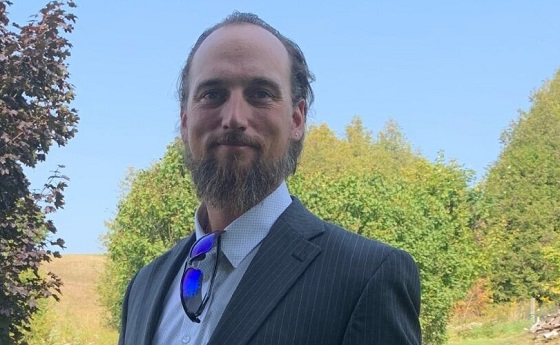
Protestor Evan Blackman’s legal team argues Trudeau’s Emergencies Act-based bank account freezes were punitive state action tied directly to protest participation.
A Freedom Convoy protester whose bank accounts were frozen by the Canadian government says a judge erred after his ruling did not consider the fact that the funds were frozen under the Emergencies Act, as grounds for a stay of proceedings.
In a press release sent out earlier this week, the Justice Centre for Constitutional Freedoms (JCCF) said that Freedom Convoy protestor Evan Blackman will challenge a court ruling in his criminal case via an appeal with the Ontario Superior Court of Justice.
“This case raises serious questions about how peaceful protest is treated in Canada and about the lasting consequences of the federal government’s unlawful use of the Emergencies Act,” noted constitutional lawyer Chris Fleury. “The freezing of protestors’ bank accounts was part of a coordinated effort to suppress dissent, and courts ought to be willing to scrutinize that conduct.”
Blackman was arrested on February 18, 2022, during the police crackdown on Freedom Convoy protests against COVID restrictions, which was authorized by the Emergencies Act (EA). The EA was put in place by former Prime Minister Justin Trudeau’s Liberal government, which claimed the protests were violent, despite no evidence that this was the case.
Blackman’s three bank accounts with TD Bank were frozen due to his participation in the Freedom Convoy, following a directive ordered by Trudeau.
As reported by LifeSiteNews, in November of this year, Blackman was convicted at his retrial even though he had been acquitted at his original trial. In 2023, Blackman’s “mischief” and “obstructing police” charges were dismissed by a judge due to lack of evidence and the “poor memory of a cop regarding key details of the alleged criminal offences.”
His retrial resulted in Blackman getting a conditional discharge along with 12 months’ probation and 122 hours of community service, along with a $200 victim fine surcharge.
After this, Blackman’s application for a stay of proceedings was dismissed by the court. He had hoped to have his stay of proceedings, under section 24(1) of the Charter of Rights and Freedoms, allowed. However, the judge ruled that the freezing of his bank accounts was legally not related to his arrest, and because of this, the stay of proceedings lacked standing.
The JCCF disagreed with this ruling, noting, it “stands in contrast to a Federal Court decision finding that the government’s invocation of the Emergencies Act was unreasonable and violated Canadians’ Charter rights, including those targeted by the financial measures used against Freedom Convoy protestors.”
As of press time, a hearing date has not been scheduled.
In 2024, Federal Court Justice Richard Mosley ruled that Trudeau was “not justified” in invoking the Emergencies Act.
In early 2022, the Freedom Convoy saw thousands of Canadians from coast to coast come to Ottawa to demand an end to COVID mandates in all forms. Despite the peaceful nature of the protest, Trudeau’s federal government enacted the EA in mid-February.
After the protesters were cleared out, which was achieved through the freezing of bank accounts of those involved without a court order as well as the physical removal and arrest of demonstrators, Trudeau revoked the EA on February 23, 2022.
Georgia county admits illegally certifying 315k ballots in 2020 presidential election

ICYMI: Largest fraud in US history? Independent Journalist visits numerous daycare centres with no children, revealing massive scam

While Western Nations Cling to Energy Transition, Pragmatic Nations Produce Energy and Wealth
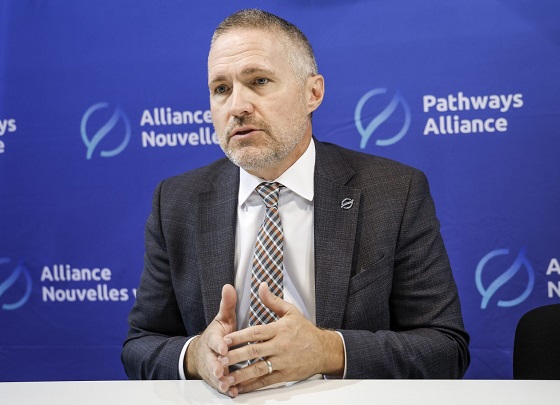
Alberta project would be “the biggest carbon capture and storage project in the world”
-
 Energy16 hours ago
Rulings could affect energy prices everywhere: Climate activists v. the energy industry in 2026
-
 Digital ID17 hours ago
The Global Push for Government Mandated Digital IDs And Why You Should Worry
-
 International2 days ago
Trump confirms first American land strike against Venezuelan narco networks
-
 Bruce Dowbiggin15 hours ago
The Rise Of The System Engineer: Has Canada Got A Prayer in 2026?
-
 International15 hours ago
Maduro says he’s “ready” to talk
-
 Business2 days ago
How convenient: Minnesota day care reports break-in, records gone
-
 Business2 days ago
The great policy challenge for governments in Canada in 2026
-
 International15 hours ago
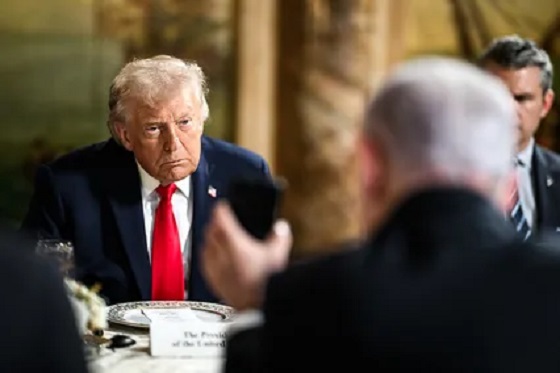
LOCKED AND LOADED: Trump threatens U.S. response if Iran slaughters protesters