Connect with us

Uncategorized

Firm tied to voter registration ‘scheme’ goes dark

Published

5 minute read

From left, Lancaster County Commissioner Alice Yoder, Lancaster County District Attorney Heather Adams, Commissioners Ray D’Agostino and Josh Parsons. The officials held a press conference on Friday, Oct. 25, 2024, to discuss voter registration fraud detected in the county.

From The Center Square

By 

Everybody Votes runs an office in Lancaster County, where election workers recently found suspicious registration forms among a batch of 2,500 applications delivered last week. Investigators there said at least 60% of those reviewed were fraudulent.

The media and consulting firm linked to fraudulent voter registration forms in Pennsylvania earlier this week has gone dark as of Saturday.

Field and Media Corps – the website and social media accounts of which are now defunct – is an Arizona-based company that contracts with Everybody Votes to run a canvassing operation in Pennsylvania and other states that target low-income minority residents unregistered to vote.

The Monroe County District Attorney’s Office confirmed Wednesday that 30 registration forms contained fraudulent information, including an application submitted on behalf of a dead resident.

Everybody Votes runs an office in Lancaster County, where election workers recently found suspicious registration forms among a batch of 2,500 applications delivered last week. Investigators there said at least 60% of those reviewed were fraudulent. So far, the campaign has not been tied directly to the investigation.

Not so in nearby York County, where law enforcement continues reviewing another delivery from the operation leading up to the Oct. 22 deadline to register.

On Wednesday, the America First Policy Institute, a conservative-leaning research nonprofit,  demanded a federal investigation into the company.

“Where there’s fire, there’s fire,” said Hogan Gidley, vice chairman of the institute’s Center for Election Integrity. “Thousands of instances of reported voter registration fraud have now been confirmed throughout Pennsylvania.”

He described Field and Media Corps, established in 2017, as a “high-powered left-wing organization” that may have launched similar “schemes” across the country that require state-level investigations.

“Submitting fraudulent registrations right at the voter deadline to overwhelm election officials is exactly the kind of scheme that the Department of Justice should be using their force and resources to stop,” he said.

Evidence also exists that Everybody Votes is linked to a left-wing super political action committee intent on expanding registration numbers for Democrats in battleground states.

According to public tax records shared with The Center Square, The Voter Registration Project, also known as Everybody Votes, describes itself as a public charity that helps low-income minority citizens register to vote and provides technical assistance to voter registration drives.

The organization reported $45.8 million in total revenues in 2022, a “substantial portion of which comes from a governmental unit or the general public.”

A 2023 report from Capital Research Center, a conservative nonprofit, says left-wing donors together raised $190 million for the campaign to register 5.1 million voters across the country – all in violation of federal law that bars 501(c)(3) from engaging in such activity.

The strategy, detailed in a 2019 leaked memo from Mind the Gap, the liberal super PAC in question, entices investors by promising a more cost-effective strategy to boost vote counts for Democrats – namely through voter registration drives.

The group pointed to its direct role in flipping the U.S. House blue in 2018 as “proof of concept.”

Detailed further in the report are signed tax forms from donors that link their grants to the Voter Registration Project in direct support of Mind the Gap. The Capital Research Center estimates President Joe Biden collected between 1 million and 2.7 million swing state votes in the 2020 election as a result.

Biden defeated then-incumbent President Donald Trump 306-232 in electoral college votes; the popular vote was Biden 81.2 million to 74.2 million.

Francisco Heredia, who runs Field and Media Corps, told Votebeat earlier this week he’d not heard from county officials in Pennsylvania, but would cooperate with the investigation. He said the company trains workers how to legally complete registration forms and has no tolerance for fraud.

Todayville is a digital media and technology company. We profile unique stories and events in our community. Register and promote your community event for free.

Follow Author

Also Interesting

When Chats Drag On for Months and Go Nowhere – And What to Do About It

Published on

We’ve all had that one chat: lots of jokes, some flirting, maybe even deep talks… and yet you never actually meet. Or call. Or do anything.

It feels like something, but also like nothing. Let’s gently call it what it is: a situationship in your phone.

Why We Get Stuck in Endless Chatting

Some common reasons:

● Fear of rejection if you move it offline.

● It’s a comforting distraction when you’re lonely or stressed.

● You’re both busy and don’t want to prioritize each other yet.

● One or both of you like the ego boost more than the person.

Here’s a quick pattern table:

Pattern                                                                                What’s usually going on

Lots of texting, no concrete plans                                       Avoidance or low real-life interest

Strong flirting, zero follow-through                                   Validation more than true intention

“We should meet sometime” on repeat                             Vague comfort zone, not real action


How Long Is “Too Long” Without Meeting?

There’s no exact rule, but for most people:

● 1–2 weeks of active texting → reasonable to suggest a call or date.

● 4+ weeks of frequent texting, zero effort to meet → something’s off.

If your “relationship” is starting to feel like a pen pal romance, it’s time to shift.

How to Move Things Forward (or End It)

You can keep it very simple:

● “I’m enjoying chatting with you. Want to grab a coffee next week and see how this feels offline?”

● “I’m not great at endless texting — would you be up for a quick video call sometime via online dating for singles?”

If they dodge vague excuses again and again, you have your answer.


Giving Yourself Permission to Let It Go

Ending a long chat connection can feel weirdly like a breakup, even if you never met. It’s still emotional energy.

You can say:

● “I’ve appreciated our chats, but I’m looking for something that can move into real life. I’m going to step back from this.”

Then mute, archive, or delete. And yes, you’re allowed to feel a bit sad and still know it was the right call.

Your Time Is Valuable

At the end of the day, your dating life is part of your actual life, not a separate mini-game.

You deserve:

● Conversations that lead somewhere

● Dates that feel safe, curious, and real

● Relationships (or explorationships) that respect your energy

Continue Reading

Business

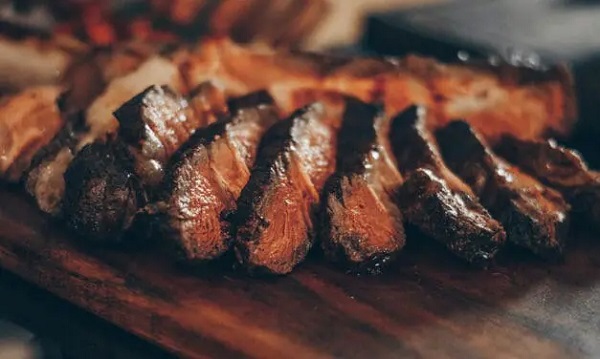
Beef is becoming a luxury item in Canada

Published on

This article supplied by Troy Media.

Troy Media By Sylvain Charlebois

Canadian beef prices have surged due to a shrinking cattle herd, high transportation costs, and potential market collusion

With summer weather settling in, Canadians are returning to a familiar ritual—ring up the barbecue. But as they approach the meat counter, many are faced with shockingly high prices. This year, the meat aisle has become a case study in supply-side economics and market dysfunction, leaving
consumers to wonder how this all came to be.

Since January, according to Statistics Canada, beef prices have surged dramatically. Striploin is up 34.2 per cent, top sirloin 33.7 per cent, and rib cuts nearly 12 per cent. Pork rib cuts and chicken breasts have each risen 5.9 per cent, while even meatless burger patties are 6.8 per cent more
expensive. Beef has led the way in these increases, and its dominance in the price hikes is striking. What’s particularly concerning is that it’s not just one cut of beef—virtually every option has seen a dramatic jump, putting pressure on Canadian consumers who were already grappling with rising food costs.

The cause behind these increases lies in Canada’s shrinking beef cow inventory, now at just 3.38 million head—the lowest since 1989. This represents a 1.2 per cent drop from last year, but it signals much more than a cyclical decline. Many cattle producers, facing an increasingly volatile market, are choosing to exit the industry while prices are favourable. Others are opting to reinvest in less risky sectors or even shift entirely to crop production, leaving the beef industry in a precarious state. In short, Canada’s beef industry is retreating, and with that retreat comes rising prices, fewer available cattle, and growing uncertainty.

South of the border, the U.S. is seeing a similar trend, but far less severe. According to the United States Department of Agriculture, the
American beef cow herd declined by just 0.5 per cent to 27.9 million head. This relatively modest drop, coupled with less disruption in their production practices, has resulted in more stable prices.

Over the past year, U.S. boneless sirloin steak rose 5.7 per cent, compared to a staggering 22 per cent in Canada. Ground beef saw a 10.8 per cent increase in the U.S., but 23 per cent in Canada. The price difference between the two countries is stark, and Canadians are feeling the inflationary pressure much more acutely.

There are several factors contributing to the price hikes: Canada’s vast geography, high transportation costs, a limited number of federally licensed beef processors, carbon pricing, and higher labour costs. Carbon pricing, in particular, has added a burden to sectors like beef production, where transportation costs are high. Regulations and logistical inefficiencies add to the costs, driving up prices for retailers and, ultimately, consumers.

This combination of factors is having a compounding effect on the price of beef, making it increasingly out of reach for many.

But there’s another possibility we can’t ignore: potential collusion within the industry. In Canada, a small number of large processors control much of the beef supply, which gives them significant influence over prices. The U.S. government has taken strong action against price-fixing among major meat packers like JBS, Tyson Foods, Cargill, and National Beef, leading to multimillion-dollar settlements. In Canada, however, the Competition Bureau has remained largely silent on similar concerns, allowing the possibility of price-fixing to persist unchecked. Perhaps it’s time for Canada to follow the U.S. lead and ensure the beef industry is held accountable for its actions.

The consequences of these rising costs are already evident. According to IBISWorld, Canadian per capita beef consumption fell by 7.1 per cent in 2023 and is expected to drop another 2.1 per cent in 2024. This isn’t merely a shift in dietary preferences—this is a structural change in consumer behaviour. Beef is becoming increasingly viewed as a luxury item, with many budget-conscious households turning to ground beef as a more affordable option. For many Canadians, beef is no longer a staple food but rather an occasional indulgence, reserved for special occasions or holiday meals.

This shift is unfortunate. Beef remains one of the most natural, sustainable sources of protein available to Canadians. Ranchers and processors have made significant strides in improving environmental stewardship, animal welfare, and food safety, often without recognition. Beef is not only nutritionally dense but also supports rural economies and provides a level of traceability few other protein sources can offer.

For many Canadian families, a summer steak on the grill is becoming more of a splurge than a staple. While Canadians will continue to enjoy beef, the frequency and volume of consumption will likely diminish.

Barbecue season hasn’t disappeared, but for many, it’s starting to look a little different: more sausages, more chicken, and fewer striploins. A shame, really, for a product that offers so much more than just taste.

Dr. Sylvain Charlebois is a Canadian professor and researcher in food distribution and policy. He is senior director of the Agri-Food Analytics Lab at Dalhousie University and co-host of The Food Professor Podcast. He is frequently cited in the media for his insights on food prices, agricultural trends, and the global food supply chain.

Troy Media empowers Canadian community news outlets by providing independent, insightful analysis and commentary. Our mission is to support local media in helping Canadians stay informed and engaged by delivering reliable content that strengthens community connections and deepens understanding across the country.

Continue Reading

Trending

X