
COVID-19
Federal Court Judge Pulls Canada Back from the Brink


From the Brownstone Institute

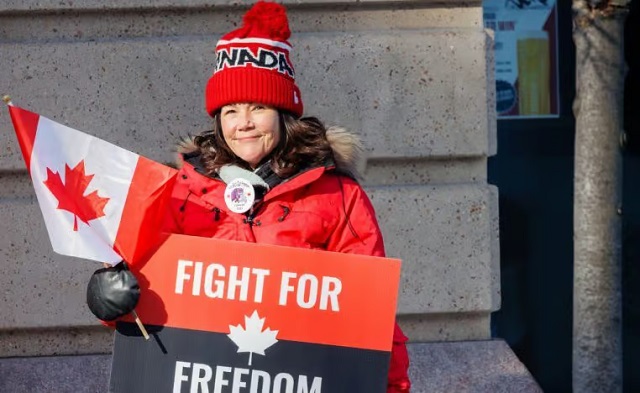
Trucks blocked border crossings in Coutts, Alberta and at the Ambassador Bridge in Windsor, Ontario. Local and provincial law enforcement dealt with those protests and cleared the borders.
The Canadian government’s use of the Emergencies Act was unlawful. The Trucker Convoy did not constitute a national emergency. So said a judge of the Federal Court. The decision may help to pull Canada back from the brink of authoritarian rule.
The Federal Court decision contains four conclusions. Two prerequisites for invoking the Emergencies Act, said Justice Richard Mosley, were not met. Moreover, the two regulations issued under it were unconstitutional. Predictably, the government has promised to appeal. For the government to prevail, an appeal panel would have to overturn all four. But there is a wrinkle, which I will get to momentarily.
Between 1963 and 1970, the Front de libération du Québec (FLQ), a separatist organization in Quebec, committed bombings, robberies, and killed several people. In October 1970, they kidnapped British trade commissioner James Cross, and then kidnapped and killed Pierre Laporte, a minister in the Quebec government. In response, Pierre Trudeau’s government invoked the War Measures Act, the only time it had been used in peacetime. In the years that followed, the invocation of the Act became regarded as a dangerous overreach of government powers and breach of civil liberties.
The Emergencies Act, enacted in 1988 to replace the War Measures Act, had higher thresholds. It was supposed to be more difficult for governments to trigger. Before Covid and the trucker convoy, it had never been used.
The Freedom Convoy arrived at Parliament Hill in Ottawa on January 29, 2022 to protest Covid vaccine mandates. The truckers parked unlawfully in downtown Ottawa. They violated parking bylaws and probably the Highway Traffic Act. Authorities could have issued tickets and towed the trucks away. But they didn’t.
In the meantime, protests in other parts of the country emerged. Trucks blocked border crossings in Coutts, Alberta and at the Ambassador Bridge in Windsor, Ontario. Local and provincial law enforcement dealt with those protests and cleared the borders. By February 15, when Justin Trudeau’s government declared a public order emergency and invoked the Emergencies Act, only the Ottawa protests had not been resolved.
The government issued two regulations under the Act. One prohibited public assemblies “that may reasonably be expected to lead to a breach of the peace.” The other outlawed donations and authorized banks to freeze donors’ bank accounts. On February 18 and 19, police brandishing riot batons descended on the crowd. They arrested close to 200 people, broke truck windows, and unleashed the occasional burst of pepper spray. By the evening of the 19th, they had cleared the trucker encampment away. Banks froze the accounts and credit cards of hundreds of supporters. On February 23, the government revoked the regulations and use of the Act.

Governments cannot use the Emergencies Act unless its prerequisites are met. A public order emergency must be a “national emergency” and a “threat to the security of Canada,” both of which are defined in the Act. A national emergency exists only if the situation “cannot be effectively dealt with under any other law of Canada.” “Threats to the security of Canada” can be one of several things. The government relied upon the clause that requires activities “directed toward or in support of the threat or use of acts of serious violence against persons or property for the purpose of achieving a political, religious or ideological objective.”
The trucker protests were neither a national emergency, Mosley concluded, nor a threat to the security of Canada.
There was no national emergency:
Due to its nature and to the broad powers it grants the Federal Executive, the Emergencies Act is a tool of last resort. [Cabinet] cannot invoke the Emergencies Act because it is convenient, or because it may work better than other tools at their disposal or available to the provinces.…in this instance, the evidence is clear that the majority of the provinces were able to deal with the situation using other federal law, such as the Criminal Code, and their own legislation…For these reasons, I conclude that there was no national emergency justifying the invocation of the Emergencies Act and the decision to do so was therefore unreasonable and ultra vires.
A threat to the security of Canada did not exist:
Ottawa was unique in the sense that it is clear that [Ottawa Police Services] had been unable to enforce the rule of law in the downtown core, at least in part, due to the volume of protesters and vehicles. The harassment of residents, workers and business owners in downtown Ottawa and the general infringement of the right to peaceful enjoyment of public spaces there, while highly objectionable, did not amount to serious violence or threats of serious violence…[Cabinet] did not have reasonable grounds to believe that a threat to national security existed within the meaning of the Act and the decision was ultra vires.
Nor were the regulations constitutional. The prohibition on public assemblies infringed freedom of expression under section 2(b) of the Charter of Rights and Freedoms. Empowering financing institutions to provide personal financial information to the government and to freeze bank accounts and credit cards was an unconstitutional search and seizure under section 8. Neither was justified, Mosley concluded, under section 1 of the Charter, the “reasonable limits” clause.
To prevail on appeal, the government would have to reverse all four conclusions. Justice Mosley did not make obvious errors of law. But there are a couple of odd bits. In particular, Mosley admits to doubts about how he would have proceeded had he been at the cabinet table himself:
I had and continue to have considerable sympathy for those in government who were confronted with this situation. Had I been at their tables at that time, I may have agreed that it was necessary to invoke the Act. And I acknowledge that in conducting judicial review of that decision, I am revisiting that time with the benefit of hindsight and a more extensive record of the facts and law…
Which brings us to the wrinkle. In April 2022, Richard Wagner, the Chief Justice of the Supreme Court of Canada, gave an interview to Le Devoir. Speaking in French, he characterized the protest on Wellington Street in Ottawa, where Parliament and the Supreme Court are located, as “the beginning of anarchy where some people have decided to take other citizens hostage.” Wagner said that “forced blows against the state, justice and democratic institutions like the one delivered by protesters…should be denounced with force by all figures of power in the country.” He did not mention the Emergencies Act by name. But his comments could be interpreted as endorsing its use.
The government’s appeal will go first to the Federal Court of Appeal but then to the Supreme Court of Canada. Its chief justice appears to have already formed an opinion about the dispute. Having made his public comments, the chief justice should announce that he will recuse himself from the case to avoid a reasonable perception of bias. That too would help bring Canada back from the brink.
Author


From LifeSiteNews
The Justice Department attorney did not mention the Trump FDA’s recent admission linking the COVID shots to at least 10 child deaths so far.
The Trump Department of Justice (DOJ) is attempting to dismiss a whistleblower case against Pfizer over its COVID-19 shots, even as the Trump Food & Drug Administration (FDA) is beginning to admit their culpability in children’ s deaths.
As previously covered by LifeSiteNews, in 2021 the BMJ published a report on insider information from a former regional director of the medical research company Ventavia, which Pfizer hired in 2020 to conduct research for the company’s mRNA-based COVID-19 shot.
The regional director, Brook Jackson, sent BMJ “dozens of internal company documents, photos, audio recordings, and emails,” which “revealed a host of poor clinical trial research practices occurring at Ventavia that could impact data integrity and patient safety […] We also discovered that, despite receiving a direct complaint about these problems over a year ago, the FDA did not inspect Ventavia’s trial sites.”
According to the report, Ventavia “falsified data, unblinded patients, employed inadequately trained vaccinators, and was slow to follow up on adverse events reported in Pfizer’s pivotal phase III trial.” Overwhelmed by numerous problems with the trial data, Jackson filed an official complaint with the FDA.
Jackson was fired the same day, and Ventavia later claimed that Jackson did not work on the Pfizer COVID-19 shot trial; but Jackson produced documents proving she had been invited to the Pfizer trial team and given access codes to software relating to the trial. Jackson filed a lawsuit against Pfizer for violating the federal False Claims Act and other regulations in January 2021, which was sealed until February 2022. That case has been ongoing ever since.
Last August, U.S. District Judge Michael Truncale dismissed most of Jackson’s claims with prejudice, meaning they could not be refiled. Jackson challenged the decision, but the Trump DOJ has argued in court to uphold it, Just the News reports, with DOJ attorney Nicole Smith arguing that the case concerns preserving the government’s unfettered power to dismiss whistleblower cases.
The rationale echoes a recurring trend in DOJ strategy that Politico described in May as “preserving executive power and preventing courts from second-guessing agency decisions,” even in cases that involve “backing policies favored by Democrats.”
Jackson’s attorney Warner Mendenhall responded that the administration “really sort of made our case for us” in effectively admitting that DOJ is taking the Fair Claims Act’s “good cause” standard for state intervention to mean “mere desire to dismiss,” which infringes on his client’s “First Amendment right to access the courts, to vindicate what she learned.”
Mendenhall added that in a refiled case, Jackson “may be able to bring a very different case along the same lines, but with the additional information” to prove fraud, whereas rejection would send the message that “if fraud involves government complicity, don’t bother reporting it.”
That additional information would presumably include the FDA’s recent admission that at least 10 children the agency has reviewed so far “died after and because of receiving COVID-19 vaccination.”
“The truth is we do not know if we saved lives on balance,” admitted FDA Chief Medical Officer Vinay Prasad in a recent leaked email. “It is horrifying to consider that the U.S. vaccine regulation, including our actions, may have harmed more children than we saved. This requires humility and introspection.”
The COVID shots have been highly controversial ever since the first Trump administration’s Operation Warp Speed initiative prepared and released them in a fraction of the time any previous vaccine had ever been developed and tested. As LifeSiteNews has extensively covered, a large body of evidence has steadily accumulated over the past five years indicating that the COVID jabs failed to prevent transmission and, more importantly, carried severe risks of their own.
Ever since, many have intently watched and hotly debated what President Donald Trump would do about the situation upon his return to office. Though he never backed mandates like former President Joe Biden did, for years Trump refused to disavow the shots to the chagrin of his base, seeing Operation Warp Speed as one of his crowning achievements. At the same time, during his latest run he embraced the “Make America Healthy Again” movement and its suspicion of the medical establishment more broadly.
So far, Trump’s second administration has rolled back several recommendations for the shots but not yet pulled them from the market, despite hiring several vocal critics of the COVID establishment and putting the Department of Health & Human Services under the leadership of America’s most prominent anti-vaccine advocate, Robert F. Kennedy Jr. Most recently, the administration has settled on leaving the current jabs optional but not supporting work to develop successors.
In a July interview, FDA Commissioner Marty Makary asked for patience from those unsatisfied by the administration’s handling of the shots, insisting more time was needed for comprehensive trials to get more definitive data.
COVID-19
University of Colorado will pay $10 million to staff, students for trying to force them to take COVID shots
From LifeSiteNews
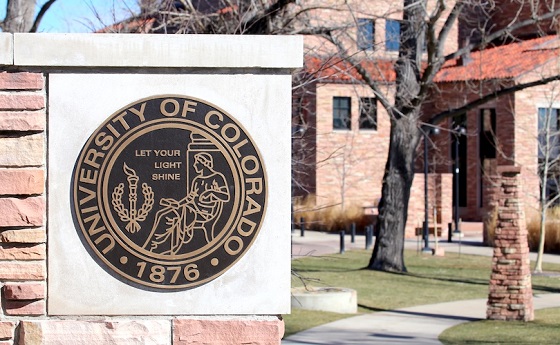
The University of Colorado Anschutz School of Medicine caused ‘life-altering damage’ to Catholics and other religious groups by denying them exemptions to its COVID shot mandate, and now the school must pay a hefty settlement.
The University of Colorado’s Anschutz School of Medicine must pay more than $10.3 million to 18 plaintiffs it attempted to force into taking COVID-19 shots despite religious objections, in a settlement announced by the religious liberty law firm the Thomas More Society.
As previously covered by LifeSiteNews, in April 2021, the University of Colorado (UC) announced its requirement that all staff and students receive COVID jabs, leaving specific policy details to individual campuses. On September 1, 2021, it enforced an updated policy stating that “religious exemption may be submitted based on a person’s religious belief whose teachings are opposed to all immunizations,” but required not only a written explanation why one’s “sincerely held religious belief, practice of observance prevents them” from taking the jabs, but also whether they “had an influenza or other vaccine in the past.”
On September 24, the policy was revised to stating that “religious accommodation may be granted based on an employee’s religious beliefs,” but “will not be granted if the accommodation would unduly burden the health and safety of other Individuals, patients, or the campus community.”
In practice, the school denied religious exemptions to Catholic, Buddhist, Eastern Orthodox, Evangelical, Protestant, and other applicants, most represented by Thomas More in a lawsuit contending that administrators “rejected any application for a religious exemption unless an applicant could convince the Administration that her religion ‘teaches (them) and all other adherents that immunizations are forbidden under all circumstances.’”
The UC system dropped the mandate in May 2023, but the harm had been done to those denied exemptions while it was in effect, including unpaid leave, eventual firing, being forced into remote work, and pay cuts.
In May 2024, a three-judge panel of the U.S. Tenth Circuit Court of Appeals rebuked the school for denying the accommodations. Writing for the majority, Judge Allison Eid found that a “government employer may not punish some employees, but not others, for the same activity, due only to differences in the employee’s religious beliefs.”
Now, Thomas More announces that year-long settlement negotiations have finally secured the aforementioned hefty settlement for their clients, covering damages, tuition costs, and attorney’s fees. It also ensured the UC will agree to allow and consider religious accommodation requests on an equal basis to medical exemption requests and abstain from probing the validity of applicants’ religious beliefs in the future.
“No amount of compensation or course-correction can make up for the life-altering damage Chancellor Elliman and Anschutz inflicted on the plaintiffs and so many others throughout this case, who felt forced to succumb to a manifestly irrational mandate,” declared senior Thomas More attorney Michael McHale. “At great, and sometimes career-ending, costs, our heroic clients fought for the First Amendment freedoms of all Americans who were put to the unconscionable choice of their livelihoods or their faith during what Justice Gorsuch has rightly declared one of ‘the greatest intrusion[s] on civil liberties in the peacetime history of this country.’ We are confident our clients’ long-overdue victory indeed confirms, despite the tyrannical efforts of many, that our shared constitutional right to religious liberty endures.”
On top of the numerous serious adverse medical events that have been linked to the COVID shots and their demonstrated ineffectiveness at reducing symptoms or transmission of the virus, many religious and pro-life Americans also object to the shots on moral grounds, due to the ethics of how they were developed.
According to a detailed overview by the pro-life Charlotte Lozier Institute, Pfizer, Moderna, and Johnson & Johnson all used fetal cells derived from aborted babies during their COVID shots’ testing phase; and Johnson & Johnson also used the cells during the design and development and production phases. The American Association for the Advancement of Science’s journal Science and even the left-wing “fact-checking” outlet Snopes have also admitted the shots’ abortion connection, which gives many a moral aversion to associating with them.
Catholic World Report notes that similarly large sums have been won in other high-profile lawsuits against COVID shot mandates, including $10.3 million to more than 500 NorthShore University HealthSystem employees in 2022 and $12.7 million to a Catholic Michigander fired by Blue Cross Blue Shield in 2024.

University of Colorado will pay $10 million to staff, students for trying to force them to take COVID shots
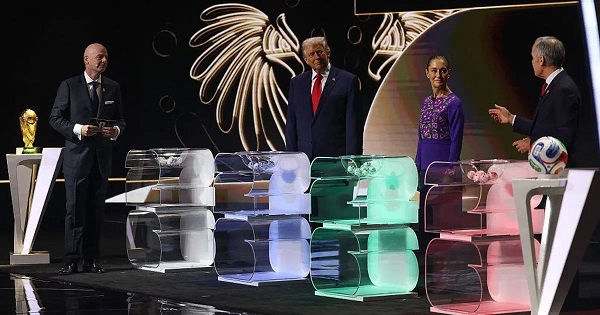
Wayne Gretzky’s Terrible, Awful Week.. And Soccer/ Football.
Integration Or Indignation: Whose Strategy Worked Best Against Trump?

Western Campuses Help Build China’s Digital Dragnet With U.S. Tax Funds, Study Warns
-
 Business2 days ago
Albertans give most on average but Canadian generosity hits lowest point in 20 years
-
 Bruce Dowbiggin2 days ago
Carney Hears A Who: Here Comes The Grinch
-
 Censorship Industrial Complex2 days ago
Ottawa’s New Hate Law Goes Too Far
-
 Business2 days ago
Taxpayers Federation calls on politicians to reject funding for new Ottawa Senators arena
-
 Fraser Institute1 day ago
Claims about ‘unmarked graves’ don’t withstand scrutiny
-
 National1 day ago
Canada’s free speech record is cracking under pressure
-
 Digital ID1 day ago
Canada considers creating national ID system using digital passports for domestic use
-
 Energy1 day ago
Meet REEF — the massive new export engine Canadians have never heard of