
espionage
FBI Buried ‘Warning’ Intel on CCP Plot to Elect Biden Using TikTok, Fake IDs, CCP Sympathizers and PRC Students—Grassley Probes Withdrawal

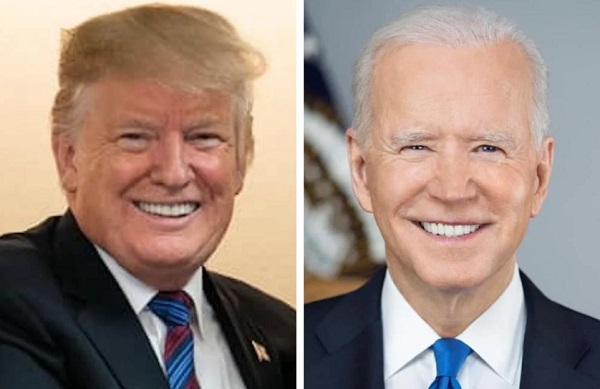



Intel warned of tens of thousands of illegal votes via fake IDs tied to CCP-linked students; FBI shut it down days after Wray denied foreign interference.
Senate Judiciary Committee Chairman Chuck Grassley announced that his panel will launch a formal investigation into why the FBI in September 2020 ordered the withdrawal and destruction of an explosive “raw intelligence” report alleging that Beijing harvested American private identity data from millions of TikTok accounts, enabling Chinese intelligence to manufacture fraudulent driver’s licenses that “would allow tens of thousands of Chinese students” to cast mail-in ballots in favor of Joe Biden during the 2020 presidential election.
Grassley confirmed receipt of the now-declassified document and said it raises “serious national‑security concerns that need to be fully investigated by the FBI.” The Senate Judiciary Committee is now requesting internal communications, a formal justification for the FBI’s “substantive recall” of the document, and a review of the FBI’s compliance with federal intelligence record-keeping laws.
The pre-election document does not assert that fraudulent ballots were cast, and explicitly warns that the information should not be actioned without FBI coordination. But the scale and specificity of the allegations—now under Senate scrutiny—have dramatically reignited questions over how U.S. intelligence agencies handled politically sensitive reports implicating the Chinese Communist Party in election interference.
According to Fox News, the heavily redacted FBI intelligence now under investigation has declassified sections that reveal the potential of a Beijing-directed voter fraud campaign designed to leverage Chinese international students, fraudulent ID records mailed into U.S. states, and populations sympathetic to the Chinese Communist Party living in America, all in efforts to elect Joe Biden over Donald Trump.
The Bureau is a reader-supported publication.
To receive new posts and support my work, consider becoming a free or paid subscriber.
One section of the report cited by Fox News states the subject as: “[REDACTED] Chinese Government Production and Export of Fraudulent US Drivers Licenses to Chinese Sympathizers in the United States, in Order to Create Tens of Thousands of Fraudulent Mail-In Votes for US Presidential Candidate Joe Biden, in late August 2020.”
The FBI’s source allegedly obtained the information from an identified sub-source, who claimed they obtained the information from unidentified PRC government officials. One of the report’s core claims is that in late August 2020, the Chinese government had produced a large amount of fraudulent United States drivers licenses that were secretly exported to the United States.
The memo states: “The fraudulent drivers licenses would allow tens of thousands of Chinese students and immigrants sympathetic to the Chinese Communist Party to vote for US Presidential Candidate USPER Joe ((Biden)), despite not being eligible to vote in the United States.”
As reported yesterday by The Bureau, the FBI’s report aligns with seizures from CBP in Chicago, where officers at the International Mail Facility intercepted nearly 20,000 counterfeit U.S. driver’s licenses in the first half of 2020—the vast majority shipped from China and Hong Kong. The licenses were often destined for college-aged recipients, with many containing real ID numbers and scannable barcodes, raising alarms that they could be used for fraudulent identification.
The FBI election interference report—allegedly pulled from circulation by then-Director Christopher Wray—contained consequential assertions about TikTok, which has been identified in subsequent U.S. intelligence assessments as a Chinese information warfare and election interference asset.
The 2020 memo stated: “China had collected private US user data from millions of TikTok accounts, to include name, ID and address, which would allow the Chinese government to use real US persons’ information to create the fraudulent drivers license.” It added that the fraudulent drivers licenses were to include true ID number and true address of U.S. citizens, making them difficult to detect, and that China planned to use the fraudulent drivers licenses to account for tens of thousands of mail-in votes.

Beijing has already succeeded in directing the social video app TikTok to “censor content outside of China,” according to a classified Department of Justice brief filed last summer in a case that casts one of the world’s most popular media platforms as a Chinese Communist Party weapon poised to attack Americans during an election or geopolitical crisis in the same manner as Chinese cyber-spies and hackers that are currently buried within North American critical infrastructure.
Yet the FBI “warning” document also reveals internal doubts. According to Fox News, FBI notations flagged gaps in the TikTok claim, stating that “a person’s address information was not a valid field when creating a TikTok account. It was unspecified how China would attain US address data from the application.” Another annotation stated that the source is available for re-contact.
The following page of the intelligence report reportedly included a directive for “SUBSTANTIVE RECALL,” dated September 25, 2020—one day after FBI Director Wray told Congress that the Bureau had seen “no coordinated voter fraud” ahead of the 2020 election. The FBI’s internal context note acknowledged that the source received the information from a sub-source who cited anonymous PRC officials. The warning section of the document repeated that the allegations were part of “an information report, not finally evaluated intelligence.” The document also stated: “Recipients should also ensure that any citation of the information in finished intelligence products draws on the SUBSTANTIVE RECALL of this report rather than the previous version.”
The document reportedly instructed all recipients to destroy all copies of the original report and remove the original report from all computer holdings, and to cite only the recall order in any future analysis. That sequence—first, a claim implicating China in voter manipulation; next, immediate questioning of the methodology; and finally, a full internal shutdown—has now become the focus of a politically and institutionally charged congressional investigation.
The remainder of the document is heavily redacted, Fox reported, and more information is being requested from the FBI as part of the Senate’s investigation. “Grassley is requesting additional documentation from the FBI to verify the production and is urging the FBI to do its due diligence to investigate why the document was recalled, who recalled it and inform the American people of its findings,” a Grassley spokesperson reportedly told Fox News.
The FBI memo’s resurfacing also casts renewed light on a broader internal struggle inside the U.S. intelligence community in 2020: whether to formally acknowledge China’s intent or actions in shaping the presidential election. At the time, DNI John Ratcliffe and a small group of dissenting officials reportedly suggested that China had taken covert steps to influence the race—particularly in opposition to Donald Trump—and that this was being downplayed or scrubbed from official analyses for political reasons. Ratcliffe’s January 7, 2021 memo to Congress directly accused senior intelligence officers of pressuring analysts to downplay or suppress these findings, especially at the CIA and ODNI. He wrote that the 2021 Intelligence Community Assessment (ICA) failed to fully and accurately reflect the scope of the Chinese government’s efforts to influence the 2020 U.S. federal elections.
According to Ratcliffe, internal IC investigations found that China analysts appeared reluctant to assess Chinese actions as interference because they tend to disagree with the administration’s policies. The whistleblower report from ODNI’s own Analytic Ombudsman warned of undue pressure on analysts offering alternative views and concluded that politicization existed from both above and below.
One of the officials who refused to back down was Christopher Porter, then the National Intelligence Officer for Cyber, who claims that his minority assessment on Chinese influence was effectively buried. Porter alleged in late 2024 that he was harassed and forced out of government after submitting his dissent.
In a series of posts on X applauding the decision to release the report to Grassley, Porter wrote that he was upbraided four years ago for raising similar warnings. He argued that the failure of U.S. intelligence to confront China’s espionage—particularly its hacking of critical infrastructure and telecommunications networks—would only embolden the regime. “We are now reaping the harvest of that bad decision,” he added. In another message, Porter emphasized that “politics has to stop at the water’s edge,” urging national leaders to call out Chinese influence operations “at the highest level.”
Porter went further, criticizing U.S. allies like the United Kingdom for dragging their feet on national security decisions regarding China’s penetration of telecommunications. Canada, under Liberal Prime Minister Justin Trudeau, took about three years to decide on banning Huawei. Critics such as Porter attribute such reluctance to economic motives overriding sober analysis.
Today, with the FBI’s suppressed memo in the hands of the Senate Judiciary Committee, Porter’s and Ratcliffe’s minority views are no longer isolated warnings. They are now part of a growing body of evidence suggesting that political sensitivity—especially over which party Beijing may prefer—might have played a role in sidelining national security intelligence during one of the most consequential U.S. elections in history.
The Bureau is a reader-supported publication.
To receive new posts and support my work, consider becoming a free or paid subscriber.
Invite your friends and earn rewards

espionage
Digital messages reportedly allege Chinese police targeted dissident who died suspiciously near Vancouver
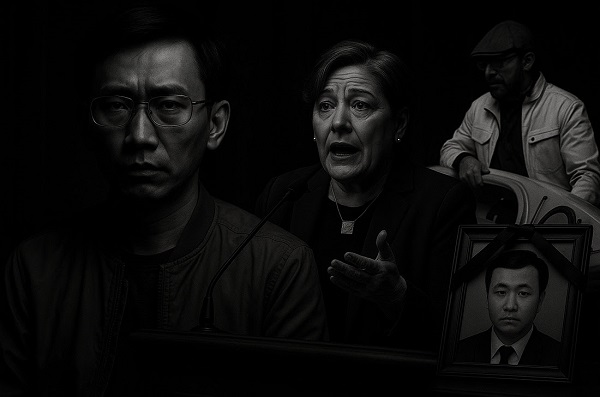

 Sam Cooper
‘Our superiors … want to get rid of him’
Radio-Canada, drawing on digital records first disclosed to Australian media in 2024 by an alleged Chinese spy, has reported new evidence suggesting that a Chinese dissident who died in a mysterious kayaking accident near Vancouver was being targeted for elimination by Chinese secret police and agents embedded in a Chinese conglomerate that the U.S. Treasury now accuses of running a multibillion-dollar organized-crime, money-laundering and modern-slavery empire out of Cambodia.
The new reporting focuses on a man identified only as “Eric,” a former undercover agent for Office No. 1 of China’s Ministry of Public Security — the police ministry at the core of so-called “CCP police stations” in global and Canadian cities, and reportedly tasked with hunting dissidents abroad.
Australia’s Four Corners revealed Eric’s story in May 2024, reporting that he had fled China in 2023 and walked into the headquarters of Australia’s domestic intelligence agency, ASIO, carrying a phone loaded with years of internal messages and records.
It also reported that Eric had been invited to testify in Canada’s Foreign Interference Commission, known as the Hogue Commission, about Beijing’s operations on Canadian soil.
“In an August 2024 report, ABC Investigations wrote: ‘Eric told ABC Investigations he had been invited to testify as a witness in the next round of hearings, scheduled to start in September.’”
But there is no public sign that his evidence was ever examined in open hearings or mentioned in the Commission’s final reports, suggesting that any material he supplied was handled entirely behind closed doors, if at all.
According to Radio-Canada’s Enquête program, reporters travelled to Australia to interview Eric and forensically review the contents of his phone: thousands of text and voice messages between 2016 and 2023, as well as financial records and internal documents that he says came from Office No. 1 and its corporate covers.
The archives reportedly include detailed exchanges with his superiors, evidence of clandestine money transfers and the names of individuals allegedly involved in overseas espionage and repression.
One sequence, labelled “The target,” captures the moment Eric is ordered to focus on a dissident painter named Hua Yong, who had already become notorious in China for blood-marked Tiananmen commemorations and for documenting mass evictions in Beijing.
Citing the exchange, which has not been independently reviewed by The Bureau, Radio-Canada quotes:
Office No. 1: Our future communications must be encrypted.
Eric: What are the orders?
Office No. 1: Listen carefully to my request. It concerns Hua Yong. Our superiors find him troublesome and want to get rid of him.
Those messages set the tone for what follows: a multi-year manhunt that begins in Thailand and ends with Hua dead off Canada’s Sunshine Coast. Eric says Hua was formally designated a high-value target, and the same phone records, as summarized by Enquête and earlier Four Corners reporting, show that a bounty was placed on Hua’s head — roughly the equivalent of US$20,000 if he were captured and repatriated.
To win Hua’s trust, Eric reportedly constructed an elaborate false persona. On social media and encrypted apps, he posed as a radical anti-Communist militant, proposing the creation of a jungle “armed camp” and a band of revolutionaries. He then invented “Brigade V,” a fake guerrilla group he promoted online while appearing in videos in camouflage and a balaclava. Hua, in exile and under pressure, was impressed. “This is brilliant,” he reportedly wrote privately, according to the message logs, and the two men soon met in person in Bangkok, drinking wine and plotting what Hua believed was resistance — all while Eric quietly fed reports back to the political-security police.
The Bureau is a reader-supported publication.
To receive new posts and support my work, consider becoming a free or paid subscriber.
It is this kind of mix of covert state targeting and deniable intermediaries that is now worrying Western security officials.
In November, ASIO director-general Mike Burgess used a major speech to warn that some authoritarian regimes are showing a “growing willingness” to mount “high-harm operations” abroad. Without naming specific countries, and not referring to Eric’s alleged evidence, he said his service believes “at least three nations” are willing and capable of carrying out lethal attacks in Australia, and may try to hide their involvement by contracting criminal “cut-outs.”
Canada’s own oversight bodies have been tracking a similar threat pattern.
In a 2024 report, the National Security and Intelligence Committee of Parliamentarians (NSICOP) described a fully redacted 12-paragraph case study of what it called the “most egregious” People’s Republic of China proxy identified by Canadian intelligence. The public summary says CSIS assessed that one aspect of the proxy’s behaviour posed a “high-risk, high-harm” threat to some Canadians and permanent residents, and that CSIS shared information on the proxy with the RCMP.
The same report notes that intelligence from CSIS and the Communications Security Establishment showed foreign states covertly attempting to buy influence with candidates and elected officials — a backdrop that makes the Hua Yong file, and the allegations of lethal targeting orders and corporate covers around Eric, especially sensitive.
Eric’s phone records, as described by Enquête, show that companies tied to his work gave him the freedom and cover to travel across Southeast Asia, build false identities and infiltrate exile networks, while maintaining his status as an MPS officer. One cover in particular stands out: a vast conglomerate in Cambodia that, on paper, dealt in real estate and finance and handled billions of dollars. Enquête identifies it as Prince Group and says Eric worked under its umbrella in 2016–2017 — a claim the company reportedly did not answer when approached by Radio-Canada.
That corporate name now has much wider resonance, and alleged connectivity to China’s United Front Work Department.
In October, the U.S. Justice Department unsealed an indictment charging Prince Group chairman Chen Zhi with orchestrating a forced-labour “pig-butchering” scam empire from compounds in Cambodia, while the U.S. Treasury and its U.K. counterpart simultaneously designated the “Prince Group Transnational Criminal Organization,” sanctioning Chen and 146 linked individuals and entities. Officials allege the network ran industrial-scale cyber-fraud centres staffed by trafficked workers, laundered billions in criminal proceeds and used shell companies and high-end real estate — including London properties — to wash illicit funds.
U.S. material also ties Prince Group into the orbit of Chinese state-aligned figures. Sanctions filings link Chen Zhi to Wan Kuok-koi, the Macau Triad boss known as “Broken Tooth,” whose modern Hongmen association has been described by U.S. officials as directly connected to the Chinese Communist Party’s United Front Work Department. They further allege that Prince Group worked with Palau-based businesswoman Rose Wang, a former vice-president of Palau’s Overseas Chinese Federation, who helped broker access and casino licences while acting as a facilitator for the scam network — a role analysts say dovetails with informal diplomacy and influence work on Beijing’s behalf.
Against that background, Eric’s description of Prince Group as one of his covers fits with The Bureau’s source material tying alleged Chinese police-station networks in Canada to underground casino and Chinese mafia structures entangled with United Front-aligned political figures.
In Eric’s interview with Radio-Canada, he portrays the Prince Group conglomerate as part of a broader ecosystem of ostensibly legitimate companies that quietly cooperate with Chinese security services — providing salaries, visas, office space and a glossy façade for officers like him to operate overseas. The digital trail Enquête reconstructed links that ecosystem to the micro-level surveillance of Hua Yong: reports on his movements, photographs of his residence in Canada, and continual updates to superiors who had bluntly said they wanted to “get rid of him.”
By April 2021, Hua had slipped out of Southeast Asia and arrived in Halifax on a humanitarian protection visa. From there, he moved west, eventually settling in the coastal community of Gibsons, British Columbia. Enquête reports that Eric continued to track him remotely, sending situation reports back to Office No. 1 even after Hua appeared to have found a measure of safety in Canada.
In November 2022, Hua reportedly set out alone in a bright yellow kayak and never returned. His body was later found on an island off the Sunshine Coast. The RCMP concluded that he had drowned and said they found no evidence of foul play; officers were not aware, at the time, that he was the subject of a Chinese police operation. According to Radio-Canada, three years later the case is still not fully closed: the British Columbia coroner has yet to issue a final report — an unusually long delay in a province where such inquests typically take around 16 months. In an email cited by Enquête, the Coroners Service said factors such as the complexity of a file and “investigations conducted by other agencies” can prolong a case.
According to Radio-Canada, Eric himself is ambivalent about what happened on the water that day. He told Enquête he had wondered whether Hua was murdered and recalled Hua’s own suspicion, during a severe illness in Canada, that he might have been poisoned. But he also pointed to later online information suggesting the death might have been an accident, and emphasized that he has no definitive proof either way. What he does insist on is that Hua was a live target of a Chinese operation at the time he died — and that, based on standard MPS tradecraft, there were “certainly other teams” beyond him monitoring the dissident in Canada.
Eric also reportedly says he has never been contacted by RCMP about Hua’s death. Instead, he told Enquête that he has provided documents from his phone archive to Canada’s Commission of Inquiry into Foreign Interference in confidential channels. From his vantage point — as the officer who received the “get rid of him” order, posed as Hua’s ally and then watched him restart his life in Canada — he argues there are “strange aspects” to the case that demand further scrutiny.
The Bureau is a reader-supported publication.
To receive new posts and support my work, consider becoming a free or paid subscriber.
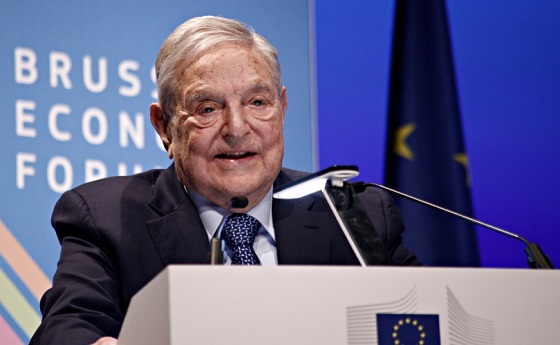
From LifeSiteNews
Files from State Department officials as early as the 1970s show the US government helping the family of radical leftist financier George Soros secure deals and funding.
The U.S. State Department has been working with the Soros family for at least 50 years, Mike Benz demonstrated using diplomatic cables published to Wikileaks.
Benz, a former deputy assistant secretary at the U.S. State Department, explained in a video posted to X on Sunday that he searched for the terms “Soros” and “Open Society Foundation,” which was created by Soros, in Wikileaks’ collection of diplomatic cables. His goal was to “create a comprehensive tapestry of all U.S. state department involvement with Soros and the Open Society Foundation in every country in the world.”
The former state department official, now the executive director of the Foundation for Freedom Online, wanted to document why it was said that George Soros is treated by the U.S. like an “independent entity” akin to a country.
In a 1995 piece published by The New Yorker, former U.S. Ambassador to Turkey Morton Abramowitz said of Soros, “he’s the only man in the US who has his own foreign policy — and can implement it.”
Strobe Tallbott, former deputy secretary of state, also said of the far-left financier, “It’s like working with a friendly, allied, independent entity, if not a government. We try to synchronize our approach to the former Communist countries with Germany, France, Great Britain — and with George Soros.” This he “added with a grin,” wrote Connie Bruck.
Benz reviewed key cables from State Department officials as far back as the 1970s demonstrating the U.S. government’s involvement with the Soros family in what appeared to be a quid pro quo relationship.
In one 1976 cable from former U.S. Secretary of State Henry Kissinger, it was shown that the Brown & Root (now Halliburton), a CIA-linked company known for work on military installations and off-shore drilling platforms, wanted to “go all out” for the construction of a port in Santa Clara, Gabon, a country on the west coast of Africa.
It is noteworthy that Brown & Root’s co-founder Herman Brown was granted a covert security clearance for work with the CIA in 1953 “for use as a covert associate.” As of the 2000s, the company was one of George Soros’ top five holdings, Benz showed.
Referencing Brown & Root’s Manager of International Sales, Kissinger wrote, “O’Sullivan has just come from detailed discussions with Soros Associates to develop background for on-site estimates of construction timetable and costs … to be used in forthcoming talks with Gabon officials.”
Soros Associates, Benz explained, was run by George Soros’ older brother Paul Soros, now deceased.
The cable, addressed to the U.S. Embassy in Gabon, seemed to pressure assistance for the construction of this port, noting that while the request for help with it came at a “difficult time,” “strong interest” in the project and other reasons “preclud[ed] deferral.”
Another series of messages show that the U.S. Department helped the Soros family to secure a contract for the port in Gabon.
According to one cable, the director of the Santa Clara port, named as “Damas,” “said that meetings had been held within the Government of Gabon and were continuing which should lead shortly to the elimination of all but a few offers and that Soros was in a very good position.”
Benz remarked, “Here is the head of the State Department in Gabon backchanneling with the head of the port to make sure that Paul Soros won the bid. Eliminate all of the opposition.”
Another message read, “It appears Soros Associates virtually certain to get engineering contract for Port.”
“Not only is the US State Department negotiating Soros’ deals, helping him secure the deals. They’re also backchanneling so that foreign governments can pay [S]oros so that Soros makes his appropriate profit on the deal,” remarked Benz.
“There is this favors-for-favors relationship that goes back five decades, And those are just the earliest cables we have,” he added.
The exposure of these cables has been described as an “ultra massive find” by journalist Alex Jones.
The find is massive because George Soros himself, as was admitted by Morton Abramowitz and Strobe Tallbott, has foreign policy interests independent of the U.S. and over the past decades has demonstrated influence on U.S. domestic policy in favor of an impotent justice system, internet censorship, and a wide range of left-wing causes such as abortion, euthanasia, and population control, as well as homosexual “marriage,” and transgenderism. In other words, as some commentators have put it, his impact has been to erode the moral fabric of America and weaken the country.


Media bound to pay the price for selling their freedom to (selectively) offend

Sometimes An Ingrate Nation Pt. 2: The Great One Makes His Choice

Recent price declines don’t solve Toronto’s housing affordability crisis

From Exception to Routine. Why Canada’s State-Assisted Suicide Regime Demands a Human-Rights Review
-
Business2 days ago
Recent price declines don’t solve Toronto’s housing affordability crisis
-
MAiD20 hours ago
From Exception to Routine. Why Canada’s State-Assisted Suicide Regime Demands a Human-Rights Review
-
 MAiD2 days ago
Health Canada report finds euthanasia now accounts for over 5% of deaths nationwide
-
 Daily Caller2 days ago
Tech Mogul Gives $6 Billion To 25 Million Kids To Boost Trump Investment Accounts
-
 Automotive2 days ago
Power Struggle: Governments start quietly backing away from EV mandates
-
 Energy2 days ago
Unceded is uncertain
-
 Business18 hours ago
Carney government should privatize airports—then open airline industry to competition
-
 Business2 days ago
New Chevy ad celebrates marriage, raising children