
Health
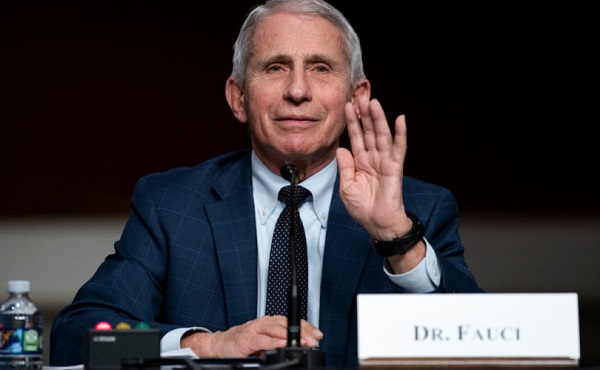
Fauci admitted to RFK Jr. that none of 72 mandatory vaccines for children has ever been safety tested


From LifeSiteNews
Robert F. Kennedy Jr., Trump’s nominee to head the Department of Health and Human Services, recently recounted how Dr. Anthony Fauci had to admit that none of the 72 vaccines currently mandated for children in the U.S. has ever been safety tested.
Robert F. Kennedy Jr., President-elect Donald Trump’s nominee to head the Department of Health and Human Services (HHS), recently recounted how when threatened with a lawsuit, Dr. Anthony Fauci finally had to eat his words and admit that none of the 72 vaccines currently mandated for children in the U.S. has ever been safety tested.
“For many years, I was saying that not one of the 72 vaccines mandated for children has ever been safety tested in pre-licensing, placebo-controlled trials,” began Kennedy, speaking at a Hillsdale College event. “Not one.”
Fauci went so far as to call Kennedy “a liar.”
When then-President Trump appointed Kennedy to run a vaccine safety commission, Trump ordered Fauci and Collins to meet with him along with White House counsel present.
Kennedy told Fauci, “You say I’m lying. For eight years you’ve been saying I’m lying,” and challenged Fauci to “show me the study” which shows that the multitude of vaccines America’s children are required to receive have been safety-tested.
Fauci claimed that he didn’t have it with him. “It’s back in Bethesda. I’ll send it to you.”
“I never got it,” said Kennedy, “so I sued him.”

“After stonewalling us for a year, their lawyers met us on the courthouse steps and said, ‘Yup, you’re right. We never had any study,’” said Kennedy.
Kennedy went on to explain how lucrative government-mandated children’s vaccines have been for the pharmaceutical industry:
There’s no downstream liability, there’s no front-end safety testing – that saves them a quarter billion dollars – and there’s no marketing and advertising costs, because the federal government is ordering 78 million school kids to take that vaccine every year.
What better product could you have? And so there was a gold rush to add all these new vaccines to the schedule that we don’t need. Most of these vaccines are unnecessary. Many of them are for diseases that are not even casually contagious.
It was a gold rush, because if you get onto that schedule, it’s a billion dollars a year for your company.
And in many cases, NIH is earning the royalties.
According to Kennedy, more obscene than the huge profits being horded by Big Pharma are the vast number of negative side-effects from all those untested vaccines.
“Neurological diseases” have “exploded,” he said.
“ADHD, sleep disorders, language delays, ASD, autism, Tourette’s syndrome, ticks, narcolepsy. These are all things that I never heard of,” said Kennedy. “Autism went from one in 10,000 in my generation according to CDC data to one in every 34 kids today.”
Kennedy is known for vehemently opposing vaccines, a stance he adopted after the mothers of vaccine-injured children implored him to look into the research linking thimerosal to neurological injuries, including autism. He went on to found Children’s Health Defense, an organization with the stated mission of “ending childhood health epidemics by eliminating toxic exposure,” largely through vaccines.
Kennedy said in October that Trump has asked him to reorganize and “clean up” federal health agencies like the CDC and FDA. This would involve ending conflicts of interest that favor the interests of pharmaceutical companies over evidence-based medicine, according to Kennedy.
Trump has also tasked him with ending “the chronic disease epidemic in this country,” especially chronic disease among children.

Health
All 12 Vaccinated vs. Unvaccinated Studies Found the Same Thing: Unvaccinated Children Are Far Healthier


I joined Del Bigtree in studio on The HighWire to discuss what the data now make unavoidable: the CDC’s 81-dose hyper-vaccination schedule is driving the modern epidemics of chronic disease and autism.
This was not a philosophical debate or a clash of opinions. We walked through irrefutable, peer-reviewed evidence showing that whenever vaccinated and unvaccinated children are compared directly, the unvaccinated group is far healthier—every single time.
Reanalyzing the Largest Vaccinated vs. Unvaccinated Birth-Cohort Study Ever Conducted
At the center of our discussion was our peer-reviewed reanalysis of the Henry Ford Health System vaccinated vs. unvaccinated birth-cohort study (Lamerato et al.)—the largest and most rigorous comparison of its kind ever conducted.
 |
 |
|
The original authors relied heavily on Cox proportional hazards models, a time-adjusted approach that can soften absolute disease burden. Even so, nearly all chronic disease outcomes were higher in vaccinated children.
Our reanalysis used direct proportional comparisons, stripping away the smoothing and revealing the full magnitude of the signal.
- All 22 chronic disease categories favored the unvaccinated cohort when proportional disease burden was examined
- Cancer incidence was 54% higher in vaccinated children (0.0102 vs. 0.0066)
- When autism-associated conditions were grouped appropriately—including autism, ADHD, developmental delay, learning disability, speech disorder, neurologic impairment, seizures, and related diagnoses—the vaccinated cohort showed a 549% higher odds of autism-spectrum–associated clinical outcomes
The findings are internally consistent, biologically coherent, and concordant with every prior vaccinated vs. unvaccinated study, all of which show drastically poorer health outcomes among vaccinated children
The 12 Vaccinated vs. Unvaccinated Studies Regulators Ignore
In the McCullough Foundation Autism Report, we compiled all 12 vaccinated vs. unvaccinated pediatric studies currently available. These studies span different populations, countries, study designs, and data sources.
 |
Every single one reports the same overall pattern. Across all 12 studies, unvaccinated children consistently exhibit substantially lower rates of chronic disease, including:
- Autism and other neurodevelopmental disorders
- ADHD, tics, learning and speech disorders
- Asthma, allergies, eczema, and autoimmune conditions
- Chronic ear infections, skin disorders, and gastrointestinal illness
This level of consistency across independent datasets is precisely what epidemiology looks for when assessing causality. It also explains why no federal agency has ever conducted—or endorsed—a fully vaccinated vs. fully unvaccinated safety study.
Flu Shot Failure
We also addressed the persistent failure of seasonal influenza vaccination.
A large Cleveland Clinic cohort study of 53,402 employees followed participants during the 2024–2025 respiratory viral season and found:
- 82.1% of employees were vaccinated against influenza
- Vaccinated individuals had a 27% higher adjusted risk of influenza compared with the unvaccinated state (HR 1.27; 95% CI 1.07–1.51; p = 0.007)
- This corresponded to a negative vaccine effectiveness of −26.9% (95% CI −55.0 to −6.6%), meaning vaccination was associated with increased—not reduced—risk of influenza
 |
When vaccination exposure increases, chronic disease, neurodevelopmental disorders, and inflammatory illness increase with it. When children are unvaccinated, they are measurably healthier across virtually every outcome that matters.
The science needed to confront the chronic disease and autism epidemics already exists. What remains is the willingness to acknowledge it.
Epidemiologist and Foundation Administrator, McCullough Foundation
Support our mission: mcculloughfnd.org
Please consider following both the McCullough Foundation and my personal account on X (formerly Twitter) for further content.
FOCAL POINTS (Courageous Discourse) is a reader-supported publication.
To receive new posts and support my work, consider becoming a free or paid subscriber.

From the Fraser Institute
By Nadeem Esmail and Mackenzie Moir
It’s an exciting time in Canadian health-care policy. But even the slew of new reforms in Alberta only go part of the way to using all the policy tools employed by high performing universal health-care systems.
For 2026, for the sake of Canadian patients, let’s hope Alberta stays the path on changes to how hospitals are paid and allowing some private purchases of health care, and that other provinces start to catch up.
While Alberta’s new reforms were welcome news this year, it’s clear Canada’s health-care system continued to struggle. Canadians were reminded by our annual comparison of health care systems that they pay for one of the developed world’s most expensive universal health-care systems, yet have some of the fewest physicians and hospital beds, while waiting in some of the longest queues.
And speaking of queues, wait times across Canada for non-emergency care reached the second-highest level ever measured at 28.6 weeks from general practitioner referral to actual treatment. That’s more than triple the wait of the early 1990s despite decades of government promises and spending commitments. Other work found that at least 23,746 patients died while waiting for care, and nearly 1.3 million Canadians left our overcrowded emergency rooms without being treated.
At least one province has shown a genuine willingness to do something about these problems.
The Smith government in Alberta announced early in the year that it would move towards paying hospitals per-patient treated as opposed to a fixed annual budget, a policy approach that Quebec has been working on for years. Albertans will also soon be able purchase, at least in a limited way, some diagnostic and surgical services for themselves, which is again already possible in Quebec. Alberta has also gone a step further by allowing physicians to work in both public and private settings.
While controversial in Canada, these approaches simply mirror what is being done in all of the developed world’s top-performing universal health-care systems. Australia, the Netherlands, Germany and Switzerland all pay their hospitals per patient treated, and allow patients the opportunity to purchase care privately if they wish. They all also have better and faster universally accessible health care than Canada’s provinces provide, while spending a little more (Switzerland) or less (Australia, Germany, the Netherlands) than we do.
While these reforms are clearly a step in the right direction, there’s more to be done.
Even if we include Alberta’s reforms, these countries still do some very important things differently.
Critically, all of these countries expect patients to pay a small amount for their universally accessible services. The reasoning is straightforward: we all spend our own money more carefully than we spend someone else’s, and patients will make more informed decisions about when and where it’s best to access the health-care system when they have to pay a little out of pocket.
The evidence around this policy is clear—with appropriate safeguards to protect the very ill and exemptions for lower-income and other vulnerable populations, the demand for outpatient healthcare services falls, reducing delays and freeing up resources for others.
Charging patients even small amounts for care would of course violate the Canada Health Act, but it would also emulate the approach of 100 per cent of the developed world’s top-performing health-care systems. In this case, violating outdated federal policy means better universal health care for Canadians.
These top-performing countries also see the private sector and innovative entrepreneurs as partners in delivering universal health care. A relationship that is far different from the limited individual contracts some provinces have with private clinics and surgical centres to provide care in Canada. In these other countries, even full-service hospitals are operated by private providers. Importantly, partnering with innovative private providers, even hospitals, to deliver universal health care does not violate the Canada Health Act.
So, while Alberta has made strides this past year moving towards the well-established higher performance policy approach followed elsewhere, the Smith government remains at least a couple steps short of truly adopting a more Australian or European approach for health care. And other provinces have yet to even get to where Alberta will soon be.
Let’s hope in 2026 that Alberta keeps moving towards a truly world class universal health-care experience for patients, and that the other provinces catch up.


Why is Canada paying for dairy ‘losses’ during a boom?

Ottawa’s Newly Released Defence Plan Crosses a Dangerous Line

Ford’s EV Fiasco Fallout Hits Hard

Carney Floor Crossing Raises Counterintelligence Questions aimed at China, Former Senior Mountie Argues
-
armed forces2 days ago
Ottawa’s Newly Released Defence Plan Crosses a Dangerous Line
-
espionage2 days ago
Carney Floor Crossing Raises Counterintelligence Questions aimed at China, Former Senior Mountie Argues
-
Health2 days ago
All 12 Vaccinated vs. Unvaccinated Studies Found the Same Thing: Unvaccinated Children Are Far Healthier
-
 Energy2 days ago
75 per cent of Canadians support the construction of new pipelines to the East Coast and British Columbia
-
 Opinion1 day ago
Pope Leo XIV’s Christmas night homily
-
 armed forces1 day ago
Remembering Afghanistan and the sacrifices of our military families
-
 Fraser Institute20 hours ago
Carney government sowing seeds for corruption in Ottawa
-
 Daily Caller19 hours ago
While Western Nations Cling to Energy Transition, Pragmatic Nations Produce Energy and Wealth