
Alberta
‘Far too serious for such uninformed, careless journalism’: Complaint filed against Globe and Mail article challenging Alberta’s gender surgery law

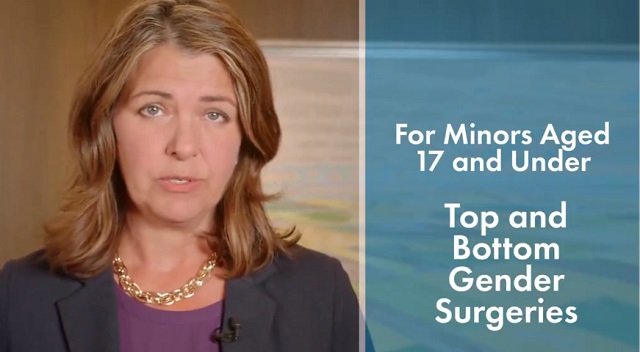


Macdonald Laurier Institute challenges Globe article on gender medicine
The complaint, now endorsed by 41 physicians, was filed in response to an article about Alberta’s law restricting gender surgery and hormones for minors.
On June 9, the Macdonald-Laurier Institute submitted a formal complaint to The Globe and Mail regarding its May 29 Morning Update by Danielle Groen, which reported on the Canadian Medical Association’s legal challenge to Alberta’s Bill 26.
Written by MLI Senior Fellow Mia Hughes and signed by 34 Canadian medical professionals at the time of submission to the Globe, the complaint stated that the Morning Update was misleading, ideologically slanted, and in violation the Globe’s own editorial standards of accuracy, fairness, and balance. It objected to the article’s repetition of discredited claims—that puberty blockers are reversible, that they “buy time to think,” and that denying access could lead to suicide—all assertions that have been thoroughly debunked in recent years.
Given the article’s reliance on the World Professional Association for Transgender Health (WPATH), the complaint detailed the collapse of WPATH’s credibility, citing unsealed discovery documents from an Alabama court case and the Cass Review’s conclusion that WPATH’s guidelines—and those based on them—lack developmental rigour. It also noted the newsletter’s failure to mention the growing international shift away from paediatric medical transition in countries such as the UK, Sweden, and Finland. MLI called for the article to be corrected and urged the Globe to uphold its commitment to balanced, evidence-based journalism on this critical issue.
On June 18, Globe and Mail Standards Editor Sandra Martin responded, defending the article as a brief summary that provided a variety of links to offer further context. However, the three Globe and Mail news stories linked to in the article likewise lacked the necessary balance and context. Martin also pointed to a Canadian Paediatric Society (CPS) statement linked to in the newsletter. She argued it provided “sufficient context and qualification”—despite the fact that the CPS itself relies on WPATH’s discredited guidelines. Notwithstanding, Martin claimed the article met editorial standards and that brevity justified the lack of balance.
MLI responded that brevity does not excuse misinformation, particularly on a matter as serious as paediatric medical care, and reiterated the need for the Globe to address the scientific inaccuracies directly. MLI again called for the article to be corrected and for the unsupported suicide claim to be removed. As of this writing, the Globe has not responded.
Letter of complaint
June 9, 2025
To: The Globe and Mail
Attn: Sandra Martin, standards editor
CC: Caroline Alphonso, health editor; Mark Iype, deputy national editor and Alberta bureau chief
To the editors;
Your May 29 Morning Update: The Politics of Care by Danielle Groen, covering the Canadian Medical Association’s legal challenge to Alberta’s Bill 26, was misleading and ideologically slanted. It is journalistically irresponsible to report on contested medical claims as undisputed fact.
This issue is far too serious for such uninformed, careless journalism lacking vital perspectives and scientific context. At stake is the health and future of vulnerable children, and your reporting risks misleading parents into consenting to irreversible interventions based on misinformation.
According to The Globe and Mail’s own Journalistic Principles outlined in its Editorial Code of Conduct, the credibility of your reporting rests on “solid research, clear, intelligent writing, and maintaining a reputation for honesty, accuracy, fairness, balance and transparency.” Moreover, your principles go on to state that The Globe will “seek to provide reasonable accounts of competing views in any controversy.” The May 29 update violated these principles. There is, as I will show, a widely available body of scientific information that directly contests the claims and perspectives presented in your article. Yet this information is completely absent from your reporting.
The collapse of WPATH’s credibility
The article’s claim that Alberta’s law “falls well outside established medical practice” and could pose the “greatest threat” to transgender youth is both false and inflammatory. There is no global medical consensus on how to treat gender-distressed young people. In fact, in North America, guidelines are based on the Standards of Care developed by the World Professional Association for Transgender Health (WPATH)—an organization now indisputably shown to place ideology above evidence.
For example, in a U.S. legal case over Alabama’s youth transition ban, WPATH was forced to disclose over two million internal emails. These revealed the organization commissioned independent evidence reviews for its latest Standards of Care (SOC8)—then suppressed those reviews when they found overwhelmingly low-quality evidence. Yet WPATH proceeded to publish the SOC8 as if it were evidence-based. This is not science. It is fraudulent and unethical conduct.
These emails also showed Admiral Rachel Levine—then-assistant secretary for Health in the Biden administration—pressured WPATH to remove all lower age recommendations from the guidelines—not on scientific grounds, but to avoid undermining ongoing legal cases at the state level. This is politics, not sound medical practice.
The U.K.’s Cass Review, a major multi-year investigation, included a systematic review of the guidelines in gender medicine. A systematic review is considered the gold standard because it assesses and synthesizes all the available research in a field, thereby reducing bias and providing a large comprehensive set of data upon which to reach findings. The systematic review of gender medicine guidelines concluded that WPATH’s standards of care “lack developmental rigour” and should not be used as a basis for clinical practice. The Cass Review also exposed citation laundering where medical associations endlessly recycled weak evidence across interlocking guidelines to fabricate a false consensus. This led Cass to suggest that “the circularity of this approach may explain why there has been an apparent consensus on key areas of practice despite the evidence being poor.”
Countries like Sweden, Finland, and the U.K. have now abandoned WPATH and limited or halted medicalized youth transitions in favour of a therapy-first approach. In Norway, UKOM, an independent government health agency, has made similar recommendations. This shows the direction of global practice is moving away from WPATH’s medicalized approach—not toward it. As part of any serious effort to “provide reasonable accounts of competing views,” your reporting should acknowledge these developments.
Any journalist who cites WPATH as a credible authority on paediatric gender medicine—especially in the absence of contextualizing or competing views—signals a lack of due diligence and a fundamental misunderstanding of the field. It demonstrates that either no independent research was undertaken, or it was ignored despite your editorial standards.
Puberty blockers don’t ‘buy time’ and are not reversible

Your article repeats a widely debunked claim: that puberty blockers are a harmless pause to allow young people time to explore their identity. In fact, studies have consistently shown that between 98 per cent and 100 per cent of children placed on puberty blockers go on to take cross-sex hormones. Before puberty blockers, most children desisted and reconciled with their birth sex during or after puberty. Now, virtually none do.
This strongly suggests that blocking puberty in fact prevents the natural resolution of gender distress. Therefore, the most accurate and up-to-date understanding is that puberty blockers function not as a pause, but as the first step in a treatment continuum involving irreversible cross-sex hormones. Indeed, a 2022 paper found that while puberty suppression had been “justified by claims that it was reversible … these claims are increasingly implausible.” Again, adherence to the Globe’s own editorial guidelines would require, at minimum, the acknowledgement of the above findings alongside the claims your May 29 article makes.
Moreover, it is categorically false to describe puberty blockers as “completely reversible.” Besides locking youth into a pathway of further medicalization, puberty blockers pose serious physical risks: loss of bone density, impaired sexual development, stunted fertility, and psychosocial harm from being developmentally out of sync with peers. There are no long-term safety studies. These drugs are being prescribed to children despite glaring gaps in our understanding of their long-term effects.
Given the Globe’s stated editorial commitment to principles such as “accuracy,” the crucial information from the studies linked above should be provided in any article discussing puberty blockers. At a bare minimum, in adherence to the Globe’s commitment to “balance,” this information should be included alongside the contentious and disputed claims the article makes that these treatments are reversible.
No proof of suicide prevention
The most irresponsible and dangerous claim in your article is that denying access to puberty blockers could lead to “depression, self-harm and suicide.” There is no robust evidence supporting this transition-or-suicide narrative, and in fact, the findings of the highest-quality study conducted to date found no evidence that puberty suppression reduces suicide risk.
Suicide is complex and attributing it to a single cause is not only false—it violates all established suicide reporting guidelines. Sensationalized claims like this risk creating contagion effects and fuelling panic. In the public interest, reporting on the topic of suicide must be held to the most rigorous standards, and provide the most high-quality and accurate information.
Euphemism hides medical harm
Your use of euphemistic language obscures the extreme nature of the medical interventions being performed in gender clinics. Calling double mastectomies for teenage girls “paediatric breast surgeries for gender-affirming reasons” sanitizes the medically unnecessary removal of a child’s healthy organs. Referring to phalloplasty and vaginoplasty as “gender-affirming surgeries on lower body parts” conceals the fact that these are extreme operations involving permanent disfigurement, high complication rates, and often requiring multiple revisions.
Honest journalism should not hide these facts behind comforting language. Your reporting denies youth, their parents, and the general public the necessary information to understand the nature of these interventions. Members of the general public rely greatly on the news media to equip them with such information, and your own editorial standards claim you will fulfill this core responsibility.
Your responsibility to the public
As a flagship Canadian news outlet, your responsibility is not to amplify activist messaging, but to report the truth with integrity. On a subject as medically and ethically fraught as paediatric gender medicine, accuracy is not optional. The public depends on you to scrutinize claims, not echo ideology. Parents may make irreversible decisions on behalf of their children based on the narratives you promote. When reporting is false or ideologically distorted, the cost is measured in real-world harm to some of our society’s most vulnerable young people.
I encourage the Globe and Mail to publish an updated version on this article in order to correct the public record with the relevant information discussed above, and to modify your reporting practices on this matter going forward—by meeting your own journalistic standards—so that the public receives balanced, correct, and reliable information on this vital topic.
Trustworthy journalism is a cornerstone of public health—and on the issue of paediatric gender medicine, the stakes could not be higher.
Sincerely,
Mia Hughes
Senior Fellow, Macdonald-Laurier Institute
Author of The WPATH Files
The following 41 physicians have signed to endorse this letter:
Dr. Mike Ackermann, MD
Dr. Duncan Veasey, Psy MD
Dr. Rick Gibson, MD
Dr. Benjamin Turner, MD, FRCSC
Dr. J.N. Mahy, MD, FRCSC, FACS
Dr. Khai T. Phan, MD, CCFP
Dr. Martha Fulford, MD
Dr. J. Edward Les, MD, FRCPC
Dr. Darrell Palmer, MD, FRCPC
Dr. Jane Cassie, MD, FRCPC
Dr. David Lowen, MD, FCFP
Dr. Shawn Whatley, MD, FCFP (EM)
Dr. David Zitner, MD
Dr. Leonora Regenstreif, MD, CCFP(AM), FCFP
Dr. Gregory Chan, MD
Dr. Alanna Fitzpatrick, MD, FRCSC
Dr. Chris Millburn, MD, CCFP
Dr. Julie Curwin, MD, FRCPC
Dr. Roy Eappen, MD, MDCM, FRCP (c)
Dr. York N. Hsiang, MD, FRCSC
Dr. Dion Davidson, MD, FRCSC, FACS
Dr. Kevin Sclater, MD, CCFP (PC)
Dr. Theresa Szezepaniak, MB, ChB, DRCOG
Dr. Sofia Bayfield, MD, CCFP
Dr. Elizabeth Henry, MD, CCFP
Dr. Stephen Malthouse, MD
Dr. Darrell Hamm, MD, CCFP
Dr. Dale Classen, MD, FRCSC
Dr. Adam T. Gorner, MD, CCFP
Dr. Wesley B. Steed, MD
Dr. Timothy Ehmann, MD, FRCPC
Dr. Ryan Torrie, MD
Dr. Zachary Heinricks, MD, CCFP
Dr. Jessica Shintani, MD, CCFP
Dr. Mark D’Souza, MD, CCFP(EM), FCFP*
Dr. Joanne Sinai, MD, FRCPC*
Dr. Jane Batt, MD*
Dr. Brent McGrath, MD, FRCPC*
Dr. Leslie MacMillan MD FRCPC (emeritus)*
Dr. Ian Mitchell, MD, FRCPC*
Dr. John Cunnington, MD
*Indicates physician who signed following the letter’s June 9 submission to the Globe and Mail, but in advance of this letter being published on the MLI website.


From the Fraser Institute
By Tegan Hill
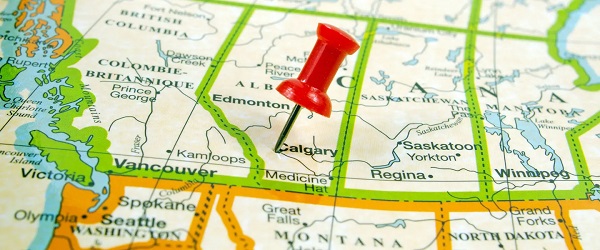
The Alberta Next Panel, tasked with advising the Smith government on how the province can better protect its interests and defend its economy, has officially released its report. Two of its key recommendations—to hold a referendum on Alberta leaving the Canada Pension Plan, and to create a commission to review programs like equalization—could lead to meaningful changes to Canada’s system of fiscal federalism (i.e. the financial relationship between Ottawa and the provinces).
The panel stemmed from a growing sense of unfairness in Alberta. From 2007 to 2022, Albertans’ net contribution to federal finances (total federal taxes paid by Albertans minus federal money spent or transferred to Albertans) was $244.6 billion—more than five times the net contribution from British Columbians or Ontarians (the only other two net contributors). This money from Albertans helps keep taxes lower and fund government services in other provinces. Yet Ottawa continues to impose federal regulations, which disproportionately and negatively impact Alberta’s energy industry.
Albertans were growing tired of this unbalanced relationship. According to a poll by the Angus Reid Institute, nearly half of Albertans believe they get a “raw deal”—that is, they give more than they get—being part of Canada. The Alberta Next Panel survey found that 59 per cent of Albertans believe the federal transfer and equalization system is unfair to Alberta. And a ThinkHQ survey found that more than seven in 10 Albertans feel that federal policies over the past several years hurt their quality of life.
As part of an effort to increase provincial autonomy, amid these frustrations, the panel recommends the Alberta government hold a referendum on leaving the Canada Pension Plan (CPP) and establishing its own provincial pension plan.
Albertans typically have higher average incomes and a younger population than the rest of the country, which means they could pay a lower contribution rate under a provincial pension plan while receiving the same level of benefits as the CPP. (These demographic and economic factors are also why Albertans currently make such a large net contribution to the CPP).
The savings from paying a lower contribution rate could result in materially higher income during retirement for Albertans if they’re invested in a private account. One report found that if a typical Albertan invested the savings from paying a lower contribution rate to a provincial pension plan, they could benefit from $189,773 (pre-tax) in additional retirement income.
Clearly, Albertans could see a financial benefit from leaving the CPP, but there are many factors to consider. The government plans to present a detailed report including how the funds would be managed, contribution rates, and implementation plan prior to a referendum.
Then there’s equalization—a program fraught with flaws. The goal of equalization is to ensure provinces can provide reasonably comparable public services at reasonably comparable tax rates. Ottawa collects taxes from Canadians across the country and then redistributes that money to “have not” provinces. In 2026/27, equalization payments is expected to total $27.2 billion with all provinces except Alberta, British Columbia and Saskatchewan receiving payments.
Reasonable people can disagree on whether or not they support the principle of the program, but again, it has major flaws that just don’t make sense. Consider the fixed growth rate rule, which mandates that total equalization payments grow each year even when the income differences between recipient and non-recipient provinces narrows. That means Albertans continue paying for a growing program, even when such growth isn’t required to meet the program’s stated objective. The panel recommends that Alberta take a leading role in working with other provinces and the federal government to reform equalization and set up a new Canada Fiscal Commission to review fiscal federalism more broadly.
The Alberta Next Panel is calling for changes to fiscal federalism. Reforms to equalization are clearly needed—and it’s worth exploring the potential of an Alberta pension plan. Indeed, both of these changes could deliver benefits.

Tegan Hill
Director, Alberta Policy, Fraser Institute

From the Canadian Energy Centre
By Will Gibson
Oil sands could maintain current production rates for more than 140 years
Investor interest in Canadian oil producers, primarily in the Alberta oil sands, has picked up, and not only because of expanded export capacity from the Trans Mountain pipeline.
Enverus Intelligence Research says the real draw — and a major factor behind oil sands equities outperforming U.S. peers by about 40 per cent since January 2024 — is the resource Trans Mountain helps unlock.
Alberta’s oil sands contain 167 billion barrels of reserves, nearly four times the volume in the United States.
Today’s oil sands operators hold more than twice the available high-quality resources compared to U.S. shale producers, Enverus reports.
“It’s a huge number — 167 billion barrels — when Alberta only produces about three million barrels a day right now,” said Mike Verney, executive vice-president at McDaniel & Associates, which earlier this year updated the province’s oil and gas reserves on behalf of the Alberta Energy Regulator.
Already fourth in the world, the assessment found Alberta’s oil reserves increased by seven billion barrels.
Verney said the rise in reserves despite record production is in part a result of improved processes and technology.
“Oil sands companies can produce for decades at the same economic threshold as they do today. That’s a great place to be,” said Michael Berger, a senior analyst with Enverus.
BMO Capital Markets estimates that Alberta’s oil sands reserves could maintain current production rates for more than 140 years.
The long-term picture looks different south of the border.
The U.S. Energy Information Administration projects that American production will peak before 2030 and enter a long period of decline.
Having a lasting stable source of supply is important as world oil demand is expected to remain strong for decades to come.
This is particularly true in Asia, the target market for oil exports off Canada’s West Coast.
The International Energy Agency (IEA) projects oil demand in the Asia-Pacific region will go from 35 million barrels per day in 2024 to 41 million barrels per day in 2050.
The growing appeal of Alberta oil in Asian markets shows up not only in expanded Trans Mountain shipments, but also in Canadian crude being “re-exported” from U.S. Gulf Coast terminals.
According to RBN Energy, Asian buyers – primarily in China – are now the main non-U.S. buyers from Trans Mountain, while India dominates purchases of re-exports from the U.S. Gulf Coast. .
BMO said the oil sands offers advantages both in steady supply and lower overall environmental impacts.
“Not only is the resulting stability ideally suited to backfill anticipated declines in world oil supply, but the long-term physical footprint may also be meaningfully lower given large-scale concentrated emissions, high water recycling rates and low well declines,” BMO analysts said.


Death by a thousand clicks – government censorship of Canada’s internet

Chinese Billionaire Tried To Build US-Born Baby Empire As Overseas Elites Turn To American Surrogates

Viral TikTok video shows 7-year-old cuddling great-grandfather before he’s euthanized

Politicians should be honest about environmental pros and cons of electric vehicles
-
Alberta1 day ago
Alberta’s huge oil sands reserves dwarf U.S. shale
-
 Alberta1 day ago
Canada’s New Green Deal
-
 Energy1 day ago
Canada’s sudden rediscovery of energy ambition has been greeted with a familiar charge: hypocrisy
-
 Business1 day ago
COP30 finally admits what resource workers already knew: prosperity and lower emissions must go hand in hand
-
 armed forces2 days ago
Ottawa’s Newly Released Defence Plan Crosses a Dangerous Line
-
 Indigenous1 day ago
Residential school burials controversy continues to fuel wave of church arsons, new data suggests
-
 Business1 day ago
Ottawa Pretends To Pivot But Keeps Spending Like Trudeau
-
 Daily Caller1 day ago
Paris Climate Deal Now Decade-Old Disaster