
Censorship Industrial Complex
EU’s “Democracy Shield” Centralizes Control Over Online Speech

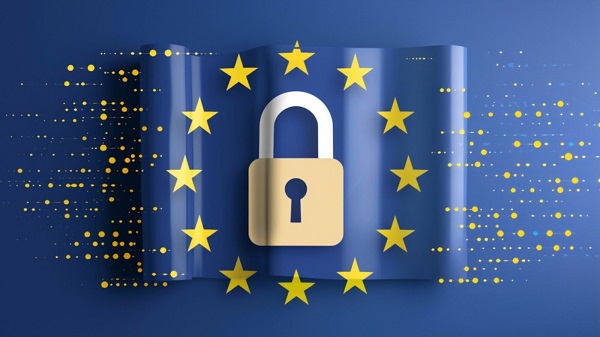



Presented as a defense of democracy, the plan reads more like the architecture of a managed reality.
|
European authorities have finally unveiled the “European Democracy Shield,” we’ve been warning about for some time, a major initiative that consolidates and broadens existing programs of the European Commission to monitor and restrict digital information flows.
Though branded as a safeguard against “foreign information manipulation and interference (FIMI)” and “disinformation,” the initiative effectively gives EU institutions unprecedented authority over the online public sphere.
At its core, the framework fuses a variety of mechanisms into a single structure, from AI-driven content detection and regulation of social media influencers to a state-endorsed web of “fact-checkers.”
The presentation speaks of defending democracy, yet the design reveals a machinery oriented toward centralized control of speech, identity, and data.
One of the more alarming integrations links the EU’s Digital Identity program with content filtering and labelling systems.
The Commission has announced plans to “explore possible further measures with the Code’s signatories,” including “detection and labelling of AI-generated and manipulated content circulating on social media services” and “voluntary user-verification tools.”
Officials describe the EU Digital Identity (EUDI) Wallet as a means for “secure identification and authentication.”
In real terms, tying verified identity to online activity risks normalizing surveillance and making anonymity in expression a thing of the past.
The Democracy Shield also includes the creation of a “European Centre for Democratic Resilience,” led by Justice Commissioner Michael McGrath.
Framed as a voluntary coordination hub, its mission is “building capacities to withstand foreign information manipulation and interference (FIMI) and disinformation,” involving EU institutions, Member States, and “neighboring countries and like-minded partners.”
The Centre’s “Stakeholder Platform” is to unite “trusted stakeholders such as civil society organizations, researchers and academia, fact-checkers and media providers.”
In practice, this structure ties policymaking, activism, and media oversight into one cooperative network, eroding the boundaries between government power and public discourse.
Financial incentives reinforce the system. A “European Network of Fact-Checkers” will be funded through EU channels, positioned as independent yet operating within the same institutional framework that sets the rules.
The network will coordinate “fact-checking” in every EU language, maintain a central database of verdicts, and introduce “a protection scheme for fact-checkers in the EU against threats and harassment.”
Such an arrangement destroys the line between independent verification and state-aligned narrative enforcement.
The Commission will also fund a “common research support framework,” giving select researchers privileged access to non-public platform data via the
Digital Services Act (DSA) and Political Advertising Regulation.
Officially, this aims to aid academic research, but it could also allow state-linked analysts to map, classify, and suppress online viewpoints deemed undesirable.
Plans extend further into media law. The European Commission intends to revisit the Audiovisual Media Services Directive (AVMSD) to ensure “viewers – particularly younger ones – are adequately protected when they consume audiovisual content online.”
While framed around youth protection, such language opens the door to broad filtering and regulation of online media.
Another initiative seeks to enlist digital personalities through a “voluntary network of influencers to raise awareness about relevant EU rules, including the DSA.” Brussels will “consider the role of influencers” during its upcoming AVMSD review.
Though presented as transparent outreach, the move effectively turns social media figures into de facto promoters of official EU messaging, reshaping public conversation under the guise of awareness.
The Shield also introduces a “Digital Services Act incidents and crisis protocol” between the EU and signatories of the Code of Practice on Disinformation to “facilitate coordination among relevant authorities and ensure swift reactions to large-scale and potentially transnational information operations.”
This could enable coordinated suppression of narratives across borders. Large platforms exceeding 45 million EU users face compliance audits, with penalties reaching 6% of global revenue or even platform bans, making voluntary cooperation more symbolic than real.
A further layer comes with the forthcoming “Blueprint for countering FIMI and disinformation,” offering governments standardized guidance to “anticipate, detect and respond” to perceived information threats. Such protocols risk transforming free expression into a regulated domain managed under preemptive suspicion.
Existing structures are being fortified, too. The European Digital Media Observatory (EDMO), already central to “disinformation” monitoring, will receive expanded authority for election and crisis surveillance. This effectively deepens the fusion of state oversight and online communication control.
Funding through the “Media Resilience Programme” will channel EU resources to preferred outlets, while regulators examine ways to “strengthen the prominence of media services of general interest.”
This includes “impact investments in the news media sector” and efforts to build transnational platforms promoting mainstream narratives. Though described as supporting “independent and local journalism,” the model risks reinforcing state-aligned voices while sidelining dissenting ones.
Education and culture are not exempt. The Commission plans “Guidelines for teachers and educators on tackling disinformation and promoting digital literacy through education and training,” along with new “media literacy” programs and an “independent network for media literacy.”
While such initiatives appear benign, they often operate on the assumption that government-approved information is inherently trustworthy, conditioning future generations to equate official consensus with truth.
Viewed as a whole, the European Democracy Shield represents a major institutional step toward centralized narrative management in the European Union.
Under the language of “protection,” Brussels is constructing a comprehensive apparatus for monitoring and shaping the flow of information.
For a continent that once defined itself through open debate and free thought, this growing web of bureaucratic control signals a troubling shift.
Efforts framed as defense against disinformation now risk becoming tools for suppressing dissent, a paradox that may leave European democracy less free in the name of making it “safe.”
|
|
|
|
You read Reclaim The Net because you believe in something deeper than headlines; you believe in the enduring values of free speech, individual liberty, and the right to privacy.
Every issue we publish is part of a larger fight: preserving the principles that built this country and protecting them from erosion in the digital age.
With your help, we can do more than simply hold the line: we can push back. We can shine a light on censorship, expose growing surveillance overreach, and give a voice to those being silenced.
If you’ve found any value in our work, please consider becoming a supporter.
Your support helps us expand our reach, educate more people, and continue this work.
Please become a supporter today.
Thank you for your support.
|

Censorship Industrial Complex
US Under Secretary of State Slams UK and EU Over Online Speech Regulation, Announces Release of Files on Past Censorship Efforts

Sarah Rogers’ comments draw a new line in the sand between America’s First Amendment and Europe’s tightening grip on online speech.
|
|
Censorship Industrial Complex
Canadian university censors free speech advocate who spoke out against Indigenous ‘mass grave’ hoax
From LifeSiteNews
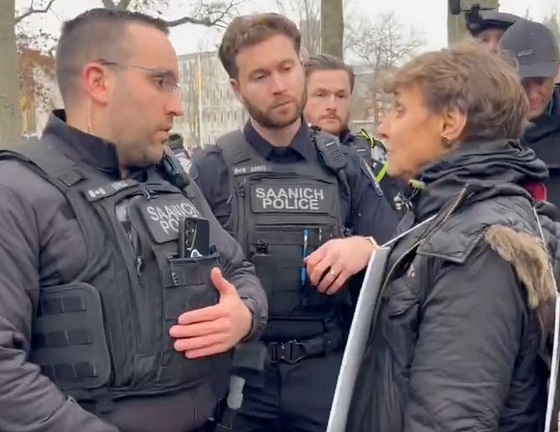
Dr. Frances Widdowson was arrested and given a ticket at the University of Victoria campus after trying to engage in conversation about ‘the disputed claims of unmarked graves in Kamloops.’
A Canadian academic who spoke out against claims there are mass unmarked graves of kids on former Indigenous residential schools, and who was arrested on a university campus as a result for trespassing, is fighting back with the help of a top constitutional group.
Dr. Frances Widdowson was arrested and given a ticket on December 2, 2025, at the University of Victoria (UVic) campus after trying to engage in conversation about “the disputed claims of unmarked graves in Kamloops,” noted the Justice Centre for Constitutional Freedoms (JCCF) in a recent news release.
According to the JCCF, Widdowson was trying to initiate a “good faith” conversation with people on campus, along with the leader of OneBC provincial party, Dallas Brodi.
“My arrest at the University of Victoria is an indication of an institution that is completely unmoored from its academic purpose,” said Widdowson in a statement made available to LifeSiteNews.
She added that the “institution” has been “perpetuating the falsehood” of the remains of 215 children “being confirmed at Kamloops since 2021, and is intent on censoring any correction of this claim.”
“This should be of concern for everyone who believes that universities should be places of open inquiry and critical thinking, not propaganda and indoctrination,” she added.
UVic had the day before Widdowson’s arrest warned on its website that those in favor of free speech were “not permitted to attend UVic property for the purpose of speaking publicly.”
Despite the warning, Widdowson, when she came to campus, was met with some “100 aggressive protesters assembled where she intended to speak at Petch Fountain,” noted the JCCF.
The protesters consisted of self-identified Communists, along with Antifa-aligned people and Hamas supporters.
When Widdowson was confronted by university security, along with local police, she was served with a trespass notice.
“When she declined to leave, she was arrested, detained for about two hours, and charged under British Columbia’s Trespass Act—an offence punishable by fines up to $2,000 or up to six months’ imprisonment,” said the JCCF.
According to Constitutional lawyer Glenn Blackett, UVic actions are shameful, as it “receives hundreds of millions of taxpayer dollars annually while it facilitates the arrest of Canadians attempting to engage in free inquiry on campus.”
Widdowson’s legal team, with the help of the JCCF, will be defending her ticket to protect her “Charter-protected freedoms of expression and peaceful assembly.”
Widdowson served as a tenured professor at Mount Royal University in Calgary, Alberta, before she was fired over criticism of her views on identity politics and Indigenous policy, notes the JCCF. She was vindicated, however, as an arbitrator later found her termination was wrongful.
In 2021 and 2022, the mainstream media ran with inflammatory and dubious claims that hundreds of children were buried and disregarded by Catholic priests and nuns who ran some Canadian residential schools. The reality is, after four years, there have been no mass graves discovered at residential schools.
However, as the claims went unfounded, over 120 churches, most of them Catholic and many of them on Indigenous lands that serve the local population, have been burned to the ground, vandalized, or defiled in Canada since the spring of 2021.
Last year, retired Manitoba judge Brian Giesbrecht said Canadians are being “deliberately deceived by their own government” after blasting the former Trudeau government for “actively pursuing” a policy that blames the Catholic Church for the unfounded “deaths and secret burials” of Indigenous children.
As reported by LifeSiteNews, new private members’ Bill C-254, “An Act To Amend The Criminal Code” introduced by New Democrat MP Leah Gazan, looks to give jail time to people who engage in so-called “Denialism.” The bill would look to jail those who question the media and government narrative surrounding Canada’s “Indian Residential School system” that there are mass graves despite no evidence to support this claim.


Ottawa’s Newly Released Defence Plan Crosses a Dangerous Line

All 12 Vaccinated vs. Unvaccinated Studies Found the Same Thing: Unvaccinated Children Are Far Healthier

Carney Floor Crossing Raises Counterintelligence Questions aimed at China, Former Senior Mountie Argues
Ottawa is still dodging the China interference threat
-
 Digital ID2 days ago
Canadian government launches trial version of digital ID for certain licenses, permits
-
 Alberta2 days ago
Alberta Next Panel calls to reform how Canada works
-
 Agriculture2 days ago
End Supply Management—For the Sake of Canadian Consumers
-
 International2 days ago
Georgia county admits illegally certifying 315k ballots in 2020 presidential election
-
 Business2 days ago
The “Disruptor-in-Chief” places Canada in the crosshairs
-
 Artificial Intelligence2 days ago
UK Police Pilot AI System to Track “Suspicious” Driver Journeys
-
 Energy1 day ago
‘The electric story is over’
-
 International2 days ago
World-leading biochemist debunks evolutionary theory