
Business
Energy leaders send this letter urging Prime Minister Mark Carney to unlock Canada’s resources

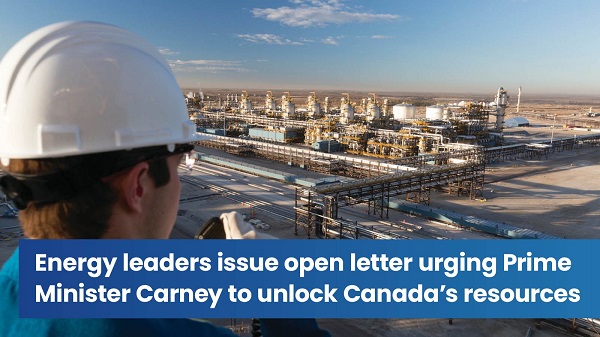


An Open Letter to the Prime Minister of Canada
The CEOs of Canada’s largest energy companies, including Canadian Natural Resources, Cenovus, Suncor, Imperial Oil and many more, have issued a new “Build Canada Now” letter to Prime Minister Carney. They are calling for Ottawa to repeal the production cap, scrap the tanker ban, simplify regulations and shorten project approvals so Alberta’s energy sector can create jobs, attract investment and help Canada become a true global energy superpower.
September 15, 2025
The Rt. Hon. Mark Carney, PC, MP
Prime Minister of Canada
Dear Prime Minister Carney,
Six months have passed since the first “Build Canada Now” letter was sent to you and the leaders of Canada’s other political parties outlining an action plan to unlock Canada’s world class oil and natural gas resources to strengthen Canada’s economic sovereignty, resilience and prosperity. After the election, we followed up with a second letter expressing our support for our shared vision of Canada becoming an energy superpower, one that harnesses both conventional and clean energy resources. Since then, we have seen progress but it is insufficient to stimulate the investment and growth required to make this vision a reality.
Thank you for leading the positive change in tone from the Federal Government in terms of the importance of economic development, including expanded investments in conventional energy. The launch of the new Major Projects Office, Indigenous Advisory Council, the initial list of projects of national significance, and the announcement that it will begin work in support of Pathways Plus are critical steps in the right direction. We appreciate the progress the Federal Government has made in these areas.

However, Canada still lacks the clear, competitive and durable fiscal and regulatory policies required to achieve the so-called “Grand Bargain”. That bargain being significant emissions reductions, expanded market access and material upstream production growth. Achieving these three inter-related outcomes goes beyond progressing select major projects but rather includes a multitude of other projects and related investments. Consequently, we reiterate our call to work together to make the policy changes required for this to happen.
Our call to action is urgent, with persistent indicators that the Canadian economy is moving in the wrong direction. The need to improve productivity and create jobs requires swift and decisive action. Canada is blessed with an enviable abundance of oil and natural gas resources and has the expertise to develop them in a manner consistent with environmental responsibility, social values, and working with Indigenous groups for the benefit of Canada and Canadians. As leaders of this sector, we have consistently advocated for the changes required to unwind the past decade of increasing policy complexity and uncertainty that led to delayed investments, lost opportunities and a competitive disadvantage on the global energy stage.
Given your background, you understand that the private sector and public markets require clarity and certainty to make the long-term investments necessary to realizing this sector’s potential, in turn creating thousands of high-paying jobs and significantly strengthening Canada’s economy.
Making the changes expressed in the earlier Build Canada Now letters are necessary to send clear signals that Canada is open for business. To reiterate, we believe that your government must focus on the following:
- Significantly simplify regulations. The Federal Impact Assessment Act and West Coast tanker ban are impeding development and need to be overhauled and repealed, respectively. Existing processes are complex, unpredictable, subjective, and excessively long. Processes need to be clarified and simplified, and decisions must withstand judicial review.
- Shorten timelines for project approvals. The Federal Government needs to dramatically reduce regulatory timelines to approve all projects within months, not years, of application. This is required to restore investor confidence and once again attract capital to Canada. Clarity on provincial versus federal jurisdiction related to project approvals is also required and needs to be respected.
- Commit to grow production, not limit it. The Federal Government’s unlegislated cap on emissions must be eliminated to allow the sector to grow and achieve its potential for the benefit of Canada and Canadians. The “production cap” creates uncertainty, is redundant, will result in production cuts, and stifles investment.
- Fiscal framework that attracts investment. The Federal carbon levy on large emitters is not globally cost competitive and should be repealed allowing provinces to set regulations. The Federal Government can lead cooperation across jurisdictions, protecting domestic and international competitiveness. Industry needs clear, competitive, and durable fiscal frameworks, including associated with carbon and overall taxation, to secure capital and incentivize investment.
- Incent Indigenous investment opportunities. The Federal Government needs to provide Indigenous loan guarantees at scale so industry can create ownership opportunities to increase prosperity and ensure Indigenous communities benefit from resource development.
As you have clearly stated, our country needs to move from “uncertainty to prosperity”. There needs to be tangible change to make this happen, and without clear and urgent action we risk missing a generational opportunity to capture the potential before Canada now.
As Parliament resumes for the Fall sitting, the energy industry remains committed to working with you, your cabinet, and the provinces on an urgent basis to achieve the energy sector’s potential for the good of Canada. Together, Canada can become the global energy superpower we all envision. We look forward to your response.
Sincerely,
Original signatories

Brandon Anderson
President & CEO
NorthRiver Midstream Inc

Doug Bartole
President & CEO
InPlay Oil Corp.

Robert Broen
President & CEO
Athabasca Oil Corporation

Scott Burrows
President and Chief Executive Officer
Pembina Pipeline Corp.

Chris Carlsen
President & COO
Birchcliff Energy Ltd.

Brad W. Corson
Chairman, President and Chief Executive Officer
Imperial Oil Ltd.

N. Murray Edwards
Executive Chairman
Canadian Natural Resources Limited

Darlene Gates
President and Chief Executive Officer
MEG Energy Corp.

Paul Hawksworth
President and Chief Executive Officer
Inter Pipeline Ltd.

Tyson Huska
President & CEO
Longshore Resources Ltd.

Mike Lawford
President & CEO
NuVista Energy Ltd.

Chris Mazerolle
President
Chevron Canada Resources

Nicholas McKenna
President
ConocoPhillips Canada

Paul Myers
President
Pacific Canbriam Energy Limited

François Poirier
President and Chief Executive Officer
TC Energy Corp.

Susan Riddell Rose
President & CEO
Rubellite Energy Corp.

Don Simmons
President & CEO
Hemisphere Energy Corporation

Adam Waterous
Executive Chairman, Board of Directors
Strathcona Resources Ltd.

Richard Wyman
President
Chance Oil and Gas Limited

Terry Anderson
President and Chief Executive Officer
ARC Resources Ltd.

Michael Binnion
President & CEO
Questerre Energy Corporation

Craig Bryksa
President and Chief Executive Officer
Veren Inc.

David J. Burton
President & CEO
Lycos Energy Inc.

Paul Colborne
President & CEO
Surge Energy Inc.

Greg Ebel
President and Chief Executive Officer
Enbridge Inc.

Grant Fagerheim
President and Chief Executive Officer
Whitecap Resources Inc.

Bryan Gould
Founder & CEO
Aspenleaf Energy Limited

Philip B. Hodge
President & CEO
Pine Cliff Energy Ltd.

Rich Kruger
President and Chief Executive Officer
Suncor Energy Inc.

Byron Lutes
President
Mancal Energy Inc.

Brendan McCracken
President & CEO
Ovintiv Canada ULC

Jon McKenzie
President and Chief Executive Officer
Cenovus Energy Inc.

Curtis Philippon
President & CEO
Gibson Energy

Mike Rose
President and Chief Executive Officer
Tourmaline Oil Corp.

Brian Schmidt
President & CEO
Tamarack Valley Energy Ltd.

David Spyker
President & CEO
Freehold Royalties Ltd.

Bevin Wirzba
President and Chief Executive Officer
South Bow Corp.

Vern Yu
President & Chief Executive Officer
AltaGas
Additional signatories




You’ve certainly been asked (begged!) to join up for at least one loyalty “points” program – like PC Optimum, Aeroplan, or Hilton Honors – over the years. And the odds are that you’re currently signed up for at least one of them. In fact, the average person apparently belongs to at no less than 14 programs. Although, ironically, you’ll need to sign up to an online equivalent of a loyalty program to read the source for that number.
Well all that warm, fuzzy “belonging” comes with some serious down sides. Let’s see how much they might cost us.
To be sure, there’s real money involved here. Canadians redeem at least two billion dollars in program rewards each year, and payouts will often represent between one and ten percent of the original purchase value.
At the same time, it’s estimated that there could be tens of billions of unredeemed dollars due to expirations, shifting program terms, and simple neglect. So getting your goodies isn’t automatic.
The Audit is a reader-supported publication.
To receive new posts and support my work, consider becoming a free or paid subscriber.
Just why do consumer-facing corporations agree to give away so much money in the fist place?
As you probably already know, it’s about your data. Businesses are willing to pay cold, hard cash in exchange for detailed descriptions of your age, sex, ethnicity, wealth, location, employment status, hobbies, preferences, medical conditions, political leanings, and, of course, shopping habits.
Don’t believe it works? So then why, after all these years, are points programs still giving away billions of dollars?
Every time you participate in such a program, the data associated with that activity will be collected and aggregated along with everything else known about you. It’s more than likely that points-based data is being combined with everything connected to your mobile phone account, email addresses, credit cards, provincial health card, and – possibly – your Social Insurance number. The depth and accuracy of your digital profile improves daily.
What happens to all that data? A lot of it is shared with – or sold to – partners or affiliates for marketing purposes. Some of it is accidentally (or intentionally) leaked to organized criminal gangs driving call center-related scams. But it’s all about getting to know you better in ways that maximize someone’s profits.
One truly scary way this data is used involves surveillance pricing (also known as price discrimination) – particularly as it’s described in a recent post by Professor Sylvain Charlebois.
The idea is that retailers will use your digital profile to adjust the prices you pay at the cash register or when you’re shopping online. The more loyal you are as a customer, the more you’ll pay. That’s because regular (“loyal”) customers are already reliable revenue sources. Companies don’t need to spend anything to build a relationship with you. But they’re more than willing to give up a few percentage points to gain new friends.
I’m not talking about the kind of price discrimination that might lead to higher prices for sales in, say, urban locations to account for higher real estate and transportation costs. Those are just normal business decisions.
What Professor Charlebois described is two customers paying different prices for the same items in the same stores. In fact, a recent Consumer Reports experiment in the U.S. involving 437 shoppers in four cities found the practice to be quite common.
But the nasty bit here is that there’s growing evidence that retailers are using surveillance pricing in grocery stores for basic food items. Extrapolating from the Consumer Reports study, such pricing could be adding $1,200 annually to a typical family’s spending on basic groceries.
I’m not sure what the solution is. It’s way too late to “unenroll” from our loyalty accounts. And government intervention would probably just end up making things worse.
But perhaps getting the word out about what’s happening could spark justified mistrust in the big retailers. No retailer enjoys dealing with grumpy customers.
Be grumpy.
The Audit is a reader-supported publication.
To receive new posts and support my work, consider becoming a free or paid subscriber.


If you think the CCP will treat foreigners better than its own people, when it extends its power over you, please think again: Dimon Liu’s warning to Canadian Parliament.
Editor’s Note: The Bureau is publishing the following testimony to Canada’s House of Commons committee on International Human Rights from Dimon Liu, a China-born, Washington, D.C.-based democracy advocate who testified in Parliament on December 8, 2025, about the human cost of China’s economic rise. Submitted to The Bureau as an op-ed, Liu’s testimony argues that the Canadian government should tighten scrutiny of high-risk trade and investment, and ensure Canada’s foreign policy does not inadvertently reward coercion. Liu also warns that the Chinese Communist Party could gain leverage over Canadians and treat them as it has done to its own subjugated population—an implied message to Prime Minister Mark Carney, who has pledged to engage China as a strategic partner without making that position clear to Canadians during his election campaign.
OTTAWA — It is an honor to speak before you at the Canadian Parliament.
My testimony will attempt to explain why China’s economic success is built on the backs of the largest number of displaced persons in human history.
It is estimated that these displaced individuals range between 300 to 400 million — it is equivalent to the total population of the United States being uprooted and forced to relocate. These displaced persons are invisible to the world, their sufferings unnoticed, their plights ignored.
In 1978, when economic reform began, China’s GDP was $150 billion USD.
In 2000, when China joined the WTO, it was approximately $1.2 trillion USD.
China’s current GDP is approximately $18 trillion USD.
In 2000 China’s manufacturing output was smaller than Italy’s.
Today it’s larger than America, Europe, Japan, and South Korea combined.
If you have ever wondered how China managed to grow so fast in such a short time, Charles Li, former CEO of the Hong Kong Stock Exchange, has the answers for you.
He listed 4 reasons: 1) cheapest land, 2) cheapest labor, 3) cheapest capital, and 4) disregard of environmental costs.

“The cheapest land” because the CCP government took the land from the farmers at little to no compensation.
“The cheapest labor,” because these farmers, without land to farm, were forced to find work in urban areas at very low wages.
The communist household registration system (hukou 戶口) ties them perpetually to the rural areas. This means they are not legal residents, and cannot receive social benefits that legal urban residents are entitled. They could be evicted at any time.
One well known incident of eviction occurred in November 2017. Cai Qi, now the second most powerful man in China after Xi Jinping, was a municipal official in Beijing. He evicted tens of thousands into Beijing’s harsh winter, with only days, or just moments of notice. Cai Qi made famous a term, “low-end population” (低端人口), and exposed CCP’s contempt of rural migrants it treats as second class citizens.
These displaced migrant workers have one tradition they hold dear — it is to reunite with their families during the Chinese Lunar New Year holiday, making this seasonal migration of 100 to 150 million people a spectacular event. In China’s economic winter of 2025 with waves of bankruptcies and factory closures, the tide of unemployed migrant workers returning home to where there is also no work, and no land to farm, has become a worrisome event.
Historically in the last 2,000 years, social instability has caused the collapse of many ruling regimes in China.
“The cheapest capital” is acquired through predatory banking practices, and through the stock markets, first to rake in the savings of the Chinese people; and later international investments by listing opaque, and state owned enterprises in leading stock markets around the world.
“A disregard of environmental costs” is a hallmark of China’s industrialization. The land is poisoned, so is the water; and China produces one-third of all global greenhouse gases.
Chinese Communist officials often laud their system as superior. The essayist Qin Hui has written that the Chinese communist government enjoys a human rights abuse advantage. This is true. By abusing its own people so brutally, the CCP regime has created an image of success, which will prove to be a mirage.
If you think the CCP will treat foreigners better than its own people, when it extends its power over you, please think again.
The Bureau is a reader-supported publication.
To receive new posts and support my work, consider becoming a free or paid subscriber.


Ottawa’s Newly Released Defence Plan Crosses a Dangerous Line

Carney Floor Crossing Raises Counterintelligence Questions aimed at China, Former Senior Mountie Argues

All 12 Vaccinated vs. Unvaccinated Studies Found the Same Thing: Unvaccinated Children Are Far Healthier
Ottawa is still dodging the China interference threat
-
International2 days ago
Ottawa is still dodging the China interference threat
-
 Agriculture14 hours ago
End Supply Management—For the Sake of Canadian Consumers
-
 Business2 days ago
There’s No Bias at CBC News, You Say? Well, OK…
-
 Automotive2 days ago
Canada’s EV gamble is starting to backfire
-
 Alberta11 hours ago
Alberta Next Panel calls to reform how Canada works
-
 Digital ID12 hours ago
Canadian government launches trial version of digital ID for certain licenses, permits
-
 Business9 hours ago
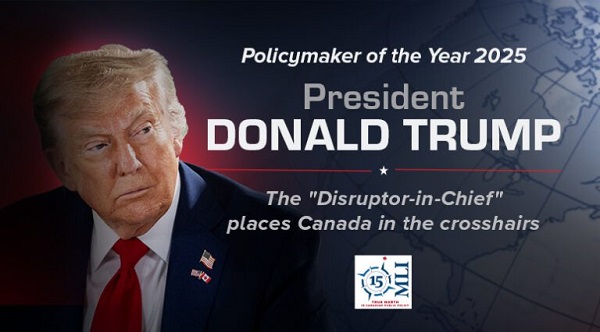
The “Disruptor-in-Chief” places Canada in the crosshairs
-
 Artificial Intelligence10 hours ago
UK Police Pilot AI System to Track “Suspicious” Driver Journeys