
espionage
Elections Canada agency unable to refute allegations of Chinese operatives posing as poll workers in 2021

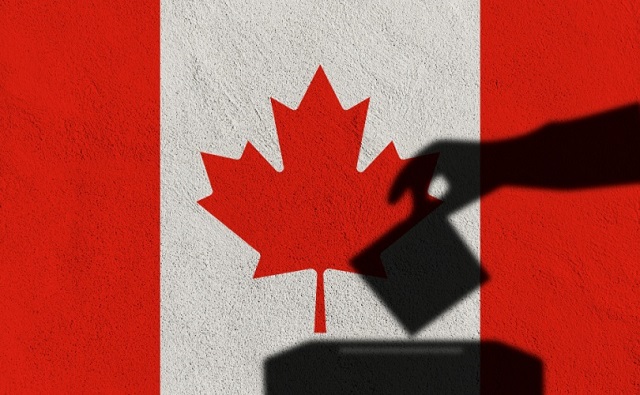
From LifeSiteNews
Elections Canada admitted that no background checks were conducted on volunteers, adding that it could not say for sure whether agents of the Chinese Communist Party infiltrated polls in the Aurora-Oak Ridges riding.
After a former MP revealed that agents of the Chinese Communist Party (CCP) allegedly worked at the polls during the 2021 federal election, Elections Canada admitted it could not refute the statement made by the former elected official.
As reported by LifeSiteNews earlier this week, documents from a federal inquiry looking at meddling in Canada’s past two elections by foreign state actors show that agents of the CCP allegedly worked at Elections Canada polling centers in the 2021 campaign.
The documents show that former Conservative MP Leona Alleslev noted in a sworn affidavit that she was told by Chinese Canadians they knew foreign operatives were working at polling stations. She also noted that she had received many complaints from Chinese Canadians that they were too scared to vote.
As recently noted by Blacklock’s Reporter, Elections Canada said in a statement that “It would be impossible for us to make any kind of determination with certainty” about Alleslev’s claims. However, it noted that “we should note that there are safeguards present at every stage of the electoral process. Transparency is one of the key pillars of electoral democracy.”
“All poll workers sign a solemn declaration that they will be non-partisan while working at an election and protect the secrecy of the vote,” said Elections Canada, adding that it was their “job” to make it possible for “electors to vote in an orderly fashion.”
Elections Canada went on to admit that no background checks were conducted on volunteers, adding that it could not say for sure whether agents of the CCP infiltrated polls in the Aurora-Oak Ridges riding.
Alleslev lost the election and her seat to Liberal MP Leah Taylor Roy by 1,460 votes. Prime Minister Justin Trudeau’s Liberals won the 2021 election by a narrow margin.
According to Alleslev’s affidavit, about “half the Chinese Canadian constituents she canvassed would tell Ms. Alleslev they were afraid to vote for her because they feared repercussions against themselves or their family members both in Canada and in China.”
“Some claimed they took the threat seriously because there were agents of the Chinese Communist Party working in the local Elections Canada office and in the polling stations or monitoring outside of the significantly reduced number of polling stations to watch who voted,” it read.
The Foreign Interference Commission was convened to “examine and assess the interference by China, Russia, and other foreign states or non-state actors, including any potential impacts, to confirm the integrity of, and any impacts on, the 43rd and 44th general elections (2019 and 2021 elections) at the national and electoral district levels.”
The commission is headed by Justice Marie-Josée Hogue, who had earlier said she and her lawyers will remain “impartial” and will not be influenced by politics. In January, Hogue said that she would “uncover the truth whatever it may be.”
As for Trudeau, he has praised China for its “basic dictatorship” and has labeled the authoritarian nation his favorite country other than his own.


From the Frontier Centre for Public Policy
By Lee Harding
Alarming claims out of P.E.I. point to deep foreign interference, and the federal government keeps stalling. Why?
Explosive new allegations of Chinese interference in Prince Edward Island show Canada’s institutions may already be compromised and Ottawa has been slow to respond.
The revelations came out in August in a book entitled “Canada Under Siege: How PEI Became a Forward Operating Base for the Chinese Communist Party.” It was co-authored by former national director of the RCMP’s proceeds of crime program Garry Clement, who conducted an investigation with CSIS intelligence officer Michel Juneau-Katsuya.
In a press conference in Ottawa on Oct. 8, Clement referred to millions of dollars in cash transactions, suspicious land transfers and a network of corporations that resembled organized crime structures. Taken together, these details point to a vulnerability in Canada’s immigration and financial systems that appears far deeper than most Canadians have been told.
P.E.I.’s Provincial Nominee Program allows provinces to recommend immigrants for permanent residence based on local economic needs. It seems the program was exploited by wealthy applicants linked to Beijing to gain permanent residence in exchange for investments that often never materialized. It was all part of “money laundering, corruption, and elite capture at the highest levels.”
Hundreds of thousands of dollars came in crisp hundred-dollar bills on given weekends, amounting to millions over time. A monastery called Blessed Wisdom had set up a network of “corporations, land transfers, land flips, and citizens being paid under the table, cash for residences and property,” as was often done by organized crime.
Clement even called the Chinese government “the largest transnational organized crime group in the history of the world.” If true, the allegation raises an obvious question: how much of this activity has gone unnoticed or unchallenged by Canadian authorities, and why?
Dean Baxendale, CEO of the China Democracy Fund and Optimum Publishing International, published the book after five years of investigations.
“We followed the money, we followed the networks, and we followed the silence,” Baxendale said. “What we found were clear signs of elite capture, failed oversight and infiltration of Canadian institutions and political parties at the municipal, provincial and federal levels by actors aligned with the Chinese Communist Party’s United Front Work Department, the Ministry of State Security. In some cases, political donations have come from members of organized crime groups in our country and have certainly influenced political decision making over the years.”
For readers unfamiliar with them, the United Front Work Department is a Chinese Communist Party organization responsible for influence operations abroad, while the Ministry of State Security is China’s main civilian intelligence agency. Their involvement underscores the gravity of the allegations.
It is a troubling picture. Perhaps the reason Canada seems less and less like a democracy is that it has been compromised by foreign actors. And that same compromise appears to be hindering concrete actions in response.
One example Baxendale highlighted involved a PEI hotel. “We explore how a PEI hotel housed over 500 Chinese nationals, all allegedly trying to reclaim their $25,000 residency deposits, but who used a single hotel as their home address. The owner was charged by the CBSA, only to have the trial shut down by the federal government itself,” he said. The case became a key test of whether Canadian authorities were willing to pursue foreign interference through the courts.
The press conference came 476 days after Bill C-70 was passed to address foreign interference. The bill included the creation of Canada’s first foreign agent registry. Former MP Kevin Vuong rightly asked why the registry had not been authorized by cabinet. The delay raises doubts about Ottawa’s willingness to confront the problem directly.
“Why? What’s the reason for the delay?” Vuong asked.
Macdonald-Laurier Institute foreign policy director Christopher Coates called the revelations “beyond concerning” and warned, “The failures to adequately address our national security challenges threaten Canada’s relations with allies, impacting economic security and national prosperity.”
Former solicitor general of Canada and Prince Edward Island MP Wayne Easter called for a national inquiry into Beijing’s interference operations.
“There’s only one real way to get to the bottom of what is happening, and that would be a federal public inquiry,” Easter said. “We need a federal public inquiry that can subpoena witnesses, can trace bank accounts, can bring in people internationally, to get to the bottom of this issue.”
Baxendale called for “transparency, national scrutiny, and most of all for Canadians to wake up to the subtle siege under way.” This includes implementing a foreign influence transparency commissioner and a federal registry of beneficial owners.
If corruption runs as deeply as alleged, who will have the political will to properly respond? It will take more whistleblowers, changes in government and an insistent public to bring accountability. Without sustained pressure, the system that allowed these failures may also prevent their correction.
Lee Harding is a research fellow for the Frontier Centre for Public Policy.


AI-driven surveillance is shifting from spotting suspects to mapping ordinary life, turning everyday travel into a stream of behavioral data
|
|
Georgia county admits illegally certifying 315k ballots in 2020 presidential election

ICYMI: Largest fraud in US history? Independent Journalist visits numerous daycare centres with no children, revealing massive scam
Alberta project would be “the biggest carbon capture and storage project in the world”
Canada’s debate on energy levelled up in 2025
-
 Energy1 day ago
Rulings could affect energy prices everywhere: Climate activists v. the energy industry in 2026
-
 Digital ID1 day ago
The Global Push for Government Mandated Digital IDs And Why You Should Worry
-
 Bruce Dowbiggin23 hours ago
The Rise Of The System Engineer: Has Canada Got A Prayer in 2026?
-
 International2 days ago
Trump confirms first American land strike against Venezuelan narco networks
-
 International24 hours ago
Maduro says he’s “ready” to talk
-
 Business2 days ago
How convenient: Minnesota day care reports break-in, records gone
-
 Business2 days ago
The great policy challenge for governments in Canada in 2026
-
 International24 hours ago
LOCKED AND LOADED: Trump threatens U.S. response if Iran slaughters protesters