
Travel
Todayville Travel: Down on the Bayou- Cajun Hospitality


The news from Louisiana is often hurricanes, burst levees and the dangerous streets of New Orleans.

What we’ve discovered down South has been unreserved hospitality.
A few years ago on our first trip through the Bayou State the weather turned cold. We became stranded in the town of Natchitoches, blind-sided by a gale of sleet. Thrilled locals informed us they hadn’t seen snow in NAK-a-tish (that’s how it’s pronounced) for nine years. As polite Canadians, we controlled our elation.

A snowstorm in Louisiana?!
As luck would have it we had arrived the day of the annual river-barge parade. We mingled with happy revelers on the banks of the Red River. As we strolled, the sound of a Cajun band spilled from an antebellum mansion fronting Front Street. The owner, a well-dressed southern gentleman, was watching the parade through his wrought-iron fence. Small talk ensued. Soon the wandering Canadians were invited into a stately pre-Civil War home to join a bon fête.

Cajun fiddler in Natchitoches
The party lasted into the wee hours. Filet gumbo, stomping feet, a crackling fire and genuine Louisiana friendliness kept us warm. After much cajoling I joined the band, rang the Cajun ti-fer… and did credit to all Canadians – in the beverage consumption department.

Antebellum (pre-Civil War) mansion in Natchitoches
On our return to Louisiana this time we bypassed Natchitoches, hugging the Gulf Coast, seeking the blue bayou of the South. Roadside billboards stuck in the swamp advertised free consultation to shrimpers still affected by the Deepwater Horizon disaster. The ex-lawyer in me was intrigued. The guy seeking quiet solitude was – quietly disgusted.

A great blue heron rests on a cypress stump

Bald cypress in winter plumage
The bayous of Louisiana start where the Mississippi River begins to end: in the silted course of its enormous delta. Braided channels open and close. New rivers form. Shallow meandering creeks emerge in swamps overgrown with cypress and mangrove forests. These muddy backwaters are the birthplace for a vast array of aquatic life. Their predators – birds and reptiles – lurk quietly in the sultry stagnant shadows.
When we arrived at the Morgan City campground it was dark. We were hungry, tired, irritable – and without a reservation. Most horrible camping experiences begin with a late arrival. While attempting to set up in the dark I backed into the last open site, glancing off an oak tree and a concrete picnic table, fanning the fires of a simmering matrimonial dispute.
I walked, fuming, past a campsite’s roaring fire toward the office to register. A happy group of tenters were huddled near the flames, laughing and smoking.
“You were pretty lucky to get that spot on a busy weekend,” said the affable occupant of site B12. “Where y’all from?
I told him we were from Alberta and said we were hungry and hoping to find a Cajun restaurant nearby. He recommended a place in town down by the Riverwalk and wished us a pleasant evening.
My mood was greatly improved when we drove back through the gate a couple of hours later, stuffed to overflowing with crawfish and dirty rice.
“How was the Creole?”
The small group settled around B12’s fire was well into their cups and still going strong. My relaxed demeanor confirmed we had not been led gastronomically astray.
“Why don’t you and your wife come on over for a drink?” asked the friendly fellow who was responsible for my contented smile. I slipped into our RV and grabbed a couple of Pilsners I had lugged from home. I handed a cold one to Dean Landry and his wife Vicky.
“These all the way from Canada?” Dean asked.
“Yup. There is no finer Canadian beer.” (I had my fingers crossed behind my back.)
“How come he talk so funny?” asked Zach, Vicky’s precocious twelve-year-old.
“Sshh, you mind your manners,” said Miss Vicky.
Zach carried on, unabashed. “You got a different kind ‘a money up ther‘ in Canada?”
I reached into my pocket and handed Zach a blue, five-dollar bill. I proudly told him it was worth almost $4 American and that it was now his.
“This’s made out of plastic,” he screamed, running through the campground, announcing to the world that some geezer from Canada had just given him a foreign blue fiver.
“Why you come down to these parts?” Mr. Landry asked. His surname and that unique Louisiana cadence confirmed his Cajun ancestry.
(Cajuns are the descendants of Acadians, French Canadians expelled from Nova Scotia in the eighteenth century. They brought a distinct culture and dialect to the swamps of the South. To the uninitiated, Cajun French is unintelligible. Their English is only marginally more comprehensible. For instance if a Cajun asks, “where you gonna powk de caw?” he is not rudely inquiring about your bedroom habits – he’s just asking where you intend to park the Buick.)
“We’re here to see the bayou,” I told Dean. “I want to get into the backwaters, see the swamp, the alligators. I noticed there are some operators in town offering boat tours. What do you think?”
Dean looked at the fire for a moment, drained the last of his Pil and said, “You an early riser?”
“Not particularly,” I replied truthfully.
“Dean, he an early bird,” chimed in Vicky. “He’s up with the roosters.”
“I live only a little more than fifty mile from here, up near Thibodau, in Lafourche Parish.” Unlike the other 49 States of the Union, which have Counties, Louisiana is divided into Parishes – further tribute to its French roots.
“Ain’t any big deal for me to scoot over first thing in the morning and hook up my boat. By the time y’all get up, my skiff’ll be waiting for you. I’ll show you the real bayou, not some tourist crap.”
We’d had a few brewskies by then – and I don’t put a lot of stock in late-night campfire bravado. So when I popped my head out of the camper the next morning my expectations for a bayou experience weren’t high.
“There you are,” shouted Dean, wiping down the lovely flat-bottomed craft that had appeared at his site. He’d driven 80 kilometers to his home, breakfasted with his daddy, hitched up the boat and returned – all while I was still sawing logs.
“And he’s been polishing that motor for near an hour now,” Vicky smiled.
My mother told me I’d never amount to anything if I didn’t get up early and get to it. But somehow serendipity follows my late-morning shadow, shaking me awake with fortunate encounters.
Vicky, Zach, my wife Florence and I jumped into the boat and Dean motored us into the bayou. The perspective from water was entirely different from the bits of swamp we could see while driving. Narrow muddy channels serpentined every which way and within minutes I was completely lost in a vast wet labyrinth.
We floated through vast groves of bald cypress trees draped in Spanish moss, their knees soaked in brackish water; past “fishing camps” – remote wooden cabins fronted by a small deck for fishing. (Many sported a Confederate flag. For the South, the Civil War is not yet over.)

For some Southerners that war ain’t over yet
The gators were out, sunning on logs or floating motionless, eyes protruding silently above the water. These malevolent-looking reptiles can grow to four meters and 400 kilograms – top of the food chain in these hidden warrens. In the bayou it’d be easy to dispose of things unwanted. I was glad Dean was a friendly chap.
Zach acted as lookout, chatting constantly, identifying all flora and fauna the bayou had to offer.
An abandoned orange hurricane pod, resembling a wayward UFO, floated uselessly in a backwater, testament to the unrelenting power of Mother Nature.

An abandoned hurricane pod resembles a wayward UFO
We moored for lunch at Gros’ Place, a remote camp accessible only by water. A huge kettle of fragrant jambalaya boiled above an open fire. A fresh-dressed deer carcass dangled from a hook in the kitchen.

This must be the place!
After a meal of fried catfish and white beans – and an afternoon of great camaraderie, Dean steered us out of the bayou, effortlessly retracing our path through the indiscernible twisting, turning channels. The sun, shining through a thick canopy of cypress and mangrove, hinted vaguely at our direction of travel.

Zach entertains the womenfolk in the bayou
At the dock we shook hands with Dean and Vicky, said good-bye and climbed into our RV, headed for New Orleans. As we pulled away Zach strolled up. I rolled down the window:
“That new? That got a diesel engine in it? My grandpa told me down on the farm that you got to fill a special compartment with somethin’ called urea to keep a diesel engine running. Urea same as pee, but you got to pay twenty dollar for five gallons.”
If there’s one thing I can’t stand it’s a know-it-all kid. I thanked him for his advice and drove off.
“That kid is either a savant or a nut,” I said to Florence.
Less than a hundred kilometers down the road a yellow warning light flashed on the dash. I pulled over. The owner’s manual indicated there was a malfunction in something called the DEF. The problem required immediate attention. After twenty ignition starts the vehicle would be rendered inoperable. I stopped at an Auto Zone and explained my problem to the man behind the counter.
“You need to add DEF fluid. It’s over there behind the antifreeze. It’s really just urea,” he said in a thick Cajun drawl.
“Yeah,” I replied. “Just like pee, but costs twenty bucks.”
About the author:
Gerry Feehan QC practised law in Red Deer for 27 years before starting his second life as a freelance travel writer and photographer. When not on the road, Gerry and his wife Florence live in Red Deer and Kimberley, BC. Todayville is proud to work with Gerry to publish some of his most compelling stories from his vast catalogue developed over more than a decade of travel.

Check out other stories by Gerry simply by clicking on the title below.


International
America first at the national parks: Trump hits Canadians and other foreign visitors with $100 fee


Foreign visitors heading to America’s crown-jewel national parks will soon face a steeper bill, as the Trump administration moves to prioritize U.S. taxpayers who already bankroll the system. The Department of the Interior announced Tuesday that starting in 2026, non-residents will be charged an additional $100 at 11 of the country’s busiest parks — a list that includes the Grand Canyon, Yellowstone, Yosemite, Acadia, Everglades, and other iconic destinations. The change accompanies a sharp increase in the cost of an annual all-parks pass for foreign tourists, which will jump to $250, more than triple the current rate. Americans and permanent residents will continue paying $80.
Interior Secretary Doug Burgum framed the policy as a straightforward matter of fairness. “President Trump’s leadership always puts American families first,” he said, arguing that U.S. households already subsidize the National Park System and deserve affordable access while international tourists contribute “their fair share” to the upkeep and expansion of the park network. It’s a pitch that aligns with Trump’s broader push to restore what he calls a sense of ownership and pride in the country’s natural treasures, and to make sure the burden of maintaining them doesn’t fall solely on American families.
We’re making it easier & more affordable for Americans to experience the beauty & freedom of our public lands!
In 2026, we’re launching:
– America-first pricing 💵
– Digital passes 📱
– Patriotic pass designs 🇺🇸
– Expanded motorcycle access 🏍️
– 5 additional fee-free days 🗓️ pic.twitter.com/a2SvHNBdSP— Secretary Doug Burgum (@SecretaryBurgum) November 25, 2025
The National Park Service recorded nearly 332 million visits in 2024 across its 63 designated national parks — a staggering figure that has placed heavy pressure on trails, facilities, and staff. While some parks charge per-vehicle fees and others by the individual, the $80 “America the Beautiful” pass covers the holder and all passengers or up to four adults. Under the new rules, foreign visitors who purchase the $250 annual pass will avoid the extra $100 at the 11 high-traffic parks, but all other overseas travelers will pay the surcharge at the gate.
The administration says the approach follows a July executive order from President Trump, aimed at preserving parkland “for American families” by ensuring those who don’t support the system through taxes help shoulder the cost of its growing maintenance needs. Burgum’s department also highlighted that U.S. visitors will continue to enjoy “patriotic fee-free days” tied to national observances — including President’s Day, Veterans Day, and Flag Day, which coincides with Trump’s birthday — while foreign visitors will pay full freight.
The move is expected to generate significant revenue from international tourism while reinforcing a message that has become central to Trump’s agenda: America’s natural wonders belong first to the taxpayers who fund them, and protecting access for those families comes before subsidizing the travel of visitors from abroad.
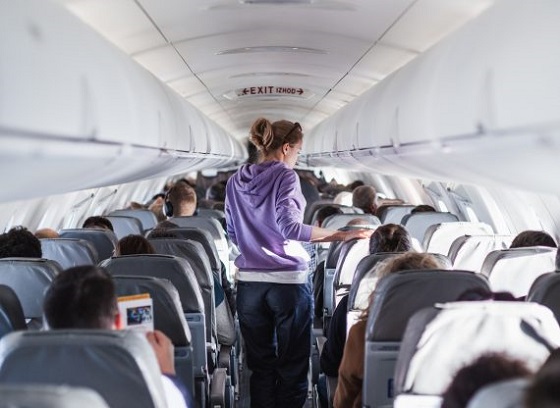

New passenger compensation rules under review could end up harming passengers as well as the country’s aviation sector by forcing airlines to pay for delays and cancellations beyond their control, warns a new report published this morning by the MEI.
“Air travel in Canada is already unaffordable and inaccessible,” says Gabriel Giguère, senior public policy analyst at the MEI. “New rules that force airlines to cover costs they can’t control would only make a bad situation worse.”
Introduced in 2023 by then-Transport Minister Omar Alghabra, the proposed amendment to the Air Passenger Protection Regulations would make airlines liable for compensation in all cases except those deemed “exceptional.” Under the current rules, compensation applies only when the airline is directly responsible for the disruption.
If adopted, the new framework would require Canadian airlines to pay at least $400 per passenger for any “unexceptional” cancellation or delay exceeding three hours, regardless of fault. Moreover, the definition of “exceptional circumstances” remains vague and incomplete, creating regulatory uncertainty.
“A presumed-guilty approach could upend airline operations,” notes Mr. Giguère. “Reversing the burden of proof introduces another layer of bureaucracy and litigation, which are costs that will inevitably be passed on to consumers.”
The Canadian Transportation Agency estimates that these changes would impose over $512 million in additional costs on the industry over ten years, leading to higher ticket prices and potentially reducing regional air service.
Canadians already pay some of the highest airfares in the world, largely due to government-imposed fees. Passengers directly cover the Air Travellers Security Charge—$9.94 per domestic flight and $34.42 per international flight—and indirectly pay airport rent through Airport Improvement Fees included on every ticket.
In 2024 alone, airport authorities remitted a record $494.8 million in rent to the federal government, $75.6 million more than the previous year and 68 per cent higher than a decade earlier.
“This new regulation risks being the final blow to regional air travel,” warns Mr. Giguère. “Routes connecting smaller communities will be the first to disappear as costs rise and they become less profitable.”
For instance, a three-hour and one minute delay on a Montreal–Saguenay flight with 85 passengers would cost an airline roughly $33,000 in compensation. It would take approximately 61 incident-free return flights to recoup that cost.
Regional air service has already declined by 34 per cent since 2019, and the added burden of this proposed regulation could further reduce connectivity within Canada. It would also hurt Canadian airlines’ competitiveness relative to U.S. carriers operating out of airports just south of the border, whose passengers already enjoy lower fares.
“If the federal government truly wants to make air travel more affordable,” says Mr. Giguère, “it should start by cutting its own excessive fees instead of scapegoating airlines for political gain.”
You can read the Economic Note here.
* * *
The MEI is an independent public policy think tank with offices in Montreal, Ottawa, and Calgary. Through its publications, media appearances, and advisory services to policymakers, the MEI stimulates public policy debate and reforms based on sound economics and entrepreneurship.


From Underdog to Top Broodmare
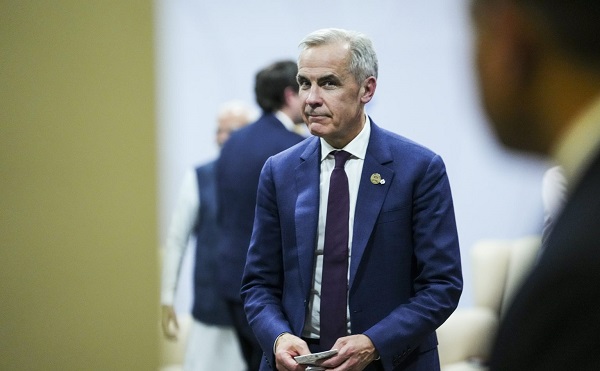
Federal major projects list raises questions
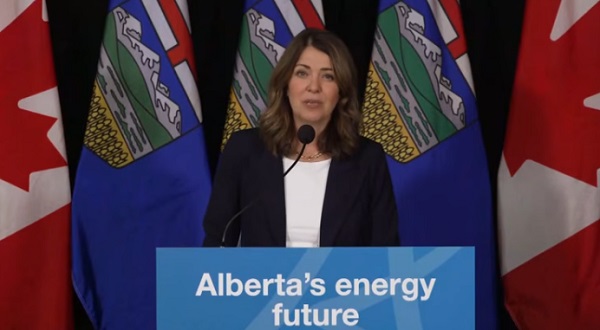
Alberta and Ottawa ink landmark energy agreement

Poilievre says West Coast Pipeline MOU is no guarantee

Google denies scanning users’ email and attachments with its AI software

Crown seeks to punish peaceful protestor Chris Barber by confiscating his family work truck “Big Red”

Health Canada indefinitely pauses plan to sell unlabeled cloned meat after massive public backlash
-
 Artificial Intelligence2 days ago
‘Trouble in Toyland’ report sounds alarm on AI toys
-
 Business12 hours ago
Recent price declines don’t solve Toronto’s housing affordability crisis
-
 National1 day ago
Media bound to pay the price for selling their freedom to (selectively) offend
-
 Bruce Dowbiggin1 day ago
Sometimes An Ingrate Nation Pt. 2: The Great One Makes His Choice
-
 Daily Caller11 hours ago
Tech Mogul Gives $6 Billion To 25 Million Kids To Boost Trump Investment Accounts
-
 Business1 day ago
Why Isn’t There a Cure for Alzheimer’s Disease?
-
 Brownstone Institute1 day ago
The Unmasking of Vaccine Science
-
 Censorship Industrial Complex4 hours ago
A Democracy That Can’t Take A Joke Won’t Tolerate Dissent