
Community
Edmonton community members explore using the Emergency Room as an entry point to transitional housing


Is there a better way than simply releasing a person experiencing homelessness from the hospital back onto the street? It creates an endless cycle of emergency room visits and escalating costs, not to mention the challenges the patients face in having a successful recovery.

As we continue to look for solutions to homelessness in our city, a group of community members from different fields and backgrounds met recently to brainstorm and discuss alternatives to the practice of releasing patients into a state of homelessness.
That’s a long way of saying that if someone experiencing homelessness comes to an emergency room with a need for medical aid, the only alternative once treated is to release the patient back onto the street. The chances of recovery are greatly diminished, while the probability of return visits increases. The costs are severe, both to the person experiencing homelessness and to our ever-more expensive health care system.
Spearheading the initiative is Dr. Louis Hugo Francescutti, a veteran emergency room physician at the Royal Alexandra Hospital and a Professor at the School of Public Health at the University of Alberta.
Watch this short video to hear from some of those involved and to better understand the concept and learn why there is a growing groundswell of support for this idea.
There are many ways that people can get involved with this initiative. It’s common sense that housing and health are interconnected. Finding solutions to chronic homelessness and easing pressure on our health care system is something we can all get behind.
Please contact Dr. Louis Hugo Francescutti directly to learn more about the project and how you can help:
Phone 780.932-7187
[email protected]


From the Fraser Institute
By Jake Fuss and Grady Munro
There would have been 1.5 million more Canadians who donated to charity in 2023—and $755.5 million more in donations—had Canadians given to the same extent they did 10 years prior
According to recent polling, approximately one in five Canadians have skipped paying a bill over the past year so they can buy groceries. As families are increasingly hard-pressed to make ends meet, this undoubtedly means more and more people must seek out food banks, shelters and other charitable organizations to meet their basic necessities.
And each year, Canadians across the country donate their time and money to charities to help those in need—particularly around the holiday season. Yet at a time when the relatively high cost of living means these organizations need more resources, new data published by the Fraser Institute shows that the level of charitable giving in Canada is actually falling.
Specifically, over the last 10 years (2013 to 2023, the latest year of available data) the share of tax-filers who reported donating to charity fell from 21.9 per cent to 16.8 per cent. And while fewer Canadians are donating to charity, they’re also donating a smaller share of their income—during the same 10-year period, the share of aggregate income donated to charity fell from 0.55 per cent to 0.52 per cent.
To put this decline into perspective, consider this: there would have been 1.5 million more Canadians who donated to charity in 2023—and $755.5 million more in donations—had Canadians given to the same extent they did 10 years prior. Simply put, this long-standing decline in charitable giving in Canada ultimately limits the resources available for charities to help those in need.
On the bright side, despite the worrying long-term trends, the share of aggregate income donated to charity recently increased from 0.50 per cent in 2022 to 0.52 per cent in 2023. While this may seem like a marginal improvement, 0.02 per cent of aggregate income for all Canadians in 2023 was $255.7 million.
The provinces also reflect the national trends. From 2013 to 2023, every province saw a decline in the share of tax-filers donating to charity. These declines ranged from 15.4 per cent in Quebec to 31.4 per cent in Prince Edward Island.
Similarly, almost every province recorded a drop in the share of aggregate income donated to charity, with the largest being the 24.7 per cent decline seen in P.E.I. The only province to buck this trend was Alberta, which saw a 3.9 per cent increase in the share of aggregate income donated over the decade.
Just as Canada as a whole saw a recent improvement in the share of aggregate income donated, so too did many of the provinces. Indeed, seven provinces (except Manitoba, Nova Scotia and Newfoundland and Labrador) saw an increase in the share of aggregate income donated to charity from 2022 to 2023, with the largest increases occurring in Saskatchewan (7.9 per cent) and Alberta (6.7 per cent).
Canadians also volunteer their time to help those in need, yet the latest data show that volunteerism is also on the wane. According to Statistics Canada, the share of Canadians who volunteered (both formally and informally) fell by 8 per cent from 2018 to 2023. And the total numbers of hours volunteered (again, both formal and informal) fell by 18 per cent over that same period.
With many Canadians struggling to make ends meet, food banks, shelters and other charitable organizations play a critical role in providing basic necessities to those in need. Yet charitable giving—which provides resources for these charities—has long been on the decline. Hopefully, we’ll see this trend turn around swiftly.


|

|
|

|
|
|



The “Disruptor-in-Chief” places Canada in the crosshairs
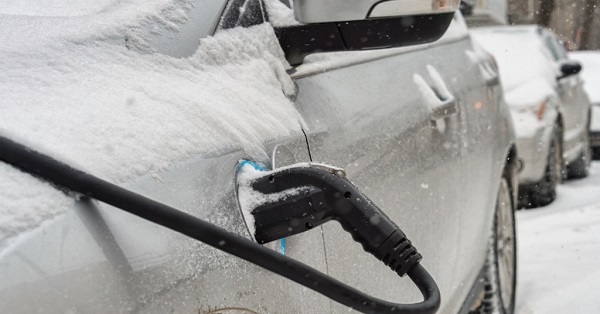
Canada’s EV gamble is starting to backfire

End Supply Management—For the Sake of Canadian Consumers

UK Police Pilot AI System to Track “Suspicious” Driver Journeys

Judge Declares Mistrial in Landmark New York PRC Foreign-Agent Case

Canadian government launches trial version of digital ID for certain licenses, permits

Alberta Next Panel calls to reform how Canada works
-
 Business2 days ago
“Magnitude cannot be overstated”: Minnesota aid scam may reach $9 billion
-
 Business2 days ago
Largest fraud in US history? Independent Journalist visits numerous daycare centres with no children, revealing massive scam
-
 Haultain Research15 hours ago
Sweden Fixed What Canada Won’t Even Name
-
 Censorship Industrial Complex2 days ago
US Under Secretary of State Slams UK and EU Over Online Speech Regulation, Announces Release of Files on Past Censorship Efforts
-
 Business15 hours ago
What Do Loyalty Rewards Programs Cost Us?
-
 Business3 hours ago
Land use will be British Columbia’s biggest issue in 2026
-
 Energy4 hours ago
Why Japan wants Western Canadian LNG
-
 Business33 mins ago
Mainstream media missing in action as YouTuber blows lid off massive taxpayer fraud