
Business
My European Favourites – Segovia, Spain

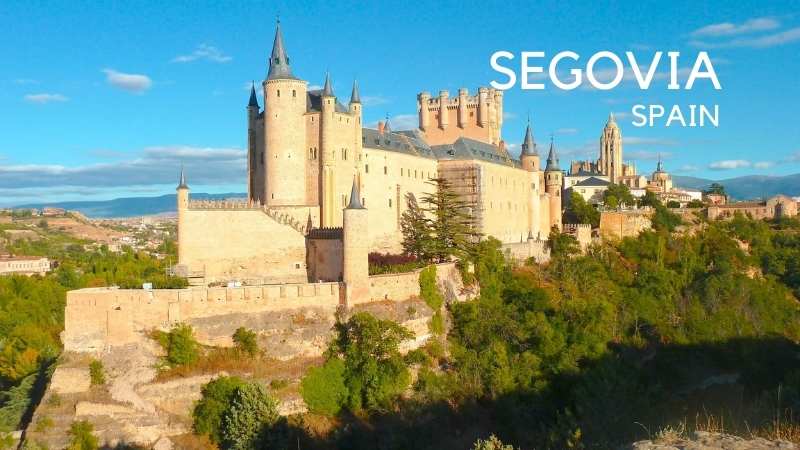

 Spain is one of our favourite countries to visit in Europe. The warm sunshine, the history, the architecture, the gastronomy, and above all, the passionate and friendly people make it a desirable location. We have been to Spain with sightseeing groups, school groups and soccer groups. Madrid, the Spanish capital is always included in our itineraries. In addition to exploring the city, there are numerous worthwhile day trips to surrounding towns. Segovia is one of those towns.

Segovia is located about an hour northwest from Madrid and the day trip is sometimes combined with a stop in the nearby medieval walled city of Ávila. Segovia is just inside the large northwestern Castile and León region of Spain. The region consists of an expansive high plateau surrounded by a ring of mountains.
Segovia’s old town is perched high on a rocky hill surrounded by the Eresma and Clamores rivers. Declared a UNESCO World Heritage site in 1985, the old town features an impressive cathedral, numerous Roman churches, a Jewish quarter, and the striking Alcazar or castle. The town is full of Roman and medieval structures including the massive Roman aqueduct.
A Brief History Of Segovia
There was already a settlement by the Aravaci, a Celtic people, for over 600 years in Segovia prior to the Romans arriving in 96 BC. The Romans installed a military installation here to control access to the Douro River region in the north, and they built the aqueduct to bring in fresh water from the surrounding mountains. After the Romans left, Segovia was inhabited by people from northern Europe until the Spanish invasion by the Moors in the early 8th century.

Panoramic view of Segovia with the Cathedral at the centre.
After the reconquest by Christian Kin Alphonso VI in 1079, Segovia was resettled by Christians. Numerous parishes and monasteries were established in area. Due to its location on main trading routes, Segovia reached its golden age during the middle ages due to the foundation of a cloth industry. The town experienced a rise in the Jewish population and became an important centre for wool and textiles.
In the 13th century, Alfonso X, King of Castile, León and Galicia, made Segovia his residence.
Later in the 15th century Henry IV, King of Castile, also made Segovia his residence, built important buildings, renovated the Alcazar, and made Segovia the site of the Royal Mint.
Segovia is also known as the place where Isabella the Catholic pronounced herself Queen of Castile in the church of San Miguel in 1474. Afterwards, she married king Ferdinand II, King of Aragon, to create a unified Spain. They are probably best known for financing the voyages of Christopher Columbus.
In the mid 16th century there was a revolt by the citizens of Castile against King Charles I and his administration. The “War of the Communities of Castile” lasted 18 months from April 1520 to October 1521. One of the rebel leaders, Juan Bravo, was from Segovia and has a statue in the main square. He was captured in the Battle of Villalar along with two other prominent rebel leaders. They were beheaded the following day. Despite the rebellion Segovia remained prosperous and the population grew to approximately 27,000.
Segovia’s decline started with an outbreak of the plague in the late 16th century and then mostly by the subsequent 17th century collapse of the textile industry. By 1694, the population dropped to just 8,000. Later attempts to revive the textile industry by King Charles III failed. In 1764 a military academy, the Royal School of Artillery, was established and is still in operation. In 1808, during the Napoleonic wars, Segovia was sacked by French troops.
19th century Spain had three Carlist Wars related to claims to the throne of Spain. During the first Carlist War, Segovia was unsuccessfully attacked. Since then, it has escaped military destruction, including during the Spanish Civil war from 1936 to 1939 that pitted the Republicans against the Nationalists led by Francisco Franco. In fact, since 1920 the population of Segovia has grown from 16,000 to over 50,000 in the early 80s. The population has stabilized in the last 40 years and the economy along with it.

The Roman Aqueduct, the Candido restaurant, and the aqueduct from the Plaza del Azoguejo.
The Roman Aqueduct
Our walking tour begins at the Plaza del Azoguejo and you can find a google map of our walk at www.azorcan.net/media to follow along. Once a market place, the plaza is located at the foot of the colossal Aqueduct of Segovia. The 28.5 meters tall aqueduct bridge, known locally as El Puente (the bridge), is one of the best preserved in the world. Built by the Romans at the end of the 1st century from stacked granite, the aqueduct transported water over 15 kilometers over rolling hills from the Sierra mountains to the town. The pillars and arches are solid rock with very little mortar in between. The aqueduct continued to supply water for many centuries after being built by the Romans and is one of the most recognizable landmarks in Spain.
The Artillery Academy of Segovia, which recently celebrated a 250 year anniversary in Segovia, is located a few blocks from the plaza in a former 15th century Franciscan convent with an interesting Gothic cloister.
Located in a half-timbered house on the south side of the Plaza del Azoguejo, you will find the famous Cándido restaurant. Since 1905, three generations of the Cándido family have been serving their famous suckling pig, stews and wines. The official Tourist Office of Segovia is located across the square from the Cándido. From the plaza, we will walk up the Calle Cervantes. Calle means street, and this one is named after the most famous Spanish literary figure, Miguel de Cervantes. Cervantes is best known for being the author of the literary classic, Don Quixote.

The Miradouro de la Canaleja, the panoramic view, and an interesting building at the viewpoint.
The Medina de la Campo and the Jewish Quarter
About 200 meters from the Plaza del Azoguejo, we arrive at an observation terrace named the Mirador de la Canaleja. Here we can admire a fantastic panoramic view of the lower town’s pastel colored buildings with red roof tops.
There is an interesting light blue building on the north side of the Mirador with three stacked sunrooms. We walk along the side of this building on the Calle Juan Bravo, the street named after Segovia’s rebel leader. A few steps away on the right is the eye-catching Casa de los Picos. The 15th century historic Gothic-Renaissance building is decorated with numerous pyramids or diamond tips made from granite and now houses the School of Art and Superior Design.

The Palacio de Cascales façade, the narrow Calle de Juan Bravo, and the Casa de los Picos.
A bit further on the Calle Juan Bravo we will come upon a little plaza on the left that leads to the Palacio de Cascales. The palace is known by a few names from its past including the Aspiroz or the del Conde Alpuente. Nowadays, it is used for the offices of the Ministry of Development of the Junta de Castilla y León. The palace was built in the 15th century by a prominent knight from Segovia named, Alonso Cascales. Its façade features Gothic windows, a unique pattern on the walls, and a Moorish or Mudejar arch kept from the original Arab building that was once there.

The Church of San Martin, statue of Juan Bravo in front of the Tower of Lozoya, and one of our school soccer academy groups.
A short distance away along the Calle Juan Bravo is the square of Medina del Campo. The square contains three notable buildings, the house of Juan Bravo, the Tower of Lozoya and the Church of San Martin. The 14th century rectangular shaped Tower of Lozoya, was once used as an armoury. The tower is now used to exhibit contemporary art. The 12th century catholic Church of San Martin, at the centre of the square, is an interesting mix of Arabic and Romanesque elements.
Moving forward on the Calle Juan Bravo, we will reach the small square Plaza Corpus. The square is named after the Corpus Christi Church which is located on the left side of the square. The church was once the largest Jewish Synagogue in Segovia starting in the 13th century. You can visit the interesting church that was converted from a synagogue in 1410 as it is open to the public.
At the Plaza Corpus you will reach a fork in the rod. The Calle la Juderia Vieja (Old Jewish Quarter Street) is on the left, and as the name implies, it leads to the Jewish Quarter. We will take the Calle Isabella la Catolica (Isabella the Catholic) on the right to the Plaza Mayor (Main Square).

Entrance to the Corpus Christi Church. The town hall and cathedral on the Plaza Mayor.
Plaza Mayor
The Plaza Mayor is the central hub of the town of Segovia. The large rectangular cobblestone square has a performance gazebo at its centre surrounded by trees. The square was once a market place in medieval times, and Segovia’s citizens still meet here to celebrate festivals and to enjoy the numerous bars and restaurants spilling onto the square from the arcades. The square still hosts a market every Thursday. The La Concepción on the north side of the square is a bit pricy, but its terrace is a great place from which to people watch. Next to the restaurant is the 17th century Segovia town hall.
On the east side of the Plaza Mayor is the Juan Bravo Theatre. Built in 1917 and refurbished in the 1980s, it is the principal theatre of Segovia. A few steps away on the south east of the square behind the luxury priced Villena restaurant is the 16th century gothic San Miguel Church.
The church is famous for being the place where, in 1474, Isabella the Catholic was crowned Queen of Castile. Exploring the maze of alleys and squares behind the San Miguel Church, you will find various interesting and moderately priced bars and restaurants. The El Sitio and the El Figon de los Comuneros are two great choices for lunch.

The Segovia Cathedral on the Plaza Mayor and a panoramic view of the cathedral and its tall tower.
Located on the west side of the square, the main building on the Plaza Mayor is the Cathedral of the Assumption. As the highest point of Segovia, the cathedral, built in late gothic style between 1525-1577, can be seen for miles around. Construction began after the original cathedral, located near the Alczar, burned in 1520. The cathedral can be toured and the view from the cathedral tower is memorable.

The Tower of John II at the entrance to the Alcazar, the Weapons Patio and the Clock Yard.
Segovia Alcazar
From the cathedral, we will walk about 600 meters on the Calle Marques del Arco which becomes the Calle Daoiz to the Plaza la Reina Victoria Eugenia (Square of Queen Victoria Eugenia). The Queen’s square is a nice garden located at the forefront of the entrance to the Alcazar. In addition to the imposing castle façade, there are great views of the Spanish countryside from the garden. On the left, there is a building called the Casa de la Química. There is a cafeteria there with a nice terrace with an amazing view of the town. There are better places for a meal, but it’s a good place to enjoy a drink under the shade of a patio umbrella on a hot day.
Like most fortresses, the Alcazar is built on an elevated area that offers a natural defensive advantage. The Alcazar’s site, on a large rock promontory at the spur of the Eresma and Clamores rivers, was a fort during the Roman occupation in the 1st century. Since Roman times, the castle has been rebuilt and expanded many times over hundreds of years by different people including the Romans, the Muslim Umayyad Dynasty in the 8th century and eventually the Spanish in the 12th century. Over time, the Alcazar has been used as a fortress, a royal palace, a prison, and a military school. The picturesque Alcazar is now a museum, a major tourist attraction, and one of the most recognizable castles in Europe. The original building from the 13th century was painstakingly restored after a devastating fire in 1862.

Statue of Ferdinand VI, the Armoury, the Throne Room, the Chapel and a panoramic view.
Approaching the Alcazar from the Queen’s square, we are faced with the imposing Tower of John II and the draw bridge. Once inside there are two staircases with 156 steps leading to the top of the tower where you can enjoy a great view of Segovia. Entering further, we arrive at the first major open area of the fortress, the Parade or Weapons Patio with a colonnade and upper walk way. This is the largest open space in the Alcazar, and along with the next outdoor area, the Clock Yard, has a great deal of Moorish influence.
At the back of the fortress, there is the Armoury with medieval flags, lances, swords, knights armour and even armour for horses. The “V” shaped well terrace at the very back looks like the bow of a boat gives the castle the appearance of being a large rock ship. The Alcazar’s garden, with shrubs in geometric shapes, is also located at the back of the castle.

The Alabaster Hall, stained glass with the Spanish coat of arms and the Armoury.
Other interesting rooms include the Chapel, Throne Room, Royal Bedrooms, a Pineapple Room, the Alabaster Hall and the Kings Hall with 52 sculptures of kings that ruled the area for hundreds of years. The Museum of the Royal Artillery School in the Alcazar contains documents, scale models, weapons and uniforms from the 18th and 19th centuries. At the base of the castle and along exterior of the city walls there is a network of connected gardens and wooded areas.

The Monastery of Santa Maria del Parral and the Church of Vera Cruz.
View from the Alcazar
From the Alcazar’s Tower of John II, you will have a great view of the surrounding area’s rolling hills, churches and monasteries. You can’t miss the impressive 15th century Monastery of Santa Maria del Parral that was founded by Henry IV of Spain. The monastery’s church was built in gothic style, while the later built bell tower has a Romanesque top. The monastery, currently owned by the Order of St. Jerome, has four interesting cloisters in built in various architectural styles.
Looking to the left from the monastery, we see the tower of the Romaesque Church of San Marcos at the bottom of a winding road. As we look up along the road, we will see the larger Convent of San Juan de la Cruz on the left and the unique Church of Vera Cruz on the right. The Church of the Vera Cruz was founded by the Knights of the Order of the Holy Sepulchre of Jerusalem in 1208. The Romanesque style church was built in the shape of a twelve-sided polygon with three semi-circular chapels. The design of the church was inspired by the Holy Sepulchre in Jerusalem that the order was named after.

El Sitio restaurant, sucking pig, patatas bravas, tapas and sangria.
Dinner
Segovia is a great place to enjoy traditional Spanish cuisine and in restaurants with matching architecture and atmosphere. The local specialities include roasted suckling pig (cochinillo), suckling lamb (lechazo), Cantimpalos chorizos, wild mushrooms and a traditional layer cake named Ponche Segoviano.
One of the best places to enjoy a meal in Segovia is near the aqueduct. We have already mentioned the famous Candido restaurant and dinner upstairs with a view of the illuminated aqueduct as a backdrop is a memorable experience.
On the Calle De Cevantes, not far from the aqueduct, there are two more great restaurants serving traditional dishes. The Conde Duque, one of the oldest restaurants in Segovia, has a unique interior while the Asador El Bernardino has a terrace with a great view.
On the Plaza Mayor, we wrote about enjoying a drink and people watching at La Concepción. Near the square we have three recommendations. El Figon de los Comuneros is a great place for sampling local tapas. At El Sitio you can have a nice traditional meal or try their pinchos in the bar area. The Restaurante Jose Maria has excellent wines, a tasting menu and a nice selection of tapas at the bar.
After dinner at any of these restaurants, you may want to take a walk of the historic centre with all the town’s monuments lit up.
Let’s Go To Segovia
Segovia is a great place to visit at any time of year, and you can easily spend a couple of days exploring the town’s historic buildings, walls, churches, monuments, narrow streets, shops, museums, bars, cafes and restaurants. The town is also known for two special religious events, the Holy Easter Week (Semana Santa) and the Three Kings parade (los Reyes Magos) held on January 5th.
Segovia is well worth the journey from the hustle and bustle of Madrid and is one of my favourite destinations in Spain. If you get a chance to visit the town, I think you will agree.

Explore Europe With Us
Azorcan Global Sport, School and Sightseeing Tours have taken thousands to Europe on their custom group tours since 1994. Visit azorcan.net to see all our custom tour possibilities for your group of 26 or more. Individuals can join our “open” signature sport, sightseeing and sport fan tours including our popular Canada hockey fan tours to the World Juniors.
At azorcan.net/media you can read our newsletters, listen to our podcasts and view maps related tour all of our “My European Favourites” stories.
Images compliments of Paul Almeida and Azorcan Tours.
Read more of Paul’s stories on Todayville.

Business
Deadlocked Jury Zeroes In on Alleged US$40 Million PPE Fraud in Linda Sun PRC Influence Case

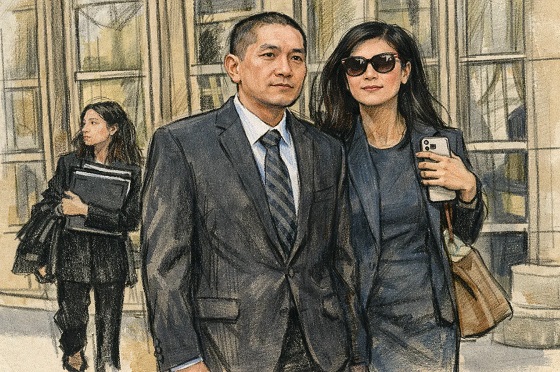


A jury of New Yorkers will return to court Monday, heading into their second week of deliberations in a landmark foreign-agent and corruption trial that reaches into two governors’ offices, struggling to decide whether former state official Linda Sun secretly served Beijing’s interests while she and her husband built a small business and luxury-property empire cashing in on pandemic-era contracts as other Americans were locked down.
On Thursday — the fourth day of deliberations — the jury sent federal Judge Brian Cogan a blunt note saying they were deadlocked on the sprawling case, in which the federal government has asked jurors to accept its account of a complex web of family and Chinese-community financial transactions through which Sun and her husband allegedly secured many millions of dollars in Chinese business deals channeled through “United Front” proxies aligned with Beijing.
The defense, by contrast, argues that Sun and her husband were simply successful through legitimate, culturally familiar transactions, not any covert scheme directed by a foreign state.
“We deeply feel that no progress can be made to change any jurors’ judgment on all counts,” the panel wrote Thursday. “There are fundamental differences on the evidence and the interpretation of the law. We cannot come to a unanimous decision.”
Cogan reportedly responded with a standard “Allen charge” — an instruction often used in deadlock situations, urging jurors to keep an open mind and continue deliberating. Because a juror had to be replaced due to travel commitments, the reconstituted panel will need to restart deliberations from square one on Monday.
According to a message the U.S. Justice Department sent to The Bureau on Wednesday, the panel had already asked for transcripts from four witnesses — Sean Carroll, Mary Beth Hefner, Karen Gallacchi and Jenny Low.
Those requests underline just how dense the case is — and how much money was at stake in the pandemic-era PPE deals at the heart of several key counts. Sun and her husband, businessman Chris Hu, face 19 counts in total, including Sun acting as an unregistered foreign agent for the People’s Republic of China; visa-fraud and alien-smuggling charges tied to a 2019 Henan provincial delegation; a multimillion-dollar pandemic PPE kickback scheme; bank-fraud and identity-misuse allegations; and multiple money-laundering and tax-evasion counts.
Carroll and Hefner’s testimony is central to the government’s key procurement-corruption allegation. Prosecutors say Sun used her influence to help steer more than US$40 million in PPE contracts to companies tied to her husband in China, with an expected profit of roughly US$8 million — money they allege was partly kicked back to Sun and Hu and funneled through accounts opened in Sun’s mother’s name and via friends and relatives.
Prosecutors say the clearest money trail in the Sun case runs through New York’s COVID PPE scramble and a pair of Jiangsu-linked emails.
“What was Linda Sun’s reward for taking official action to steer these contracts through the procurement process? Millions of dollars in kickbacks or bribes. It was money that she knew would be coming her way if she pushed these contracts through,” prosecutor Alexander Solomon told jurors in closing.
He argued that in March 2020, as the pandemic hit, a Jiangsu provincial official in Albany emailed state staff, including Sun, with information on four Chinese PPE and medical suppliers — and that the next day Sun forwarded herself a second email that copied the language about two of those vendors but added a new line claiming that “High Hope comes highly recommended by the Jiangsu Department of Commerce.”
A New York State IT specialist testified that this exact phrase appears only once in the state’s entire email system, in Sun’s self-forwarded message. Prosecutors urged jurors to see it as a fabricated email.
They suggest it is one of a number of frauds and forgeries, including claims that Sun repeatedly faked Governor Kathy Hochul’s signature on invitation letters used to bring Chinese provincial officials into the United States as part of plans to build a large education complex in New York.
On the PPE dealings, prosecutors say that during a period when Sun still had broad latitude to vet vendors, she sent procurement official Sean Carroll a proposal for High Hope to supply five million masks.
Prosecutors say she did not disclose that High Hope was tied to family associate Henry Hua or that she had a financial interest in the deal, but did repeat language that the company “came recommended” by Jiangsu authorities — phrasing Carroll testified he understood as an official validation from the Chinese side.
Prosecutors then linked the High Hope contracts that moved through Carroll’s office to alleged downstream cash flows laid out in a Chris Hu spreadsheet: PPE contract money Hu recorded as owed by Jay Chen, marked as wired into an account called “Golden” and then on to “HC Paradise,” the vehicle Hu allegedly used to pay for a Hawaii property.
In the government’s telling, that is how a doctored Jiangsu government “recommendation” for High Hope ultimately turned into New York taxpayer funds helping to buy a Hawaiian condo.
As The Bureau has reported in detail, prosecutor Alexander Solomon used his closing argument to give jurors one of the clearest open-court narratives yet of how the Chinese Communist Party’s United Front allegedly seeks to shape Western politics through diaspora networks — and to argue that Sun sat at the center of such a network in Albany.
Solomon walked the panel through a cast that ran from Sun’s family and business partners in Queens to United Front–linked association bosses in New York, provincial officials in Henan and Guangdong, and senior staff at China’s New York consulate. In his account, Sun — officially feted in Beijing as an “eminent young overseas Chinese” after a 2017 political tour — became a “trusted insider” who quietly repurposed New York State letterhead, access and messaging to serve Beijing’s priorities on Taiwan, Uyghurs and trade, while keeping that relationship hidden from her own colleagues.
Among the most striking elements of the government’s case, as The Bureau reported from Solomon’s summation, were that Sun allegedly forged Hochul’s signature on multiple invitation letters that Chinese officials then used to secure U.S. visas for provincial delegations — promising meetings in Albany that, Solomon said, no one in state government had actually approved — as part of a broader push by Henan Province to anchor a major education complex in the United States.
He then tied that influence narrative to money: millions in lobster-export deals for Chris Hu, allegedly greased by Chinese officials and New York-based United Front intermediaries; coded “apple” cash drop-offs funneled through third-party accounts; and the pandemic PPE contracts.
In Solomon’s formulation, all of that adds up to clandestine agency for Beijing.
He told jurors that while Sun was boasting to Chinese consulate officials that she could treat Hochul “like her puppet,” she was acting “like an agent,” treating PRC officials as her “real bosses,” and seeking and receiving benefits. Sun kept doing so, Solomon said, even after an FBI agent warned her about the Foreign Agents Registration Act and the risks of working too closely with the consulate.
Defense lawyers for Sun and Hu, in their own summations, urged the jury to reject that picture of a couple monetizing their access to senior American politicians in order to enrich themselves through clandestine business dealings facilitated by community leaders secretly working for Beijing’s United Front units. According to the Global Investigations Review summary and other accounts, they argued that prosecutors have overreached by criminalizing ordinary diaspora politics, networking and pandemic procurement.
On the defense view, much of what the government calls “direction and control” is better understood as routine back-and-forth involving a diaspora liaison in the governor’s office and community or trade groups with ties to China. None of the government’s evidence, they argue, amounts to an agreement to operate under the “direction or control” of a foreign principal — the core FARA requirement.
The Bureau is a reader-supported publication.
To receive new posts and support my work, consider becoming a free or paid subscriber.
This article supplied by Troy Media.

Inflation is down, poverty is falling and Argentina’s economy is growing as Javier Milei pushes reforms many skeptics said would fail
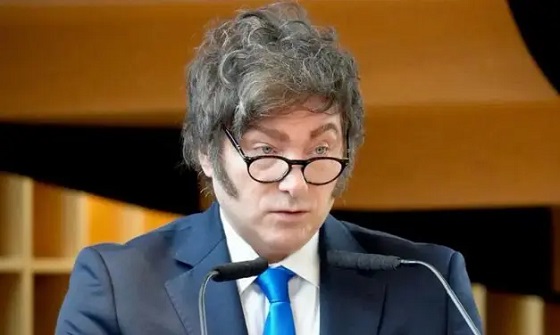
Javier Milei recently passed the two-year mark as president of Argentina. While his personal popularity has been bumpy in recent months—the Americas Society/Council of the Americas suggested his approval rating was a little under 40 per cent this fall—the political climate is still very much in his favour.
His party, La Libertad Avanza, won almost 41 per cent of the vote in the October midterm elections, earning 13 of 24 Senate seats and 64 of the 127 contested lower-house seats.
Few would have expected a libertarian economist who supports small government, lower taxes, more individual rights and freedoms, private enterprise, trade liberalization and anarcho-capitalism to become a success in Argentine politics. The proof has been in the political pudding for quite some time, however.
“As of September, the economy is growing at five per cent on a yearly basis,” the Cato Institute’s Marcos Falcone wrote on Dec. 10. “Poverty, which exceeded 40 per cent before Milei took office and peaked at 52.9 per cent in the first half of 2024, is now down to 31.6 per cent. Monthly inflation, which often surpassed 10 per cent in the pre-Milei era and reached 25 per cent in December 2023, now hovers around two per cent. Both exports and imports are rising rapidly.”
These are all significant benefits for the Argentine economy. Milei wants to accomplish even more. Falcone noted that “the government has already called for special sessions in Congress for its new members to vote on labour, tax and criminal justice reform bills before the end of the year.” Some other legislative goals include “privatization of major state-owned enterprises, pension reform that allows for private retirement plans, the liberalization of education, and further deregulation of the economy, among others.”
Milei’s libertarian philosophy of anarcho-capitalism, which was largely the brainchild of the late American economist Murray Rothbard, rejects statism and socialism. He has worked hard to convince Argentines that free markets, private enterprise, open trade and more will lead to economic success for individuals, families and businesses alike.
That is why Milei remains a “breath of fresh air for Argentina,” as I wrote in a Nov. 20, 2023, National Post column, and “he’s exactly what the doctor ordered for this struggling and impoverished nation.”
He is also an eccentric fellow, to put it mildly. The Argentine president used to be a TV pundit known as El Loco, the madman, who was known for his “profane outbursts,” Time magazine noted on May 23, 2024. He also bragged about being a “tantric sex guru, brandished a chainsaw at rallies to symbolize his plans to slash government spending, dressed up as a superhero who sang about fiscal policy, and told voters that his five cloned English mastiffs, which he reportedly consults in telepathic conversations, are his ‘best strategists.’”
Milei even claimed to have met one of his beloved canines, Conan, in a previous life in the Roman Colosseum more than 2,000 years ago. He was a gladiator, and his four-legged companion was a lion.
Milei’s left-leaning critics have attempted to use these eccentricities to their advantage. They have also called Milei “far right” and claimed he was an Argentine version of U.S. President Donald Trump. None of this is true. Milei has always rejected fascism and totalitarian regimes. He is business-oriented and focused on getting Argentina back on the road to financial success. He wants his home country to be free from government interference, state control and the iron grip of Peronist fanatics. He is getting closer to this goal.
Falcone, the Cato Institute analyst, pointed out in his piece that “a key reform that is still part of Argentina’s unfinished agenda is dollarization.” Milei strongly “advocated” for this policy in 2023, and he has wanted to finish it off for some time. With his party in control of both houses, that time is now.
The Wall Street Journal reported on Dec. 15 that “Argentina’s central bank … would allow the peso to move more freely, responding to investors who have demanded President Javier Milei’s government correct an overvalued currency.” The new policy for the peso will “allow the band to expand at the rate of monthly inflation, which was 2.5 per cent in November, the central bank said. The band currently expands at a monthly rate of one per cent.”
This announcement has been met favourably. “The changes go in the right direction,” Pablo Guidotti, an economist at the Torcuato Di Tella University in Buenos Aires, told the Wall Street Journal. “If the economy expands, this will contribute to higher peso demand allowing Argentina, together with access to capital markets, to accumulate international reserves.”
The quest to achieve dollarization in Argentina has begun.
In summation, Milei’s economic program “is serious and one of the most radical doses of free-market medicine since Thatcherism,” The Economist noted in a Nov. 28, 2024, piece. While the political left “detests him” and the “Trumpian right embraces him,” he does not belong in either camp. “He has shown that the continual expansion of the state is not inevitable,” The Economist continued, and he is a “principled rebuke to opportunistic populism, of the sort practised by Donald Trump. Mr. Milei believes in free trade and free markets, not protectionism; fiscal discipline, not reckless borrowing; and, instead of spinning popular fantasies, brutal public truth-telling.”
There is much that world leaders can learn from the strange, quirky anarcho-capitalist president of Argentina. They should start to take note—and, more importantly, take notes.
Michael Taube is a political commentator, Troy Media syndicated columnist and former speechwriter for Prime Minister Stephen Harper. He holds a master’s degree in comparative politics from the London School of Economics, lending academic rigour to his political insights.
Troy Media empowers Canadian community news outlets by providing independent, insightful analysis and commentary. Our mission is to support local media in helping Canadians stay informed and engaged by delivering reliable content that strengthens community connections and deepens understanding across the country.


‘There Will Be Very Serious Retaliation’: Two American Servicemen, Interpreter Killed In Syrian Attack
Inflation Reduction Act, Green New Deal Causing America’s Energy Crisis
Politicians should be honest about environmental pros and cons of electric vehicles
Canada’s sudden rediscovery of energy ambition has been greeted with a familiar charge: hypocrisy
Chinese Billionaire Tried To Build US-Born Baby Empire As Overseas Elites Turn To American Surrogates
Terror in Australia: 12 killed after gunmen open fire on Hanukkah celebration

Canada releases new digital ID app for personal documents despite privacy concerns
-
 Crime1 day ago
Brown University shooter dead of apparent self-inflicted gunshot wound
-
 Business2 days ago
Canada Hits the Brakes on Population
-
 Frontier Centre for Public Policy2 days ago
Canada Lets Child-Porn Offenders Off Easy While Targeting Bible Believers
-
 Health20 hours ago
RFK Jr reversing Biden-era policies on gender transition care for minors
-
 Agriculture2 days ago
Why is Canada paying for dairy ‘losses’ during a boom?
-
 Business1 day ago
Trump signs order reclassifying marijuana as Schedule III drug
-
 Alberta22 hours ago
Alberta’s new diagnostic policy appears to meet standard for Canada Health Act compliance
-
 Business2 days ago
White House declares inflation era OVER after shock report