
Automotive
Drop in EV sales signals Ottawa should drop its mandate


The slowing adoption of electric vehicles is a clear signal that the federal government should abandon its gradual ban on gas-powered vehicles, says the MEI.
“Consumer choices belong to consumers, not the government,” says Gabriel Giguère, senior policy analyst at the MEI. “With consumers’ appetite for electric vehicles waning, not only is the federal government’s mandate unrealistic, but it is also coercive.”
Data released this morning show that electric vehicle purchases are down 36.8 per cent year over year (Q2 to Q2).
In June, only 7.9 per cent of vehicle sales in Canada were zero emission, down from 13.0 per cent in June of 2024, according to Statistics Canada.
In 2023, the federal government introduced targets for gradually eliminating the sale of new gas-powered vehicles by 2035.
To meet the government’s targets, 20 per cent of new vehicle sales would need to be electric or plug-in hybrid in 2026, representing a 12-point jump from current levels and a reversal of the current trend.
“At this rate, the target will simply not be met, since Canadians’ current purchasing habits reveal a preference for other types of vehicles,” notes Mr. Giguère.

Seven in 10 Canadians (68 per cent) consider the prohibition of gas-powered vehicle sales by 2035 to be “unrealistic,” according to a Leger poll conducted earlier this month.
Asked whether they believe the EV mandate should be maintained or scrapped, 71 per cent of Canadians say it should be rescinded due to “high costs and implementation concerns.”
These concerns align with findings from an MEI Viewpoint published in February, which highlighted significant worries over the availability of charging infrastructure, the pressure on provincial electrical grids, and the high cost of purchasing new electric vehicles. Together, these concerns justify the abandonment of the federal prohibition.
“Canadians should have the freedom to purchase the vehicles that suit their needs,” says Mr. Giguère. “The adoption of new technology should be driven by innovation, not by government decree.”
* * *
The MEI is an independent public policy think tank with offices in Montreal, Ottawa, and Calgary. Through its publications, media appearances, and advisory services to policymakers, the MEI stimulates public policy debate and reforms based on sound economics and entrepreneurship.

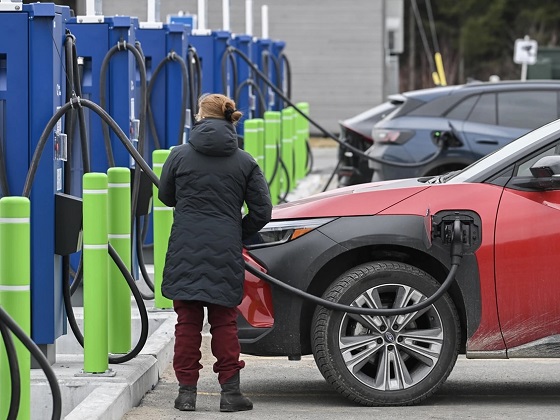
From Resource Works
Barry Penner doesn’t posture – he brings evidence. And lately, the evidence has been catching up fast to what he’s been saying for months.
Penner, chair of the Energy Futures Institute and a former B.C. environment minister and attorney-general, walked me through polling that showed a decisive pattern: declining support for electric-vehicle mandates, rising opposition, and growing intensity among those pushing back.
That was before the political landscape started shifting beneath our feet.
In the weeks since our conversation, the B.C. government has begun retreating from its hardline EV stance, softening requirements and signalling more flexibility. At the same time, Ottawa has opened the door to revising its own rules, acknowledging what the market and motorists have been signalling for some time.
Penner didn’t need insider whispers to see this coming. He had the data.

Barry Penner, Chair of the Energy Futures Institute
B.C.’s mandate remains the most aggressive in North America: 26 per cent ZEV sales by 2026, 90 per cent by 2030, and 100 per cent by 2035. Yet recent sales paint a different picture. Only 13 per cent of new vehicles sold in June were electric. “Which means 87 per cent weren’t,” Penner notes. “People had the option. And 87 per cent chose a non-electric.”
Meanwhile, Quebec has already adjusted its mandate to give partial credit for hybrids. Polling shows 76 per cent of British Columbians want the same. The trouble? “There’s a long waiting list to get one,” Penner says.
Cost, charging access and range remain the top barriers for consumers. And with rebates shrinking or disappearing altogether, the gap between policy ambition and practical reality is now impossible for governments to ignore.
Penner’s advice is simple, and increasingly unavoidable: “Recognition of reality is in order.”
- Now watch Barry Penner’s full video interview with Stewart Muir on Power Struggle here:


By Jerome Gessaroli for Inside Policy
Reducing transportation emissions is a worthy goal, but policy must be guided by evidence, not ideology.
In the next few years, the average new vehicle in British Columbia could reach $80,000, not because of inflation, but largely because of provincial and federal climate policy. By forcing zero-emission-vehicle (ZEV) targets faster than the market can afford, both governments risk turning climate ambition into an affordability crisis.
EVs are part of the solution, but mandates that outpace market acceptance risk creating real-world challenges, ranging from cold-weather travel to sparse rural charging to the cost and inconvenience for drivers without home charging. As Victoria and Ottawa review their ZEV policies, the goal is to match ambition with evidence.
Introduced in 2019, BC’s mandate was meant to accelerate electrification and cut emissions from light-duty vehicles. In 2023, however, it became far more stringent, setting the most aggressive ZEV targets in North America. What began as a plan to boost ZEV adoption has now become policy orthodoxy. By 2030, automakers must ensure that 90 per cent of new light-duty vehicles sold in BC are zero-emission, regardless of what consumers want or can afford. The evidence suggests this approach is out of step with market realities.
The province isn’t alone in pursuing EV mandates, but its pace is unmatched. British Columbia, Quebec, and the federal government are the only ones in Canada with such rules. BC’s targets rise much faster than California’s, the jurisdiction that usually sets the bar on green-vehicle policy, though all have the same goal of making every new vehicle zero-emission by 2035.
According to Canadian Black Book, 2025 model EVs are about $17,800 more expensive than gas-powered vehicles. However, ever since Ottawa and BC removed EV purchase incentives, sales have fallen and have not yet recovered. Actual demand in BC sits near 16 per cent of new vehicle sales, well below the 26 per cent mandate for 2026. To close that gap, automakers may have to pay steep penalties or cut back on gas-vehicle sales to meet government goals.
The mandate also allows domestic automakers to meet their targets by purchasing credits from companies, such as Tesla, which hold surplus credits, transferring millions of dollars out of the country simply to comply with provincial rules. But even that workaround is not sustainable. As both federal and provincial mandates tighten, credit supplies will shrink and costs will rise, leaving automakers more likely to limit gas-vehicle sales.
It may be climate policy in intent, but in reality, it acts like a luxury tax on mobility. Higher new-vehicle prices are pushing consumers toward used cars, inflating second-hand prices, and keeping older, higher-emitting vehicles on the road longer. Lower-income and rural households are hit hardest, a perverse outcome for a policy meant to reduce emissions.
Infrastructure is another obstacle. Charging-station expansion and grid upgrades remain far behind what is needed to support mass electrification. Estimates suggest powering BC’s future EV fleet alone could require the electricity output of almost two additional Site C dams by 2040. In rural and northern regions, where distances are long and winters are harsh, drivers are understandably reluctant to switch. Beyond infrastructure, changing market and policy conditions now pose additional risks to Canada’s EV goals.
Major automakers have delayed or cancelled new EV models and battery-plant investments. The United States has scaled back or reversed federal and state EV targets and reoriented subsidies toward domestic manufacturing. These shifts are likely to slow EV model availability and investment across North America, pushing both British Columbia and Ottawa to reconsider how realistic their own targets are in more challenging market conditions.
Meanwhile, many Canadians are feeling the strain of record living costs. Recent polling by Abacus Data and Ipsos shows that most Canadians view rising living costs as the country’s most pressing challenge, with many saying the situation is worsening. In that climate, pressing ahead with aggressive mandates despite affordability concerns appears driven more by green ideology than by evidence. Consumers are not rejecting EVs. They are rejecting unrealistic timelines and unaffordable expectations.
Reducing transportation emissions is a worthy goal, but policy must be guided by evidence, not ideology. When targets become detached from real-world conditions, ideology replaces judgment. Pushing too hard risks backlash that can undo the very progress we are trying to achieve.
Neither British Columbia nor the federal government needs to abandon its clean-transportation objectives, but both need to adjust them. That means setting targets that match realistic adoption rates, as EVs become more affordable and capable, and allowing more flexible compliance based on emissions reductions rather than vehicle type. In simple terms, the goal should be cutting emissions, not forcing people to buy a specific type of car. These steps would align ambition with reality and ensure that environmental progress strengthens, rather than undermines, public trust.
With both Ottawa and Victoria reviewing their EV mandates, their next moves will show whether Canadian climate policy is driven by evidence or by ideology. Adjusting targets to reflect real-world affordability and adoption rates would signal pragmatism and strengthen public trust in the country’s clean-energy transition.
Jerome Gessaroli is a senior fellow at the Macdonald-Laurier Institute and leads the Sound Economic Policy Project at the BC Institute of British Columbia


Is there a cure for Alzheimer’s Disease?

Learning the Truth about “Children’s Graves” and Residential Schools is More Important than Ever

The Unmasking of Vaccine Science

Media bound to pay the price for selling their freedom to (selectively) offend
-
 Bruce Dowbiggin2 days ago
Integration Or Indignation: Whose Strategy Worked Best Against Trump?
-
 International2 days ago
FBI may have finally nabbed the Jan. 6 pipe bomber
-
 Business2 days ago
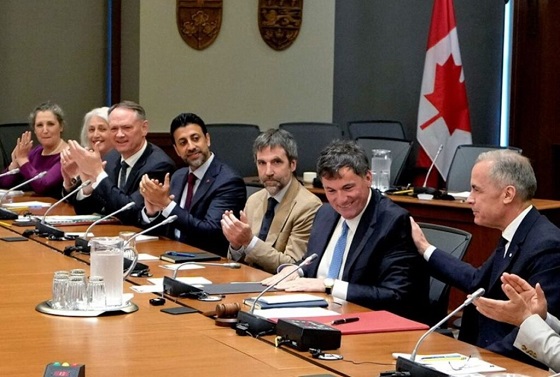
Carney’s Toronto cabinet meetings cost $530,000
-
 espionage2 days ago
Digital messages reportedly allege Chinese police targeted dissident who died suspiciously near Vancouver
-
 MAiD2 days ago
101-year-old woman chooses assisted suicide — press treats her death as a social good
-
 Business1 day ago
Oil tanker traffic surges but spills stay at zero after Trans Mountain Expansion
-
 COVID-191 day ago
University of Colorado will pay $10 million to staff, students for trying to force them to take COVID shots
-
 Censorship Industrial Complex2 days ago
Justice Centre campaigning Canadian provinces to follow Alberta’s lead protecting professionals