
Media
CBC bonuses total $15 million in 2023



News release from the Canadian Taxpayers Federation
The Canadian Broadcasting Corporation gave out $14.9 million in bonuses in 2023, according to access-to-information records obtained by the Canadian Taxpayers Federation.
This comes on the heels of a CBC announcement in December 2023, just weeks before Christmas, that the public broadcaster was planning to lay off hundreds of employees.
Since 2015, the CBC has issued $114 million in bonuses.
“CBC President Catherine Tait is wrong to hand out bonuses while announcing hundreds of job losses and begging the government for more taxpayer cash,” said Franco Terrazzano, CTF Federal Director. “Tait won’t do the right thing, so Canadian Heritage Minister Pascale St-Onge needs to step in and shut down these bonuses.”
All told, 1,143 CBC staffers took a bonus in 2023, costing taxpayers $14,902,755. That number could climb even higher as the records indicate the data is up to date “as of Oct. 26, 2023.”
“[Bonus] pay… is a key part of the total compensation of our non-union staff, about 1,140 employees,” Tait recently told a parliamentary committee.
Tait was called to testify at the committee in January 2024 on executive bonuses and planned layoffs at the public broadcaster.
The CBC also dished out $11.5 million in raises (to date) for the 2023-24 fiscal year, with 6,575 employees taking a pay bump, representing 87 per cent of its workforce, according to separate access-to-information records obtained by the CTF. There were no pay cuts.

The CBC has rubberstamped $97 million in pay raises since 2015.
There are now 1,450 CBC staffers taking home a six-figure salary, according to access-to-information records obtained by the CTF.
Since Prime Minister Justin Trudeau came to power in 2015, the number of CBC employees taking a six-figure annual salary has spiked by 231 per cent.
Following Tait’s committee appearance, during which she claimed the public broadcaster was subject to “chronic underfunding,” the federal government announced it was increasing funding to the CBC by 96.1 million.
The CBC will receive $1.4 billion in taxpayer funding for the 2024-25 fiscal year.
Tait’s annual pay is between $472,900 and $623,900, which includes salary, bonus and other benefits, according to the CBC’s senior management compensation summary.
In 2014, Tait’s predecessor, Hubert Lacroix, told a Senate committee his annual bonus was “around 20 per cent.”
“Tait should be taking a pay cut and ending bonuses,” Terrazzano said. “It’s time for the government to end the taxpayer-funded bonuses at the CBC.”


Vice President JD Vance is giving public credit to a YouTube journalist for doing what he says legacy media and elite institutions have failed to do: follow the money in Minnesota. In a post on X, Vance praised independent reporter Nick Shirley for digging into alleged fraud networks tied to the state, saying Shirley “has done far more useful journalism than any of the winners of the 2024 Pulitzer prizes.” The comment was a direct response to a video Shirley shared online documenting what he described as widespread fraud, with Shirley claiming his team identified more than $110 million in suspicious activity in a single day while confronting facilities allegedly receiving millions in public funds.
Shirley’s reporting has been circulating widely among conservatives, with commentators amplifying clips of him visiting supposed daycare and education centers that appeared inactive despite receiving massive federal aid. Conservative media personality Benny Johnson said Shirley had exposed more than $100 million in Minnesota Somali-linked fraud routed through fake daycare and healthcare fronts, adding to the pressure on state leadership. The issue gained further traction after Tom Emmer, Minnesota’s top House Republican, demanded answers from Gov. Tim Walz following a viral clip showing Shirley confronting workers at an alleged daycare in South Minneapolis. Shirley reported the center, called the “Quality Learning Center,” showed no visible activity despite claims it served up to 99 children, and even misspelled “learning” on its signage. As Shirley approached, a woman inside was heard shouting “Don’t open up,” while incorrectly accusing him of being an ICE agent.
🚨 Here is the full 42 minutes of my crew and I exposing Minnesota fraud, this might be my most important work yet. We uncovered over $110,000,000 in ONE day. Like it and share it around like wildfire! Its time to hold these corrupt politicians and fraudsters accountable
We ALL… pic.twitter.com/E3Penx2o7a
— Nick shirley (@nickshirleyy) December 26, 2025
The controversy builds on earlier reporting from City Journal, which published a November investigation citing federal counterterrorism sources who said millions of dollars siphoned through Minnesota fraud schemes had been sent overseas, with some of the money allegedly ending up in the hands of Al-Shabaab. One confidential source quoted in the report bluntly claimed, “The largest funder of Al-Shabaab is the Minnesota taxpayer.” Since that report, the scrutiny has widened inside the Trump administration. Treasury Secretary Scott Bessent has announced that the Treasury Department is examining whether Minnesota taxpayer funds were diverted to terrorist-linked groups, while Education Secretary Linda McMahon has publicly called on Walz to resign amid separate allegations of large-scale education fraud within the state’s college system.
Taken together, the attention from Vance, congressional Republicans, and multiple federal agencies has elevated Shirley’s reporting from viral internet content to a flashpoint in a broader debate over fraud, accountability, and the role of independent journalists. For the vice president, the message was clear: real accountability sometimes comes not from prize committees or press rooms, but from outsiders willing to ask uncomfortable questions and stand in front of locked doors with a camera rolling.
Censorship Industrial Complex
US Slams UK and EU Over Online Speech Regulation, Announces Release of Files on Past Censorship Efforts


Sarah Rogers’ comments draw a new line in the sand between America’s First Amendment and Europe’s tightening grip on online speech.
|
|
Georgia county admits illegally certifying 315k ballots in 2020 presidential election

Alberta Next Panel calls to reform how Canada works

Canadian government launches trial version of digital ID for certain licenses, permits

End Supply Management—For the Sake of Canadian Consumers
-
International14 hours ago
Georgia county admits illegally certifying 315k ballots in 2020 presidential election
-
 Business2 days ago
ICYMI: Largest fraud in US history? Independent Journalist visits numerous daycare centres with no children, revealing massive scam
-
 Alberta1 day ago
Alberta project would be “the biggest carbon capture and storage project in the world”
-
 Energy1 day ago
Canada’s debate on energy levelled up in 2025
-
 Haultain Research16 hours ago
Sweden Fixed What Canada Won’t Even Name
-
 Business15 hours ago
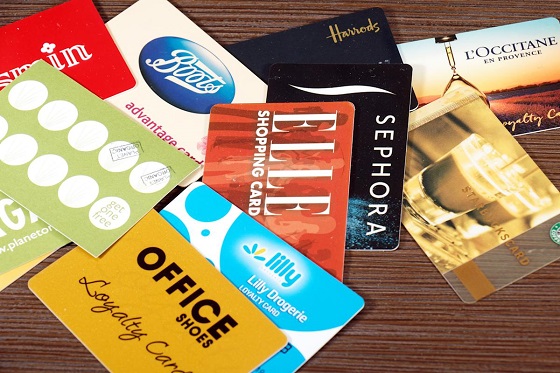
What Do Loyalty Rewards Programs Cost Us?
-
 Business1 day ago
Socialism vs. Capitalism
-
 Energy1 day ago
New Poll Shows Ontarians See Oil & Gas as Key to Jobs, Economy, and Trade