
Alberta
Carney’s pipeline deal hits a wall in B.C.



This article supplied by Troy Media.

Carney’s attempt to ease Canada’s dependence on the U.S. stirs a backlash in B.C., raises Indigenous concerns and rattles his own party
The Memorandum of Understanding (MOU) between Prime Minister Mark Carney and Alberta Premier Danielle Smith has opened a political hornet’s nest, exposing deep divisions within the Liberal Party and forcing a national debate that has been avoided for years.
Carney was under mounting pressure to respond to U.S. tariffs that threaten to carve billions out of Canada’s economy. The United States buys more than 95 per cent of Canada’s oil exports, leaving the country highly exposed to U.S. policy decisions. That pressure is now driving his push for a route to the Pacific, a project that could change Canada’s economic future but also destabilize his already fragile minority government.
Carney knows the political risk. His government could fall at any time, which only raises the stakes. Even so, he has pressed ahead. The agreement with Alberta lays early groundwork for a new pipeline to the Pacific. It would expand the oil sands, ease some environmental obligations and revive a proposal industry leaders have pushed for years.
The route is far from settled, but it is expected to run to B.C.’s northern coast and open access to Asian buyers. A Pacific route would finally give Canada a direct path into Asian energy markets, where demand remains strong and prices are often higher than in the United States.
If Carney expected broad support, he did not get it, especially in British Columbia. Because B.C. is the only province with a deep-water port capable of handling large crude carriers, it is the only path a west-coast pipeline can take. The province is now the central battleground, and whether the project succeeds will depend on what happens there.
B.C. Premier David Eby criticized the lack of consultation. “It would have been good for B.C. to be at the table,” he said, warning that the project risks undermining Indigenous support for the province’s liquefied natural gas plans. He also noted that the pipeline has no private backer and no commitments from First Nations, two obstacles that have tripped up projects before.
The backlash quickly spread to Ottawa. Steven Guilbeault, the former environment minister and the most prominent environmentalist ever to serve in a federal cabinet, resigned from cabinet in direct response to the MOU. He said the proposed pipeline “would have major environmental impacts”. Green Party Leader Elizabeth May said his departure “dashes the last hope that Mark Carney is going to have a good climate record ever.”

Several B.C. Liberal MPs echoed concerns about the political cost. CBC News reported anger inside the caucus, with some MPs “seething” over the agreement and worried about losing climate-focused voters.
The voters those MPs fear may not be as opposed as they think. An October Angus Reid Institute survey found that a solid majority of Canadians support a pipeline from northern Alberta to the northwest B.C. coast. In British Columbia, support outweighs opposition by a wide margin. That challenges Eby’s claim that the project lacks public backing. Carney may have more room to manoeuvre than his critics admit.
The most significant challenge, however, comes from Indigenous leaders. British Columbia is the only province that has formally adopted the United Nations Declaration on the Rights of Indigenous Peoples (UNDRIP) into law, giving First Nations a stronger legal position in major project decisions. Court rulings over the past two decades have affirmed a duty to consult and, in some cases, accommodate Indigenous communities, giving them major influence over large projects.
A group representing Coastal First Nations in B.C. said the pipeline “will never happen”. The Union of B.C. Indian Chiefs said it is “loudly objecting” to the MOU, arguing it was drafted without involvement from coastal First Nations and does not meet consultation standards outlined in UNDRIP. “The answer is still no and always will be,” said UBCIC Grand Chief Stewart Phillip. He also said lifting the crude oil tanker ban would amount to bulldozing First Nation rights. Without Indigenous consent, the project cannot proceed, and Carney knows this is the single largest barrier he faces.
Carney’s reasoning is straightforward. The long-term danger of relying on one market outweighs the short-term turbulence created by the pipeline fight. The MOU suggests Ottawa is prepared to reconsider projects once thought politically impossible in order to protect Canada’s economic future. He is betting that doing nothing is the bigger risk.
Whether this pipeline moves forward is uncertain, and the obstacles are real. One fact, however, remains clear. Canada cannot keep betting its stability on a single market.
Toronto-based Rashid Husain Syed is a highly regarded analyst specializing in energy and politics, particularly in the Middle East. In addition to his contributions to local and international newspapers, Rashid frequently lends his expertise as a speaker at global conferences. Organizations such as the Department of Energy in Washington and the International Energy Agency in Paris have sought his insights on global energy matters.
Troy Media empowers Canadian community news outlets by providing independent, insightful analysis and commentary. Our mission is to support local media in helping Canadians stay informed and engaged by delivering reliable content that strengthens community connections and deepens understanding across the country.


Canada and Alberta’s new net-zero energy deal is being promoted as progress, but it also brings rising costs. In this video, I break down the increase to Alberta’s industrial carbon price, how those costs can raise fuel, heating, and grocery prices, and why taxpayer-funded carbon-capture projects and potential pipeline delays could add even more. Here’s what this agreement could mean for Canadians.
Watch Nataliya Bankert’s latest video.

Alberta’s government will introduce a motion under the Alberta Sovereignty within a United Canada Act to defend law-abiding firearms owners.
A new motion under the Alberta Sovereignty within a United Canada Act will, if passed by the legislature, instruct all provincial entities, including law-enforcement agencies such as municipal police services and the RCMP, to decline to enforce or implement the federal gun seizure program. The motion also makes clear that Albertans have the right to use reasonable force to defend themselves, their families and their homes from intruders.
This builds on the steps Alberta has already taken to reduce crime, strengthen public safety and assert provincial jurisdiction over firearms. This includes passing the Alberta Firearms Act to establish the Alberta Chief Firearms Office, along with the Alberta Firearms Regulation and the Seizure Agent and Provider Licensing Regulation.
“It’s time for Ottawa to stop targeting the wrong people. Albertans have the right to protect their homes and their families. No one should hesitate to defend themselves when faced with a threat at their own doorway. Law-abiding citizens, hunters, farmers and sport shooters are not the source of violent crime, yet the federal government wants to confiscate their property while illegal guns pour across our borders. Alberta will not stand by while responsible gun owners are treated like criminals. This motion is about using every legal tool we have to protect their rights, uphold public safety and push back on federal overreach into provincial jurisdiction.”
“When someone breaks into your home, the law recognizes that you have enhanced rights to protect yourself and your family. Alberta is making that principle unmistakably clear: lawful, reasonable self-defence will be respected, not criminalized.”
“As an experienced former law enforcement officer, law-abiding gun owners have never been an issue, in my own personal experience, nor has there been any data to support that law-abiding gun owners are the ones that are committing violent gun crimes. The illegal guns that you see being used by criminals are typically being smuggled in from the United States. The federal government should help us strengthen the border, helping us to stop illegal guns from coming into Canada. This would further enhance safety and security for the people of Alberta and Canada as opposed to going after lawful gun owners.”
Under the Alberta Firearms Regulation, municipalities, law enforcement and police commissions must obtain approval from Alberta’s Minister of Justice before accepting funding to participate in the Assault-Style Firearms Compensation Program.
“Misguided federal initiatives such as the handgun transfer ban and the Order in Council firearms prohibitions of 2020, 2024 and 2025 have had a devastating impact on the safe, legitimate activities of the firearms community and the businesses that support it, while having no discernible effect on criminal activity. I am proud to see that the Alberta government is pushing back and supporting lawful firearms owners through these measures.”
“Licensed gun owners and all Albertans can rest assured that their government, under the leadership of the UCP, is laser focused on protecting law abiding citizens while prioritizing real public safety.”
“The Alberta Hunter Education Instructors Association will continue to support our government and the Alberta chief firearms officer in our joint quest to use safety training and education as the key tools to ensure we have safer streets and communities. Safe and responsible use of firearms in Alberta is a key part of our heritage, culture, and our rich and precious heritage.”
Key facts:
- Pursuant to the Attorney General’s recent guidance protocols, Alberta’s prosecutors will decline to prosecute offences under the federal gun seizure program when it is not in the public interest.
- The Attorney General’s recent guidance protocol directs prosecutors to not prosecute home defence offences when it is not in the public interest.
- Total spending on the federal Assault-Style Firearms Compensation Program is expected to exceed $750 million.
- The firearms motion considers the Alberta Bill of Rights, the Constitution Act, 1867 and the Criminal Code.
- Currently 10 per cent of adult Albertans are licenced to use and own firearms. There are 381,900 firearms licences in Alberta.
- Alberta has 638 licensed firearms businesses, 138 shooting ranges and 91 shooting clubs.


Landmark 2025 Study Says Near-Death Experiences Can’t Be Explained Away

STUDY: TikTok, Instagram, and YouTube Shorts Induce Measurable “Brain Rot”
Blacked-Out Democracy: The Stellantis Deal Ottawa Won’t Show Its Own MPs
Red Deer’s Jason Stephan calls for citizen-led referendum on late-term abortion ban in Alberta
-
 C2C Journal2 days ago
Learning the Truth about “Children’s Graves” and Residential Schools is More Important than Ever
-
 Business2 days ago
Is there a cure for Alzheimer’s Disease?
-
 Brownstone Institute2 days ago
The Unmasking of Vaccine Science
-
 Alberta2 days ago
Emissions Reduction Alberta offering financial boost for the next transformative drilling idea
-
 Business1 day ago
Recent price declines don’t solve Toronto’s housing affordability crisis
-
 armed forces2 days ago
Global Military Industrial Complex Has Never Had It So Good, New Report Finds
-
 International2 days ago
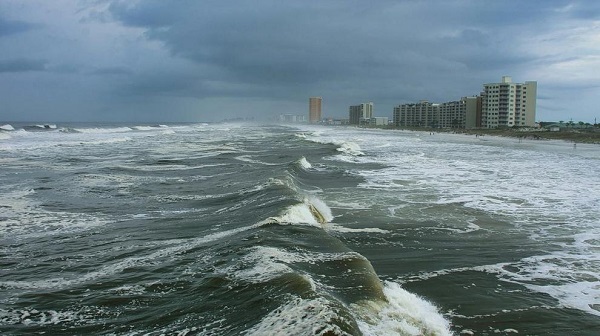
Atlantic hurricane season is 8th this century with no landfalls
-
 Daily Caller1 day ago
Tech Mogul Gives $6 Billion To 25 Million Kids To Boost Trump Investment Accounts