
Business
Canada can’t allow so many people to say ‘no’ to energy projects


From the Fraser Institute
By Alex Whalen and Matthew D. Mitchell
In a nod to the importance of the energy industry, both the Liberals and Conservatives made promises in the recent election to cut red tape and speed the approval of major energy projects. To that end, the Carney government recently enacted Bill C-5, which gives the prime minister sweeping powers to override existing laws and regulations that might stand in the way of new projects.
While Prime Minister Carney, who continues to say he wants Canada to become an “energy superpower,” has properly diagnosed the problem (i.e. red tape in the approval process), but Bill C-5 is not the solution.
Let’s begin with the problem. In terms of living standards, despite its abundant natural resources and well-educated workforce, Canada has failed to keep up with its peer countries, in part because business investment has collapsed over the past decade due to bad policy including high regulatory burdens in the energy sector.
These regulatory burdens are steep because too many entities have the power to say no to new projects. It’s a tragedy of the anticommons. (The more familiar “tragedy of the commons” arises when too many people can access a commonly owned resource such as a fishery or a forest. Too much access to common resources can lead to overexploitation.)
In contrast, a tragedy of the anticommons arises when too many people can stop others from accessing a resource such as a market. With too many people wielding veto power, resources may be underutilized.
Across Canada, a long list of natural resource projects remain stalled or cancelled. They include pipelines headed west and east, natural gas developments, export terminals and mining opportunities. Again, the problem is that too many groups can say no and scuttle any one project.
For example, the Energy East pipeline. The idea of a west-east pipeline rose to prominence in the early 2010s after the U.S. government put the Keystone XL pipeline on hold. Rather than selling oil at a discount to the Americans, the thought was that oil-producing western provinces could ship oil across the country by pipeline to refineries on the east coast, which are currently forced to import most of their oil from foreign countries due to a lack of pipeline and rail capacity in that part of Canada. But while a west-east pipeline seemed like a no-brainer, several opponents including First Nations and environmental groups urged the federal government and several provincial governments to kill the project. In the midst of this uncertainty, the TransCanada Corporation cancelled the project in 2017.

Fast-forward to today. As Trump’s trade war threatens Canada’s ability to rely on U.S. energy products including oil, the idea of reviving Energy East may be gaining steam. But proponents must first eliminate the tragedy of the anticommons that killed the project eight years ago.
Here’s how the tragedy unfolds. For starters, the project’s proponents must satisfy conditions of the Impact Assessment Agency of Canada, the federal government’s energy regulator, unless the government uses Bill C-5 to override those conditions. The last time around (under the former National Energy Board), the process was fraught with setbacks.
Second, assuming the project gets past the federal review, it may or may not need the approval of many Indigenous groups. While the Supreme Court has repeatedly said the “duty to consult” these groups does not give them a veto, leading scholars such as Tom Flanagan argue that the power conferred on these groups to delay and create uncertainty creates an effective veto. With Energy East set to cross the traditional territories of approximately 180 different Indigenous groups, any approval process requiring unanimity will kill the project. The Trudeau government’s decision to enshrine the United Nations Declaration on the Rights of Indigenous Peoples (UNDRIP) into Canadian law in 2021 (and a later federal court decision to apply UNDRIP to the interpretation of Indigenous rights vis-a-vis the Charter of Rights and Freedoms) further complicate the matter.
Third, in addition to the official federal regulatory process and Indigenous consultation, provinces, municipalities and vocal environmental groups can each apply their own brakes.
Writing in the industry publication Energy Regulation Quarterly, researcher Ron Wallace summarized the situation: “When a federation dissolves into narrow definitions of federal, provincial and local government interests, the number of hands in the pot increases the complexity of issues for everyone… The result is a complex, often contradictory and competing web of legislative and regulatory tools whose resolution cannot reasonably be achieved by continuous references to federal courts.”
In a free and democratic society, each of these stakeholders has the right to voice their concerns. But to the extent that these voices become vetoes, they represent an impossible burden for any project to overcome.
Unfortunately, Bill C-5 doesn’t address this problem. Instead of eliminating all veto points, it allows the prime minister to pick and choose which veto points to override and which to enforce. This level of unilateral power courts favouritism and corruption.
If Canada is to truly become an energy superpower it must solve the tragedy of the anticommons. And to do that, it must eliminate all overlapping veto points for all projects. This will be a massive task requiring stern political will. But Canada’s future relies on its ability to produce and transport its own energy.

Alex Whalen
Director, Atlantic Canada Prosperity, Fraser Institute

Matthew D. Mitchell


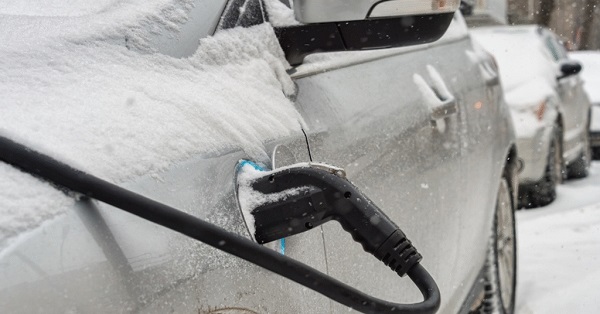

Things have only gone from bad to worse for the global Electric Vehicle industry. And that’s a problem for Canada, because successive Liberal governments have done everything in their power to hitch our cart to that horse.
Earlier this month, the Trump Administration rolled back more Biden-era regulations that effectively served as a back-door EV mandate in the United States. These rules mandated that all passenger cars be able to travel at least 65.1 miles (and for light trucks, 45.2 miles) per gallon of gasoline or diesel, by the year 2031. Since no Internal Combustion Engine (ICE) vehicle could realistically conform to those standards, that would have essentially boxed them out of the market.
Trump’s rolling them back was a fulfillment of his campaign promise to end the Biden Administration’s stealth EV mandates. But it was also a simple recognition of the reality that EVs can’t compete on their own merits.
For proof of that, look no further than our second bit of bad news for EVs: Ford Motor Company has just announced a massive $19.5 billion write-down, almost entirely linked to its aggressive push into EVs. They’ve lost $13 billion on EVs in the past two years alone.
The company invested tens of billions on these go-carts, and lost their shirt when it turned out the market for them was miniscule.
Ford’s EV division president Andrew Frick explained, “Ford is following the customer. We are looking at the market as it is today, not just as everyone predicted it to be five years ago.”
Of course, five years ago, the market was assuming that government subsidies-plus-mandates would create a market for EVs at scale, which hasn’t happened.
As to what this portends for the market, the Wall Street Journal argued, “The company’s pivot from all-electric vehicles is a fresh sign that America’s roadways – after a push to remake them – will continue to look in the near future much like they do today, with a large number of gas-powered cars and trucks and growing use of hybrids.”
And that’s not just true in the U.S. Across the Atlantic, reports suggest the European Union is preparing to delay their own EV mandates to 2040. And the U.K.’s Labour government is considering postponing their own 2030 ICE vehicle ban to align with any EU change in policy.
It’s looking like fewer people around the world will be forced by their governments to buy EVs. Which means that fewer people will be buying EVs.
Now, that is a headache for Canada. Our leaders, at both the federal and provincial levels, have bet big on the success of EVs, investing billions in taxpayer dollars in the hopes of making Canada a major player in the global EV supply chain.
To bolster those investments, Ottawa introduced its Electric Vehicle mandate, requiring 100 per cent of new light-duty vehicle sales to be electric by 2035. This, despite the fact that EVs remain significantly more expensive than gas-and-diesel driven vehicles, they’re poorly suited to Canada’s vast distances and cold climate, and our charging infrastructure is wholly inadequate for a total transition to EVs.
But even if these things weren’t true, there still aren’t enough of us to make the government’s investment make sense. Their entire strategy depends on exporting to foreign markets that are rapidly cooling on EVs.
Collapsing demand south of the border – where the vast majority of the autos we build are sent – means that Canadian EVs will be left without buyers. And postponed (perhaps eventually canceled) mandates in Europe mean that we will be left without a fallback market.
Canadian industry voices are growing louder in their concern. Meanwhile, plants are already idling, scaling back production, or even closing, leaving workers out in the cold.
As GM Canada’s president, Kristian Aquilina, said when announcing her company’s cancellation of the BrightDrop Electric delivery van, “Quite simply, we just have not seen demand for these vehicles climb to the levels that we initially anticipated…. It’s simply a demand and a market-driven response.”
Prime Minister Mark Carney, while sharing much of the same environmental outlook as his predecessor, has already been compelled by economic realities to make a small adjustment – delaying the enforcement of the 2026 EV sales quotas by one year.
But a one-year pause doesn’t solve the problem. It kicks the can down the road.
Mr. Carney must now make a choice. He can double down on this troubled policy, continuing to throw good money after bad, endangering a lot of jobs in our automotive sector, while making transportation more expensive and less reliable for Canadians. Or he can change course: scrap the mandates, end the subsidies, and start putting people and prosperity ahead of ideology.
Here’s hoping he chooses the latter.
The writing is on the wall. Around the world, the forced transition to EVs is crashing into economic reality. If Canada doesn’t wake up soon, we’ll be left holding the bag.

From the Frontier Centre for Public Policy
New script, same budget playbook. Nothing in the Carney budget breaks from the Trudeau years
Prime Minister Mark Carney’s first budget talks reform but delivers the same failed spending habits that defined the Trudeau years.
While speaking in the language of productivity, infrastructure and capital formation, the diction of grown-up economics, it still follows the same spending path that has driven federal budgets for years. The message sounds new, but the behaviour is unchanged.
Time will tell, to be fair, but it feels like more rhetoric, and we have seen this rhetoric lead to nothing before.
The government insists it has found a new path, one where public investment leads private growth. That sounds bold. However, it is more a rebranding than a reform. It is a shift in vocabulary, not in discipline. The government’s assumptions demand trust, not proof, and the budget offers little of the latter.
Former prime ministers Jean Chrétien and Paul Martin did not flirt with restraint; they executed it. Their budget cuts were deep, restored credibility, and revived Canada’s fiscal health when it was most needed. Ottawa shrank so the country could grow. Budget 2025 tries to invoke their spirit but not their actions. The contrast shows how far this budget falls short of real reform.
Former prime minister Stephen Harper, by contrast, treated balanced budgets as policy and principle. Even during the global financial crisis, his government used stimulus as a bridge, not a way of life. It cut taxes widely and consistently, limited public service growth and placed the long-term burden on restraint rather than rhetoric. Carney’s budget nods toward Harper’s focus on productivity and capital assets, yet it rejects the tax relief and spending controls that made his budgets coherent.
Then there is Justin Trudeau, the high tide of redistribution, vacuous identity politics and deficit-as-virtue posturing. Ottawa expanded into an ideological planner for everything, including housing, climate, childcare, inclusion portfolios and every new identity category.
The federal government’s latest budget is the first hint of retreat from that style. The identity program fireworks are dimmer, though they have not disappeared. The social policy boosterism is quieter. Perhaps fiscal gravity has begun to whisper in the prime minister’s ear.
However, one cannot confuse tone for transformation.
Spending still rises at a pace the government cannot justify. Deficits have grown. The new fiscal anchor, which measures only day-to-day spending and omits capital projects and interest costs, allows Ottawa to present a balanced budget while still adding to the deficit. The budget relies on the hopeful assumption that Ottawa’s capital spending will attract private investment on a scale economists politely describe as ambitious.
The housing file illustrates the contradiction. New funding for the construction of purpose-built rentals and a larger federal role in modular and subsidized housing builds announced in the budget is presented as a productivity measure, yet continues the Trudeau-era instinct to centralize housing policy rather than fix the levers that matter. Permitting delays, zoning rigidity, municipal approvals and labour shortages continue to slow actual construction. These barriers fall under provincial and municipal control, meaning federal spending cannot accelerate construction unless those governments change their rules. The example shows how federal spending avoids the real obstacles to growth.
Defence spending tells the same story. Budget 2025 offers incremental funding and some procurement gestures, but it avoids the core problem: Canada’s procurement system is broken. Delays stretch across decades. Projects become obsolete before contracts are signed. The system cannot buy a ship, an aircraft or an armoured vehicle without cost overruns and missed timelines. The money flows, but the forces do not get the equipment they need.
Most importantly, the structural problems remain untouched: no regulatory reform for major projects, no tax-competitiveness agenda and no strategy for shrinking a federal bureaucracy that has grown faster than the economy it governs. Ottawa presides over a low-productivity country but insists that a new accounting framework will solve what decades of overregulation and policy clutter have created. The budget avoids the hard decisions that make countries more productive.
From an Alberta vantage, the pivot is welcome but inadequate. The economy that pays for Confederation receives more rhetorical respect, yet the same regulatory thicket that blocks pipelines and mines remains intact. The government praises capital formation but still undermines the key sectors that generate it.
Budget 2025 tries to walk like Chrétien and talk like Harper while spending like Trudeau. That is not a transformation. It is a costume change. The country needed a budget that prioritized growth rooted in tangible assets and real productivity. What it got instead is a rhetorical turn without the courage to cut, streamline or reform.
Canada does not require a new budgeting vocabulary. It requires a government willing to govern in the country’s best interests.
Marco Navarro-Genie is vice-president of research at the Frontier Centre for Public Policy and co-author with Barry Cooper of Canada’s COVID: The Story of a Pandemic Moral Panic (2023).


Death by a thousand clicks – government censorship of Canada’s internet

Viral TikTok video shows 7-year-old cuddling great-grandfather before he’s euthanized

Chinese Billionaire Tried To Build US-Born Baby Empire As Overseas Elites Turn To American Surrogates

Politicians should be honest about environmental pros and cons of electric vehicles
-
 Alberta1 day ago
Alberta’s huge oil sands reserves dwarf U.S. shale
-
 Alberta1 day ago
Canada’s New Green Deal
-
 Energy22 hours ago
Canada’s sudden rediscovery of energy ambition has been greeted with a familiar charge: hypocrisy
-
 Business1 day ago
COP30 finally admits what resource workers already knew: prosperity and lower emissions must go hand in hand
-
 armed forces1 day ago
Ottawa’s Newly Released Defence Plan Crosses a Dangerous Line
-
 Indigenous1 day ago
Residential school burials controversy continues to fuel wave of church arsons, new data suggests
-
Business20 hours ago
Ottawa Pretends To Pivot But Keeps Spending Like Trudeau
-
 Daily Caller21 hours ago
Paris Climate Deal Now Decade-Old Disaster