
Calgary
Behind the Violence, Looting & Vandalism During the Black Lives Matter Riots


Image Credit: Michael Tracey
It has been just over 2 months since the death of George Floyd in the streets of Minneapolis, Minnesota, at the hands of 3 police officers in broad daylight, ignited a global conversation on police brutality. The significant outrage invoked by this tragedy has manifested across the globe in the form of mass protests under the banner of Black Lives Matter. While a significant number of protests have been peaceful presentations of solidarity and collective calls for change, a number of cities throughout the United States and across the world have been devastated by violent riots, vandalism and looting. The response of the media and general public to these instances of violence, which have left a number of people dead, have dramatically deepened the ideological divide surrounding the already controversial issues of systematic racism and police brutality.
One side of the argument is highlighted by an opinion piece written by Robin D. G. Kelley, an American history professor, published in the New York Times titled “What Kind of Society Values Property Over Black Lives?”. This article argues the media’s focus on looting as a part of the riots is a way to deflect from the central issue. “The police keep killing us with impunity,” says Kelley, “Instead, once the burning and looting start, the media often shifts to the futility of “violence” as a legitimate path to justice.”
Similarly, an InStyle piece by Jacqueline Schneider states, “If you’re more concerned about looted storefronts than the brutal loss of life that spurred these protests, please re-evaluate.” The article goes on to highlight certain leading fashion brands, such Marc Jacobs and Coach, have come out in support of the protests despite the material losses sustained by their brands as a result of the looting and destruction. Marc Jacobs published an Instagram post featuring the vandalism of a Los Angeles branch location with the simple caption, “A life cannot be replaced. Black Lives Matter.”
A number of other works with a similar sentiment have emerged over the last two months, many of which make reference to the work of Martin Luther King Jr. While King is largely known for his unwavering commitment to non-violence in the face of oppression, he “recognized violent political rebellions … as the organic response to racial oppression and structural violence” (1).
““Alienated from society and knowing that this society cherishes property above people, [the looter] is shocking it by abusing property rights,” he said. The real provocateur of the riots, he argued, was white supremacy.” (2)
Therefore, many of the arguments that do not denounce looting as a part of the riots lean on this ideological argument along with the notion that the destruction of property should not be discussed alongside the loss of human life.
On the opposite side of this controversial debate, journalist Michael Tracey presents an investigative report featuring first-hand stories from shop owners and locals in small US cities that have received minimal coverage throughout the riots. In something of a post-apocalyptic Purge-esque collection, Michael Tracey’s interviews showcase the current quality of life in places like Atlantic City, Fort Wayne, Green Bay, Olympia and more. The impact of the riots in these areas has been the significant destruction of small businesses and housing projects, burnt buildings and cars, shattered glass and windows barricaded with plywood, oftentimes featuring bullet holes.

Photo Credit: Michael Tracey
According to Tracey, who spent six weeks travelling the US collecting testimonies and documenting the unfolding implications of the ongoing riots, “…The primary victims – meaning those who feared for their safety, suffered severe material losses, and whose lives were upended – are themselves minorities, and were targeted by activist whites.”
Tracey shares the stories, fears and opinions of a number of minority locals and shop owners who struggle to make sense of the looting. Victims of the riots highlight the lack of available emergency responders during the crises, adding to the level of fear and helplessness being experienced. In one video, Tracy interviews a local resident, who “recalls being told during the riots that there would be no fire or police service available and people needed to fend for themselves.”
A number of boarded up storefronts, many of which will likely never open again, feature signage with the phrase “Black-owned business”. Tracey believes this is both a statement of pride as well as a plea to be left alone by rioters, “Does the ubiquity of these types of signs, in which owners declare their ethnic or racial status, seem healthy to you?” he asks.

Photo Credit: Micheal Tracey
These disparate opinions position looting and violent rioting as an inevitable response to minority oppression and injustice, while highlighting the logical inconsistency that occurs as a number of those being victimized are themselves, minorities. While this debate continues to unfold, the chaos remains ongoing across the United States, where many protests have continued to take violent turns and the death toll continues to rise.
For more stories, visit Todayville Calgary.



From LifeSiteNews
It is not yet clear if the flag motion applies to other flags, such as LGBT ones.
Western Canada’s largest city has put in place what amounts to a ban on politically charged flags from flying at city-owned buildings.
“Calgary’s Flag Policy means any country recognized by Canada may have their flag flown at City Hall on their national day,” said Calgary’s new mayor Jeromy Farkas on X last month.
“But national flag-raisings are now creating division. Next week, we’ll move to end national flag-raisings at City Hall to keep this a safe, welcoming space for all.”
The motion to ban foreign flags from flying at government buildings was introduced on December 15 by Calgary councilor Dan McLean and passed by a vote of 8 to 7. He had said the previous policy to allow non-Canadian flags to fly, under former woke mayor Jyoti Gondek, was “source of division within our community.”
“In recent months, this practice has been in use in ways that I’ve seen have inflamed tensions, including instances where flag raisings have been associated with anti-Semitic behavior and messaging,” McLean said during a recent council meeting.
The ban on flag raising came after the Palestinian flag was allowed to be raised at City Hall for the first time.
Farkas, shortly after being elected mayor in the fall of 2025, had promised that he wanted a new flag policy introduced in the city.
It is not yet clear if the flag motion applies to other flags, such as LGBT ones.
Despite Farkas putting forth the motion, as reported by LifeSiteNews he is very much in the pro-LGBT camp. However, he has promised to focus only on non-ideological issues during his term.
McLean urged that City Hall must be a place of “neutrality, unity, and respect” for everyone.
“When City Hall becomes a venue for geopolitical expressions, it places the city in the middle of conflicts that are well beyond our municipal mandates,” he said.
As reported by LifeSiteNews, other jurisdictions in Canada are considering banning non-Canadian flags from flying over public buildings.
Recently a political party in British Columbia, OneBC, introduced legislation to ban non-domestic government flags at public buildings in British Columbia.
Across Canada there has also been an ongoing issue with so-called “Pride” flags being raised at schools and city buildings.
From the Fraser Institute
By Tegan Hill and Austin Thompson
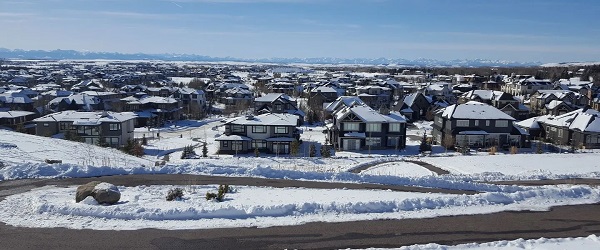
Calgary’s new mayor, Jeromy Farkas, has promised to scrap “blanket rezoning”—a policy enacted by the city in 2024 that allows homebuilders to construct duplexes, townhomes and fourplexes in most neighbourhoods without first seeking the blessing of city hall. In other words, amid an affordability crunch, Mayor Farkas plans to eliminate a policy that made homebuilding easier and cheaper—which risks reducing housing choices and increasing housing costs for Calgarian families.
Blanket rezoning was always contentious. Debate over the policy back in spring 2024 sparked the longest public hearing in Calgary’s history, with many Calgarians airing concerns about potential impacts on local infrastructure, parking availability and park space—all important issues.
Farkas argues that blanket rezoning amounts to “ignoring the community” and that Calgarians should not be forced to choose between a “City Hall that either stops building, or stops listening.” But in reality, it’s virtually impossible to promise more community input on housing decisions and build more homes faster.
If Farkas is serious about giving residents a “real say” in shaping their neighbourhood’s future, that means empowering them to alter—or even block—housing proposals that would otherwise be allowed under blanket rezoning. Greater public consultation tends to give an outsized voice to development opponents including individuals and groups that oppose higher density and social housing projects.
Alternatively, if the mayor and council reform the process to invite more public feedback, but still ultimately approve most higher-density projects (as was the case before blanket rezoning), the consultation process would be largely symbolic.
Either way, homebuilders would face longer costlier approval processes—and pass those costs on to Calgarian renters and homebuyers.
It’s not only the number of homes that matters, but also where they’re allowed to be built. Under blanket rezoning, builders can respond directly to the preferences of Calgarians. When buyers want duplexes in established neighbourhoods or renters want townhomes closer to work, homebuilders can respond without having to ask city hall for permission.
According to Mayor Farkas, higher-density housing should instead be concentrated near transit, schools and job centres, with the aim of “reducing pressure on established neighbourhoods.” At first glance, that may sound like a sensible compromise. But it rests on the flawed assumption that politicians and planners should decide where Calgarians are allowed to live, rather than letting Calgarians make those choices for themselves. With blanket rezoning, new homes are being built in areas in response to buyer and renter demand, rather than the dictates of city hall. The mayor also seems to suggest that city hall should thwart some redevelopment in established neighbourhoods, limiting housing options in places many Calgarians want to live.
The stakes are high. Calgary is not immune to Canada’s housing crisis, though it has so far weathered it better than most other major cities. That success partly reflects municipal policies—including blanket rezoning—that make homebuilding relatively quick and inexpensive.
A motion to repeal blanket rezoning is expected to be presented to Calgary’s municipal executive committee on Nov. 17. If it passes, which is likely, the policy will be put to a vote during a council meeting on Dec. 15. As the new mayor and council weigh changes to zoning rules, they should recognize the trade-offs. Empowering “the community” may sound appealing, but it may limit the housing choices available to families in those communities. Any reforms should preserve the best elements of blanket rezoning—its consistency, predictability and responsiveness to the housing preferences of Calgarians—and avoid erecting zoning barriers that have exacerbated the housing crisis in other cities.

Tegan Hill
Director, Alberta Policy, Fraser Institute

Austin Thompson

Why Japan wants Western Canadian LNG

Disclosures reveal Minnesota politician’s husband’s companies surged thousands-fold amid Somali fraud crisis
What Do Loyalty Rewards Programs Cost Us?
Mainstream media missing in action as YouTuber blows lid off massive taxpayer fraud
-
 Business10 hours ago
How convenient: Minnesota day care reports break-in, records gone
-
 Business1 day ago
The Real Reason Canada’s Health Care System Is Failing
-
 International10 hours ago
Trump confirms first American land strike against Venezuelan narco networks
-
 Opinion1 day ago
Globally, 2025 had one of the lowest annual death rates from extreme weather in history
-
 Business1 day ago
Federal funds FROZEN after massive fraud uncovered: Trump cuts off Minnesota child care money
-
 Business9 hours ago
The great policy challenge for governments in Canada in 2026
-
 Addictions1 day ago
Coffee, Nicotine, and the Politics of Acceptable Addiction
-
 Business1 day ago
Dark clouds loom over Canada’s economy in 2026