
Automotive
Big Auto Wants Your Data. Trump and Congress Aren’t Having It.



From the Daily Caller News Foundation
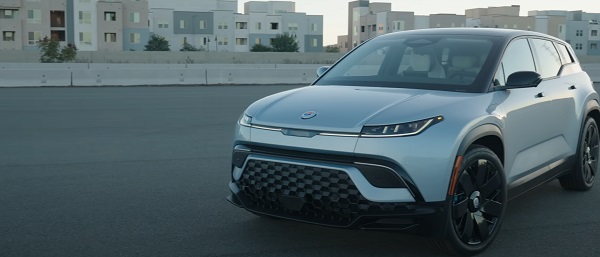
Congress is not going to allow Big Auto to sideline consumer privacy and safety while getting subsidized massively by the federal government.
That is because, in late September, by an overwhelming vote of 50 to 1, Chairman Brett Guthrie’s (R-KY) House Energy & Commerce Committee joined the Senate Commerce, Science, and Transportation Committee in passing the AM Radio for Every Vehicle Act.
This legislation is in response to some automakers removing AM radios from new model vehicles despite pleas from America’s public safety community not to do so.
Dear Readers:
As a nonprofit, we are dependent on the generosity of our readers.
Please consider making a small donation of any amount here.
Thank you!
“They’d rather force consumers to use their infotainment devices — which collect and sell their third-party data — than protect American lives,” Corey Lewandowski, President Trump’s 2016 campaign manager and senior adviser to his 2020 and 2024 campaigns, stated.
The entirety of America’s public safety community spanning the federal, state, and local levels, insists AM radio remaining in cars is critical for protecting the nation’s emergency alerting systems. These systems rely heavily upon AM radio, the only communication method that has stayed reliably accessible during many disasters such as the Sept.11 terrorist attack and major disasters like Hurricanes Katrina, Sandy, and most recently, Helene.
Brendan Carr, the current chairman of President Trump’s FCC, nominated by President Trump, has also endorsed the AM Radio for Every Vehicle Act. In a statement, Carr said that “millions of Americans depend on the value of AM radio and the local news that AM broadcasters offer in communities across the country.” He also recounted hearing firsthand stories of Hurricane Helene victims who “could only access lifesaving information in the days following the storm by tuning into their AM radios.”
AM radio also serves another purpose that the elites in Silicon Valley and Detroit often forget: it keeps rural and working-class America connected. Millions of people outside the big cities rely on AM for local news, farm reports, weather alerts, and even community events. For many small towns, AM stations are a lifeline—far more reliable than expensive streaming services or spotty cell coverage. Pulling it out of cars is yet another way of telling Middle America: “you don’t matter.”

Of course, no good idea in Washington is safe from special interests.
Despite the broad support within Congress, the administration, and throughout the public safety and first responder communities, the bill has faced a full-court press by the musicFIRST Coalition — a group backed by the Recording Industry of America — to tank the legislation unless it is tied to unrelated music royalty reform legislation. That’s cronyism politics at its worst—holding public safety hostage to squeeze out another payday.
However, now that the AM Radio for Every Vehicle Act has passed both committees by overwhelming margins, the only stop left for the legislation is the House and Senate Floor — meaning Speaker Mike Johnson (R-LA) and House Majority Leader John Thune (R-SD) must call it up for a roll call vote.
At the heart of this fight is more than just whether a radio dial stays in your dashboard. It’s about whether Americans can trust that their safety won’t be sacrificed for corporate profit.
It’s also about data privacy. Automakers and Big Tech are eager to funnel drivers into infotainment systems that monitor every move, harvest personal information, and sell it to the highest bidder. AM radio doesn’t spy on you. It doesn’t crash when the grid goes down. It doesn’t put profit ahead of people. It just works.
For the sake of both public safety and personal freedom, Congress should make sure it stays that way.
Ken Blackwell (@KenBlackwell) is an adviser to the Family Research Council and a chair at the America First Policy Institute. He is a former Mayor of Cincinnati, Ohio, Ohio Treasurer and Secretary of State, and U.S. Ambassador to the United Nations Human Rights Commission. He is also a former member of the Trump transition team.

From the Daily Caller News Foundation
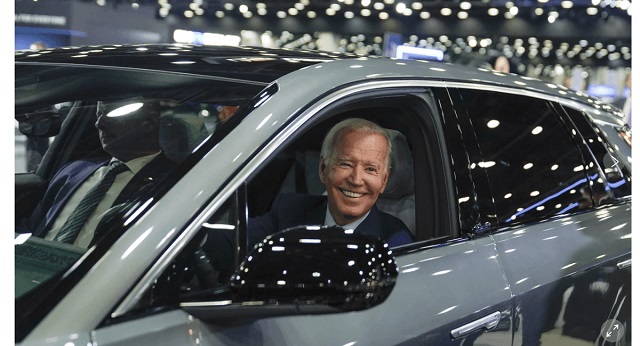
President Donald Trump dealt the dreams of former President Joe Biden for an all-electric fleet of American cars a fatal blow on Thursday by terminating the onerous Corporate Average Fuel Economy (CAFE) standards Biden invoked in 2022 and further tightened in 2024.
“We’re officially terminating Joe Biden’s ridiculously burdensome, horrible actually, CAFE standards, that imposed expensive restrictions… It puts tremendous pressure on upward car prices,” Trump said during a press conference held in the Oval Office Thursday afternoon.
The Biden standards, which cranked down on allowable tailpipe emissions and raised industry-wide average car mileage to a stratospheric 50.4 miles per gallon requirement by 2030, were the centerpiece of his strategy to force American consumers to buy electric vehicles by intentionally forcing up prices for traditional internal combustion models.
Dear Readers:
As a nonprofit, we are dependent on the generosity of our readers.
Please consider making a small donation of any amount here.
Thank you!
That’s right, America: Your government, led by Joe Biden’s autopen and the woke staffers who wielded it, intentionally and with malice aforethought drove up the prices of the gas powered cars you actually want to buy to try to force you to purchase electric models that poll after poll proves most of you don’t want. They did this all in the name of the global climate alarm religion, which far too many U.S. politicians use to justify a vast array of authoritarian actions.
The unbridled hubris involved in even entertaining this concept would have in the past been considered scandalous. Yet, today, it is completely in keeping with one of the central goals of the energy transition movement to drive up the costs of all traditional forms of energy to try to make the subsidized alternatives favored by the Democratic Party – wind, solar, and electric vehicles – competitive in the market. Activists in the climate alarm movement no longer even try to deny this goal – they proudly boast about it.
This was the real enterprise behind Biden’s ridiculous CAFE standards, and it is what President Trump interrupted on Thursday. It was just the latest in a series of body blows Trump and his officials have dealt the U.S. EV industry, one that could well prove fatal to many pure-play electric car companies and force major reallocations of capital budgets inside integrated automakers like Ford, GM, and Stellantis.
Naturally, the climate alarm activist community was outraged. “Trump’s action will feed America’s destructive use of oil, while hamstringing us in the green tech race against … foreign carmakers,” said Dan Becker, Director of the notorious far-left conflict group, the Center for Biological Diversity, according to the Guardian.
But here’s the thing: U.S. consumers don’t want to buy the alternative the climate alarm community and Biden administration were trying to force. Even with the attraction of Biden’s economically ruinous $7,500 per unit IRA subsidies, U.S. car buyers made clear their strong preference for big, full-size, gas-or-diesel-powered pickups and SUVs.
This reality is why Stellantis announced in September it was abandoning plans to introduce a full-size electric pickup to compete with Ford’s F-150 Lightning. Even worse for EV boosters, Ford has already cut back on production of the Lightning model, and is planning to eliminate it entirely soon, according to the Wall Street Journal. These decisions and plans were already underway long before Trump’s decision to rescind the CAFE standards, based on simple consumer demand.
Interestingly, many consumers believe Trump didn’t go far enough on Thursday, and that he should simply eliminate mileage requirements altogether. One commenter to my Substack newsletter writes, “why didn’t they just kill CAFE standards once and for all? From what clause in the Constitution does the federal government have the right to limit what type of car I can buy?…They should have just killed it outright.”
It’s a legitimate question: Why do federal regulators believe they have the right to control consumer behavior in the name of climate alarmism? In light of last year’s decision by the Supreme Court to rescind the Chevron deference – which helped facilitate the massive expansion of the federal bureaucracy for 40 long years – it’s a question that could be litigated in the months and years to come.
Joe Biden’s EV dreams are dead now, but that doesn’t mean the situation can’t possibly get even worse for the EV industry in America. Stay tuned.
David Blackmon is an energy writer and consultant based in Texas. He spent 40 years in the oil and gas business, where he specialized in public policy and communications.
From Resource Works
Barry Penner doesn’t posture – he brings evidence. And lately, the evidence has been catching up fast to what he’s been saying for months.
Penner, chair of the Energy Futures Institute and a former B.C. environment minister and attorney-general, walked me through polling that showed a decisive pattern: declining support for electric-vehicle mandates, rising opposition, and growing intensity among those pushing back.
That was before the political landscape started shifting beneath our feet.
In the weeks since our conversation, the B.C. government has begun retreating from its hardline EV stance, softening requirements and signalling more flexibility. At the same time, Ottawa has opened the door to revising its own rules, acknowledging what the market and motorists have been signalling for some time.
Penner didn’t need insider whispers to see this coming. He had the data.

Barry Penner, Chair of the Energy Futures Institute
B.C.’s mandate remains the most aggressive in North America: 26 per cent ZEV sales by 2026, 90 per cent by 2030, and 100 per cent by 2035. Yet recent sales paint a different picture. Only 13 per cent of new vehicles sold in June were electric. “Which means 87 per cent weren’t,” Penner notes. “People had the option. And 87 per cent chose a non-electric.”
Meanwhile, Quebec has already adjusted its mandate to give partial credit for hybrids. Polling shows 76 per cent of British Columbians want the same. The trouble? “There’s a long waiting list to get one,” Penner says.
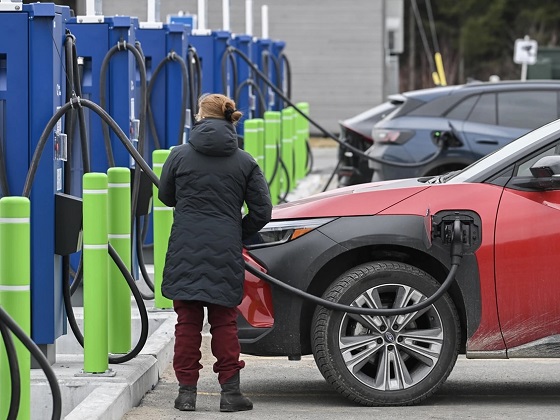
Cost, charging access and range remain the top barriers for consumers. And with rebates shrinking or disappearing altogether, the gap between policy ambition and practical reality is now impossible for governments to ignore.
Penner’s advice is simple, and increasingly unavoidable: “Recognition of reality is in order.”
- Now watch Barry Penner’s full video interview with Stewart Muir on Power Struggle here:


Media bound to pay the price for selling their freedom to (selectively) offend

Sometimes An Ingrate Nation Pt. 2: The Great One Makes His Choice

Recent price declines don’t solve Toronto’s housing affordability crisis

Tech Mogul Gives $6 Billion To 25 Million Kids To Boost Trump Investment Accounts
-
National24 hours ago
Media bound to pay the price for selling their freedom to (selectively) offend
-
Bruce Dowbiggin23 hours ago
Sometimes An Ingrate Nation Pt. 2: The Great One Makes His Choice
-
Business12 hours ago
Recent price declines don’t solve Toronto’s housing affordability crisis
-
Daily Caller13 hours ago
Tech Mogul Gives $6 Billion To 25 Million Kids To Boost Trump Investment Accounts
-
 Business11 hours ago
Ottawa’s gun ‘buyback’ program will cost billions—and for no good reason
-
 Energy14 hours ago
The Trickster Politics of the Tanker Ban are Hiding a Much Bigger Reckoning for B.C.
-
 Censorship Industrial Complex1 day ago
Canadian bishops condemn Liberal ‘hate speech’ proposal that could criminalize quoting Scripture
-
 Energy2 days ago
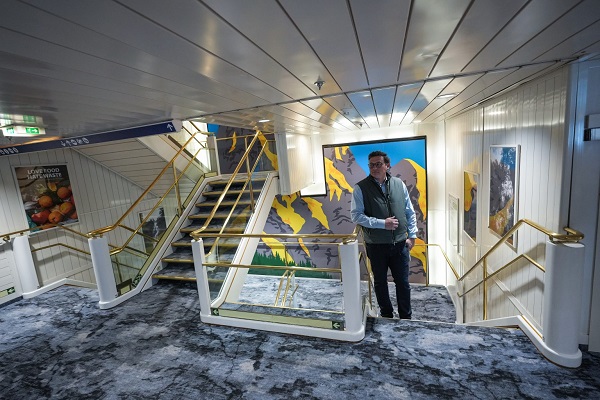
A look inside the ‘floatel’ housing B.C.’s LNG workforce