
Bruce Dowbiggin
Ben Johnson: Can You Railroad A Guilty Man?


The Incredible Life Of Ben Johnson: World’s Fastest Man by Mary Ormsby, Sutherland House, 286 pages
It’s a short list of sports events that Canadians can remember where they were when the story broke. Paul Henderson’s 1972 goal in the USSR Summit Series. The Gretzky Trade. Ben Johnson tests positive after winning the 1988 Olympics 100 metre gold.
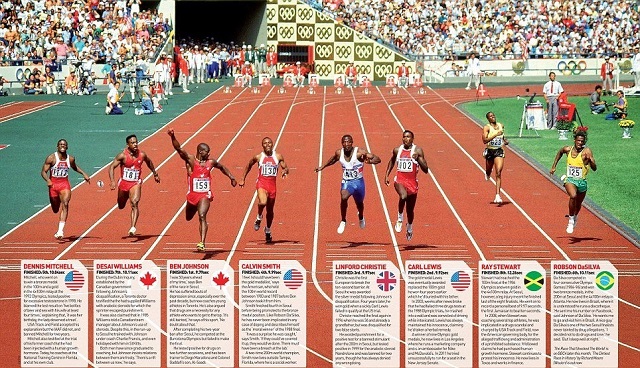
It’s long been established that Johnson was guilty on the positive steroid charge. But many questions have lingered for Canadians. Why was Johnson the only one singled out when five other runners in that race have drugging histories? Why did Canadian officials abandon Johnson to his fate in Seoul?
Our friend Mary Ormsby, longtime former reporter at the Toronto Star, has wondered the same things for years. So when Johnson asked her to cooperate on a book, she decided to conduct a cold-case investigation into a story that has flummoxed Canadians for decades. We spoke about The Incredible Life of Ben Johnson: World’s Fastest Man
Why is Ben Johnson still relevant to Canadians 35 years later:? I think, he still strikes a nerve with the Canadian consciousness. He took everybody on that 100-yard run with him in 1988. And then, of course, this historic, disqualification during the Seoul Olympics for his doping offence. That was seared in the Canadian mindset at the time, and I found over the decades that Canadians have never really forgotten about that moment.

People are still curious about him, and I think over time, people have become very much more aware and educated about the prevalence of doping in sport. We were quite naïve as Canadians, at least back in 1988. And we’ve learned a lot more since including that five of the other guys in that 100 metre final, became linked to doping infractions in some way. So it’s a wiser population that thinks that Ben is interesting, and they want to know what happened to him in the interim.
How did you get Ben to agree to the book: Actually, Ben said, “do you think there’s a book in this?” He’s the one who asked me to write it? And I said no, for a long time. Then I said, well, why not look into it after I left the Toronto Star?
What did you discover: The crux of the book is how is it possible to railroad a guilty man? Was he denied or deprived of due process at his hearing in Seoul? A lot of the people I talked to for the book, they all seem to say that Ben got screwed in Seoul. Meaning he wasn’t the only one using something at the time or of that generation or later. Only he was singled out. Now, that’s not to say, Ben is blameless. We all know he broke a rule, he willingly took steroids and he lied about it. He made it bad for himself. But again, I think people have learned to understand sport in a way that is much more cynical and much more educated, through, all the anti-doping news that continues to this very day almost.


That’s one of the questions I really want to explore in the book. So all this is to say it, it came to be at one point.
Why should people read the book?: The way to engage people was to really focus on what I would call the cold case aspect of the Ben Johnson story. And that is how was he represented at that very critical hearing that Monday night in Seoul when it was all or nothing trying to hold on to his gold medal. As I said, Ben is not blameless. We all know what he did. He lied about it. It took a $4 million inquiry and testimony under oath to get the truth out of him. “Yes, I did know what I was doing and yes, I did take steroids.” Then I try to weave the idea that there is an injustice, surrounding the mystique of Ben Johnson that Canadian officials didn’t go to the wall for him, as they should have. It was pretty much an open-and-shut case very quickly. But following the paper trail, you can see where evidence wasn’t looked at, the Canadian officials didn’t even look at his drug test. They just assumed that everything was correct and all the paperwork was absolutely topnotch. Then the IOC Medical Commission members dropped a second test on him that showed he was a longtime anabolic steroid user.
It was an unofficial test, and also no one took exception to the many conflicts of interest of the IOC doping panel that was actually hearing his appeal. They had many conflicts in my opinion. They developed the testing, they ran the testing, they supervised the testing. They were the prosecutor and the judge and the jury. And they were the ones who could recommend whether he be disqualified or not. So, the trick— and I hope I did it properly— was to get people involved in this idea that there was an injustice that happened. You can support someone’s right to a fair hearing and he was entitled to a fair hearing. That doesn’t mean you support or endorse the behaviour. Those are two separate matters.
How did Canadian officials drop the ball?: Ben made it trickier, because he, said yes, please have IOC VP Richard Pound represent me when that option was presented to him that night. Everybody was in total shock. Richard Pound, he stood to lose something too. He was one of the golden boys of the IOC movement. He was hoping to be in the running for next IOC president. From talking to IOC Medical Commission member Arne Ljundqvist after the fact, the panel weren’t very pleased to see him there running the show when, in their opinion, it should have been Canada’s chef de mission Caroline Anne Letheren. I asked Pound, why did you not look at his drug test? Why, did you not look at the supporting paperwork? And he said, you know, I didn’t want to be someone who got somebody off on a technicality. Perhaps, but if you’re fighting for your life, I would like my representatives to go to the wall for me whenever possible.

How was his late coach Charlie Francis responsible for this?: He really did influence Ben and convince him— based on Charlie’s own research and knowledge and beliefs— that everybody at the highest level is using performance enhancing drugs. You know, that famous line, you don’t have to use, but you’re always going to be a metre behind. Ben thought about it for a week or two and said, yeah, let’s do it. Charlie was a huge influence on Ben moving forward. So much so that Ben would claim, when he got caught lying, that he lied to protect Charlie Francis. He didn’t want Charlie to be caught up in the big disaster. To this day he, he talks about Charlie with, with great love and affection. So that was a very strong bond. And Charlie Francis did take advantage of that. Ben was the one who was able to help fill Charlie’s ambition as a coach.
Why wasn’t Ben caught when he set the world record at the Rome 1987 World Track & Field Championships?: Amazingly, he said he wasn’t tested in Rome. In fact, he was in the doping control room, and Primo Nebbiolo’s bodyguard went in to get him (Nebbiolo was president of the World Track & Field Federation). He says, “The boss wants to see you at this horse track”. So he spirited Ben out of the doping control room. Ben went in a limousine to this horse-racing track where he met Primo’s friends and horse racing friends and some championship horse, and then he was eventually taken back to Rome to his hotel. Nobody ever bothered him about providing a urine sample after he set the world record. (Nebbiolo later erased Ben’s 1987 world record for embarrassing him with the incident.)
How Is Ben today?: I think Ben has been broken many times in his life about this, and he tried really hard to fight through it. It’s been a lonely fight. At different times, he surrounded himself with people who didn’t always have his best interests at heart (Muammar Ghaddafi) and he retains a bitterness about Seoul and what happened to him and why he was the only one. But there’s also a resilience there that I’m pretty impressed with, because in all that time he’s had to scramble to make a living. He is still hoping with this book and maybe with more time, he will be able to clear his name. He sees that at the end of the day. I don’t know. But what we do see, even just walking down the street in Toronto or down in Jamaica, people will still call out to him. “Hey, world’s fastest man” and give him the thumbs up. You know, what a great guy.
Bruce Dowbiggin @dowbboy is the editor of Not The Public Broadcaster A two-time winner of the Gemini Award as Canada’s top television sports broadcaster, he’s a regular contributor to Sirius XM Canada Talks Ch. 167. His new book Deal With It: The Trades That Stunned The NHL And Changed hockey is now available on Amazon. Inexact Science: The Six Most Compelling Draft Years In NHL History, his previous book with his son Evan, was voted the seventh-best professional hockey book of all time by bookauthority.org . His 2004 book Money Players was voted sixth best on the same list, and is available via brucedowbigginbooks.ca.

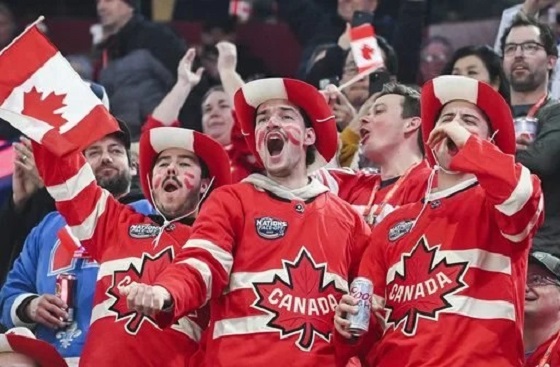
There’s an observation that only two things bind modern Canada. The federal equalization scheme and hockey, The past year illustrated that equalization is on tenuous ground with talk of separation in Quebec, Alberta and Saskatchewan.
Hockey, conversely, drew the nation closer at the moment that Donald Trump read the riot act to Canada’s elites. After the mens junior squad bombed out of the Junior Hockey championships for a second straight year, a new crisis emerged. To cover their purging of Justin Trudeau and insertion of Mark Carney as PM. the notorious Mike Myers’ Elbows Up homage to Gordie Howe’s elbows was appropriated by the Liberals (In true Woke wonk fashion, Howe never carried his elbows in Carney’s crash position. He kept them by his sides for greater power.)
In February’s Four Nations Cup, played at the height of tension between the two nations, Americans launched a Shoresy brawl in the first game, won easily by Team USA 3-1. As we wrote at the time, “Despite public calls for mutual respect, the sustained booing of the American national anthem and the Team Canada invocation by MMA legend Georges St. Pierre was answered by the Tkachuck brothers, Matthew and Brady, with a series of fights in the first nine seconds of the game.
Three fights to be exact when former Canuck J.T. Miller squared up with Brandon Hagel. (All three U.S. players have either played on or now play for Canadian NHL teams.) Premeditated and nasty. To say nothing of the vicious mugging of Canada’s legend Sidney Crosby behind the U.S. net moments later by Charlie McEvoy.”
Perhaps the least-appreciated aspect of the tension was the booing of the Star Spangled Banner by Canadians who have many Americans playing in their nation’s NHL squads. Leftist Toronto Star scribbler Bruce Arthur, bristled, “You’re damn right Canadians should boo the anthem.”
But in the rematch for the tournament title Canada reversed the tables, winning 3-2 in OT. The rush of nationalistic pride— from people who just weeks before were at each other’s throats over Indigenous claims and pipelines—fed a demographic topsy-turvy that swung Liberals 20 points in the polls, defeating the stunned Conservatives and coming within a few seats of a majority under Carney. Such was the hockey-fed insanity that NDP voters abandoned their far-left mantras to vote for a man who’d only weeks prior was a director of international giant Brookfield Investments.

One other byproduct of the Four Nations was the defrocking of Canadian legend Wayne Gretzky, who’d made a public show of his support for Trumping the 2024 presidential election. He was coldly rebuffed as he shook hands with the Canadian players before the Final game. It was not the finish for Gretz. He was reviled for golfing with The Donald in November, and then mocked for his faceplant appearance at the FIFA 2026 World Cup men’s draw. We wrote, “Gretzy apparently thinks there are countries called “North Mack-a-donia” and “Cur-ack-ow.” Other stabs at geography were almost as tortured.
Bitter Canadians could put up with him sucking up to Trump (he was mentioned as being in the crowd at the DC Xmas tree lighting) but failing geography is unforgivable. The week that started with Gretzky in a photo golfing at POTUS’s Jupiter, Florida, golf course was ending with him pummelled for his abuse of nations with different-sounding names. The Wayne Gretzky Center For Kids Who Want To Talk Good. “

In between the Gretzky episodes, two men who’d shaped modern hockey passed away. In September, on the anniversary of his participation in the 1972 Canada/ USSR series, Ken Dryden died at age 78. “For a generation that watched him develop he was likely the quintessential modern Canadian. Son of a charitable community figure. Educated in the Ivy League. Obtained his law degree. Served as a federal cabinet minister. Author of several definitive hockey books (The Game is perhaps the best sports non-fiction in the English language). Executive of the Toronto Maple Leafs. And more.
“He was on the American telecast of the 1980 U.S. Miracle On Ice at Lake Placid. And the radio broadcast of the 1976 Canada Cup. Ubiquitous media source. Loyal to Canada. And crucially, a son, husband, father and grandfather. If you’d created a model for the citizen of Canada of his times it was Ken.”
A less-loved figure in hockey— but no less significant— died the week after Dryden with the passing of former NHL Players Association director Bob Goodenow, who led the union through three momentous labour fights. Our take: “Tenacious, fearless and bold describes his style. Cuddly and sentimental he was not. The former lawyer and player agent for Brett Hull was not impressed by NHL self-dealing, and he said so. The Harvard product made a bad enemy after he succeeded Alan Eagleson in 1992.

“Today’s players owe him so much for finally giving them self respect. While players in other leagues ate steak, NHL players ate KD. Our book on the topic Money Players is an exhaustive catalogue of dirty dealing and deceit.
“Goodenow convinced hockey players that to earn their worth in the market they had to stick together in negotiations. It would be trying as fans and the media took the owners’ line under new commissioner Gary Bettman when they locked out players in 1994. He didn’t suffer reporters who were NHL echo chambers or old-timers who pined for their good old days of making $1000 a year.
CBA negotiations have never been the same. Player salaries have never been the same. Media covering hockey has never been the same. Eagleson was criminally convicted in the U.S. and Canada for the self dealing revealed by Conway and us. That’s an impressive legacy. RIP the man who reformed pro hockey from within.”
In a hangover story stretching back seven years, the sexual assault trial of the World Junior Hockey gold medalists of 2018 was a field day for narratives in the media and the courtroom. The facts, meanwhile, were stowed away beneath the surface of social media. As we reported in our June 28 column: “Outside diligent reporters such as Katie Strang of The Athletic and Rick Westhead of TSN, the media universe simply assumed guilt in the five players, because. hockey… Social media liberally smeared them as rapists, symbols of women’s degradation.

The five players on trial had been unfairly branded as criminals by Hockey Canada which rushed to condemn them in a quick civil settlement of EM’s charges. HC never consulted them about their side of the story before surrendering the cash. In the end, Ontario Justice Maria Carroccia found EM not “credible or reliable” enough to send the players to jail. While scolding their behaviour she declared the young men not guilty. It was a courageous decision, knowing it would prompt backlash. The Globe&Mail led the charge, declaring “After the Hockey Canada verdict Advocates fear survivors will fall silent”.
As 2026 dawns the outlook for Canadian NHL teams looks bleak. Just two teams would make the postseason today— Edmonton and Montreal— while Toronto, Ottawa, Winnipeg, Calgary and Vancouver wallow below the cut line. Which leaves the Elbows Up crowd pining for a replay of the Four Nations as Canada heads to the Olympic tournament. Don’t expect Wayne Gretzky to ride to their rescue.
Bruce Dowbiggin @dowbboy is the editor of Not The Public Broadcaster A two-time winner of the Gemini Award as Canada’s top television sports broadcaster, his 2025 book Deal With It: The Trades That Stunned The NHL And Changed Hockey is now available on Amazon. Inexact Science: The Six Most Compelling Draft Years In NHL History, his previous book with his son Evan, was voted the seventh-best professional hockey book of all time by bookauthority.org . His new poetry collection In Other Words is available via brucedowbigginbooks.ca and on Kindle books at https://www.amazon.ca/dp/1069802700
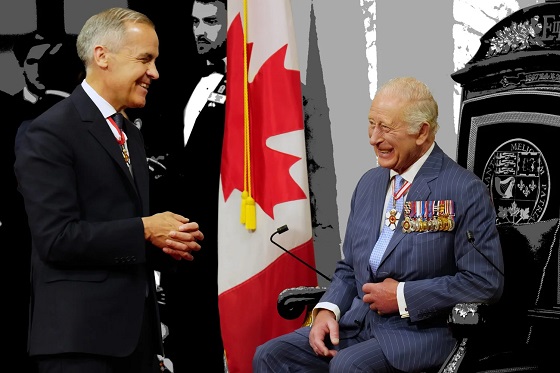
“The unifying theme that enables the Liberal party to maintain its hold over Canada is persistent anti-Americanism…I hope Canadians finally mature, acknowledge that we are neither superior nor inferior to the United States, and abandon our collective national inferiority complex.” Conrad Black quotes a friend.
Canadian media have almost always been reflexively anti-American. Fair enough. Abandoned by Britain they needed to push back. But the real fear of being consumed by the rebel colonies to the south has morphed into a fear of Donald Trump reminding Canada that it has been riding first class while paying economy.
Bashing noisy, bumptious America has always been good business if you owned a Canadian newspaper or television/radio network. The performative worship of Canadian leaders who cocked a snook at the Yankees led, in recent times, to the open-mouthed support for the fatuous Trudeaupian line of monarchs. As Ray Davies sang, “each one a dedicated follower of fashion.”
Since Pierre “The Bold” Trudeau succeeded Lester Pearson and ascended to the throne of the Family Compact in 1968, Canadian policy from Viet Nam to Trump has become “What are the Americans doing? Then let’s do the opposite”. Sample of spite: CBS TV pulled a controversial 60 Minutes news story —but it aired in Canada after being leaked by pissed-off CBS employees.
Yes, there was the brief Harper interregnum when Canada actually fought a military campaign alongside the U.S. in Afghanistan. But mostly it was Jean “Golf Balls” Chretien sitting out the Iraq War.
Alas, all good things must end. Or at least pause. People were starting to notice that Justy was a Chinese trusty, his Montreal riding campaign funded by hundreds of Chinese “businessman” from far away. The tragi-comic Trudeuapian succession hit a speed bump with Mark Carney being brought in to domesticate Canada in manner satisfactory to Brookfield and the EU.

But no one is betting the Libs won’t turn to a third generation of Quebec fashionistas— in the form of another Trudeau progeny— when all else fails.
As usual caustic Conrad Black sums up Canada best. With Quebec and Alberta talking separation he quotes a friend on the state of the nation. “What exists instead is a Liberal Party that manages — often quite poorly — the finances of a collection of provinces and territories, while relying on its media apparatus to shape and safeguard its narrative. It resembles a hedge fund supported by an image consulting firm.” (Insert your convict felon/ anglo wannabe reference here.)
There is no doubt that, as 2025 skulks out, the “image-consulting firm” painting rosy pictures of the Laurentian Elite is in for a a challenge. Justin thought using Trump as his pretext could achieve peace by buying up the lads and lasses of the fourth estate. It worked with Covid and the Truckers Convoy as the column writers/ panel hosts dutifully wrote it like he called it (even as the international press chided Trudeau.).
But even those good times didn’t last, forcing the Libs to do a presto-chango before Justin could lead them to a catastrophic defeat in the spring election. Once more, faced with Trump’s aggressive posture toward trade with Canada, the press closed ranks over Elbows Up, portraying CPC leader Pierre Poilievre as Dick Dastardly.
But new polling shows that the burst of enthusiasm for more Liberal pantomime is wearing thin. The new “new” trade deal promised with Trump has dissipated. The threat to private home ownership in B.C. by government’s indigenous land concessions has sent a chill through the middle class. The NDP fainting goats who bought Elbows Up are headed back to Crazytown, likely under Avi Lewis.
Now, at last, the reckoning promised by the Conservatives’ 20-point lead in polling this time last year may be at hand. While the diehards will go their graves mumbling land acknowledgements and 32 pronouns, there is hope that the under 60s— who emphatically support the Tories— will force change.
What change? Tristan Hopper in the National Post suggests that one place to start reforming the jalopy of Canadian government is in the oceans of money lavished on cause-related political leeches. Seeing the Bondi Beach slaughter by ISIS radicals many now question how long before Toronto or Montreal experiences a similar tragedy at the hands of jihadis who are lavishly supported by tax money.
Yes, not all Muslims in the West are terrorists. But almost all terrorists in the West are Muslim. Hate-spewing Hamas groupies from college faculty are regularly allowed major intersections with police protection as they promise to wipe out infidels. Till now it’s been poor form to even mention, let alone criticize, this pantomime.
Withdrawing financial aid to these groups and their academic fellow travellers would immediately rob these brigands of their impact. The cries of despair from cutting the cord would also expose those in the Commons who have coddled these vipers with grants and ministries.
Similar hacking at the slush money aimed at every other form of leftist posing— from trans to indigenous to illegal immigrants— would also mark the end of free money. Of course there will be caterwauling from the Elizabeth May Free Lunch crew. But with the threat of Canada coming apart with Quebec and Alberta/ Saskatchewan headed for the door those usual dissenting voices will be muted.
Only one thing stands in the way of this culling. That is PM Mark Carney coercing one more MP to cross the floor to his party, cementing its majority status for up to four more years. While the At Issue panels slap their flippers in glee at Poilievre’s demise, the rest of the nation will be less enthralled with the new realities of censorship, trade and housing.

As Stephen Punwasi states. “People in Canada can’t afford homes & prices can’t fall because debt was securitized with widespread fraud—so taxpayers will subsidize foreign speculation. It’s like they hired the mayor of Vancouver to run housing. Oh—they did, eh? Kids, run.”
Bruce Dowbiggin @dowbboy is the editor of Not The Public Broadcaster A two-time winner of the Gemini Award as Canada’s top television sports broadcaster, his 2025 book Deal With It: The Trades That Stunned The NHL And Changed Hockey is now available on Amazon. Inexact Science: The Six Most Compelling Draft Years In NHL History, his previous book with his son Evan, was voted the seventh-best professional hockey book of all time by bookauthority.org . His new poetry collection In Other Words is available via brucedowbigginbooks.ca and on Kindle books at https://www.amazon.ca/dp/1069802700
Georgia county admits illegally certifying 315k ballots in 2020 presidential election
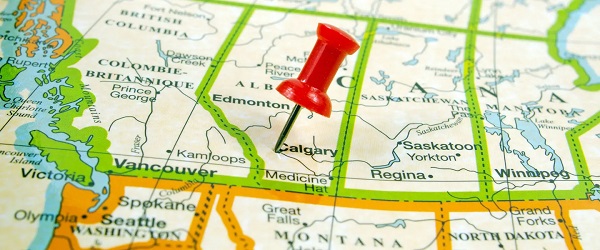
Alberta Next Panel calls to reform how Canada works

Canadian government launches trial version of digital ID for certain licenses, permits
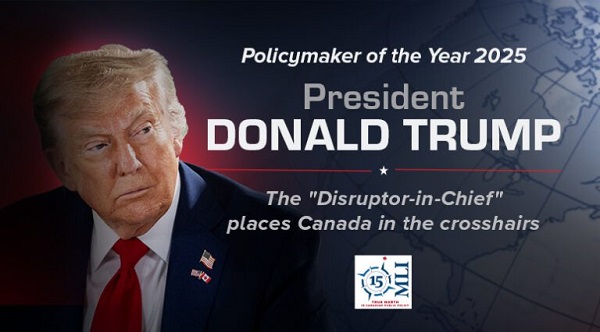
The “Disruptor-in-Chief” places Canada in the crosshairs
-
International2 days ago
Georgia county admits illegally certifying 315k ballots in 2020 presidential election
-
 Business2 days ago
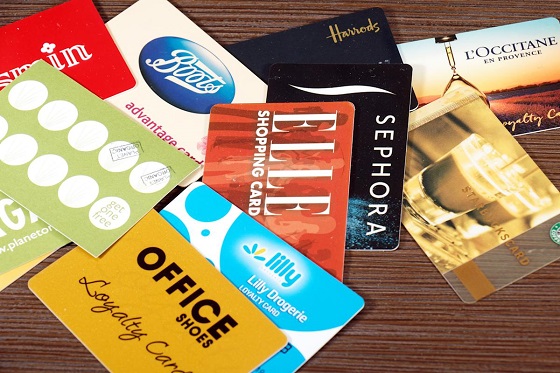
What Do Loyalty Rewards Programs Cost Us?
-
 Haultain Research2 days ago
Sweden Fixed What Canada Won’t Even Name
-
 Energy2 days ago
Why Japan wants Western Canadian LNG
-
 Business2 days ago
Land use will be British Columbia’s biggest issue in 2026
-
 Business2 days ago
The Real Reason Canada’s Health Care System Is Failing
-
 Business2 days ago
Dark clouds loom over Canada’s economy in 2026
-
 Business2 days ago
Federal funds FROZEN after massive fraud uncovered: Trump cuts off Minnesota child care money