
Business
Bank of Canada survey reveals 86% of Canadians opposed to creating digital ‘dollar’



From LifeSiteNews
The main findings show that Canadians place a ‘high value on holding cash that is backed by their central bank and want to maintain access to bank notes.’
An overwhelming majority, 86% of Canadians, are opposed to the creation of a national digital dollar and want the government and banks to “leave cash alone,” according to results from a recent Bank of Canada (BOC) survey concerning the creation of a “potential digital Canadian dollar.”
In a press release yesterday, the BOC published the feedback it got concerning the creation of a “potential digital Canadian dollar.” The bank says it has been collecting information since 2020 with “stakeholders in the financial sector and civil society.”
The main findings from the BOC’s survey show that Canadians place a “high value on holding cash that is backed by their central bank and want to maintain access to bank notes.”
“Canadians value their right to privacy and many expressed concerns that a digital dollar could compromise that right,” the BOC said about another main finding from its report.
The BOC noted that should a digital dollar be created, it “should be easily accessible and should neither add barriers nor worsen existing ones.”
“A digital dollar should not add to financial stability risks,” the BOC said.
The survey, which was open from May 8 to June 19, 2023, received 89,423 responses. A total of 87% of respondents said they were “aware” of talk concerning the creation of a digital dollar.
The survey results come after the BOC in August admitted that the creation of a central bank digital currency (CBDC) is not needed as many people rely on “cash” to pay for things. The bank concluded that the introduction of a digital currency would only be feasible if consumers demanded its release.
Canadians prefer cash as the best payment method, but bank has not fully ruled out digital dollar
Some 93% of the BOC’s survey respondents said that they continue to use cash as a payment form in addition to the use of debit and credit cards. A total of 66% of respondents said that having access to a digital currency was not important.
A total of 88% of respondents said they were not interested in the creation of an additional “offline” payment method such as an offline digital dollar in addition to cash.

While 85% of respondents said they would not use a digital dollar, 12% said they would, with 3% being uncertain.
Of important note is that the BOC has not ruled out the creation of a digital dollar despite the report’s findings.
The BOC said it “aims to ensure that Canadians will continue to have the benefits of money issued by the central bank in an increasingly digitalized world.”
“Whether and when a digital dollar will become needed is uncertain. Ultimately, the decision to go ahead with a digital dollar belongs to Canadians, through their representatives in Parliament,” the BOC said.
As reported by LifeSiteNews in May, the BOC was looking for public feedback on whether such a form of digital currency, which experts have warned could mean an end to purchasing anonymity, would be viable for Canadians.
Overall, the report found that when all answers were combined, the creation of a digital dollar garnered 86% negative feedback.
According to the BOC, a CBDC would have to offer “compelling advantages to motivate these consumers – particularly the typical, well-connected consumers who account for most of the market — to adopt and use CBDC at sufficient scale to generate widespread merchant acceptance.”
Digital currencies have been touted as a way by some government officials to replace traditional cash.
As noted in a report from LifeSiteNews, experts warn that central bank digital currencies are a “control tool” of governments.
Conservative leader Pierre Poilievre promised that if he is elected prime minister, he would stop any implementation of a “digital currency” or a compulsory “digital ID” system.
The BOC at the time said that any final decision on when and if a digital Canadian dollar is issued would be up to the government.


From LifeSiteNews
Of the Royal Canadian Mounted Police’s fleet of 1,200 drones, 79% pose national security risks due to them being made in China
Canada’s top police force spent millions on now near-useless and compromised security drones, all because they were made in China, a nation firmly controlled by the Communist Chinese Party (CCP) government.
An internal report by the Royal Canadian Mounted Police (RCMP) to Canada’s Senate national security committee revealed that $34 million in taxpayer money was spent on a fleet of 973 Chinese-made drones.
Replacement drones are more than twice the cost of the Chinese-made ones between $31,000 and $35,000 per unit. In total, the RCMP has about 1,228 drones, meaning that 79 percent of its drone fleet poses national security risks due to them being made in China.
The RCMP said that Chinese suppliers are “currently identified as high security risks primarily due to their country of origin, data handling practices, supply chain integrity and potential vulnerability.”
In 2023, the RCMP put out a directive that restricted the use of the made-in-China drones, putting them on duty for “non-sensitive operations” only, however, with added extra steps for “offline data storage and processing.”
The report noted that the “Drones identified as having a high security risk are prohibited from use in emergency response team activities involving sensitive tactics or protected locations, VIP protective policing operations, or border integrity operations or investigations conducted in collaboration with U.S. federal agencies.”
The RCMP earlier this year said it was increasing its use of drones for border security.
Senator Claude Carignan had questioned the RCMP about what kind of precautions it uses in contract procurement.
“Can you reassure us about how national security considerations are taken into account in procurement, especially since tens of billions of dollars have been announced for procurement?” he asked.
“I want to make sure national security considerations are taken into account.”
The use of the drones by Canada’s top police force is puzzling, considering it has previously raised awareness of Communist Chinese interference in Canada.
Indeed, as reported by LifeSiteNews, earlier in the year, an RCMP internal briefing note warned that agents of the CCP are targeting Canadian universities to intimidate them and, in some instances, challenge them on their “political positions.”
The final report from the Foreign Interference Commission concluded that operatives from China may have helped elect a handful of MPs in both the 2019 and 2021 Canadian federal elections. It also concluded that China was the primary foreign interference threat to Canada.
Chinese influence in Canadian politics is unsurprising for many, especially given former Prime Minister Justin Trudeau’s past admiration for China’s “basic dictatorship.”
As reported by LifeSiteNews, a Canadian senator appointed by Trudeau told Chinese officials directly that their nation is a “partner, not a rival.”
China has been accused of direct election meddling in Canada, as reported by LifeSiteNews.
As reported by LifeSiteNews, an exposé by investigative journalist Sam Cooper claims there is compelling evidence that Carney and Trudeau are strongly influenced by an “elite network” of foreign actors, including those with ties to China and the World Economic Forum. Despite Carney’s later claims that China poses a threat to Canada, he said in 2016 the Communist Chinese regime’s “perspective” on things is “one of its many strengths.”
Business
The world is no longer buying a transition to “something else” without defining what that is

From Resource Works
Even Bill Gates has shifted his stance, acknowledging that renewables alone can’t sustain a modern energy system — a reality still driving decisions in Canada.
You know the world has shifted when the New York Times, long a pulpit for hydrocarbon shame, starts publishing passages like this:
“Changes in policy matter, but the shift is also guided by the practical lessons that companies, governments and societies have learned about the difficulties in shifting from a world that runs on fossil fuels to something else.”
For years, the Times and much of the English-language press clung to a comfortable catechism: 100 per cent renewables were just around the corner, the end of hydrocarbons was preordained, and anyone who pointed to physics or economics was treated as some combination of backward, compromised or dangerous. But now the evidence has grown too big to ignore.
Across Europe, the retreat to energy realism is unmistakable. TotalEnergies is spending €5.1 billion on gas-fired plants in Britain, Italy, France, Ireland and the Netherlands because wind and solar can’t meet demand on their own. Shell is walking away from marquee offshore wind projects because the economics do not work. Italy and Greece are fast-tracking new gas development after years of prohibitions. Europe is rediscovering what modern economies require: firm, dispatchable power and secure domestic supply.
Meanwhile, Canada continues to tell itself a different story — and British Columbia most of all.
A new Fraser Institute study from Jock Finlayson and Karen Graham uses Statistics Canada’s own environmental goods and services and clean-tech accounts to quantify what Canada’s “clean economy” actually is, not what political speeches claim it could be.
The numbers are clear:
- The clean economy is 3.0–3.6 per cent of GDP.
- It accounts for about 2 per cent of employment.
- It has grown, but not faster than the economy overall.
- And its two largest components are hydroelectricity and waste management — mature legacy sectors, not shiny new clean-tech champions.
Despite $158 billion in federal “green” spending since 2014, Canada’s clean economy has not become the unstoppable engine of prosperity that policymakers have promised. Finlayson and Graham’s analysis casts serious doubt on the explosive-growth scenarios embraced by many politicians and commentators.
What’s striking is how mainstream this realism has become. Even Bill Gates, whose philanthropic footprint helped popularize much of the early clean-tech optimism, now says bluntly that the world had “no chance” of hitting its climate targets on the backs of renewables alone. His message is simple: the system is too big, the physics too hard, and the intermittency problem too unforgiving. Wind and solar will grow, but without firm power — nuclear, natural gas with carbon management, next-generation grid technologies — the transition collapses under its own weight. When the world’s most influential climate philanthropist says the story we’ve been sold isn’t technically possible, it should give policymakers pause.
And this is where the British Columbia story becomes astonishing.
It would be one thing if the result was dramatic reductions in emissions. The provincial government remains locked into the CleanBC architecture despite a record of consistently missed targets.
Since the staunchest defenders of CleanBC are not much bothered by the lack of meaningful GHG reductions, a reasonable person is left wondering whether there is some other motivation. Meanwhile, Victoria’s own numbers a couple of years ago projected an annual GDP hit of courtesy CleanBC of roughly $11 billion.
But here is the part that would make any objective analyst blink: when I recently flagged my interest in presenting my research to the CleanBC review panel, I discovered that the “reviewers” were, in fact, two of the key architects of the very program being reviewed. They were effectively asked to judge their own work.
You can imagine what they told us.
What I saw in that room was not an evidence-driven assessment of performance. It was a high-handed, fact-light defence of an ideological commitment. When we presented data showing that doctrinaire renewables-only thinking was failing both the economy and the environment, the reception was dismissive and incurious. It was the opposite of what a serious policy review looks like.
Meanwhile our hydro-based electricity system is facing historic challenges: long term droughts, soaring demand, unanswered questions about how growth will be powered especially in the crucial Northwest BC region, and continuing insistence that providers of reliable and relatively clean natural gas are to be frustrated at every turn.
Elsewhere, the price of change increasingly includes being able to explain how you were going to accomplish the things that you promise.
And yes — in some places it will take time for the tide of energy unreality to recede. But that doesn’t mean we shouldn’t be improving our systems, reducing emissions, and investing in technologies that genuinely work. It simply means we must stop pretending politics can overrule physics.
Europe has learned this lesson the hard way. Global energy companies are reorganizing around a 50-50 world of firm natural gas and renewables — the model many experts have been signalling for years. Even the New York Times now describes this shift with a note of astonishment.
British Columbia, meanwhile, remains committed to its own storyline even as the ground shifts beneath it. This isn’t about who wins the argument — it’s about government staying locked on its most basic duty: safeguarding the incomes and stability of the families who depend on a functioning energy system.
Resource Works News


University of Colorado will pay $10 million to staff, students for trying to force them to take COVID shots

Wayne Gretzky’s Terrible, Awful Week.. And Soccer/ Football.

Western Campuses Help Build China’s Digital Dragnet With U.S. Tax Funds, Study Warns

Surgery Denied. Death Approved.
-
Bruce Dowbiggin1 hour ago
Wayne Gretzky’s Terrible, Awful Week.. And Soccer/ Football.
-
espionage4 hours ago
Western Campuses Help Build China’s Digital Dragnet With U.S. Tax Funds, Study Warns
-
 Agriculture21 mins ago
Canada’s air quality among the best in the world
-
Business2 hours ago
Canada invests $34 million in Chinese drones now considered to be ‘high security risks’
-
 Economy3 hours ago
Affordable housing out of reach everywhere in Canada
-
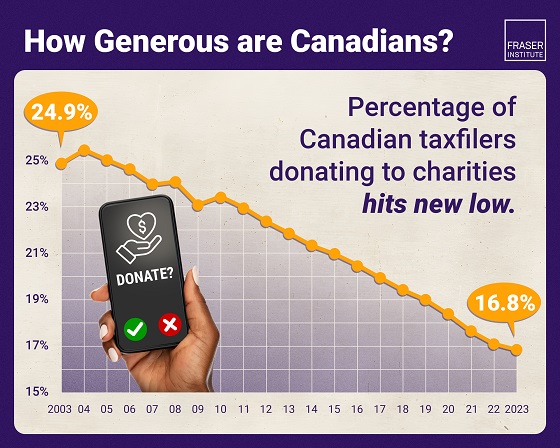 Business2 days ago
Albertans give most on average but Canadian generosity hits lowest point in 20 years
-
 Fraser Institute1 day ago
Claims about ‘unmarked graves’ don’t withstand scrutiny
-
 Bruce Dowbiggin2 days ago
Carney Hears A Who: Here Comes The Grinch