
COVID-19
Australian doctor who criticized COVID jabs has his suspension reversed


From LifeSiteNews
By David James
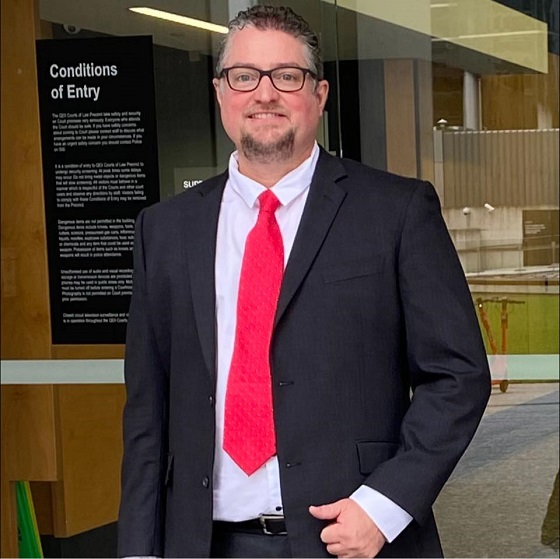
‘I am free, I am no longer suspended. I can prescribe Ivermectin, and most importantly – and this is what AHPRA is most afraid of – I can criticize the vaccines freely … as a medical practitioner of this country,’ said COVID critic Dr. William Bay.
A long-awaited decision regarding the suspension of the medical registration of Dr William Bay by the Medical Board of Australia has been handed down by the Queensland Supreme Court. Justice Thomas Bradley overturned the suspension, finding that Bay had been subject to “bias and failure to afford fair process” over complaints unrelated to his clinical practice.
The case was important because it reversed the brutal censorship of medical practitioners, which had forced many doctors into silence during the COVID crisis to avoid losing their livelihoods.
Bay and his supporters were jubilant after the decision. “The judgement in the matter of Bay versus AHPRA (Australian Health Practitioner Regulation Agency) and the state of Queensland has just been handed down, and we have … absolute and complete victory,” he proclaimed outside the court. “I am free, I am no longer suspended. I can prescribe Ivermectin, and most importantly – and this is what AHPRA is most afraid of – I can criticize the vaccines freely … as a medical practitioner of this country.”
Bay went on: “The vaccines are bad, the vaccines are no good, and people should be afforded the right to informed consent to choose these so-called vaccines. Doctors like me will be speaking out because we have nothing to fear.”
Bay added that the judge ruled not only to reinstate his registration, but also set aside the investigation into him, deeming it invalid. He also forced AHPRA to pay the legal costs. “Everything is victorious for myself, and I praise God,” he said.
The Australian Health Practitioner Regulation Agency (AHPRA), which partners the Medical Board of Australia, is a body kept at arm’s length from the government to prevent legal and political accountability. It was able to decide which doctors could be deregistered for allegedly not following the government line. If asked questions about its decisions AHPRA would reply that it was not a Commonwealth agency so there was no obligation to respond.
The national board of AHPRA is composed of two social workers, one accountant, one physiotherapist, one mathematician and three lawyers. Even the Australian Medical Association, which also aggressively threatened dissenting doctors during COVID, has objected to its role. Vice-president Dr Chris Moy described the powers given to AHPRA as being “in the realms of incoherent zealotry”.

This was the apparatus that Bay took on, and his victory is a significant step towards allowing medical practitioners to voice their concerns about Covid and the vaccines. Until now, most doctors, at least those still in a job, have had to keep any differing views to themselves. As Bay suggests, that meant they abrogated their duty to ensure patients gave informed consent.
Justice Bradley said the AHPRA board’s regulatory role did not “include protection of government and regulatory agencies from political criticism.” To that extent the decision seems to allow freedom of speech for medical practitioners. But AHPRA still has the power to deregister doctors without any accountability. And if there is one lesson from Covid it is that bureaucrats in the Executive branch have little respect for legal or ethical principles.
READ: More scientists are supporting a swift recall of the dangerous COVID jabs
It is to be hoped that Australian medicos who felt forced into silence now begin to speak out about the vaccines, the mandating of which has coincided with a dramatic rise in all-cause mortality in heavily vaccinated countries around the world, including Australia. This may prove psychologically difficult, though, because those doctors would then have to explain why they have changed their position, a discussion they will no doubt prefer to avoid.
The Bay decision has implications for the way the three arms of government: the legislature, the executive and the judiciary, function in Australia. There are supposed to be checks and balances, but the COVID crisis revealed that, when put under stress, the separation of powers does not work well, or at all.
During the crisis the legislature routinely passed off its responsibilities to the executive branch, which removed any voter influence because bureaucrats are not elected. The former premier of Victoria, Daniel Andrews, went a step further by illegitimately giving himself and the Health Minister positions in the executive branch, when all they were entitled to was roles in the legislature as members of the party in power. This appalling move resulted in the biggest political protests ever seen in Melbourne, yet the legislation passed anyway.
The legislature’s abrogation of responsibility left the judiciary as the only branch of government able to address the abuse of Australia’s foundational political institutions. To date, the judges have disappointed. But the Bay decision may be a sign of better things to come.
READ: Just 24% of Americans plan to receive the newest COVID shot: poll

From LifeSiteNews
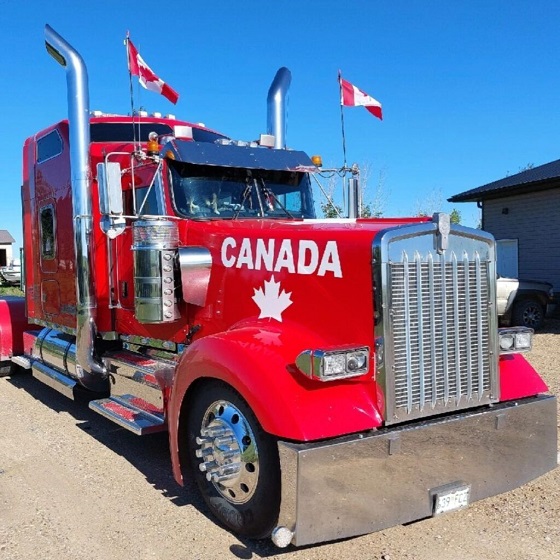
A judge ruled that the Ontario Court of Justice is already ‘satisfied’ with Chris Barber’s sentence and taking away his very livelihood would be ‘disproportionate.’
A Canadian judge has dismissed a demand from Canadian government lawyers to seize Freedom Convoy leader Chris Barber’s “Big Red” semi-truck.
On Friday, Ontario Court of Justice Judge Heather Perkins-McVey denied the Crown’s application seeking to forfeit Barber’s truck.
She ruled that the court is already “satisfied” with Barber’s sentence and taking away his very livelihood would be “disproportionate.”
“This truck is my livelihood,” said Barber in a press release sent to LifeSiteNews.
“Trying to permanently seize it for peacefully protesting was wrong, and I’m relieved the court refused to allow that to happen,” he added.
Criminal defense lawyer Marwa Racha Younes was welcoming of the ruling as well, stating, “We find it was the right decision in the circumstances and are happy with the outcome.”
John Carpay, president of the Justice Centre for Constitutional Freedoms (JCCF), said the decision is “good news for all Canadians who cherish their Charter freedom to assemble peacefully.”
READ: Freedom Convoy protester appeals after judge dismissed challenge to frozen bank accounts
“Asset forfeiture is an extraordinary power, and it must not be used to punish Canadians for participating in peaceful protest,” he added in the press release.
As reported recently by LifeSiteNews, the Canadian government claimed that Barber’s truck is an “offence-related property” relating to his involvement in the 2022 protests against Canada’s COVID mandates.
At this time, the court ruling ends any forfeiture proceedings for the time being, however Barber will continue to try and appeal his criminal conviction and house arrest sentence.
Barber’s truck, a 2004 Kenworth long-haul he uses for business, was a focal point in the 2022 protests. He drove it to Ottawa, where it was parked for an extended period of time, but he complied when officials asked him to move it.
On October 7, 2025, after a long trial, Ontario Court Justice Perkins-McVey sentenced Barber and Tamara Lich, the other Freedom Convoy leader, to 18 months’ house arrest. They had been declared guilty of mischief for their roles as leaders of the 2022 protest against COVID mandates, and as social media influencers.
Lich and Barber have filed appeals of their own against their house arrest sentences, arguing that the trial judge did not correctly apply the law on their mischief charges.
Government lawyers for the Crown have filed an appeal of the acquittals of Lich and Barber on intimidation charges.
The pair’s convictions came after a nearly two-year trial despite the nonviolent nature of the popular movement.
From LifeSiteNews
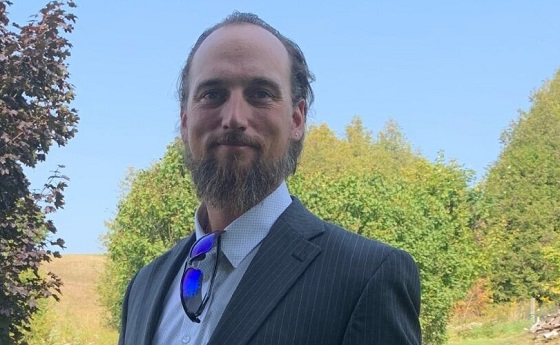
Protestor Evan Blackman’s legal team argues Trudeau’s Emergencies Act-based bank account freezes were punitive state action tied directly to protest participation.
A Freedom Convoy protester whose bank accounts were frozen by the Canadian government says a judge erred after his ruling did not consider the fact that the funds were frozen under the Emergencies Act, as grounds for a stay of proceedings.
In a press release sent out earlier this week, the Justice Centre for Constitutional Freedoms (JCCF) said that Freedom Convoy protestor Evan Blackman will challenge a court ruling in his criminal case via an appeal with the Ontario Superior Court of Justice.
“This case raises serious questions about how peaceful protest is treated in Canada and about the lasting consequences of the federal government’s unlawful use of the Emergencies Act,” noted constitutional lawyer Chris Fleury. “The freezing of protestors’ bank accounts was part of a coordinated effort to suppress dissent, and courts ought to be willing to scrutinize that conduct.”
Blackman was arrested on February 18, 2022, during the police crackdown on Freedom Convoy protests against COVID restrictions, which was authorized by the Emergencies Act (EA). The EA was put in place by former Prime Minister Justin Trudeau’s Liberal government, which claimed the protests were violent, despite no evidence that this was the case.
Blackman’s three bank accounts with TD Bank were frozen due to his participation in the Freedom Convoy, following a directive ordered by Trudeau.
As reported by LifeSiteNews, in November of this year, Blackman was convicted at his retrial even though he had been acquitted at his original trial. In 2023, Blackman’s “mischief” and “obstructing police” charges were dismissed by a judge due to lack of evidence and the “poor memory of a cop regarding key details of the alleged criminal offences.”
His retrial resulted in Blackman getting a conditional discharge along with 12 months’ probation and 122 hours of community service, along with a $200 victim fine surcharge.
After this, Blackman’s application for a stay of proceedings was dismissed by the court. He had hoped to have his stay of proceedings, under section 24(1) of the Charter of Rights and Freedoms, allowed. However, the judge ruled that the freezing of his bank accounts was legally not related to his arrest, and because of this, the stay of proceedings lacked standing.
The JCCF disagreed with this ruling, noting, it “stands in contrast to a Federal Court decision finding that the government’s invocation of the Emergencies Act was unreasonable and violated Canadians’ Charter rights, including those targeted by the financial measures used against Freedom Convoy protestors.”
As of press time, a hearing date has not been scheduled.
In 2024, Federal Court Justice Richard Mosley ruled that Trudeau was “not justified” in invoking the Emergencies Act.
In early 2022, the Freedom Convoy saw thousands of Canadians from coast to coast come to Ottawa to demand an end to COVID mandates in all forms. Despite the peaceful nature of the protest, Trudeau’s federal government enacted the EA in mid-February.
After the protesters were cleared out, which was achieved through the freezing of bank accounts of those involved without a court order as well as the physical removal and arrest of demonstrators, Trudeau revoked the EA on February 23, 2022.
Georgia county admits illegally certifying 315k ballots in 2020 presidential election
Alberta Next Panel calls to reform how Canada works

Canadian government launches trial version of digital ID for certain licenses, permits

End Supply Management—For the Sake of Canadian Consumers
-
International8 hours ago
Georgia county admits illegally certifying 315k ballots in 2020 presidential election
-
 Business1 day ago
ICYMI: Largest fraud in US history? Independent Journalist visits numerous daycare centres with no children, revealing massive scam
-
 Alberta1 day ago
Alberta project would be “the biggest carbon capture and storage project in the world”
-
 Energy22 hours ago
Canada’s debate on energy levelled up in 2025
-
 Haultain Research10 hours ago
Sweden Fixed What Canada Won’t Even Name
-
 Business9 hours ago
What Do Loyalty Rewards Programs Cost Us?
-
 Business23 hours ago
Socialism vs. Capitalism
-
 Energy1 day ago
New Poll Shows Ontarians See Oil & Gas as Key to Jobs, Economy, and Trade