
Opinion
Another new neighbourhood. How many are there? How can we afford it?


Capstone at Riverlands does look exciting. It took 20 years and hundreds of millions of dollars to get to this point. Is it too much?
We have plenty of new neighbourhoods, Evergreen, Timberlands, Clearview Ridge, Garden Heights, Southbrook, and expanded new subdivisions like Vanier and they all offer new homes.
The logical mathematic part of me worries about the costs. All these new neighbourhoods incur costs, new roads that need to be built, maintained and repaired, sidewalks, utilities, street lights and so on. Who pays for all these shiny new things? We do.
In the last 4 years the population in the newer areas grew by 4,927 residents, but the city as a whole only grew by 2723 residents so 2204 residents simply moved from older neighbourhoods.
Now we have 25 neighbourhoods with fewer residents. The neighbourhoods, themselves did not get smaller, they still had the same roads and utilities that needed to be maintained and repaired they just had fewer people to pay for it.
Things might be better if we had a housing shortage, but we don’t. We do not have a waiting list of people wanting to move into Red Deer. In fact we are losing population, losing 975 residents last year. Even then we still built 375 new homes.
In 2013 we had a population of 97,109, the last census (2016) showed 99,832 meant an increase of 2,723 or a 2.8% increase which does not warrant all these new neighbourhoods and their associated costs.
Now that development will begin at Capstone and all the associated expenses, I am wondering what services in my neighbourhood will be cut.
If I had to guess, I believe my property taxes will go up again next year. The city is reporting a shortfall in revenue, coinciding with a smaller population, lower transit, and facility use and increased expenses. Duh!
The province is digging into reserves due to a continued sluggish economy but we are building new neighbourhoods.
I guess I will just turn the thermostat down another degree in my 50 year old house, eat less and walk more so I can help pay for all these new neighbourhoods. Shouldn’t be too hard, being retired and all, if the grandchildren don’t visit too often………….


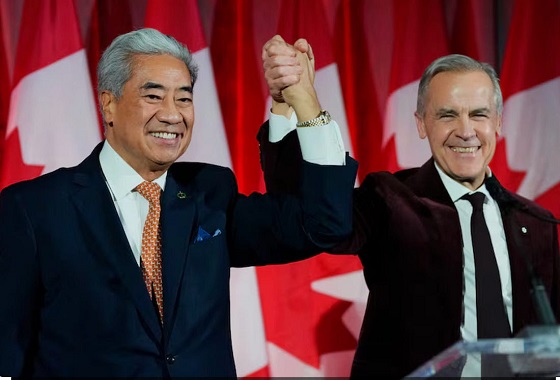
Former Tory MP, Michael Ma, is welcomed to the Liberal Party by Mark Carney.

Toronto area MP, Michael Ma’s defection has put the Liberals within a seat of a majority
So the Groucho Marx Party – “these are my principles: if you don’t like them, I have others” – has another member.
Michael Ma, who was elected as Conservative MP for Markham-Unionville about five minutes ago, has flipped to the Liberals, taking their standings to one tantalizing seat short of a majority that would keep them in power until 2029. You can hardly blame Mark Carney from encouraging bad behaviour in the circumstances.
Fly Straight is a reader-supported publication.
To receive new posts and support my work, consider becoming a free or paid subscriber.
But MPs have a responsibility to their constituents.
There will, no doubt, be other unscrupulous Conservatives lining up to get the Liberals over the majority line, like Augustus Gloop diving into Willy Wonka’s chocolate river. To be fair, the lure of personal aggrandizement is matched for some by the push factor of a Conservative Party leadership that appears to relish upsetting the median voter.
However, would-be floor crossers should think twice if they want to qualify for their six years of pensionable service. It rarely ends well. Parliament nerds will no doubt prove me wrong but from memory only a handful of MPs have moved from one party in the House of Commons to another and subsequently been re-elected in the past two decades or so.
Keith Martin left the Canadian Alliance to protest the merger with the Conservatives in 2004, sat as an independent and subsequently won his Vancouver Island riding as a Liberal; Progressive Conservative Scott Brison made a similar journey and won six elections as a Liberal MP; Conservative Belinda Stronach helped Paul Martin stave off a potentially disastrous election in 2005 by joining the Liberals in dramatic fashion and she was re-elected in Newmarket-Aurora in 2006, before losing in 2008; Leona Alleslev won her suburban Toronto riding for the Liberals in 2015 and then for the Conservatives in 2019, before losing to her former party in 2021; while, Jenica Atwin won her Fredericton riding for the Greens in 2019 and for the Liberals in 2021.
The more typical stories are of mediocrities who think they are Socrates fooling themselves that their personal brand will carry them to victory under a different banner.
 |
One such cautionary tale is that of Eve Adams, who won the Mississauga-Brampton South riding for the Conservatives in 2011, beating Navdeep Bains, before crossing to the Liberals before the 2015 election. She later lost the Liberal nomination for the Eglinton-Lawrence seat to future minister, Marco Mendicino, and subsequently failed in her bid for a seat on Hamilton City Council.
The reason that crossing the floor is a career-limiting move is that it connotes a lack of principle. Voters, fools that they are, genuinely value honesty, character, integrity and loyalty. The floor crosser, rightly or wrongly, is seen as having abandoned party esprit de corps for personal advancement.
As David Lloyd George once famously said of serial floor-crosser, former British foreign secretary Sir John Simon: “The right honourable and learned gentleman has twice crossed the floor of this House, each time leaving behind a trail of slime”.
Conversely, the man or woman of principle is prepared to head into the political wilderness if he or she cannot stomach the direction in which their party is heading.
In the course of researching my upcoming book on Irwin Cotler, one of his staff members told me that the Conservatives tried to lure the former justice minister to join them, after failing to unseat him in 2011. I raised it with him and he conceded that the Harper government had extended that option, “including offering me a ministry if I would do so. But it was never an option for me and I made that very clear to them,” he said.
I don’t think I have met anyone in a journalistic career spanning more than three decades who lives their virtue like Cotler, as opposed to merely signalling it.
He summed up an approach that should be standard for all members of Parliament. “For me, it was an issue of principle. I would never cross the floor. My mandate came from my constituents – for me personally but also for the party I was representing. If I felt I could no longer be a member of that party, then my option and responsibility was to resign.”
MPs are billed as “Honourable Members” in Hansard, the official report of all debates. They should live up to that characterization.
Fly Straight is a reader-supported publication.
To receive new posts and support my work, consider becoming a free or paid subscriber.
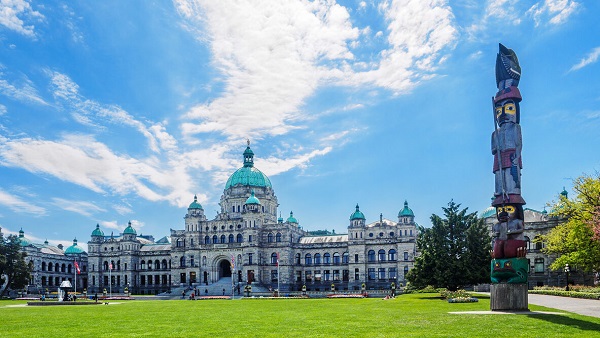
From Resource Works
Gitxaala has changed all the ground rules in British Columbia reshaping the risks around mills, mines and the North Coast transmission push.
The British Columbia Court of Appeal’s decision in Gitxaala v. British Columbia (Chief Gold Commissioner) is poised to reshape how the province approves and defends major resource projects, from mills and mines to new transmission lines.
In a split ruling on 5 December, the court held that British Columbia’s Declaration on the Rights of Indigenous Peoples Act makes consistency with the United Nations Declaration on the Rights of Indigenous Peoples a question courts can answer. The majority went further, saying UNDRIP now operates as a general interpretive aid across provincial law and declaring the Mineral Tenure Act’s automatic online staking regime inconsistent with article 32(2).
University of Saskatchewan law professor Dwight Newman, who has closely followed the case, says the majority has stretched what legislators thought they were doing when they passed the statute. He argues that section 2 of British Columbia’s UNDRIP law, drafted as a purpose clause, has been turned from guidance for reading that Act into a tool for reading all provincial laws, shifting decisions that were meant for cabinet and the legislature toward the courts.
The decision lands in a province already coping with legal volatility on land rights. In August, the Cowichan Tribes title ruling raised questions about the security of fee simple ownership in parts of Richmond, with critics warning that what used to be “indefeasible” private title may now be subject to senior Aboriginal claims. Newman has called the resulting mix of political pressure, investor hesitation and homeowner anxiety a “bubbling crisis” that governments have been slow to confront.
Gitxaala’s implications reach well beyond mining. Forestry communities are absorbing another wave of closures, including the looming shutdown of West Fraser’s 100 Mile House mill amid tight fibre and softwood duties. Industry leaders have urged Ottawa to treat lumber with the same urgency as steel and energy, warning that high duties are squeezing companies and towns, while new Forests Minister Ravi Parmar promises to restore prosperity in mill communities and honour British Columbia’s commitments on UNDRIP and biodiversity, as environmental groups press the government over pellet exports and protection of old growth.
At the same time, Premier David Eby is staking his “Look West” agenda on unlocking about two hundred billion dollars in new investment by 2035, including a shift of trade toward Asia. A centrepiece is the North Coast Transmission Line, a grid expansion from Prince George to Bob Quinn Lake that the government wants to fast track to power new mines, ports, liquefied natural gas facilities and data centres. Even as Eby dismisses a proposed Alberta to tidewater oil pipeline advanced under a new Alberta memorandum as a distraction, Gitxaala means major energy corridors will also be judged against UNDRIP in court.
Supporters of the ruling say that clarity is overdue. Indigenous nations and human rights advocates who backed the appeal have long argued that governments sold UNDRIP legislation as more than symbolism, and that giving it judicial teeth will front load consultation, encourage genuine consent based agreements and reduce the risk of late stage legal battles that can derail projects after years of planning.
Critics are more cautious. They worry that open ended declarations about inconsistency with UNDRIP will invite strategic litigation, create uncertainty around existing approvals and tempt courts into policy making by another name, potentially prompting legislatures to revisit UNDRIP statutes altogether. For now, the judgment leaves British Columbia with fewer excuses: the province has built its growth plans around big, nation building projects and reconciliation framed as partnership with Indigenous nations, and Gitxaala confirms that those partnerships now have a hard legal edge that will shape the next decade of policy and investment.
Resource Works News


From Exception to Routine. Why Canada’s State-Assisted Suicide Regime Demands a Human-Rights Review

Carney government should privatize airports—then open airline industry to competition

University of Colorado will pay $10 million to staff, students for trying to force them to take COVID shots

Integration Or Indignation: Whose Strategy Worked Best Against Trump?
-
 Automotive2 days ago
The $50 Billion Question: EVs Never Delivered What Ottawa Promised
-
 Local Business2 days ago
Red Deer Downtown Business Association to Wind Down Operations
-
 International2 days ago
Trump admin wants to help Canadian woman rethink euthanasia, Glenn Beck says
-
 C2C Journal2 days ago
Wisdom of Our Elders: The Contempt for Memory in Canadian Indigenous Policy
-
 Agriculture2 days ago
Growing Alberta’s fresh food future
-
 Alberta2 days ago
Alberta introducing three “all-season resort areas” to provide more summer activities in Alberta’s mountain parks
-
 Alberta2 days ago
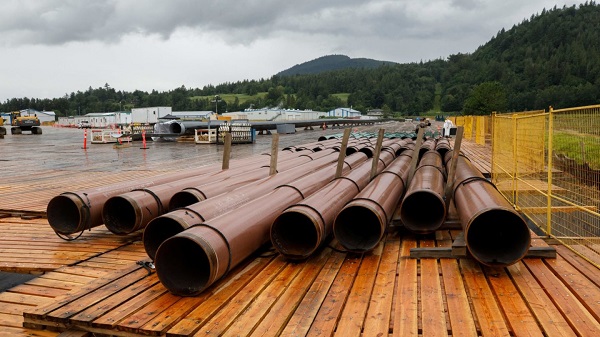
The case for expanding Canada’s energy exports
-
 Censorship Industrial Complex2 days ago
Conservative MP calls on religious leaders to oppose Liberal plan to criminalize quoting Scripture