
Alberta
Alberta to hit 5 million population within 2 years, tackle electricity and insurance prices – 2023 Throne Speech

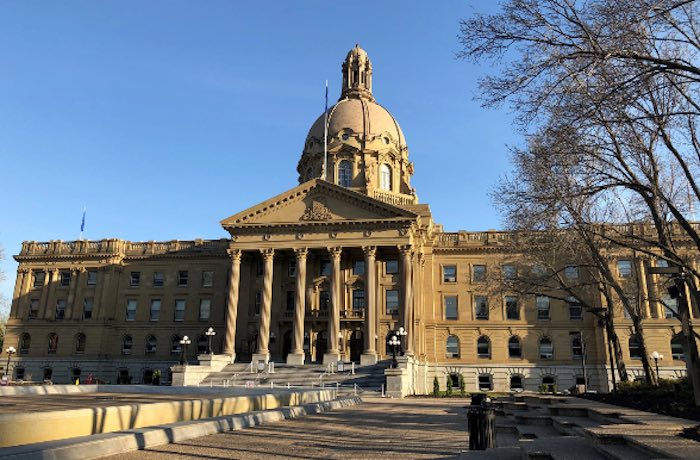

Highlights: Alberta takes charge of its future
Measures to keep more money in Albertans’ pockets, improve patient outcomes and support more students remain the Alberta government’s priorities, as outlined in the speech from the throne.
The speech, read in the assembly on Oct. 30 to open the first sitting of the 31st legislature, describes a tax cut on one’s first $60,000 of income, a law against tax increases without voter agreement, steps to limit costs of insurance, electricity and fuel, increasing health care and education staff, and more affordable housing options.
“I’m excited for this upcoming legislative session and the next four years. In the spring, Albertans gave us a mandate to tackle the issues that are most important to them. We’re committed to delivering on our promises and that work begins in earnest, today.”
“Our province finds itself at a critical juncture in our history, and choices made in the coming months and years will have generational impacts.”
The throne speech outlined the agenda of the government elected in June, including affirming that Bill 1 will be a law prohibiting tax increases without a referendum first. Among the highlights:
Provincial rights
Alberta will continue to fight federal intrusions on the province’s right to develop its oil and gas resources for the economic benefit of the province and the nation. If necessary, the province will use motions under the Sovereignty within a United Canada Act to block actions that are unconstitutional and hurt Alberta.
Growth pressures
Predicting Alberta will top five million people by 2026, the government has promised to build the roads, schools and other facilities necessary to support a larger population.
Affordability
Alberta’s government will continue its work to address affordability challenges in the province by reducing the tax burden on Albertans and focusing on efforts to reduce costs to Albertans related to housing, fuel, electricity and insurance.
Public safety
Alberta’s government will continue its work to help keep Albertans safe on the streets and in communities. This includes supporting the hiring of more police officers and introducing reforms to the justice system. In addition, Alberta’s government will continue its work to help those struggling with the disease of addiction and with untreated mental health issues, including establishing recovery communities and introducing a compassionate intervention program for those unable to make life-saving decisions and who pose a danger to themselves or others.
Health care
Alberta’s government will bring forward a plan to decentralize decision-making in the health care system to ensure services are available to Albertans where and when they need them and to improve patient outcomes.
Education
Strengthening Alberta’s education system will help the province prepare for further population growth and this will be accomplished by increasing the number of classrooms, staff and educational choices. In addition, further mental health support and strengthening career education will help students succeed and better prepare for the future.
Economic diversification
Growing the province’s economy will continue to be a priority for Alberta’s government. In addition to further growing the province’s energy and agriculture sectors, the government will continue its efforts to attract investment and support new and emerging industries, including hydrogen, rare earth minerals, technology, forestry, tourism and culture. By continuing to partner with Indigenous communities and remove barriers for new Albertans to work, Alberta’s government will ensure that everyone can participate in the province’s success.
The Throne Speech 2023
The first session of the 31st legislature opened October 30, 2023 with a speech from the throne delivered by Her Honour, the Honourable Salma Lakhani, AOE, B.Sc., LLD (hon) Lieutenant Governor of Alberta.
Introduction
Mr. Speaker, honourable members of the legislative assembly and fellow Albertans: I open this first session of the thirty-first legislature as His Majesty the King’s representative.
Today we gather on Treaty 6 territory, and I invite all honourable members to reflect upon and acknowledge the traditional territories of the First Peoples of this land and their invaluable contributions to our province and country. I also recognize Métis people in Alberta, who share a deep connection with this land.
Honourable members, since this assembly last convened, the people of Alberta voted in a free and competitive provincial election.
During that period, there was robust discussion and healthy public debate on a variety of critically important issues facing our province. These many discussions and debates took place on doorsteps, in coffee shops, at dinner tables, during local candidate forums and, of course, live on television.
And after those vigorous debates and discussions were concluded, almost 1.8 million Albertans exercised their constitutionally protected right to vote for the candidate of their choice.
The results of that free and fair vote are reflected by the presence of each and every elected member in this assembly, the membership of the provincial cabinet, and of course, the Premier of Alberta.
And today’s speech from the throne will outline the commitments of this newly elected government to the people and province of Alberta.
Alberta’s provincial rights
Honourable members, our province finds itself at a critical juncture in our history, and choices must be made in the coming months and years that will have generational impacts.
There are powerful forces in our country, including in the federal government, that believe our province must fundamentally alter our provincial economy and way of life, and that we must do so without delay or concern of cost.
These individuals believe that developing Alberta’s natural resources is inconsistent with reducing global emissions. They intend to enforce this belief by effectively capping emissions, and therefore production, of our oil and natural gas sector, which will cost Alberta hundreds of thousands of jobs and hundreds of billions of dollars in economic investment and provincial revenues.
These same individuals believe that our province must also fundamentally transform our power grid to be net zero within approximately a decade, with risk to the reliability of Alberta’s power grid and at a cost of hundreds of billions of dollars to Alberta ratepayers.
And they seek to impose these policies on our province knowing full well the Canadian Constitution grants our province exclusive jurisdiction over the development of our natural resources and operation of our provincial electrical grid.
Honourable members, Alberta’s government will not permit the federal government to inflict these destructive policies on the people of Alberta.
If the federal government continues down its current path, Alberta’s government will, over the coming months, introduce several motions under the Sovereignty within a United Canada Act detailing provincial initiatives and legislation necessary to protect Albertans from these unconstitutional and harmful policies.
It is the Alberta government’s position that every Albertan must have access to affordable and reliable electricity no matter the weather or time of day, and this government will not permit misguided federal policies to risk the safety and prosperity of Albertans.
Further, it is the Alberta government’s position that our world will have little hope of meaningfully reducing carbon emissions without Alberta multiplying its natural gas and other energy exports to Asia and other jurisdictions to replace the world’s use of coal, wood and other high-emitting sources for energy.
The world needs more Alberta energy – not less – and Alberta’s government intends to empower Albertans to deliver it.
Growth pressures
Honourable members, Alberta’s government does not believe Alberta has in any way reached the peak of our provincial journey. Just the opposite. In fact, the government believes our province is still in the midst of “Alberta’s Century.”
Our province is growing faster than at any other time in our history. Hundreds of thousands of new and wonderful people are intentionally choosing to call this province home each year.
As we surpass five million people in the coming twenty-four months, Alberta’s government must set priorities and guide its work through the lens of understanding that by 2050, our province is projected to be the second largest in the country with a population approaching ten million people.
This growth presents both incredible opportunities and massive challenges.
It means our economy will be one of the strongest in the world for many decades. It means that all the technology and growth required to build flourishing new industries and transform and grow established ones will occur right in our front yard!
It means massive infrastructure improvements and new recreational and entertainment opportunities that will build our quality of life and culture for decades.
It means the best and brightest from all over the world will continue treating this province as a land of promise – a shining city on a hill – where those willing to work hard and contribute can realize their and their families’ greatest dreams.
But it also means our province will face significant challenges. Challenges born out of high growth and economic activity.
Our province has experienced these challenges in the past, but Alberta’s government intends to learn from both the successes and mistakes of past governments in dealing with these challenges as we move forward.
Affordability
A primary concern in times of growth is affordability. We have seen cities, provinces, states and countries across the world fail to address this issue effectively for decades. Alberta needs to be the exception to those failed examples and forge our own successful path to prosperity.
Albertans, new and old, need to be able to rent apartments and homes for their families without compromising their food budget. When they have good credit, they need to be able to purchase a home at an attainable price. The cost of fuel for their vehicles needs to be reasonable and stable. Electricity prices and insurance premiums need to reflect the reality of people’s paycheques.
Although it is certainly a bold undertaking, Alberta’s government intends to tackle all these affordability challenges head-on.
Lower taxes
The biggest expense for almost every Albertan and Canadian are the taxes we pay. The burden has simply become too great for most to bear: income taxes, sales taxes, fuel taxes, and of course, the inflation-inducing federal carbon tax.
Albertans are taxed too much, and it’s making everything Albertans need to live more expensive.
For obvious reasons, Alberta’s government can do little about the federal carbon tax or federal sales tax.
But it can and will do its part to lower the tax burden for Albertans.
That is why Alberta’s government will introduce Bill 1 – the Taxpayer Protection Amendment Act – to guarantee there will be no new taxes or increases in personal or business taxes in this province without approval by Albertans in a referendum.
In addition, Alberta’s government will lower the tax burden for Albertans by creating a new eight per cent tax bracket on income under $60,000, saving Alberta taxpayers up to $750 annually. The government will also legislatively extend the fuel tax pause until Dec. 31, 2023, and has made the fuel tax relief program permanent to protect Albertans during times of high oil prices.
Albertans will reap the benefits of these tax cuts and consumer protections. They will keep more of their hard-earned money for the things that are important to them, whether that’s nutritious food, hockey fees, dance lessons, further education, family vacations or retirement savings.
Attainable housing strategy
Honourable members, housing and the price of housing has become one of the greatest concerns across the country.
Albertans feel these pressures and Alberta’s government is here to support them.
The government is expanding the use of rent supplements to better use existing rental market capacity and help more Albertans get into suitable, affordable housing.
Alberta’s government is also working to develop partnerships and build capacity within the housing system to support an additional 12,000 low-income households through rent assistance.
With its partners, Alberta is now supporting nine billion dollars in housing investments to build twenty-five thousand new units by 2031 and will be working with municipalities to drastically increase private construction to ensure Albertans can find homes to rent and buy that fit within their budgets.
Electricity costs
Albertans’ electricity costs are too high, honourable members.
There are many reasons for this. A rushed provincial transition from coal to natural gas and federal policies that are scaring away new investment in electricity generation from natural gas are the primary culprits, but there are certainly additional factors. Regardless, electricity in Alberta has gone from being among the most affordable in the country to among the most expensive.
Alberta’s government will not allow that to continue.
Over the coming months, Alberta’s government will work collaboratively with industry and consumers on a package of substantive reforms to ensure Albertans have an electricity grid that gives them access to affordable and reliable power and supports the expansion of a power grid that will need to more than double its base load capacity in the coming decades.
These reforms will ensure ample natural gas-generated electricity is brought on to the electricity grid to ensure prices are pushed down and the lights always stay on.
It will ensure that our electricity market is free from market manipulation and that ratepayers are not left with unaffordable electricity rates under what is now inappropriately termed the ‘regulated rate option.’
Alberta’s government will incentivize investments in carbon capture, utilization and storage, nuclear, geothermal and other reliable sources of base load power.
It will modernize the grid and incentivize consumers to install solar panels and other energy-efficient technologies in their homes and businesses to decrease demand stress on the grid.
And Alberta’s government will conclude work on a regulatory regime that continues to see Alberta lead the country in renewable energy growth in a manner that is financially sustainable, protects our pristine landscapes and prime agricultural lands, guarantees end-of-life site reclamation and does not risk the integrity of our power grid.
Simply put – Albertans will have affordable and reliable electricity when and where they need it. And the province will accomplish all of this while moving towards a carbon-neutral electrical grid by 2050.
Insurance costs
Insurance premiums are another cost-of-living pressure that this government must act on. Albertans can’t just choose not to have insurance. They need it for their vehicles and property.
And although Alberta’s government supports the consumer choices and other advantages that our free-market insurance system provides, our insurance industry must understand that when it provides a product that effectively all Albertans are required to have, consumers must be protected from undeserved spikes in the costs of those products.
That is why Alberta’s government froze auto insurance rates before the end of last year.

And it is why when the government lifts that freeze in the new year, it will also implement a series of reforms to limit increases to premiums for drivers who have safe driving records and introduce other changes to assist insurers to keep premiums more reasonable and competitive with the rest of the country on a go-forward basis.
Life in Alberta must be affordable for those who choose to live here.
Public safety and addiction crisis
Life in Alberta must also be safe.
Albertans are done with allowing further deterioration of public safety on our streets – especially in Edmonton and Calgary. They are done with open-air drug use – and unsafe tent cities – and criminals being repeatedly released on bail to reoffend.
Albertans are tired of the excuses and tolerance for criminal behaviour by those who seem to think that what we see on our streets is acceptable in any way.
That is why Alberta’s government will provide funding to support the hiring of hundreds of new police officers and introduce multiple justice system reforms to do all that is possible as a province to arrest and put criminals behind bars.
While Albertans are looking for consequences for criminals, our hearts also break as we see so many falling into the deadly and destructive trap of addiction and untreated mental health issues. In many instances, these Albertans have become a danger to themselves and others in the community.
That is one of the reasons why Alberta’s government will introduce legislation to create a compassionate intervention program for those who have lost the capacity to make life-saving decisions and are a danger to themselves or others. And it’s why Alberta’s government is establishing eleven recovery communities and adding to the more than 10,000 new publicly funded addiction treatment spaces across the province. We owe it to these Albertans, their families and the community to find a better way to get them the help they need.
Our streets and communities must be safe, and Alberta’s government calls on the federal government, municipal councils and police commissions to work together to aggressively address this critically urgent challenge.
Health care
As our province doubles in size over the coming decades, we will also need to significantly improve and grow the capacity of our health-care system for all Albertans.
Despite the excellent work of doctors, nurses and other front-line staff, more work is needed so Albertans can access world-class health care when and where they need it. Alberta’s government began down this road last fall with its Health Care Action Plan. While we have seen some success with reducing wait times in emergency rooms and for surgeries, and improving ambulance response times, the government believes more needs to be done.
Earlier this month, Alberta’s government took action to help Albertans get more access to family doctors and other local health professionals, which is the foundation of a healthier province. The government will have more to say in the coming weeks on additional action to decentralize decision-making and move additional health resources and professionals to the front lines.
This, in turn, will increase health care capacity and improve health care delivery in the province and lead to better outcomes for patients.
Education
Honourable members, with the substantial growth our province is set to experience in the years ahead, Alberta’s government must significantly expand the number of spaces in our kindergarten through Grade 12 and post-secondary education systems.
Not only does our province need many more classrooms, teachers, assistants and support staff, we also need more quality educational choices for parents by growing capacity in, and improving the quality of, our public, separate, charter, independent and home-schooling systems.
Government will further integrate mental health supports within schools and continue to implement additional educational assistants into classrooms to address the unique and specialized needs of many of our students.
Alberta’s government will also ensure our kindergarten through Grade 12 and post-secondary school systems outline clear paths for students and parents to help direct students into the jobs and careers our province needs most.
The government will work to strengthen career education by funding new and enhanced dual credit programs; bringing more collegiate schools online across the province to create pathways for students; and exploring new ways to attract and bridge qualified tradespeople, health care professionals, information technologists and other experts into the teaching profession.
And Alberta’s government will champion skilled trades and professions to ensure young Albertans know that apprenticeship education has as much merit and value as any other form of post-secondary study.
Our children deserve a world-class education system geared towards obtaining jobs and success in the economy of today and tomorrow. Alberta’s government will ensure they have it.
Economic diversification
Honourable members, if Alberta wishes to maintain and further grow one of the world’s most successful economies, the government believes we must build on our core strengths while incentivizing the creation and growth of new industries and opportunities.
Our province is the fourth-largest producer of oil and gas in the entire world – and is far and away its most environmentally responsible one.
Alberta will not be content with fourth place – not when our province’s energy reserves and environmental technologies are second to none, and when increasing our exports can guarantee energy security for the free world while replacing thousands of megatonnes of carbon dioxide from coal and other high-emission fuels with clean Alberta LNG and responsibly developed oil products.
That is why Alberta’s government is forming a cross-ministry working group to review and reform how it regulates natural resource development in this province.
Not only will Alberta be the greenest energy producer in the world, the government will ensure we create one of the most efficient, timely and red-tape free jurisdictions on the planet to invest in energy – whether that be conventional, non-conventional, renewable or otherwise.
Alberta’s government will ensure the entire world understands that the words “Alberta” and “energy” are inextricably linked for generations.
Further, with food security becoming an emerging world challenge, Alberta is perfectly placed to help feed the world with our world-class agricultural entrepreneurs, farmers and ranchers.
That is why Alberta launched the Agri-Processing Investment Tax Credit to attract large-scale investment in value-added agricultural manufacturing. This tax credit builds on the province’s other competitive advantages and maximizes opportunities to create more jobs for Albertans.
And although energy and agriculture will be the bread and butter of our economy for the foreseeable future, the government will not wait to build the industries of tomorrow.
Alberta’s government will incentivize the development of new and emerging industries such as hydrogen, rare earth minerals, technology, new forestry products, tourism and culture.
And as it does so, the government will remove barriers for new Albertans to qualify to work in the jobs our economy most needs – and where they are often already qualified to work – by working with our professional regulatory partners to create a more efficient and streamlined system for the best and brightest to join the workforce of tomorrow and secure our province’s future.
Alberta’s government will also remain steadfastly committed to economic reconciliation by partnering in prosperity with Indigenous communities as we unlock Alberta’s full economic potential together.
Alberta’s government has expanded the capacity of the Alberta Indigenous Opportunities Corporation to two billion dollars and will further increase it to three billion dollars, so it can continue to remove barriers to Indigenous investments by providing large loan guarantees that weren’t previously available.
And in Budget 2023, Alberta’s government created the Indigenous Reconciliation Initiative, which supports Indigenous-led economic and cultural initiatives.
Economic reconciliation is about improving social outcomes by creating jobs and opportunities for Indigenous Peoples in Alberta … it is about collaboration … and it is a central part of this government’s commitment to walking the path toward reconciliation together.
Infrastructure
Honourable members, as our province grows by another million people over the next five years and to ten million by 2050, so too must investment in our municipalities and provincial transportation network.
Aside from health care facilities, schools and other needed building infrastructure, the province needs to substantially invest in infrastructure that incentivizes economic development, attracts skilled professionals and increases the quality of life of Albertans.
That is why Alberta’s government has been working closely with municipalities across Alberta to finalize a new funding framework that is tied to provincial revenues and provides more predictability for capital planning at the municipal level.
But the province also needs to significantly expand our provincial transportation and highway network and build commuter rail links between our two largest cities and their growing neighbouring communities and airports.
We need to decongest our highways to Kananaskis and Banff with a passenger rail tie between the Calgary airport, downtown Calgary and Canmore/Banff.
And yes, we need to start planning for the inevitable need for high-speed rail through the Calgary-Red Deer-Edmonton corridor when six to seven million Albertans eventually call that corridor their home.
These investments are decades long and should not be made randomly. They must be planned carefully and in an integrated fashion to ensure the most efficient and timely use of tax dollars. Alberta’s government intends to do just that.
Fiscal responsibility
Alberta’s government will do all of what has been spoken of today within the discipline of our province’s newly passed fiscal framework.
It will simply not place crushing debt on the backs of future generations of Albertans. Our children and grandchildren deserve so much better.
Alberta’s government will give them better.
It will balance our provincial budget each year.
It will limit spending increases each year to below inflation plus population growth.
It will pay down debt every year until our province is debt-free again.
And when the province runs surpluses, rather than spend it all away on the wants of today, Alberta’s government will build our Heritage Fund by billions of dollars – and eventually by tens of billions of dollars – so that one day our province’s reliance on oil and natural gas royalties will be eliminated.
Let us leave future generations of Albertans a legacy of prosperity and opportunity built on a fiscal foundation as strong as our Rocky Mountains.
Closing
Yes, honourable members, this government’s agenda is ambitious. But so too are Albertans.
We are not content with average. We are not a people to say ‘good enough’ when the job is not yet finished.
And we do not shy away from a challenge – not when the future of our families, friends and neighbours is at stake.
We are indeed a province of leaders, innovators, pioneers and visionaries. But we are also a province of teachers, healers and protectors.
And we will need the unique strengths and gifts of all of us, and those of our children and their children, to realize the limitless promise of this great province.
God save the King, and may God bless Alberta to be forever strong and free.

Alberta
Premier Smith: Canadians support agreement between Alberta and Ottawa and the major economic opportunities it could unlock for the benefit of all


From Energy Now
By Premier Danielle Smith
Get the Latest Canadian Focused Energy News Delivered to You! It’s FREE: Quick Sign-Up Here
If Canada wants to lead global energy security efforts, build out sovereign AI infrastructure, increase funding to social programs and national defence and expand trade to new markets, we must unleash the full potential of our vast natural resources and embrace our role as a global energy superpower.
The Alberta-Ottawa Energy agreement is the first step in accomplishing all of these critical objectives.
Recent polling shows that a majority of Canadians are supportive of this agreement and the major economic opportunities it could unlock for the benefit of all Canadians.
As a nation we must embrace two important realities: First, global demand for oil is increasing and second, Canada needs to generate more revenue to address its fiscal challenges.
Nations around the world — including Korea, Japan, India, Taiwan and China in Asia as well as various European nations — continue to ask for Canadian energy. We are perfectly positioned to meet those needs and lead global energy security efforts.
Our heavy oil is not only abundant, it’s responsibly developed, geopolitically stable and backed by decades of proven supply.
If we want to pay down our debt, increase funding to social programs and meet our NATO defence spending commitments, then we need to generate more revenue. And the best way to do so is to leverage our vast natural resources.
At today’s prices, Alberta’s proven oil and gas reserves represent trillions in value.
It’s not just a number; it’s a generational opportunity for Alberta and Canada to secure prosperity and invest in the future of our communities. But to unlock the full potential of this resource, we need the infrastructure to match our ambition.
There is one nation-building project that stands above all others in its ability to deliver economic benefits to Canada — a new bitumen pipeline to Asian markets.
The energy agreement signed on Nov. 27 includes a clear path to the construction of a one-million-plus barrel-per-day bitumen pipeline, with Indigenous co-ownership, that can ensure our province and country are no longer dependent on just one customer to buy our most valuable resource.
Indigenous co-ownership also provide millions in revenue to communities along the route of the project to the northwest coast, contributing toward long-lasting prosperity for their people.
The agreement also recognizes that we can increase oil and gas production while reducing our emissions.
The removal of the oil and gas emissions cap will allow our energy producers to grow and thrive again and the suspension of the federal net-zero power regulations in Alberta will open to doors to major AI data-centre investment.
It also means that Alberta will be a world leader in the development and implementation of emissions-reduction infrastructure — particularly in carbon capture utilization and storage.
The agreement will see Alberta work together with our federal partners and the Pathways companies to commence and complete the world’s largest carbon capture, utilization and storage infrastructure project.
This would make Alberta heavy oil the lowest intensity barrel on the market and displace millions of barrels of heavier-emitting fuels around the globe.
We’re sending a clear message to investors across the world: Alberta and Canada are leaders, not just in oil and gas, but in the innovation and technologies that are cutting per barrel emissions even as we ramp up production.
Where we are going — and where we intend to go with more frequency — is east, west, north and south, across oceans and around the globe. We have the energy other countries need, and will continue to need, for decades to come.
However, this agreement is just the first step in this journey. There is much hard work ahead of us. Trust must be built and earned in this partnership as we move through the next steps of this process.
But it’s very encouraging that Prime Minister Mark Carney has made it clear he is willing to work with Alberta’s government to accomplish our shared goal of making Canada an energy superpower.
That is something we have not seen from a Canadian prime minister in more than a decade.
Together, in good faith, Alberta and Ottawa have taken the first step towards making Canada a global energy superpower for benefit of all Canadians.
Danielle Smith is the Premier of Alberta

From the Fraser Institute
The federal and Alberta governments recently released their much-anticipated Memorandum of Understanding (MOU) outlining what it will take to build a pipeline from Alberta, through British Columbia, to tidewater to get more of our oil to markets beyond the United States.
This was great news, according to most in the media: “Ottawa-Alberta deal clears hurdles for West Coast pipeline,” was the top headline on the Globe and Mail’s website, “Carney inks new energy deal with Alberta, paving way to new pipeline” according to the National Post.
And the reaction from the political class? Well, former federal environment minister Steven Guilbeault resigned from Prime Minister Carney’s cabinet, perhaps positively indicating that this agreement might actually produce a new pipeline. Jason Kenney, a former Alberta premier and Harper government cabinet minister, congratulated Prime Minister Carney and Premier Smith on an “historic agreement.” Even Alberta NDP Leader Naheed Nenshi called the MOU “a positive step for our energy future.”
Finally, as Prime Minister Carney promised, Canada might build critical infrastructure “at a speed and scale not seen in generations.”
Given this seemingly great news, I eagerly read the six-page Memorandum of Understanding. Then I read it again and again. Each time, my enthusiasm and understanding diminished rapidly. By the fourth reading, the only objective conclusion I could reach was not that a pipeline would finally be built, but rather that only governments could write an MOU that no Canadian could understand.
The MOU is utterly incoherent. Go ahead, read it for yourself online. It’s only six pages. Here are a few examples.
The agreement states that, “Canada and Alberta agree that the approval, commencement and continued construction of the bitumen pipeline is a prerequisite to the Pathways project.” Then on the next line, “Canada and Alberta agree that the Pathways Project is also a prerequisite to the approval, commencement and continued construction of the bitumen pipeline.”
Two things, of course, cannot logically be prerequisites for each other.
But worry not, under the MOU, Alberta and Ottawa will appoint an “Implementation Committee” to deliver “outcomes” (this is from a federal government that just created the “Major Project Office” to get major projects approved and constructed) including “Determining the means by which Alberta can submit its pipeline application to the Major Projects Office on or before July 1, 2026.”
What does “Determining the means” even mean?
What’s worse is that under the MOU, the application for this pipeline project must be “ready to submit to the Major Projects Office on or before July 1, 2026.” Then it could be another two years (or until 2028) before Ottawa approves the pipeline project. But the MOU states the Pathways Project is to be built in stages, starting in 2027. And that takes us back to the circular reasoning of the prerequisites noted above.
Other conditions needed to move forward include:
The private sector must construct and finance the pipeline. Serious question: which private-sector firm would take this risk? And does the Alberta government plan to indemnify the company against these risks?
Indigenous Peoples must co-own the pipeline project.
Alberta must collaborate with B.C. to ensure British Columbians get a cut or “share substantial economic and financial benefits of the proposed pipeline” in MOU speak.
None of this, of course, addresses the major issue in our country—that is, investors lack clarity on timelines and certainty about project approvals. The Carney government established the Major Project Office to fast-track project approvals and provide greater certainty. Of the 11 project “winners” the federal government has already picked, most either already had approvals or are already at an advanced stage in the process. And one of the most important nation-building projects—a pipeline to get our oil to tidewater—hasn’t even been referred to the Major Project Office.
What message does all this send to the investment community? Have we made it easier to get projects approved? No. Have we made things clearer? No. Business investment in Canada has fallen off a cliff and is down 25 per cent per worker since 2014. We’ve seen a massive outflow of capital from the country, more than $388 billion since 2014.
To change this, Canada needs clear rules and certain timelines for project approvals. Not an opaque Memorandum of Understanding.

Niels Veldhuis
President, Fraser Institute


Media bound to pay the price for selling their freedom to (selectively) offend

Sometimes An Ingrate Nation Pt. 2: The Great One Makes His Choice

Recent price declines don’t solve Toronto’s housing affordability crisis

From Exception to Routine. Why Canada’s State-Assisted Suicide Regime Demands a Human-Rights Review
-
Business2 days ago
Recent price declines don’t solve Toronto’s housing affordability crisis
-
MAiD24 hours ago
From Exception to Routine. Why Canada’s State-Assisted Suicide Regime Demands a Human-Rights Review
-
 MAiD2 days ago
Health Canada report finds euthanasia now accounts for over 5% of deaths nationwide
-
 Daily Caller2 days ago
Tech Mogul Gives $6 Billion To 25 Million Kids To Boost Trump Investment Accounts
-
 Automotive2 days ago
Power Struggle: Governments start quietly backing away from EV mandates
-
 Energy2 days ago
Unceded is uncertain
-
 Business22 hours ago
Carney government should privatize airports—then open airline industry to competition
-
 Business2 days ago
New Chevy ad celebrates marriage, raising children