
Alberta
Alberta RCMP announce results of investigation into the 2017 UCP Leadership Vote

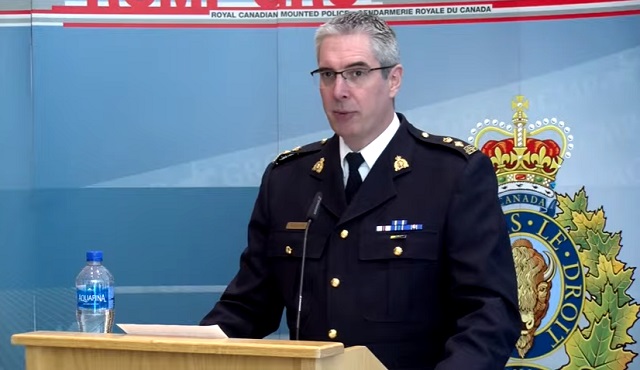

News release from the Alberta RCMP
Alberta RCMP concludes investigations surrounding the 2017 UCP Leadership Vote
In July 2017, the Wildrose Party and the Progressive Conservative Party merged to form the United Conservative Party (UCP). A UCP leadership contest followed, which was an internal UCP process with no oversight from Elections Alberta, except as it related to the Alberta Election Finances and Contributions Disclosure Act (EFCDA).
On Oct. 4, 2017, Jeff Callaway dropped out of the race and publicly endorsed Jason Kenney. On Oct. 28, 2017, Kenney was officially elected as the new UCP leader. Allegations of wrongdoing surfaced after the leadership contest. In February 2019, a complaint was received by the Alberta RCMP in relation to these allegations, which resulted in the RCMP opening an investigation into two separate allegations.
Allegation #1 – Jeff Callaway candidacy
One allegation was that Callaway entered the contest solely to attack another candidate, always with the intention of pulling out of the leadership race and endorsing a different candidate prior to the vote. Given the allegation that this candidate had portrayed himself as a legitimate candidate and, as a result, was able to solicit money from individuals who believed he was a legitimate candidate, fraud contrary to section 380 of the Criminal Code, was identified as the appropriate offence to be investigated:
- Investigators reviewed the candidate’s campaign debates and political advertisements used during the campaign. A review of the campaign’s financial records showed that, as a result, it was able to generate approximately $95,000 in financial contributions. Elections Alberta investigated Callaway’s campaign finances under the Alberta Election Finances and Contributions Disclosure Act. The results of Elections Alberta’s investigation are posted on their website.
- Alberta RCMP Investigators conducted more than 170 interviews with contributors and campaign staff, and examined over 25,000 related emails.
Outcome #1: The investigation did not uncover evidence to establish that Callaway, or any other person, committed a criminal offence.
Allegation #2 – Voter Fraud
In order to vote, a UCP member needed to register and receive a Personal Identification Number (PIN), either by phone call, email, or text message. Once the PIN was received, the member could then cast a vote by phone or by using a proprietary electronic voting platform on the internet.
The allegations were that emails were created in order to receive PINs and vote on peoples’ behalf without their consent or knowledge. Identity Fraud contrary to section 403 of the Criminal Code was identified as the appropriate offence to be investigated under the circumstances:
- The online platform used by the UCP to hold the leadership contest was identified and the RCMP obtained the voter database through a legal process, which contained data for more than 60,000 voters.
- The RCMP analysed the data and identified several suspicious cross-sections of voters where multiple votes were cast from the same phone number, or originated from the same IP address. Similar to an in-person ballot, the data did not show which candidate was voted for, only that a vote had been cast using that unique identifier.
- The RCMP generated a list of these “suspicious votes,” conducted interviews with the more than 1,200 individuals and examined their UCP membership and registration forms.
- To be clear, the number of potential votes at issue, which after investigation was less than 200, would not have impacted the leadership contest given that Jason Kenney won with 36,625 votes (61%), whereas Brian Jean received 18,336 votes (31%), followed by Doug Schweitzer with 4,273 votes (7%).The RCMP investigation did not find evidence that any leadership candidate encouraged their volunteers to engage in identity fraud.
- The service provider for the online voting platform used by the UCP was not compromised, and worked exactly as specified.
This high-profile investigation was extremely complex, and time consuming due to several factors:
- The sheer volume of data being analysed and investigated took a significant amount of time. Further, a portion of this data required that judicial authorizations be obtained both domestically and outside of Canada.
- The fact that the complaint was not received until 2019 impacted many witnesses’ recollections of the event. The 2017 UCP Leadership Contest occurred at the same time as other internal party votes. As a result, some witnesses were unclear about which process the RCMP were investigating.
- Even for cases that appear to be voter fraud, there can be innocent explanations. For example, it wasn’t illegal for one phone number or email to receive many PINs. It was also not illegal for many votes to be cast from the same IP address or phone number. In certain families living under the same roof, this was common. We also saw the same pattern in office buildings and at voting kiosks where many people voted from the same IP.
Outcome #2: While the Alberta RCMP determined that there were suspected instances of potential identity fraud, there was insufficient evidence to charge any suspect, again there was no evidence that any leadership candidate orchestrated these relatively rare instances.
The decision on whether or not to lay a charge in Alberta rests with the police. However, throughout this investigation, the RCMP did seek advice from Crown, which began in Alberta, but was later referred to the Ontario Ministry of the Attorney General who assigned Crown Prosecutors.
These Crown Prosecutors provided valuable and timely advice throughout our investigation and their assistance was greatly appreciated
It should be noted that these allegations of possible voter fraud occurred during an internal political party voting process, and in no way represents any possible fraud or shortcomings in our general provincial and federal elections.
Nothing in the investigation suggested that the UCP failed to take reasonable steps to manage their internal process. We hope that the information shared today will further reduce the risk of similar incidents occurring in the future for any political party.
The investigators received cooperation from the UCP and the leadership candidates which
assisted in moving the investigation forward.
“We would like to highlight that in investigating allegations of criminality, the thoroughness and completeness of the investigation is the standard that should be assessed and that the lack of criminal charges should not be the test of a successful investigation,” said Superintendent Rick Jané of the Alberta RCMP. “In this case, experienced criminal investigators tested these allegations. In the end, Albertans can be confident that a thorough investigation, independent of government, was conducted.”

Video of News Conference: https://www.youtube.com/@RCMPAlbertaGRC/streams
Key Statistics:
Investigators
- 65 Investigators
o 5 core investigators
o 60 additional investigators seconded for varying lengths of time
o 10 public service employees assisted in various capacities
Investigation
- 1,200 voter canvass interviews
- 563 structured interviews
o 226 hours of audio
o Conducted by two interviewers
o Totaling 420 person-hours worked
Translation
- Translation was required for Arabic, South Asian and Chinese languages
- Investigators were sourced from “K” Div Federal Policing; Auto-theft; Digital Forensic Services Units; as well as Airdrie, Canmore, Red Deer, Thorsby, High River, and Maskwacis RCMP Detachments to fulfill this need.
Financial
- $460,877 in overtime and travel expenses
o $356,288 in overtime
o $104,589 in travel expenses, with $38,647 in out-of-province expenses
Travel
- 12 out of province trips (BC, Ontario, Nova Scotia) involving 22 members
- There was no international travel
Documentation
(warrants, sealing orders, production orders, information to obtain, administration, mutual legal assistance requests)
- 7,484 PDF documents (totaling 69,922 pages)
- 20,625 digital files (totaling 54 GB of data)


Alberta’s government will introduce a motion under the Alberta Sovereignty within a United Canada Act to defend law-abiding firearms owners.
A new motion under the Alberta Sovereignty within a United Canada Act will, if passed by the legislature, instruct all provincial entities, including law-enforcement agencies such as municipal police services and the RCMP, to decline to enforce or implement the federal gun seizure program. The motion also makes clear that Albertans have the right to use reasonable force to defend themselves, their families and their homes from intruders.
This builds on the steps Alberta has already taken to reduce crime, strengthen public safety and assert provincial jurisdiction over firearms. This includes passing the Alberta Firearms Act to establish the Alberta Chief Firearms Office, along with the Alberta Firearms Regulation and the Seizure Agent and Provider Licensing Regulation.
“It’s time for Ottawa to stop targeting the wrong people. Albertans have the right to protect their homes and their families. No one should hesitate to defend themselves when faced with a threat at their own doorway. Law-abiding citizens, hunters, farmers and sport shooters are not the source of violent crime, yet the federal government wants to confiscate their property while illegal guns pour across our borders. Alberta will not stand by while responsible gun owners are treated like criminals. This motion is about using every legal tool we have to protect their rights, uphold public safety and push back on federal overreach into provincial jurisdiction.”
“When someone breaks into your home, the law recognizes that you have enhanced rights to protect yourself and your family. Alberta is making that principle unmistakably clear: lawful, reasonable self-defence will be respected, not criminalized.”
“As an experienced former law enforcement officer, law-abiding gun owners have never been an issue, in my own personal experience, nor has there been any data to support that law-abiding gun owners are the ones that are committing violent gun crimes. The illegal guns that you see being used by criminals are typically being smuggled in from the United States. The federal government should help us strengthen the border, helping us to stop illegal guns from coming into Canada. This would further enhance safety and security for the people of Alberta and Canada as opposed to going after lawful gun owners.”
Under the Alberta Firearms Regulation, municipalities, law enforcement and police commissions must obtain approval from Alberta’s Minister of Justice before accepting funding to participate in the Assault-Style Firearms Compensation Program.
“Misguided federal initiatives such as the handgun transfer ban and the Order in Council firearms prohibitions of 2020, 2024 and 2025 have had a devastating impact on the safe, legitimate activities of the firearms community and the businesses that support it, while having no discernible effect on criminal activity. I am proud to see that the Alberta government is pushing back and supporting lawful firearms owners through these measures.”
“Licensed gun owners and all Albertans can rest assured that their government, under the leadership of the UCP, is laser focused on protecting law abiding citizens while prioritizing real public safety.”
“The Alberta Hunter Education Instructors Association will continue to support our government and the Alberta chief firearms officer in our joint quest to use safety training and education as the key tools to ensure we have safer streets and communities. Safe and responsible use of firearms in Alberta is a key part of our heritage, culture, and our rich and precious heritage.”
Key facts:
- Pursuant to the Attorney General’s recent guidance protocols, Alberta’s prosecutors will decline to prosecute offences under the federal gun seizure program when it is not in the public interest.
- The Attorney General’s recent guidance protocol directs prosecutors to not prosecute home defence offences when it is not in the public interest.
- Total spending on the federal Assault-Style Firearms Compensation Program is expected to exceed $750 million.
- The firearms motion considers the Alberta Bill of Rights, the Constitution Act, 1867 and the Criminal Code.
- Currently 10 per cent of adult Albertans are licenced to use and own firearms. There are 381,900 firearms licences in Alberta.
- Alberta has 638 licensed firearms businesses, 138 shooting ranges and 91 shooting clubs.
Alberta
Emissions Reduction Alberta offering financial boost for the next transformative drilling idea

From the Canadian Energy Centre
$35-million Alberta challenge targets next-gen drilling opportunities
‘All transformative ideas are really eligible’
Forget the old image of a straight vertical oil and gas well.
In Western Canada, engineers now steer wells for kilometres underground with remarkable precision, tapping vast energy resources from a single spot on the surface.
The sector is continually evolving as operators pursue next-generation drilling technologies that lower costs while opening new opportunities and reducing environmental impacts.
But many promising innovations never reach the market because of high development costs and limited opportunities for real-world testing, according to Emissions Reduction Alberta (ERA).
That’s why ERA is launching the Drilling Technology Challenge, which will invest up to $35 million to advance new drilling and subsurface technologies.
“The focus isn’t just on drilling, it’s about building our future economy, helping reduce emissions, creating new industries and making sure we remain a responsible leader in energy development for decades to come,” said ERA CEO Justin Riemer.
And it’s not just about oil and gas. ERA says emerging technologies can unlock new resource opportunities such as geothermal energy, deep geological CO₂ storage and critical minerals extraction.
“Alberta’s wealth comes from our natural resources, most of which are extracted through drilling and other subsurface technologies,” said Gurpreet Lail, CEO of Enserva, which represents energy service companies.
ERA funding for the challenge will range from $250,000 to $8 million per project.
Eligible technologies include advanced drilling systems, downhole tools and sensors; AI-enabled automation and optimization; low-impact rigs and fluids; geothermal and critical mineral drilling applications; and supporting infrastructure like mobile labs and simulation platforms.
“All transformative ideas are really eligible for this call,” Riemer said, noting that AI-based technologies are likely to play a growing role.
“I think what we’re seeing is that the wells of the future are going to be guided by smart sensors and real-time data. You’re going to have a lot of AI-driven controls that help operators make instant decisions and avoid problems.”
Applications for the Drilling Technology Challenge close January 29, 2026.


From Underdog to Top Broodmare

Landmark 2025 Study Says Near-Death Experiences Can’t Be Explained Away

STUDY: TikTok, Instagram, and YouTube Shorts Induce Measurable “Brain Rot”
Red Deer’s Jason Stephan calls for citizen-led referendum on late-term abortion ban in Alberta
-
 National1 day ago
Media bound to pay the price for selling their freedom to (selectively) offend
-
 Business1 day ago
Is there a cure for Alzheimer’s Disease?
-
 Bruce Dowbiggin1 day ago
Sometimes An Ingrate Nation Pt. 2: The Great One Makes His Choice
-
 Alberta1 day ago
New era of police accountability
-
 C2C Journal1 day ago
Learning the Truth about “Children’s Graves” and Residential Schools is More Important than Ever
-
 Energy2 days ago
Canadians will soon be versed in massive West Coast LPG mega-project
-
 Artificial Intelligence2 days ago
‘Trouble in Toyland’ report sounds alarm on AI toys
-
 Brownstone Institute1 day ago
The Unmasking of Vaccine Science