
Alberta
Alberta “Open for Summer” plan to begin Friday


Alberta’s Open For Summer Plan
Alberta’s government will remove provincewide health measures in three stages as vaccine targets are reached and hospitalizations decline.
Alberta’s Open for Summer Plan provides a three-stage road map to lifting health restrictions and safely getting back to normal.
The plan provides Albertans with a clear picture of a summer without restrictions as long as Albertans continue to follow public health measures in the short term and vaccination numbers continue to rise quickly.
Alberta’s Open for Summer Plan includes three stages based on vaccination thresholds and hospitalizations:
- Stage 1: Two weeks after 50 per cent of Albertans age 12-plus have received at least one dose of vaccine and COVID-19 hospitalizations are below 800 and declining.
- Stage 2: Two weeks after 60 per cent of Albertans age 12-plus have received at least one dose of vaccine and COVID-19 hospitalizations are below 500 and declining.
- Stage 3: Two weeks after 70 per cent of Albertans age 12-plus have received at least one dose of vaccine.
Since Alberta reached the 50 per cent threshold for one-dose vaccination on May 18, and with hospitalizations well below 800, Alberta will enter Stage 1 on June 1. Based on the current pace of vaccinations, Alberta is projected to enter Stage 2 in mid-June and Stage 3 in late June or early July. These are estimates only and rely on all Albertans continuing to drive down our hospitalizations while increasing vaccination numbers.
“This is the day we have all waited for. We now have a clear plan to lift all public health restrictions and get back to normal. So long as Albertans continue to get vaccinated in strong numbers, Alberta will be fully open and back to normal for a truly great Alberta summer.”
“Our Open for Summer Plan is a responsible plan to get back to normal while at the same time protecting our health-care system. We will end this pandemic the same way we started it – by ensuring we have world-class health care available to every Albertan who needs it.”
“Thanks to vaccines, we can start moving safely forward. Please book your vaccine appointment and also keep following the measures in place for a little while longer. That will protect our communities and this reopening plan.”
Stage 1: Two weeks after 50 per cent of Albertans age 12-plus have received at least one dose of vaccine and hospitalizations are below 800 and declining.
Starting May 28:

- The capacity limit for worship services increases to 15 per cent of fire code occupancy.
Starting June 1:
- Outdoor social gatherings, with distancing, increase to up to 10 people.
- Indoor social gatherings are still not permitted.
- Outdoor patio dining can resume with a maximum of four people per table.
- Everyone at the table must be members of the same household or for a person living alone, dining parties are limited to two close contacts.
- Physical distancing and other restrictions still apply.
- Outdoor physical, performance and recreational activities are permitted with up to 10 distanced people, for all ages.
- Retail can increase to 15 per cent of fire code occupancy (must maintain ability to distance).
- Personal and wellness services can reopen, by appointment only.
- Wedding ceremonies may have up to 10 people, including the officiant, bride/groom, witnesses and any photographers/videographers. Receptions remain prohibited.
- Funeral ceremonies may have up to 20 people, not including facility staff, funeral clergy or organizers not considered guests. Receptions remain prohibited.
- Distancing and masking requirements remain in effect.
Stage 2: Two weeks after 60 per cent of Albertans age 12-plus have received at least one dose of vaccine and hospitalizations are below 500 and declining.
- Outdoor social gatherings increase to 20 people, with distancing.
- Wedding ceremonies may occur with up to 20 attendees. Receptions are permitted outdoors only.
- Funeral ceremonies remain unchanged with up to 20 people permitted, not including facility staff, funeral clergy or organizers not considered guests. Receptions are permitted outdoors only.
- Restaurants may seat tables with up to six people, indoors or outdoors.
- Dining parties are no longer restricted to households only.
- Physical distancing and other restrictions still apply.
- Retail capacity increases to one-third of fire code occupancy (must maintain ability to distance).
- Capacity for places of worship increases to one-third of fire code occupancy.
- Gyms and other indoor fitness open for solo and drop-in activities with three-metre distancing between participants and fitness classes may resume with three-metre distancing.
- Indoor settings may open with up to one-third of fire code occupancy, including indoor recreation centres. This includes arenas, cinemas, theatres, museums, art galleries and libraries.
- Indoor and outdoor youth and adult sports resume with no restrictions.
- Youth activities, such as day camps and play centres, may resume, with restrictions.
- Personal and wellness services can resume walk-in services.
- Post-secondary institutions can resume in-person learning.
- The work-from-home order is lifted but still recommended.
- Outdoor fixed seating facilities (e.g., grandstands) can open with one-third seated capacity.
- Public outdoor gatherings increase to 150 people (e.g. concerts/festivals), with restrictions.
- Distancing and masking requirements remain in effect.
Stage 3: Two weeks after 70 per cent of Albertans age 12-plus have received at least one dose of vaccine.
- All restrictions are lifted, including the ban on indoor social gatherings.
- Isolation requirements for confirmed cases of COVID-19 and some protective measures in continuing care settings remain.
Additional details on all restrictions and measures in place will be released prior to each step. Albertans can track the province’s immunization progress on alberta.ca.
Provincial COVID-19 transmission will continue to be monitored throughout the reopening. If required, a reopening step may be paused to respond to COVID-19 transmission trends at regional or provincial levels.
Sustained reopening will depend on Albertans getting fully vaccinated with two doses during the summer months to prevent future spread of COVID-19.
Alberta’s government is responding to the COVID-19 pandemic by protecting lives and livelihoods with precise measures to bend the curve, sustain small businesses and protect Alberta’s health-care system.
Quick facts
- More than 2.55 million doses of vaccine have now been administered in Alberta.


From the Fraser Institute
By Tegan Hill
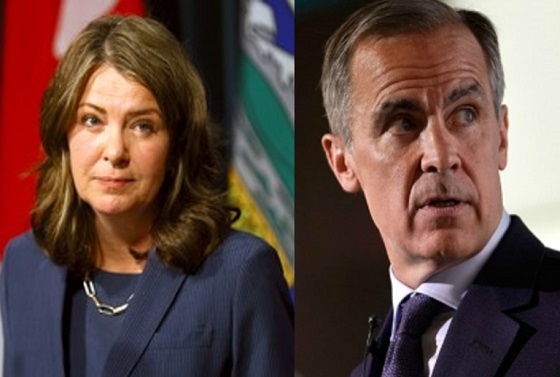
Last Friday, less than a week before Christmas, the Smith government quietly released the final report from its Alberta Next Panel, which assessed Alberta’s role in Canada. Among other things, the panel recommends that the federal government transfer some of its tax revenue to provincial governments so they can assume more control over the delivery of provincial services. Based on Canada’s experience in the 1990s, this plan could deliver real benefits for Albertans and all Canadians.
Federations such as Canada typically work best when governments stick to their constitutional lanes. Indeed, one of the benefits of being a federalist country is that different levels of government assume responsibility for programs they’re best suited to deliver. For example, it’s logical that the federal government handle national defence, while provincial governments are typically best positioned to understand and address the unique health-care and education needs of their citizens.
But there’s currently a mismatch between the share of taxes the provinces collect and the cost of delivering provincial responsibilities (e.g. health care, education, childcare, and social services). As such, Ottawa uses transfers—including the Canada Health Transfer (CHT)—to financially support the provinces in their areas of responsibility. But these funds come with conditions.
Consider health care. To receive CHT payments from Ottawa, provinces must abide by the Canada Health Act, which effectively prevents the provinces from experimenting with new ways of delivering and financing health care—including policies that are successful in other universal health-care countries. Given Canada’s health-care system is one of the developed world’s most expensive universal systems, yet Canadians face some of the longest wait times for physicians and worst access to medical technology (e.g. MRIs) and hospital beds, these restrictions limit badly needed innovation and hurt patients.
To give the provinces more flexibility, the Alberta Next Panel suggests the federal government shift tax points (and transfer GST) to the provinces to better align provincial revenues with provincial responsibilities while eliminating “strings” attached to such federal transfers. In other words, Ottawa would transfer a portion of its tax revenues from the federal income tax and federal sales tax to the provincial government so they have funds to experiment with what works best for their citizens, without conditions on how that money can be used.
According to the Alberta Next Panel poll, at least in Alberta, a majority of citizens support this type of provincial autonomy in delivering provincial programs—and again, it’s paid off before.
In the 1990s, amid a fiscal crisis (greater in scale, but not dissimilar to the one Ottawa faces today), the federal government reduced welfare and social assistance transfers to the provinces while simultaneously removing most of the “strings” attached to these dollars. These reforms allowed the provinces to introduce work incentives, for example, which would have previously triggered a reduction in federal transfers. The change to federal transfers sparked a wave of reforms as the provinces experimented with new ways to improve their welfare programs, and ultimately led to significant innovation that reduced welfare dependency from a high of 3.1 million in 1994 to a low of 1.6 million in 2008, while also reducing government spending on social assistance.
The Smith government’s Alberta Next Panel wants the federal government to transfer some of its tax revenues to the provinces and reduce restrictions on provincial program delivery. As Canada’s experience in the 1990s shows, this could spur real innovation that ultimately improves services for Albertans and all Canadians.

Tegan Hill
Director, Alberta Policy, Fraser Institute
From the Fraser Institute
By Tegan Hill
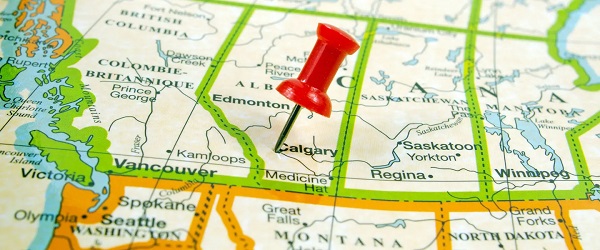
The Alberta Next Panel, tasked with advising the Smith government on how the province can better protect its interests and defend its economy, has officially released its report. Two of its key recommendations—to hold a referendum on Alberta leaving the Canada Pension Plan, and to create a commission to review programs like equalization—could lead to meaningful changes to Canada’s system of fiscal federalism (i.e. the financial relationship between Ottawa and the provinces).
The panel stemmed from a growing sense of unfairness in Alberta. From 2007 to 2022, Albertans’ net contribution to federal finances (total federal taxes paid by Albertans minus federal money spent or transferred to Albertans) was $244.6 billion—more than five times the net contribution from British Columbians or Ontarians (the only other two net contributors). This money from Albertans helps keep taxes lower and fund government services in other provinces. Yet Ottawa continues to impose federal regulations, which disproportionately and negatively impact Alberta’s energy industry.
Albertans were growing tired of this unbalanced relationship. According to a poll by the Angus Reid Institute, nearly half of Albertans believe they get a “raw deal”—that is, they give more than they get—being part of Canada. The Alberta Next Panel survey found that 59 per cent of Albertans believe the federal transfer and equalization system is unfair to Alberta. And a ThinkHQ survey found that more than seven in 10 Albertans feel that federal policies over the past several years hurt their quality of life.
As part of an effort to increase provincial autonomy, amid these frustrations, the panel recommends the Alberta government hold a referendum on leaving the Canada Pension Plan (CPP) and establishing its own provincial pension plan.
Albertans typically have higher average incomes and a younger population than the rest of the country, which means they could pay a lower contribution rate under a provincial pension plan while receiving the same level of benefits as the CPP. (These demographic and economic factors are also why Albertans currently make such a large net contribution to the CPP).
The savings from paying a lower contribution rate could result in materially higher income during retirement for Albertans if they’re invested in a private account. One report found that if a typical Albertan invested the savings from paying a lower contribution rate to a provincial pension plan, they could benefit from $189,773 (pre-tax) in additional retirement income.
Clearly, Albertans could see a financial benefit from leaving the CPP, but there are many factors to consider. The government plans to present a detailed report including how the funds would be managed, contribution rates, and implementation plan prior to a referendum.
Then there’s equalization—a program fraught with flaws. The goal of equalization is to ensure provinces can provide reasonably comparable public services at reasonably comparable tax rates. Ottawa collects taxes from Canadians across the country and then redistributes that money to “have not” provinces. In 2026/27, equalization payments is expected to total $27.2 billion with all provinces except Alberta, British Columbia and Saskatchewan receiving payments.
Reasonable people can disagree on whether or not they support the principle of the program, but again, it has major flaws that just don’t make sense. Consider the fixed growth rate rule, which mandates that total equalization payments grow each year even when the income differences between recipient and non-recipient provinces narrows. That means Albertans continue paying for a growing program, even when such growth isn’t required to meet the program’s stated objective. The panel recommends that Alberta take a leading role in working with other provinces and the federal government to reform equalization and set up a new Canada Fiscal Commission to review fiscal federalism more broadly.
The Alberta Next Panel is calling for changes to fiscal federalism. Reforms to equalization are clearly needed—and it’s worth exploring the potential of an Alberta pension plan. Indeed, both of these changes could deliver benefits.
Tegan Hill
Director, Alberta Policy, Fraser Institute


Ottawa’s Newly Released Defence Plan Crosses a Dangerous Line

All 12 Vaccinated vs. Unvaccinated Studies Found the Same Thing: Unvaccinated Children Are Far Healthier

Carney Floor Crossing Raises Counterintelligence Questions aimed at China, Former Senior Mountie Argues
Ottawa is still dodging the China interference threat
-
 Digital ID1 day ago
Canadian government launches trial version of digital ID for certain licenses, permits
-
 Agriculture2 days ago
End Supply Management—For the Sake of Canadian Consumers
-
Alberta1 day ago
Alberta Next Panel calls to reform how Canada works
-
 International1 day ago
Georgia county admits illegally certifying 315k ballots in 2020 presidential election
-
 Business1 day ago
The “Disruptor-in-Chief” places Canada in the crosshairs
-
 Artificial Intelligence1 day ago
UK Police Pilot AI System to Track “Suspicious” Driver Journeys
-
 Energy1 day ago
‘The electric story is over’
-
 International2 days ago
World-leading biochemist debunks evolutionary theory